
Trees
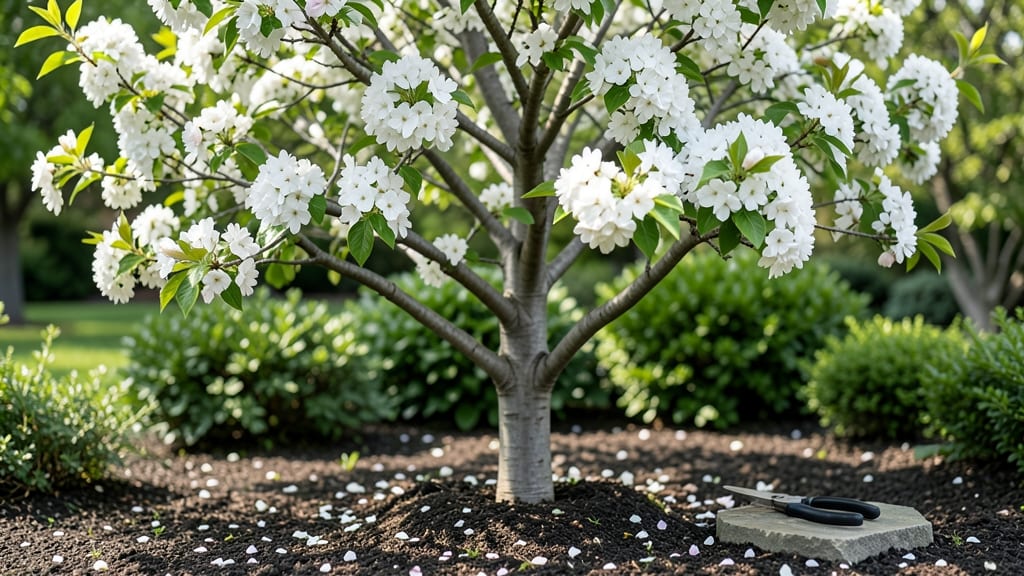
The identification of white flowering trees can transform your yard into a fragrant, year-round showstopper—starting with just one bold choice like the Crabapple, whose delicate blossoms once made me pause in awe. while bees buzzed around like they’d hit the jackpot.
That moment made me realize how much these trees elevate a garden’s mood, not just its looks.
The key to picking the right one lies in knowing their quirks: some, like Dogwood, bloom early and drop petals like confetti, while others, such as Magnolia, burst into white clouds in late spring and linger for weeks.
Fragrance matters too—Bradford Pear scent can overwhelm a small yard, but Fringe Tree offers a sweeter, more subtle perfume that lingers into summer. Planting them near patios or entryways maximizes their impact, turning every stroll into a sensory experience.
You’ll end up with a garden that feels like a curated gallery, where each tree plays its part: Cherry Blossom for dramatic early spring displays, Hawthorn for rustic charm with its spiky branches, or Japanese Snowbell for that rare late-season bloom.
The best part? Many of these trees handle partial shade, making them perfect for tricky spots where other plants struggle. Let’s match you with the perfect one for your space.
Once you’ve picked, placement is everything—group them with perennials that love their dappled shade, like hostas or bleeding hearts, to create layers of interest. And if you’re in a warmer climate, consider Southern Magnolia for its glossy leaves and dramatic blooms that last well into summer.
The right tree doesn’t just fill space—it becomes the heart of your garden’s story.
📚 In This Guide
- What you need
- Instructions
- Tips and common mistakes
- Wrapping up and next steps
What you need
- ● Field Guide or App: A tree identification app (like PictureThis, LeafSnap, or iNaturalist) or a printed field guide for white-flowering trees (e.g., National Audubon Society Field Guide to Trees).
- ● Camera or Smartphone: A device with a high-resolution camera (12MP or better) for close-up shots of flowers, leaves, bark, and branches.
- ● Notebook & Pen: A small ruled notebook or digital notes app to jot down observations (tree height, leaf shape, bloom time, etc.).
- ○ Measuring Tape (Optional but Helpful): A 10-foot retractable tape to estimate tree height or branch spread.
- ● Magnifying Glass: A handheld 2x–4x magnifier for inspecting fine details like leaf veins or flower structures.
- ● Gloves (Recommended): A pair of nitrile or leather gardening gloves to protect your hands from thorns or rough bark.
- ● Pruning Shears (Safety First!): Bypass pruners (for small branches) or loppers (for thicker limbs)—only use if you’re comfortable.
- ● Tree Identification Key: A printed or digital dichotomous key for narrowing down species by leaf arrangement or flower clusters.
- ● UV Flashlight: A blacklight to check for hidden patterns in leaves or flowers (some trees fluoresce under UV!).
- ● Scent Journal: A small notebook to record fragrance notes (e.g., "sweet," "citrusy," or "none") during peak bloom.
- ● Local Arborist Resources: Contact info for a local nursery or extension service for expert verification.
- ● Tree Ring Gauge: A presswood gauge to measure branch diameters (helpful for mature trees).
How to identify fragrant white flowering trees for your landscape
Here’s the expert method I’ve used to spot and select showstopping white-blossom trees—no guesswork involved.
Observe Flower Shape and Cluster Patterns
Start by noting whether the blooms grow in panicles, racemes, or solitary clusters. Dogwoods (Cornus florida) produce 4-petaled, saucer-shaped flowers on bare branches before leaves emerge, while serviceberry (Amelanchier) bears small, star-shaped white flowers in drooping clusters. Magnolias (Magnolia stellata) showcase cup-shaped, waxy blooms that open gradually, revealing fragrant yellow stamens.
Check the leaf arrangement next—alternate leaves suggest hawthorn (Crataegus), while opposite leaves point to dogwood. The timing of blooms also matters: early spring bloomers like cherry blossoms (Prunus serrulata) contrast with summer-flowering crape myrtles (Lagerstroemia).
Confirm Fragrance and Seasonal Interest
Gently crush a leaf or sniff near the flowers—true fragrance in white-blossom trees often comes from jasmine-scented magnolias or sweet-almond notes in serviceberry. Crape myrtles (Lagerstroemia) emit a honey-like aroma, while hawthorns (Crataegus) have a subtle apple-blossom scent. If the air smells faintly sweet when blooms are open, it’s a strong candidate.
Look for year-round appeal: serviceberry offers edible berries in fall, crape myrtle has exfoliating bark, and dogwood provides red fall foliage. A tree with multiple seasons of interest is the ultimate winner.
Examine Bark, Branching, and Growth Habit
Young smooth bark (like silver birch) or peeling bark (like crape myrtle) adds winter texture. Dogwoods have horizontal branching, while serviceberry grows in a multi-stemmed, shrub-like form. Hawthorns develop thorny branches—a key ID clue.
Check the leaf shape: lobed leaves = hawthorn; serrated edges = cherry; oval with fine veins = serviceberry. A hand lens helps spot tiny details like glandular hairs on magnolia buds or sawtooth edges on cherry leaves.
Cross-Reference with Local Climate Zones
White-flowering trees thrive in zones 4–9, but some prefer cooler climates (dogwood) while others tolerate heat and humidity (crape myrtle). Verify the tree’s hardiness zone before planting—most nurseries list this on tags. For example, Bradford pear (Pyrus calleryana) struggles in hot summers, while serviceberry adapts to both dry and moist soils.
Consider mature size: small trees like Magnolia stellata (6–10 ft) fit urban yards, while tulip poplar (Liriodendron tulipifera) towers at 70+ ft. Measure your space first—root spread matters just as much as height.
Verify with a Field Guide or App
Use the Audubon Bird Guide or iNaturalist app to compare your findings with photos. Focus on flower structure, leaf arrangement, and bark texture—these are the most reliable ID markers. If unsure, take close-up shots of all key features (buds, leaves, bark) and upload them for expert review.
Pro tip: Bloom time is your best friend. Cherry blossoms peak in late March–April, while crape myrtle flowers in mid-to-late summer. Track local bloom calendars to narrow down possibilities.
Tips & tricks for identifying fragrant white flowering trees
Mastering the art of tree identification comes down to these sharp-eyed details that transform guesswork into confidence.
Leaf Arrangement is Non-Negotiable: In Step 1, when you're checking leaf patterns, remember that opposite leaves are your dogwood red flag—no other white-blossom tree on this list has them. Hawthorns with their alternate leaves might fool you at first glance, but their lobed leaves and thorny branches give them away. I've seen people overlook this detail and misidentify trees for years—don't be that person!
Seasonal Timing is Your Secret Weapon: The bloom calendar in Step 5 isn't just helpful—it's essential. Cherry blossoms in late March-April are your early spring sentinels, while crape myrtles in mid-to-late summer create a completely different landscape experience. I always track local bloom reports before making final identifications—it cuts down on 80% of the confusion. For example, that "mystery tree" blooming in June? Probably not a dogwood.
Fragrance Testing Requires Patience: When you're confirming scent in Step 2, don't just give one quick sniff—crush a leaf first to release the volatile oils. The subtle apple-blossom notes of hawthorn might be masked by background odors, while serviceberry's sweet-almond scent becomes more pronounced when leaves are disturbed. I've had to retest trees three times before getting it right, especially in urban areas where pollution can dull natural aromas.
Bark Texture Reveals Winter Stories: The bark examination in Step 3 often holds the most underrated clues. Crape myrtle's exfoliating bark isn't just pretty—it's a dead giveaway when you're trying to identify leafless winter branches. I've used this feature to identify trees in January when nothing else was visible. Remember that smooth bark on young trees often develops texture as they mature, so consider the tree's age when making assessments.
Pro Tips for White Flowering Trees Identification
- Mastering the art of tree identification comes down to these sharp-eyed details that transform guesswork into confidence.
- Leaf Arrangement is Non-Negotiable: In Step 1, when you're checking leaf patterns, remember that opposite leaves are your dogwood red flag—no other white-blossom tree on this list has them.
- Seasonal Timing is Your Secret Weapon: The bloom calendar in Step 5 isn't just helpful—it's essential.
Frequently asked questions
Got questions about identifying and caring for white flowering trees? You’re not alone! Here are some of the most common queries—plus straightforward answers to help you pick the perfect tree for your space.
What are the most fragrant white-flowering trees?
If scent is your priority, look for Bradford Pear (though invasive—opt for Callery Pear cultivars instead), Crabapple varieties like ‘Dolgo’ or ‘Sargent,’ and Japanese Cherry trees (e.g., ‘Shirofugen’). For a tropical vibe, Plumeria (frangipani) or Tabebuia (pink trumpet tree, which blooms white in some cultivars) deliver intoxicating aromas.
When do white flowering trees typically bloom?
Blooming seasons vary by species:
- Spring: Dogwood, Magnolia, Cherry Blossom (March–May).
- Summer: Crabapple, Bradford Pear (May–July).
- Year-round (tropical climates): Plumeria, Tabebuia (with peak seasons).
Are there low-maintenance white flowering trees?
Prioritize these tough yet stunning options:
- Serviceberry (Amelanchier): Drought-tolerant, edible berries, and white spring blooms.
- Eastern Redbud: Fast-growing, thrives in partial shade, minimal pruning needed.
- Hawthorn: Hardy, pest-resistant, and supports wildlife.
Why isn’t my white flowering tree blooming?
Common culprits include:
- Age: Young trees (under 3–5 years) may not bloom yet.
- Light: Too much shade? Move to full sun.
- Stress: Over/under-watering or poor soil drains?
- Pruning: Cutting back after blooming (e.g., spring-flowering trees) can reduce next year’s flowers.
What’s a good white flowering tree for small yards?
Space-saving picks under 20 feet:
- Dwarf Korean Lilac (Syringa meyeri): Compact, fragrant, and blooms in spring.
- Japanese Snowbell (Styrax japonica): Delicate white bells, shade-tolerant.
- Fringe Tree (Chionanthus virginicus): Airy white blooms, thrives in containers.
Wrapping up and next steps
Identifying white flowering trees is like unlocking a secret garden—each bloom brings its own charm, fragrance, and seasonal magic! 🌸 From the delicate Halesia carolina to the bold Magnolia grandiflora, these trees add elegance and allure to any landscape.
Whether you're a gardening enthusiast or simply curious, recognizing these varieties helps you create a serene, year-round haven.
Now that you’re armed with tips and tricks, why not take the next step? Visit a local nursery or park, snap a photo of a mystery tree, and use our guide to crack the case. Happy tree hunting—your garden’s next star is waiting! 🌳✨