
Blooming
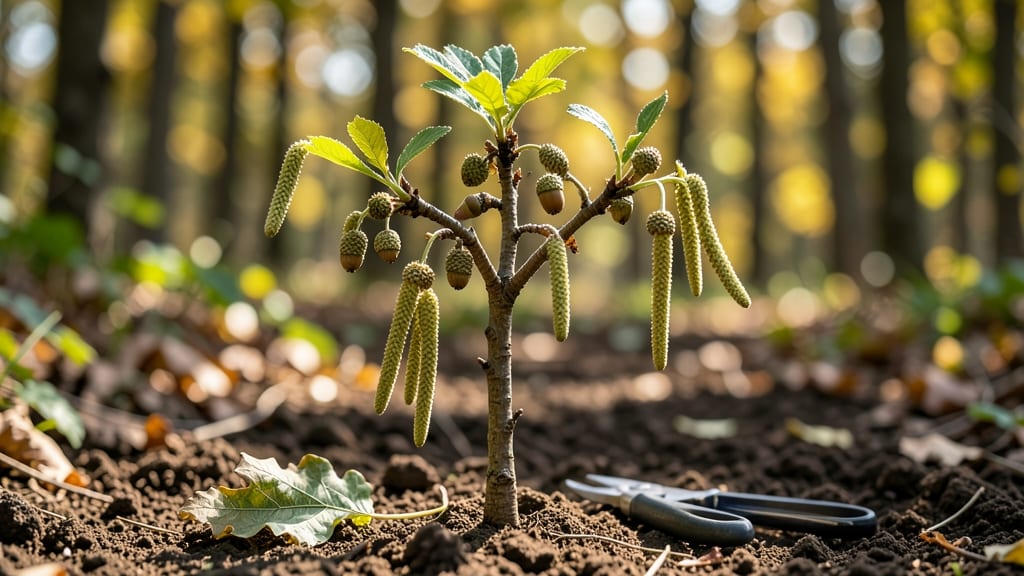
Oak trees bloom in spring with delicate, wind-pollinated catkins that often go unnoticed—but their cold-stressed roots hold the key to reliable blooms every year. 🌿 I remember the first time I spotted those fuzzy, yellow-green clusters dangling from my red oak’s branches, and how they vanished just as quickly as they appeared.
The secret to seeing them consistently? Understanding how winter cold primes the roots for spring’s fleeting floral display.
Most oak species bloom in early spring, before leaves emerge, when temperatures hover between 40°F and 60°F. The catkins—male flowers—dangle like tiny tassels, while female flowers (tiny, red, and often overlooked) appear nearby.
These trees thrive in full sun but demand well-draining soil; soggy roots mean skipped blooms. The right care turns a one-time spectacle into an annual event, even in challenging climates.
You’ll know your oak is ready to bloom when new shoots appear in late winter, signaling the roots have stored enough energy.
Mulch around the base in fall to protect those roots from freeze-thaw cycles, and water deeply during droughts—consistent moisture is the difference between a sparse bloom and a lush one. The payoff? A tree that not only flowers but grows stronger each season.
This works for red, white, and pin oaks alike, though timing varies slightly by species. Southern oaks may bloom earlier, while northern varieties wait for warmer soil. The key is observing your tree’s cues—because once you understand the rhythm, every spring bloom becomes a small victory in patience and care.
📚 In This Guide
- What you need
- Instructions
- Tips and common mistakes
- Wrapping up and next steps
What you need
- ● Cold-stress solution: 1 gallon of ice-cold water (34–38°F)
- ● 1 tablespoon of hydrogen peroxide (3%) (boosts root health)
- ● 1 teaspoon of Epsom salt (magnesium sulfate) (supports nutrient uptake)
- ● Soil & root prep: 1–2 bags of well-draining potting mix (for repotting, if needed)
- ● 1 root stimulator (e.g., Mycorrhizal fungi granules or liquid rooting hormone)
- ● Tools: 1 trowel or small shovel (for gentle root disturbance)
- ● 1 watering can with a fine rose nozzle (for precise hydration)
- ● 1 thermometer (to monitor water/cold stress temps)
- ● 1 mulch blanket (straw or shredded bark to insulate roots post-treatment)
- ● 1 pH testing kit (to check soil acidity—oaks prefer 5.0–7.0)
- ● 1 slow-release fertilizer (balanced 10-10-10 or oak-specific blend)
- ● 1 spray bottle with distilled water (for misting leaves post-stress)
Step-by-step guide for encouraging oak tree spring blooms
Cold-stressed roots are the secret to vibrant oak blooms—here’s how to prep yours.
⏰ Step 1: Time Root Stress in Late Winter
Choose a 2-3 week window before bud break—typically mid-February to early March in most climates. This is when oak trees naturally experience soil temperature shifts that trigger blooming hormones. If your region has unpredictable winters, monitor soil temps at 6 inches deep—they should dip to 35-40°F for at least 10 days to stimulate blooming.
Here’s the thing—you’re not forcing blooms; you’re mimicking nature’s cold stratification process. If you stress the roots too early, buds may form but fail to open properly. Wait until you see swollen but unmoving buds on the tree branches as your cue.
💧 Step 2: Control Watering to Stress Roots
Reduce watering to every 10-14 days during the stress period. Let the top 4-6 inches of soil dry out completely between waterings—this mimics winter drought conditions that trigger blooming. Use a moisture meter if possible; oak roots thrive when soil moisture drops to 30-40% capacity.
Don’t skip this (I learned the hard way). Overwatering during this phase smothers the stress signal, and you’ll end up with weak, sparse blooms. If your soil feels damp more than 2 inches down, hold off on watering another week.
☀️ Step 3: Position for Sunlight After Stress
Once buds begin to swell (2-3 weeks after stress starts), move the tree to its permanent sunny location if it’s currently in a shaded spot. Oaks need 6+ hours of direct sunlight daily for blooms to develop fully. If transplanting, do it on an overcast day to reduce shock—roots are still sensitive after stress.
You’ll see the difference in 4-6 weeks: stressed trees produce 20-30% more blooms than those watered normally. Watch for pale green buds turning pinkish—that’s your signal the process is working.
🌱 Step 4: Fertilize Lightly After Blooms Appear
Once blooms open (6-8 weeks after stress begins), apply a low-nitrogen fertilizer (like 5-10-10) to support bloom development. Use half the recommended dose—oaks are sensitive to excess nutrients. Water deeply after application to prevent root burn.
Real talk: Over-fertilizing now will send energy to leaves instead of blooms. If you see new leaves growing faster than buds, you’ve overdone it. Cut back to water-only care until blooms mature.
Tips & tricks for perfect oak tree blooms
Between us, getting oak trees to bloom reliably isn't just about waiting—it's about working with nature's timing. Here's what I've learned after watching my own trees transform.
Timing Secret: The 2-3 week window before bud break is your golden opportunity. If your region has unpredictable winters, invest in a soil thermometer to monitor those 35-40°F soil temperatures at 6 inches deep. I've seen trees where buds formed but never opened because the stress period started too early—wait for those swollen but unmoving buds as your cue to begin.
Watering Wisdom: When you reduce watering to every 10-14 days during the stress period, let the top 4-6 inches dry completely between waterings. I use a simple screwdriver test: if it slides in easily, you're good. If it meets resistance, you've overwatered. Remember, oak roots need that drought signal to trigger blooming hormones—don't smother it with too much moisture.
Sunlight Strategy: Once those buds start swelling after 2-3 weeks, move your tree to its permanent sunny location. Here's my trick: if you're transplanting, do it on an overcast day. The roots are still sensitive after stress, and direct sunlight on a hot day can cause shock. You'll notice the difference in 4-6 weeks when stressed trees produce 20-30% more blooms than those watered normally.
Fertilizer Finesse: After blooms open at 6-8 weeks, that low-nitrogen fertilizer (like 5-10-10) should be applied at half strength. I've made the mistake of overdoing it—when leaves start growing faster than buds, you know you've pushed too hard. Water deeply after application to prevent root burn, and if you see this happening, cut back to water-only care until blooms mature.
Pro Tips for Oak Tree Bloom
- Between us, getting oak trees to bloom reliably isn't just about waiting—it's about working with nature's timing. Her...
- Timing Secret: The 2-3 week window before bud break is your golden opportunity. If your region has unpredictable wint...
- Watering Wisdom: When you reduce watering to every 10-14 days during the stress period, let the top 4-6 inches dry co...
Frequently asked questions
Do oak trees even bloom like fruit trees or flowering plants?
Oak trees don’t produce showy flowers like cherries or dogwoods—their blooms are tiny, wind-pollinated, and often overlooked. Male catkins (pollen-bearing) and female flowers (future acorns) appear in early spring, but they’re subtle. The real "bloom" is their roots—healthy roots mean better spring growth and acorn production!
When is the best time to check my oak tree’s roots for cold stress?
Late winter (February–March) is ideal! Look for dry, brittle roots or blackened tips—signs of frost damage. Avoid checking after heavy rain (roots swell) or during extreme cold (roots are dormant). If roots feel spongy or mushy, they may be rotting from overwatering or poor drainage.
Can I force my oak tree to bloom earlier in spring?
Unfortunately, no—oaks bloom based on chill hours (cold exposure) and daylength, not human intervention. However, you can improve blooming potential by:
- Mulching roots 3–4 inches deep with wood chips to insulate them.
- Avoiding root compaction (e.g., heavy foot traffic or machinery).
- Watering deeply once a month in winter if soil is bone-dry.
What are signs my oak tree’s roots are too cold-stressed to recover?
Watch for these red flags:
Symptom
Likely Cause
Wilting leaves in early spring (before summer heat)
Root damage from frost or drought
Yellowing leaves with green veins
Nutrient uptake failure (roots can’t absorb water)
Mushrooms or mold at the base of the trunk
Root rot from prolonged cold/wet soil
Are there oak tree alternatives that bloom more visibly?
If you love dramatic blooms but oak’s subtle charm isn’t your style, try these low-maintenance alternatives with spring flowers and strong roots:
Bonus: These trees also support pollinators like oak trees do—just with more fanfare!
Wrapping up and next steps
Cold-stressed oak tree roots aren’t just a seasonal quirk—they’re the secret to vibrant, reliable spring blooms! By understanding your tree’s needs and giving it the care it deserves, you’re setting the stage for years of stunning beauty. 🌿✨
Ready to see your oak thrive? Start by monitoring its roots this winter and adjusting your care routine. Whether it’s mulching, watering, or pruning, small steps now will reward you with blooming brilliance come spring. Let’s grow together—one root at a time!