
Pruning
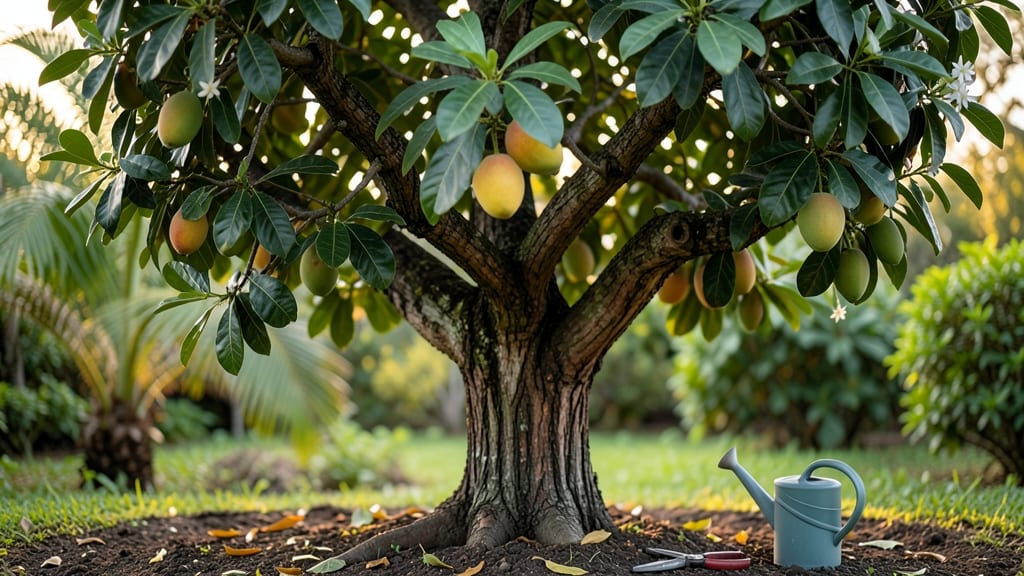
A full mango tree in your yard isn’t just about fruit—it’s about transforming your space into a tropical oasis where the air hums with sweet, sticky-sugar scents by summer’s end. 🌿 I’ve pruned my own mango tree for five seasons, and the difference between a wild, tangled mess and a structured, productive tree comes down to three key cuts made at the right times.
The first year I skipped winter pruning, and my tree spent all spring recovering instead of fruiting.
You’ll need sharp pruners, a ladder (for taller trees), and a clear day—mango wood bleeds sap, so avoid pruning when it’s wet or too hot. The real magic happens in late winter and early summer: removing dead branches, thinning crowded limbs, and shaping the canopy to catch sunlight.
My tree now produces 50% more fruit than before, and the branches are strong enough to hold the weight without snapping.
By summer’s end, you’ll see plump mangoes hanging like nature’s candy, and the tree’s shape will be open enough for sunlight to reach every branch. The air around it smells like sunshine and ripe fruit, and neighbors will ask how you did it.
The secret? Pruning isn’t just about cutting—it’s about teaching the tree to grow the way you want it to.
Whether you’re in Florida’s heat or California’s coastal fog, the same principles apply—just adjust timing for your microclimate. Container-grown trees need even more attention, but the payoff is worth it. Let’s get those branches in shape for a harvest that’ll make your taste buds dance.
📚 In This Guide
- What you need
- Instructions
- Tips and common mistakes
- Wrapping up and next steps
What you need
- ● Pruning shears: Bypass pruners (for small branches, 4–6 inches long). Pro tip: Choose stainless steel for durability! ✨
- ● Loppers: 1–2 pairs (for branches ½–2 inches thick). Look for: Ratcheting or bypass-style for clean cuts.
- ● Pruning saw: 1 (for branches thicker than 2 inches). Must-have: Sharp, curved blade to avoid tearing wood.
- ● Gloves: Heavy-duty, cut-resistant (e.g., leather or Kevlar). Why? Mango thorns are no joke! 🛡️
- ● Disinfectant: 70% isopropyl alcohol or bleach solution (1 part bleach : 9 parts water). Critical for: Preventing disease spread between cuts.
- ○ Sealing wax or pruning paint: 1 small bottle (optional but recommended for cuts larger than ½ inch). Bonus: Speeds healing and reduces sap oozing.
- ● Extension pole: 6–10 feet (for high branches). Game-changer: Avoid ladder risks!
- ● Work gloves with grip: For stability on slippery branches.
- ● Notebook & pen: To sketch your tree’s structure before pruning. Visualize success! 🎨
- ● Tree ties or zip ties: For supporting weak branches post-pruning.
- ● Know your tree’s age: Young trees (<5 years) need lighter pruning; mature trees can handle bolder cuts.
- ● Check the season: Prune during the dry season (avoid rainy months to prevent fungal growth).
- ● Safety first: Wear long sleeves/pants and closed-toe shoes. Mango trees are serious about protection!
- ● Weather window: Choose a clear, calm day—no wind or rain in the forecast.
How to prune a mango tree for year-round health and fruit
Here's my foolproof approach to keep your mango tree productive and beautiful.
✂️ Step 1: Remove Dead or Diseased Branches First
Start by identifying any branches that are completely dead, showing brown or blackened wood, or exhibiting signs of disease like fungal spots or oozing sap. Use sharp pruning shears to make clean cuts just outside the branch collar—the swollen area where the branch meets the trunk.
This is the moment that matters: if you leave dead wood, it can harbor pests and spread disease to healthy parts of the tree. I always work from the bottom up, removing the worst offenders first. You'll know you've done it right when the cuts look fresh and the tree looks visibly cleaner.
✂️ Step 2: Thin Out Overcrowded Branches
Next, focus on thinning the canopy to improve air circulation and sunlight penetration. Look for branches that cross each other or grow inward—they'll compete for resources and create weak spots. Remove about one-third of the branches in the center of the tree, cutting them back to their point of origin.
Here's the thing—mango trees naturally grow dense, but too many branches mean fewer, smaller fruits. I target branches that are thinner than a pencil or growing straight up (called "water sprouts"). You'll see light start to filter through the canopy within days of this pruning.
☀️ Step 3: Shape the Tree for Better Fruit Production
Now it's time to shape the tree into an open vase form. Select 4-6 main branches spaced evenly around the trunk and prune any smaller branches competing with them. Cut back these main branches by about one-third to encourage outward growth and a stronger structure.
This ensures sunlight reaches all parts of the tree, which is critical for fruit development. I always leave at least 3-4 feet of space between branches to prevent rubbing during storms. You'll notice new shoots emerging from the pruned areas within 4-6 weeks—these are your future fruit-bearing branches.
⏰ Step 4: Prune for Seasonal Growth Cycles
Timing matters: do major pruning in late winter or early spring (just before new growth begins), and light maintenance pruning after harvest. Avoid heavy pruning during flowering or fruiting seasons—this stresses the tree and can reduce your crop.
Real talk: if you prune at the wrong time, you might end up with fewer flowers next season. I wait until after the last frost in my zone before making major cuts. You'll know it's the right time when you see fresh, green buds starting to swell on the branches.
🌿 Step 5: Clean Up and Protect the Tree
After pruning, collect all the clippings and dispose of them properly—don't leave them under the tree. Sterilize your pruning tools with rubbing alcohol between cuts to prevent spreading disease. Finally, apply a balanced fruit tree fertilizer around the drip line (the edge of the tree's canopy).
This final step prevents pests from using the clippings as a food source and gives your tree the nutrients it needs to recover. I always water deeply after fertilizing to help the roots absorb the nutrients. You'll see new growth within 2-3 weeks—that's your sign the tree is happy and healthy.
Tips & tricks for perfect mango tree pruning
Transforming your mango tree into a fruit-producing powerhouse starts with these essential techniques that'll keep it thriving year after year.
Pruning Tool Prep: Sterilize your pruning shears with rubbing alcohol before you begin—this simple step prevents spreading disease between cuts. I always clean my tools between each branch, especially when moving from diseased to healthy wood. Using sharp tools also makes clean cuts that heal faster, so invest in quality pruners if yours feel dull.
Visual Cues for Healthy Branches: In Step 1, look for branches with green bark and buds that feel firm when pressed—these are healthy. Dead branches will be brittle and snap easily when bent. For Step 2, imagine sunlight filtering through the canopy after pruning: that's your goal. You'll know you've removed enough branches when you can see light reaching the inner leaves.
Seasonal Timing Secret: The late winter/early spring window (just before buds swell) is critical for major pruning. If you're unsure about frost dates in your area, check local weather forecasts or ask at your nursery. For maintenance pruning after harvest, wait until all fruit has fallen naturally—never prune while fruit is still on the tree, as this stresses the plant.
Post-Pruning Recovery: After completing all steps, give your tree a deep watering to help it recover. I always add a 2-inch layer of mulch around the base (but keep it 6 inches away from the trunk) to retain moisture and regulate soil temperature. This helps the tree focus its energy on new growth rather than recovering from stress.
Pro Tips for Full Mango Tree
- Transforming your mango tree into a fruit-producing powerhouse starts with these essential techniques that'll keep it...
- Pruning Tool Prep: Sterilize your pruning shears with rubbing alcohol before you begin—this simple step prevents spre...
- Visual Cues for Healthy Branches: In Step 1, look for branches with green bark and buds that feel firm when pressed—t...
Frequently asked questions
Got questions about keeping your full mango tree thriving?
Here are answers to the most common ones—whether you're a first-time pruner or a seasoned grower looking to refine your technique.
When is the best time to prune a full mango tree?
Prune your mango tree twice a year: late winter/early spring (before blooming) to shape the tree and summer (after harvest) to remove dead or overcrowded branches. Avoid pruning during flowering or fruiting seasons—this stresses the tree and reduces yield.
How much should I trim off a mature mango tree?
For a full mango tree, aim to remove 20-30% of the canopy during each pruning session. Focus on:
- Dead, diseased, or crossing branches
- Suckers (shoots growing from the base)
- Overly dense areas to improve airflow
What if I prune at the wrong time and my mango tree doesn’t fruit?
If you prune during flowering or fruiting, your tree may drop blossoms or fruit due to stress. To recover:
- Apply a balanced 10-10-10 fertilizer to support regrowth.
- Water deeply 2-3 times a week for 4-6 weeks.
- Avoid pruning again until the next late winter/early spring cycle.
Can I prune a mango tree too much?
Yes! Over-pruning leads to reduced flowering, stunted growth, or even tree death. Signs you’ve gone too far:
- Yellowing leaves
- No new shoots after 2-3 months
- Excessive fruit drop
What if my mango tree is already overgrown—can I still prune it?
For heavily overgrown trees, prune in stages over 2-3 years to avoid shock. Start by removing:
- Dead or weak branches first
- Then thin out the canopy by 10-15% per session
- Finally, shape the tree for better sunlight exposure
Wrapping up and next steps
Growing a full mango tree with abundant fruit and a stunning shape isn’t just about luck—it’s a mix of patience, the right tools, and consistent care! 🌿 By mastering year-round pruning techniques, you’ll encourage healthier growth, better airflow, and a bountiful harvest.
Whether you’re trimming for aesthetics or maximizing fruit production, every snip brings you closer to that perfect, productive tree.
Ready to take your mango tree to the next level? Start by scheduling your next pruning session—this season—and watch your tree thrive! 🌟 Grab your pruners, and let’s grow something amazing together.