
Trees
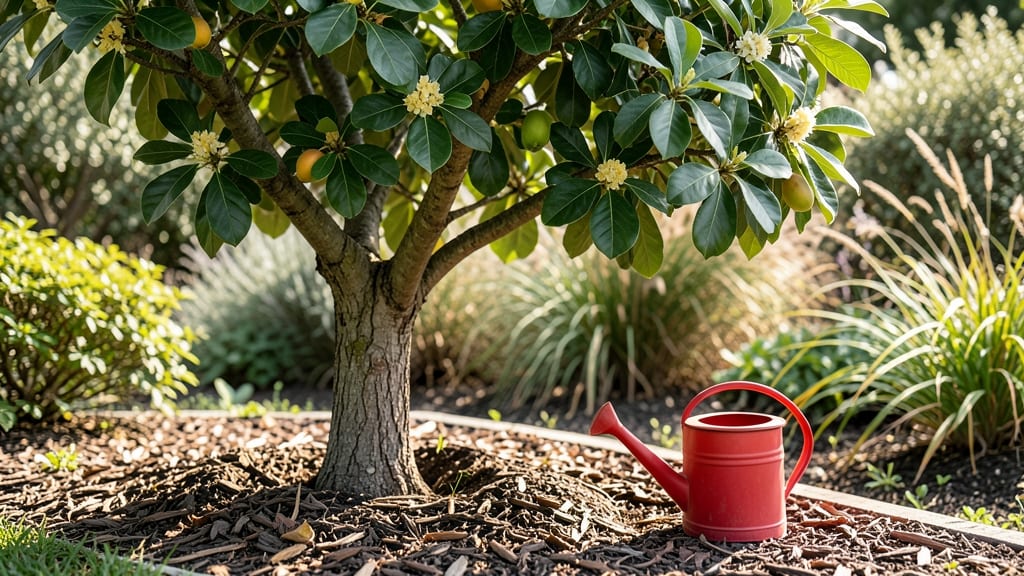
Caring for a loquat tree (Eriobotrya japonica) means waking up to glossy, evergreen leaves and fragrant white blossoms year after year. 🌿 I’ve grown mine in zone 8 for five seasons now, and the key to its success isn’t complicated—just consistent care that matches its natural resilience.
The tree thrives with minimal fuss once you understand its basic needs: well-draining soil, partial shade, and occasional pruning to shape its growth.
Most people assume loquat trees demand constant attention, but the truth is simpler: they reward patience over effort. Start with a well-draining soil mix (equal parts garden soil and compost) and plant in a spot where it gets morning sun and afternoon shade—this mimics its native subtropical climate.
Water deeply once a week in summer, then taper off in winter when growth slows. Fertilize lightly in early spring with a balanced 10-10-10 blend, and you’ll see new shoots within weeks.
By summer, you’ll notice clusters of sweet, apricot-like fruit ripening on the branches—each one a reward for the minimal effort you’ve invested. The tree’s natural pest resistance means fewer headaches than other fruit trees, and its glossy foliage adds beauty even when it’s not bearing fruit.
Prune lightly after harvest to encourage next year’s crop, and you’ll have a tree that thrives with almost no work.
Whether you’re a beginner or an experienced gardener, loquat trees adapt easily to containers or in-ground planting. The real magic happens in how they produce fruit with less care than most gardeners expect—proof that sometimes, the best gardens grow with the least fuss. Let’s get yours thriving!
📚 In This Guide
- What you need
- Instructions
- Tips and common mistakes
- Wrapping up and next steps
What you need
- ● Loquat Tree: 1 healthy sapling (bare-root or potted) – choose a variety suited to your climate (e.g., 'Big Jim' or 'Wells' for cold-hardy regions).
- ○ Optional: Grafted tree for faster fruiting (if available).
- ● Soil Amendments: 5–10 lbs of well-draining potting mix (for containers) or compost (for in-ground planting).
- ● 1 lb of perlite or sand (to improve drainage).
- ○ Optional: Slow-release citrus-specific fertilizer (e.g., 8-3-6 NPK ratio, 1 lb per tree).
- ● Planting Supplies: 1 5-gallon bucket (for watering during transplant).
- ● 1 shovel (for digging holes 2–3x wider than the root ball).
- ● 1 garden hose with adjustable nozzle (for deep watering).
- ● Pruning Tools: 1 pair of bypass pruners (for small branches).
- ● 1 pruning saw (for thicker branches).
- ○ Optional: Disinfectant spray (to clean tools between cuts).
- ● Mulching: 2–3 inches of organic mulch (e.g., wood chips or straw).
- ○ Optional: Landscape fabric (to retain moisture).
- ● Pest Control: Neem oil spray (1–2 oz per gallon of water).
- ○ Optional: Insecticidal soap (for soft-bodied pests).
- ● A sunny location with 6+ hours of direct sunlight daily (loquats are tropical but tolerate partial shade in hot climates).
- ● Well-draining soil (pH 6.0–7.0; amend clay soil with sand/compost).
- ● Protection from strong winds (young trees are delicate; plant near a fence or trellis if needed).
- ○ Optional: Frost cloth (for regions with temps below 20°F).
Step-by-Step guide to year-round loquat tree maintenance
Here’s how to keep your loquat tree thriving with simple, seasonal adjustments.
🌱 Step 1: Establish Proper Planting and Soil Conditions
Loquat trees (Eriobotrya japonica) demand well-draining soil with a slightly acidic to neutral pH (6.0–7.0). Amend native soil with 3–4 inches of organic compost and 20% perlite or coarse sand to prevent root rot—a common issue in heavy clay. Plant in full sun (6+ hours daily) for optimal fruit production, but young trees tolerate partial shade until established.
Dig a hole twice as wide as the root ball but no deeper. Place the tree so the graft union sits 2–3 inches above soil level—this prevents moisture from rotting the vulnerable junction. Water deeply immediately after planting to settle the soil around roots, then apply 2–3 inches of mulch (wood chips or pine straw) to retain moisture and suppress weeds.
Here’s the thing—loquats hate soggy roots. If your soil drains poorly, consider a raised bed or mound planting. You’ll know drainage is right when water soaks in within 10–15 minutes after watering.
☀️ Step 2: Water and Fertilize for Seasonal Growth
Water deeply once weekly during the first year, letting the soil dry 3–4 inches deep between sessions. Mature trees need 1–1.5 inches of water weekly, but reduce in winter when growth slows. Overwatering causes leaf drop and fruit splitting—both signs your tree is stressed.
Fertilize twice yearly: in early spring (before buds swell) and late summer (after harvest). Use a balanced 10-10-10 or 8-3-9 formula at half the recommended rate—loquats are sensitive to excess nitrogen, which promotes leafy growth over fruit. Scratch granules into the soil 6 inches from the trunk and water thoroughly to activate.
Watch for yellowing leaves—this often signals over-fertilization. Cut back on feeding if new growth appears soft or mushy.
✂️ Step 3: Prune for Shape and Fruit Production
Prune late winter or early spring (just before buds break) to remove dead, crossing, or inward-growing branches. Use clean, sharp pruners to make cuts at a 45-degree angle just above a leaf node. This encourages outward growth and better air circulation, reducing fungal diseases like anthracnose.
Thin fruit in late spring by removing half the small fruits, leaving 6–8 inches between remaining ones. This ensures larger, sweeter loquats. You’ll see clusters of tiny fruits forming—select the healthiest ones to mature.
Don’t skip pruning young trees. Skipping it leads to a dense canopy that blocks sunlight and invites pests. Aim for an open, vase-like shape to maximize fruit exposure.
🪴 Step 4: Protect and Monitor Year-Round
Loquats are evergreen in warm climates but may drop leaves in cold snaps below 20°F. If frost threatens, wrap the trunk with burlap and cover with a frost blanket to protect emerging buds. In containers, move pots to a sheltered, sunny spot or indoors near a bright window.
Monitor for scale insects (white, waxy bumps on leaves) and aphids (sticky residue on new growth). Spray with neem oil (1 tsp per quart of water) at the first sign of infestation. Repeat every 7–10 days until pests clear.
Real talk: Loquats are low-maintenance, but neglecting pests or pruning leads to poor fruit set. A quick weekly check keeps issues in check.
Tips & tricks for perfect loquat tree maintenance
These simple yet powerful strategies will help you avoid common pitfalls and keep your loquat tree thriving year after year.
Soil Drainage Test: Before planting, perform a simple drainage test in your garden area. Dig a hole about 12 inches deep and fill it with water. If it drains completely within the 10-15 minutes mentioned in Step 1, your soil is perfect. If not, mix in additional perlite or sand to achieve that ideal well-draining texture. Confession: I skipped this test once and ended up with a tree that struggled for months.
Fertilizer Timing Secret: The twice-yearly fertilization schedule in Step 2 works best when timed precisely. Early spring fertilization should happen when you see the first signs of new growth—typically when buds begin to swell but before leaves appear. Late summer feeding should occur immediately after harvest when the tree starts preparing for dormancy. I've found using a slow-release fertilizer can help maintain consistent nutrient levels between feedings.
Pruning Technique: When pruning in late winter or early spring (Step 3), look for branches that grow directly upward—they're called "water sprouts" and should be removed completely. These vertical growers compete with fruit-bearing branches for energy. Also, make sure your pruners are clean and sharp—dull tools can crush branches rather than make clean cuts, leading to infection points.
Frost Protection Hack: For the 20°F threshold mentioned in Step 4, I've found that wrapping the trunk with burlap and covering with a frost blanket works best when combined with a simple DIY heat source. Place a few Christmas lights wrapped around the trunk (safely, with no exposed wires) to provide gentle warmth. This extra step has saved my trees during close calls with unexpected cold snaps.
Pro Tips for Loquat Tree Care
- These simple yet powerful strategies will help you avoid common pitfalls and keep your loquat tree thriving year afte...
- Soil Drainage Test: Before planting, perform a simple drainage test in your garden area. Dig a hole about 12 inches d...
- Fertilizer Timing Secret: The twice-yearly fertilization schedule in Step 2 works best when timed precisely. Early sp...
Frequently asked questions
Got questions about keeping your loquat tree happy? Here are some of the most common concerns—plus quick, no-fuss solutions to keep your tree thriving with minimal effort.
How often should I water my loquat tree?
Water deeply once a week during the first year, then taper to every 10–14 days once established (adjust for drought or extreme heat). Loquat trees hate soggy roots—always ensure well-draining soil to prevent rot. Mulch around the base to retain moisture.
When is the best time to prune a loquat tree?
Prune late winter or early spring (just before buds swell) to shape the tree and remove dead branches. Avoid heavy pruning in summer—it stresses the tree and can reduce fruit production. Use clean, sharp shears to make angled cuts just above a leaf node.
Why aren’t my loquat tree’s fruits ripening?
Fruit ripening issues often stem from inconsistent watering or nutrient deficiencies (like nitrogen or potassium). Check for pests (e.g., aphids) and apply a balanced fertilizer in early spring. If your tree is young (<3 years), it may still be maturing—patience is key!
Can loquat trees survive cold winters?
Most loquat varieties tolerate down to 15°F (-9°C), but young trees or tender cultivars may need winter protection. Wrap the trunk with burlap, mulch heavily, and avoid pruning until spring. If temps drop below 10°F (-12°C), consider container-growing and moving pots indoors.
Are there low-maintenance alternatives to loquat trees?
If loquats feel too high-maintenance, try fig trees (drought-tolerant, fast-growing) or citrus varieties like Meyer lemons (thrive in containers). For fruitless options, olive trees or ornamental cherry trees offer similar Mediterranean charm with less fuss.
Wrapping up and next steps
Caring for your loquat tree doesn’t have to be complicated—just consistent! With the right balance of sunlight, water, and occasional pruning, you’ll enjoy sweet fruit and lush foliage for years. Whether you’re a beginner or a seasoned gardener, these simple steps make loquat tree care rewarding and low-stress.
Now that you’re armed with the know-how, take the next step! Plant your loquat tree this season and watch it thrive—one harvest at a time. 🌱✨