
Pruning
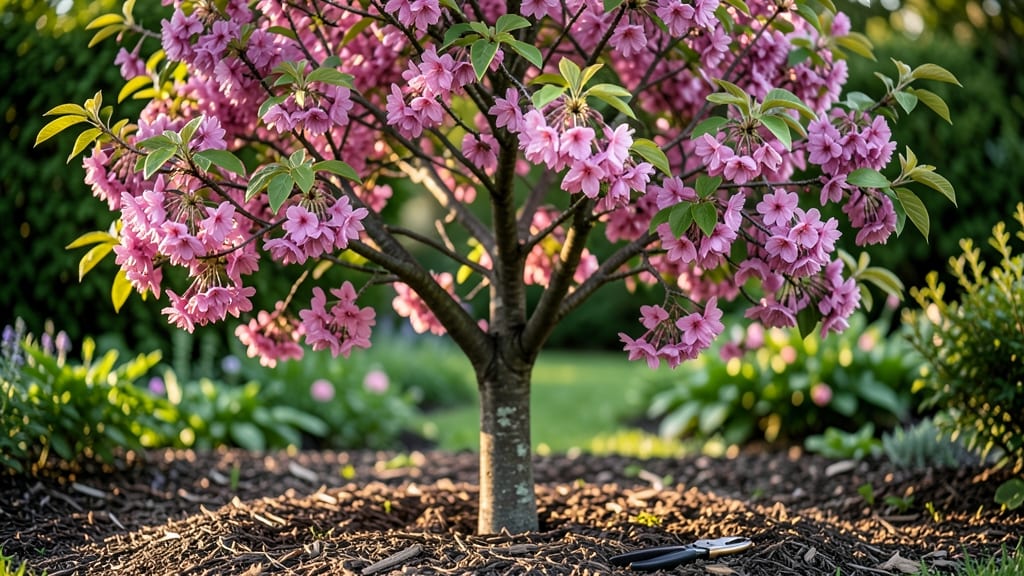
Your eastern redbud tree care just got easier—those stunning pink blooms and heart-shaped leaves won’t be a seasonal flash if you prune them right. 🌸 I’ve learned the hard way that redbuds bloom on last year’s growth, so timing and technique make all the difference between a showstopper and a sad shrub.
The basics are simple: well-draining soil, morning sun, and moderate water (about 1 inch per week once established). But pruning is where most gardeners stumble—cutting at the wrong time can strip away next year’s flowers.
I’ll show you exactly when to trim (late winter or early spring) and how to shape the tree without sacrificing those iconic blooms.
With the right approach, your redbud will burst into color every spring, then put on a second act with golden fall foliage. The key is thinning out crowded branches and opening the canopy to sunlight—no heavy-handed shearing needed. You’ll end up with a tree that’s both beautiful and low-maintenance.
Works for both young saplings and mature trees, and I’ll cover what to watch for in each season. Let’s get those branches looking intentional!
📚 In This Guide
- What you need
- Instructions
- Tips and common mistakes
- Wrapping up and next steps
What you need
- ● Pruning shears: Bypass pruners (sharp, clean, and 5-7 inches long) for small branches.
- ● Loppers: 8-10 inches long, for thicker branches (½–1½ inches in diameter).
- ● Pruning saw: Curved-tooth for branches 1½+ inches thick.
- ● Gloves: Heavy-duty, cut-resistant to protect your hands.
- ● Disinfectant: 70% isopropyl alcohol or bleach solution (1 part bleach to 9 parts water) to sterilize tools.
- ○ Pruning sealant: Optional but helpful for larger cuts (e.g., tree wound dressing).
- ● Ladder or step stool: Sturdy and tall enough to reach higher branches safely.
- ● Trash bags: Heavy-duty for collecting pruned branches.
- ● Knowledge: Basic understanding of Eastern Redbud tree anatomy (e.g., identifying dead, crossing, or overcrowded branches).
- ● Weather check: Mild, dry day (avoid pruning when wet or freezing).
- ○ Safety gear (optional): Safety glasses and long sleeves/pants for protection.
- ○ Tree growth chart (optional): Helps track pruning progress over seasons.
Step-by-Step guide to pruning your eastern redbud tree
Here’s how I keep my redbuds flowering like crazy year after year—no guesswork involved.
🌿 Step 1: Prune Immediately After Spring Blooms
Wait until 2-4 weeks after flowering when the tree has finished blooming but before new leaves fully mature. This timing ensures you don’t accidentally cut off next year’s flower buds, which form on last year’s growth. I like to prune in late April or early May in most climates—just check that no more flowers are opening.
Start by removing any dead, diseased, or crossing branches first. These are easy to spot—they’re brown, brittle, or rubbing against other branches. Use clean, sharp pruning shears to make cuts at a 45-degree angle just outside the branch collar where it meets the trunk. This prevents water from pooling and rotting the wound.
✂️ Step 2: Thin the Canopy for Better Airflow
Step back and look at your tree’s shape. The goal is to create an open, vase-like structure that lets sunlight reach the center. I remove about 10-20% of the branches—focus on the oldest, thickest branches first, especially those growing inward or downward. These compete with younger growth and weaken the tree’s structure.
Make your cuts just above an outward-facing bud or side branch. This encourages new growth to fill in gaps naturally. Avoid "heading back" (cutting back to a stub)—it creates ugly stubs and encourages weak, water-sprout growth. If a branch is too thick to cut with shears, use a pruning saw and make the cut on the underside of the branch to prevent tearing.
☀️ Step 3: Summer Pruning for Shape and Health
Light summer pruning keeps your redbud looking tidy and prevents pests from hiding in dense foliage. Wait until July or August when the tree has finished its main growth spurt. This is when I remove any suckers (shoots growing from the base or roots) and water sprouts (fast-growing vertical shoots). These sap-sucking branches drain energy from your tree.
For shaping, I only make small adjustments—never remove more than 10% of the foliage in summer. Use hand pruners for thin branches and a saw for anything thicker than ½ inch. Always sanitize your tools with rubbing alcohol between cuts to prevent spreading disease. If you see any yellowing leaves or powdery mildew, prune those branches immediately and dispose of them in the trash (not your compost).
⏰ Step 4: Light Winter Pruning for Structure
Dormant-season pruning (late November through February) is your chance to tackle bigger structural work. The tree’s bare branches make it easy to see the skeleton of the tree. I focus on removing branches that cross or rub, as well as any that grow straight up or down—these create weak points and block light from reaching the center.
Make your cuts just outside the branch collar, and avoid leaving stubs. If a branch is larger than 2 inches in diameter, consider making a 3-cut pruning technique to prevent the branch from tearing. Start with an undercut about 12 inches out from the trunk, then make a top cut a few inches farther out, and finally twist the branch off before making the final cut at the collar. Seal larger wounds (over ½ inch) with pruning sealant to reduce the risk of decay.
Tips & tricks for perfect eastern redbud tree care
Here's what nobody tells you about keeping your redbud thriving—these tricks make all the difference between a tree that just survives and one that flourishes.
Timing is Everything: The 2-4 week window after flowering in Step 1 is critical because that's when flower buds for next year are already forming on last year's growth. If you prune too early, you risk cutting off next year's blooms. I mark my calendar for late April or early May—right after the last pink petals fall. Confession: I skipped this step for years and wondered why my spring blooms never got better.
Branch Selection Strategy: When thinning the canopy in Step 2, focus on removing branches that are growing inward or downward—they're the ones causing crowding and blocking sunlight. I like to use the "third branch rule": if a branch is thicker than one-third the diameter of the trunk, it's a candidate for removal. This creates that beautiful open vase shape that lets light reach the center.
Tool Maintenance Matters: Always sanitize your pruning shears or saw with rubbing alcohol between cuts, especially in Step 3 when dealing with potential disease. I keep a small bottle of alcohol in my tool belt and wipe tools after every 3-4 cuts. Sharp tools make clean cuts that heal faster, so I sharpen my shears annually. If you're dealing with thick branches in Step 4, a dull saw will tear the bark and create larger wounds.
Wound Care for Big Cuts: For branches larger than 2 inches in diameter, use the 3-cut technique mentioned in Step 4—but don't stop there. After making your final cut, apply pruning sealant to wounds over ½ inch wide. I've seen trees develop fungal infections from untreated large cuts, even when the rest of the pruning was perfect. The sealant isn't just for looks; it helps prevent decay and speeds up healing.
Pro Tips for Eastern Redbud Tree Care
- Here's what nobody tells you about keeping your redbud thriving—these tricks make all the difference between a tree that just survives and one that flourishes.
- Timing is Everything: The 2-4 week window after flowering in Step 1 is critical because that's when flower buds for next year are already forming on last year's growth.
- Branch Selection Strategy: When thinning the canopy in Step 2, focus on removing branches that are growing inward or downward—they're the ones causing crowding and blocking sunlight.
Frequently asked questions
Got questions about keeping your Eastern Redbud tree thriving?
You’re not alone! Here are answers to the most common concerns—from pruning timing to troubleshooting—so you can enjoy stunning blooms and lush foliage year after year.
When is the best time to prune an Eastern Redbud tree?
The ideal window is late winter or early spring (February–March), just as buds swell but before new growth starts. This prevents removing next year’s flowers and keeps the tree healthy. Avoid pruning in fall or winter, as late cuts can expose the tree to cold damage or pests.
Can I prune my Eastern Redbud in winter?
Pruning in deep winter (January–February) is not recommended because the tree is dormant, and cuts may not heal well. However, if you must prune for safety (e.g., removing dead branches), do it in late winter (February) and avoid heavy cuts. Always sterilize tools to prevent disease spread.
Why are my Eastern Redbud leaves turning yellow or dropping?
Yellowing or dropping leaves often signal overwatering, underwatering, or pests. Check soil moisture—redbuds prefer well-draining soil. Powdery mildew (white fungal spots) or Japanese beetles (skeletonized leaves) are common culprits. Treat with neem oil or insecticidal soap if needed, and ensure 3–4 inches of mulch to regulate moisture.
How much can I prune back an Eastern Redbud tree?
Eastern Redbuds tolerate light to moderate pruning (up to 25% of the canopy). Avoid heavy pruning (more than 30%), as it can stress the tree and reduce flowering. Focus on removing dead, diseased, or crossing branches first, then thin out crowded areas for airflow. Never “top” the tree—it disrupts its natural shape.
Are there alternatives to Eastern Redbud for small spaces?
If space is limited, consider these small-tree alternatives with similar spring blooms:
- Dwarf Korean Lilac (Syringa meyeri): Compact, fragrant, and low-maintenance.
- Serviceberry (Amelanchier): Edible berries + white spring flowers.
- Japanese Snowbell (Styrax japonica): Shade-tolerant with delicate blooms.
Wrapping up and next steps
Caring for your eastern redbud tree is a rewarding journey that brings vibrant blooms and lush foliage to your landscape year after year! 🌸 By mastering the art of pruning—whether in late winter, early spring, or summer—you’ll encourage healthy growth, stunning flowers, and even better fruit production.
Remember, patience and consistency are key, so don’t hesitate to revisit your tree’s needs as it matures.
Ready to transform your yard into a showstopper? Grab your pruners, mark your calendar, and start planning your next pruning session! Your redbud’s future beauty starts with the steps you take today.