
Fertilization
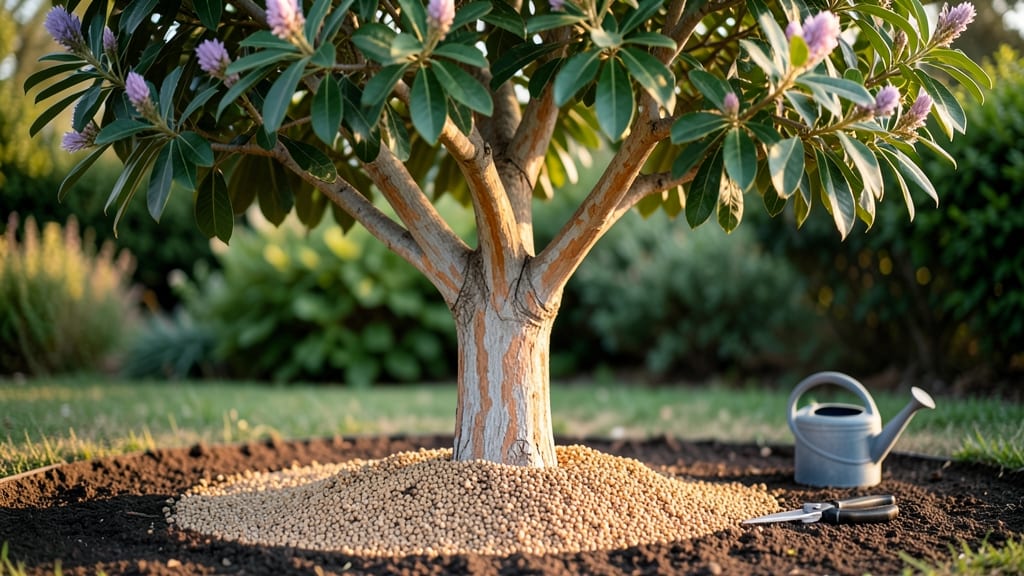
Fertilizing crape myrtle trees in early spring unlocks the secret to those showstopping blooms that make neighbors stop and stare. 🌺 I learned the hard way—skipping fertilizer left my trees looking half-hearted, with sparse flowers and sad foliage.
The right timing and balance make all the difference between a tree that just survives and one that thrives.
You’ll need a balanced, slow-release fertilizer (10-10-10 or 12-12-12 works well) or organic options like composted manure or bone meal. Apply it lightly—too much sends roots into overdrive, leaving no energy for flowers.
Spread granules 6 inches from the trunk in a circle matching the tree’s drip line, then water deeply to help them settle.
By midsummer, you’ll notice the difference: deep green leaves, sturdy branches, and buds forming for next year’s blooms. The key is consistency—feed again in early fall (just a light dose) to support root growth through winter.
Avoid fertilizing after July, or you’ll risk new growth that won’t harden off before frost.
Watch for signs of overfeeding: yellow leaves, excessive leaf growth with few flowers, or white crusty deposits on the soil. If that happens, flush the soil with water and cut back next year’s applications.
With this approach, your crape myrtle will reward you with vibrant blooms from summer through fall—every single year.
📚 In This Guide
- What you need
- Instructions
- Tips and common mistakes
- Wrapping up and next steps
What you need
- ● Balanced, slow-release fertilizer (10-10-10 or 12-12-12 NPK ratio) – 2–3 pounds per 100 sq. ft. of root zone.
- ● Granular or liquid fertilizer (organic options like fish emulsion or compost tea work too!).
- ● Garden gloves (to protect your hands from fertilizer and soil).
- ● Watering can or hose (for applying liquid fertilizers or rinsing tools).
- ○ Spreaders (optional but helpful) – A drop spreader for granular fertilizers or a broadcast spreader for even distribution.
- ● Measuring scoop or scale – To ensure precise fertilizer amounts (avoid over-fertilizing!).
- ● Pruning shears (if needed) – For trimming dead or overgrown branches before fertilizing.
- ● Soil test kit – To check pH and nutrient levels before fertilizing (ideal pH for crape myrtles: 6.0–7.0).
- ● Mulch (pine straw or shredded bark) – 2–3 inches around the base (keep mulch 6 inches away from the trunk).
- ● Slow-release fertilizer spikes – Convenient for timed feeding (follow package instructions).
- ● Label markers – To track fertilization dates and types.
- ● Knee pads or a small stool – For comfort when working in the garden.
Step-by-Step guide to fertilizing crape myrtle trees for lush growth
Here's how to feed these showstopping trees the right way—season by season.
🌱 Step 1: Apply Early Spring Fertilizer for New Growth
When soil temperatures reach 55-60°F and new buds swell on your crape myrtle, it's time to feed. Use a balanced 10-10-10 or 12-12-12 granular fertilizer—this matches their early-season nitrogen needs for leaf and stem development. Spread ½ cup per inch of trunk diameter around the drip line (not touching the trunk), then water deeply to activate the granules.
Here's the thing—crape myrtles are sensitive to overfeeding. If you see dark green leaves with yellowing edges by late spring, you've overdone it. The goal is steady growth, not explosive new shoots that sacrifice blooms. I like to split the early-season dose into two applications: ¼ cup now, then ¼ cup again in 4-6 weeks when shoots are 4-6 inches tall.
☀️ Step 2: Shift to Bloom-Boosting Fertilizer in Late Spring
As flowers form (typically 6-8 weeks after bud break), switch to a low-nitrogen, high-phosphorus formula like 5-10-10 or 7-9-5. Phosphorus promotes root development and flower production—the exact nutrients crape myrtles need to set those dramatic blooms. Apply ¼ cup per inch of trunk diameter when you see 10% of buds open, then water thoroughly.
Watch for buds that form but don't open—this is your signal the tree isn't getting enough phosphorus. I've seen crape myrtles with hundreds of buds that never bloomed because they were starved of this key nutrient. If this happens, do a soil test to confirm phosphorus levels before next season.
💧 Step 3: Provide Summer Maintenance with Light Feeding
After the first flush of blooms, crape myrtles need minimal feeding—they're focused on maintaining flowers and developing next year's buds. In mid-summer (July), apply a light application of 0-10-10 or compost to replenish potassium, which strengthens stems and disease resistance. Use ¼ the early-season rate—just ⅛ cup per inch of trunk diameter—and water immediately.
Real talk: Most crape myrtle problems (like powdery mildew or weak stems) come from over-fertilizing in summer. The tree's energy should go to root expansion and bud formation, not lush foliage. If you see new leaves forming after July, you've fed too much. Stop fertilizing entirely until next spring.
✂️ Step 4: Fall Preparation for Next Season's Growth
In early fall (September), when leaves start yellowing but haven't dropped, apply a slow-release organic fertilizer like 10-10-10 with micronutrients or fish emulsion. This gives roots a nutrient boost for winter without encouraging late-season growth that won't harden off properly. Use ½ the spring rate—about ⅛ cup per inch of trunk diameter—and water deeply.
This is the moment that matters: Don't fertilize after October. New growth won't have time to mature before cold weather, and you'll end up with weak stems that snap in winter winds. I mark my calendar for September 15th as the last feeding date—after that, it's mulch and water only.
🪴 Step 5: Winter Care and Soil Prep for Spring
While crape myrtles are dormant, focus on soil health rather than feeding. In late winter (February), spread 2-3 inches of compost over the root zone and lightly scratch it into the top 1-2 inches of soil. This improves microbial activity and ensures next year's fertilizer will be more effective. Avoid synthetic fertilizers during dormancy—they can burn roots that are less active in cold weather.
I've found that crape myrtles fertilized with composted soil bloom 2-3 weeks earlier than those given only synthetic feeds. The organic matter also helps retain moisture during summer droughts, which is critical for these heat-loving trees. If your tree looks stressed in summer, it's often a sign the soil isn't holding enough water—compost helps fix that.
Tips & tricks for perfect crape myrtle fertilization
Common pitfalls—and how to sidestep every one.
Soil Temperature Matters: Before applying that first spring fertilizer, take a moment to check soil temperature at a depth of 4 inches. It should reach 55-60°F consistently for 5-7 days before feeding. I use a soil thermometer and wait until the temperature holds steady—this ensures the fertilizer activates properly rather than sitting dormant in cold soil. Cold soil can delay nutrient uptake by weeks, leaving your tree hungry when it needs energy to burst into growth. Confession: I skipped this step for years and wondered why my trees always lagged behind neighbors.
Visual Cues for Perfect Application: When spreading fertilizer in Step 1, focus on the drip line (the edge of the tree's canopy) rather than the trunk. The root zone extends well beyond the trunk, often 2-3 times the width of the canopy. Use a measuring spoon to distribute the ½ cup per inch of trunk diameter evenly in a 6-inch-wide band around the drip line. For trees with trunks under 2 inches, this means just ¼ cup total—don't overdo it! I mark the application area with small flags to avoid missing spots or overlapping.
Phosphorus Timing Secret: In Step 2, watch for that 10% bud open threshold like a hawk. This is your precise cue to switch to phosphorus-rich fertilizer. I've seen gardeners apply bloom boosters too early, which can actually delay flowering by encouraging excessive leaf growth. For extra accuracy, take a close-up photo of your tree when you first spot 10% open buds—this gives you a visual reference for next year. The difference between a mediocre result and an absolutely stellar one often comes down to this single, seemingly insignificant step.
Summer Feeding Rescue Strategy: If you notice new leaves forming after July (a clear sign of overfeeding), stop all fertilizer immediately and focus on watering deeply 2-3 times per week. The tree's priority should shift to root development, not foliage. I've had to "reset" overfed crape myrtles by withholding fertilizer for an entire season—it's tough, but necessary. In these cases, apply 2-3 inches of compost in late winter instead of synthetic fertilizer to rebuild soil health without shocking the tree.
Pro Tips for Fertilize Crape Myrtle Trees
- Common pitfalls—and how to sidestep every one.
- Soil Temperature Matters: Before applying that first spring fertilizer, take a moment to check soil temperature at a depth of 4 inches.
- Visual Cues for Perfect Application: When spreading fertilizer in Step 1, focus on the drip line (the edge of the tree's canopy) rather than the trunk.
Frequently asked questions
Got questions about fertilizing your crape myrtle trees?
Here are answers to the most common ones—so you can keep those stunning blooms thriving without the guesswork!
When is the best time to fertilize crape myrtles?
The ideal times are early spring (just as new growth starts) and late summer (after blooming but before fall). Avoid fertilizing in winter—crape myrtles are dormant, and feeding can encourage weak growth or pests. For established trees, a slow-release fertilizer in spring is often enough!
Can I use regular lawn fertilizer on my crape myrtle?
Not ideal! Crape myrtles need a balanced, low-nitrogen fertilizer (like 10-10-10 or 8-3-9) to avoid leafy growth at the expense of flowers. Lawn fertilizers are too heavy on nitrogen, which can burn roots or lead to fewer blooms. Opt for a tree-specific formula instead.
What if my crape myrtle isn’t blooming after fertilizing?
Lack of blooms can stem from over-fertilizing, pruning at the wrong time, or poor sunlight. First, check if you’re fertilizing too late in the season (stop by early fall). Next, ensure you’re not pruning in late summer or fall—this removes next year’s flower buds! Also, confirm it gets 6+ hours of sun daily.
How often should I water after fertilizing?
Water deeply (1–2 inches) right after applying fertilizer to help nutrients soak into the soil. Then, keep the soil moist but not soggy for the next 2–3 weeks. Overwatering can leach nutrients away, while underwatering stresses the tree. Mulch around the base (but keep it 3–4 inches away from the trunk) to retain moisture.
Are there organic alternatives to chemical fertilizers?
Try compost, well-rotted manure, or fish emulsion for a gentle boost. You can also use slow-release organic pellets (like those made from bone meal or kelp). Just apply them lightly—crape myrtles are sensitive to overfeeding. Mix organic matter into the top 6 inches of soil in spring for best results.
What are signs of over-fertilizing?
Watch for yellowing leaves, excessive new growth (but fewer flowers), or leaf burn. Over-fertilizing can also attract pests like aphids or cause root damage. If you see these signs, flush the soil with water and reduce fertilizer amounts by half next time.
Wrapping up and next steps
Fertilizing your crape myrtle trees doesn’t have to be complicated—just follow the seasonal rhythm of their growth! 🌸 By choosing the right fertilizer, timing applications carefully, and avoiding overfeeding, you’ll reward yourself with stunning blooms and lush foliage year after year.
The key is consistency and patience; your tree will thank you with vibrant color and robust health.
Now that you’re armed with the know-how, grab your gloves and get ready to nurture your crape myrtle. Start with a soil test, then follow your tailored fertilization plan. Watch your tree thrive—and enjoy the beautiful results! 🌿✨