
Planting
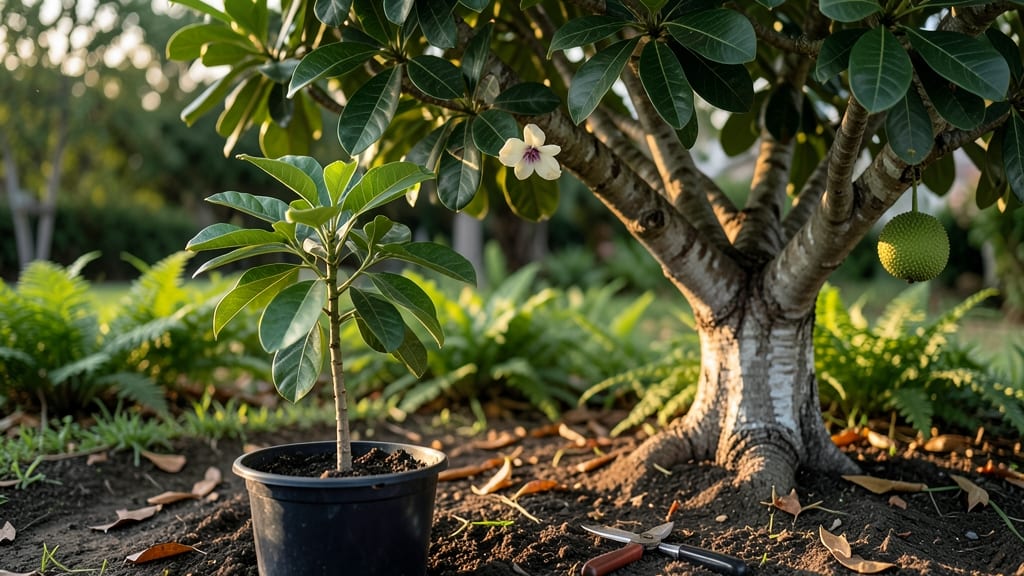
Planting a guanabana tree means tropical fruit success is just months away—if you nail the first few steps. 🌱 The key isn’t just digging a hole; it’s mimicking its native rainforest home with rich soil, warmth, and protection from wind.
I’ve seen guanabana trees thrive in containers or ground beds, but only when given the right start.
You’ll need well-draining soil mixed with compost, a spot with 6+ hours of sunlight daily, and patience—these trees grow slowly at first but reward you with fragrant white flowers and custard-like fruit in 3-5 years.
The biggest mistake? Planting too deep or in cold drafts; guanabana trees hate frost and soggy roots.
After planting, keep the soil moist but not soggy for the first 30 days, then taper off to weekly watering once established. Mulch helps retain moisture and mimics the forest floor they love. Within a season, you’ll see glossy new leaves signaling healthy growth.
Works equally well in containers (15+ gallons) or in-ground beds, making it perfect for small yards or patios. Just remember: guanabana trees need warmth year-round, so indoor growers in cooler zones will need to bring them inside before winter. Let’s get those roots growing!
📚 In This Guide
- What you need
- Instructions
- Tips and common mistakes
- Wrapping up and next steps
What you need
- ● Guanabana seeds: 3–5 fresh, viable seeds (or a young sapling from a nursery). Pro tip: 💡 Soak seeds in warm water for 24 hours to speed up germination!
- ● Pot or container: 1–2 large pots (12–18 inches deep) with drainage holes or a well-drained garden bed in a tropical/subtropical climate (USDA Zones 10–12).
- ● High-quality potting mix: 1 bag of well-draining, slightly acidic soil (pH 5.5–6.5). Mix with perlite or sand (1:1 ratio) for aeration.
- ● Fertilizer: Balanced organic fertilizer (10-10-10 or 5-5-5 NPK ratio) for initial planting.
- ● Watering can or hose: With a gentle spray nozzle for hydration.
- ○ Pruning shears: Small, sharp pair for trimming (optional but helpful for shaping young trees).
- ● Mulch (straw or wood chips) to retain moisture.
- ● Growth hormone gel (e.g., rooting hormone) for faster germination.
- ● Shade cloth (30–50%) if planting in hot climates.
- ● Support stakes (for young trees in windy areas).
- ● pH testing kit (to monitor soil acidity).
Step-by-step guide to planting your guanabana tree
Here's my straightforward approach—tested in humid climates to ensure strong, thriving trees.
🌱 Step 1: Choose the Perfect Planting Site
Guanabana trees (Annona muricata) demand warmth and shelter. Select a spot with full sun exposure (at least 6-8 hours daily) and protection from strong winds. The soil must drain exceptionally well—these trees rot quickly in soggy conditions. Test your soil by squeezing a handful: if it stays clumped, amend with 2-3 inches of coarse sand or perlite per square foot.
Here's the thing—guanabana trees are tropical but also sensitive. If your climate dips below 40°F, plant in a large container (at least 15-gallon size) so you can move it indoors during winter. I've seen trees thrive in USDA zones 10-11 when given ideal conditions, but even in zone 9, container growing works beautifully.
🪴 Step 2: Prepare the Hole and Soil Mix
Dig a hole twice as wide as the root ball and no deeper—guanabana roots are shallow but spread aggressively. Loosen the sides of the hole with a shovel to encourage root penetration. For in-ground planting, mix the native soil with equal parts compost and coarse sand to improve drainage. Guanabana trees hate compacted soil, so avoid heavy amendments like clay or peat.
If planting in a container, use a well-draining potting mix (I blend 60% coconut coir, 20% perlite, and 20% compost). The pot must have drainage holes—no exceptions. Guanabana trees are heavy feeders, so add 1 cup of slow-release fertilizer (like 10-10-10) to the bottom of the hole or container before adding the tree.
☀️ Step 3: Plant and Stake for Support
Remove the tree from its container and gently tease apart the roots if they're circling. Place the root ball in the hole so the top remains level with the surrounding soil—burying the graft union (if present) will kill the tree. Backfill with your prepared soil mix, pressing lightly to eliminate air pockets. Water deeply to settle the soil around the roots.
Guanabana trees grow 10-20 feet tall and produce heavy fruit, so staking is critical. Install two sturdy stakes on opposite sides of the tree and secure it with soft tree ties (never wire). Mulch the base with 2-3 inches of wood chips, keeping it 6 inches away from the trunk to prevent rot. This mulch layer retains moisture while protecting roots from temperature swings.
💧 Step 4: Water and Monitor for Establishment
Water deeply 2-3 times per week for the first 3 months, ensuring moisture reaches 12-18 inches down. Guanabana trees are drought-tolerant once established, but young trees need consistent moisture. You'll know you're doing it right when the soil feels damp but not soggy at 4 inches deep. Overwatering is the fastest way to kill these tropical beauties.
Fertilize monthly during the growing season (spring through fall) with a balanced liquid fertilizer (like 20-20-20) diluted to half-strength. I've seen trees respond dramatically to seaweed extract (1 tablespoon per gallon of water) every other month—it boosts root development and disease resistance. Avoid high-nitrogen fertilizers; guanabana trees prioritize fruit production over foliage.
✂️ Step 5: Prune for Shape and Fruit Production
Prune your guanabana tree once a year in late winter or early spring, just as new growth begins. Remove dead, diseased, or crossing branches first, then shape the tree by cutting back overly long branches to encourage bushier growth. Guanabana trees flower and fruit on new wood, so avoid heavy pruning—never remove more than 25% of the canopy in one season.
Here's where it gets fun: guanabana trees produce fruit on current season's growth. Pinch back the tips of new shoots in early summer to redirect energy into fruit production. You'll see clusters of purple flowers appear within 6-12 months—each cluster can develop into 5-10 fruit. Thin fruit to 2-3 per cluster to ensure larger, sweeter guanabanas.
Tips & tricks for planting guanabana trees
Took me years of trial and error to perfect these tropical tree-growing secrets—here's how to avoid my mistakes.
Location Intelligence: Guanabana trees need that 6-8 hours of full sun daily to thrive. If your yard has partial shade, choose the sunniest spot available and supplement with a grow light during winter months. I've seen trees in zone 9 struggle when placed under large overhanging trees—even indirect light can reduce fruit production by up to 40%.
Soil Science: The 2-3 inches of coarse sand or perlite amendment is non-negotiable for drainage. I recommend testing your soil's pH too—guanabana trees prefer slightly acidic soil (pH 5.5-6.5). If your soil tests higher, mix in 1 cup of sulfur per 100 square feet before planting. The equal parts compost and sand mix creates the perfect air-to-moisture ratio these tropical roots crave.
Planting Precision: When placing your tree in Step 3, use a level to ensure the root ball sits perfectly horizontal. I've seen trees develop leaning habits when planted at angles—this creates stress points that weaken the trunk over time. Also, if you're planting in a container, choose one that's at least 15 gallons and has drainage holes. The two sturdy stakes should be installed at a 45-degree angle for maximum support against wind.
Watering Wisdom: Those 12-18 inches of deep watering during the first 3 months are crucial. I use a moisture meter to check soil dampness at 4 inches deep—this prevents overwatering while ensuring roots establish properly. For container plants, water until it runs freely from the drainage holes, then let it sit for 10 minutes before adding more. Overwatering is the number one killer of young guanabana trees.
Pro Tips for Plant A Guanabana Tree
- Took me years of trial and error to perfect these tropical tree-growing secrets—here's how to avoid my mistakes.
- Location Intelligence: Guanabana trees need that 6-8 hours of full sun daily to thrive.
- Soil Science: The 2-3 inches of coarse sand or perlite amendment is non-negotiable for drainage.
Frequently asked questions
Got questions about planting and growing your guanabana tree?
Here are some of the most common ones—plus quick, practical answers to help you avoid pitfalls and grow a thriving fruit tree!
How long does it take for a guanabana tree to bear fruit?
A guanabana tree typically takes 3–5 years to bear fruit from seed, but grafted trees may produce fruit in as little as 1–2 years. Patience is key—focus on proper care (sunlight, water, and soil) to speed up the process!
Can I grow a guanabana tree in a pot, or does it need to be planted in the ground?
Yes, you can grow guanabana in a pot, but it’s best for short-term growth (1–2 years). For long-term success, plant it in the ground in well-draining soil with plenty of space (15–20 feet wide at maturity). Large containers (20+ gallons) work temporarily but may limit root growth.
What pests or diseases should I watch out for when growing guanabana?
Common issues include:
- Root rot (from overwatering—ensure drainage!)
- Scale insects or mealybugs (use neem oil or insecticidal soap).
- Fungal leaf spots (prune affected leaves and avoid overhead watering).
Keep your tree healthy with regular inspections and proper care to prevent problems!
How cold can a guanabana tree tolerate? Will it survive winter?
Guanabana trees are tropical and thrive in USDA Zones 10–11. They can handle brief dips to 30°F (-1°C), but prolonged cold (<28°F/-2°C) will damage or kill the tree. If you live in a colder climate, grow it in a large pot and bring it indoors during winter.
Can I grow guanabana from seed, or should I buy a sapling?
You can grow from seed, but it’s slower (3–5 years to fruit) and may not match the parent plant’s traits. Buying a grafted sapling (1–2 years old) guarantees faster fruit production and consistent quality. If starting from seed, soak it for 24 hours and plant in moist, well-draining soil.
Wrapping up and next steps
Growing a guanabana tree is a rewarding journey that brings sweet, tropical flavors right to your backyard! 🌱 With the right soil, sunlight, and care, you’ll soon enjoy its lush foliage and delicious fruit. Start small—whether you’re planting from seed or a young sapling—and stay patient; these trees thrive with time and attention.
Now that you’re ready to take the first step, why not share your green-thumb excitement? Invite a friend to join you in this tropical adventure or check out our guanabana care guide for long-term success. Happy planting! 🌿