
Trees
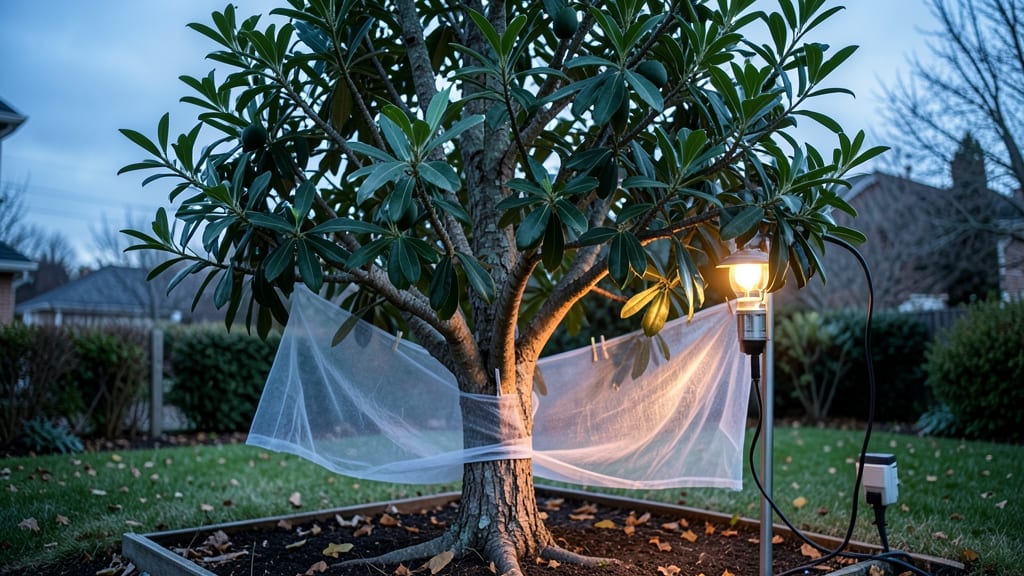
When frost threatens your avocado tree, protecting avocado trees from frost starts with a simple but critical step: insulating the roots before the cold sets in.
I learned this the hard way when a late-season frost turned my once-lush tree into a sad, brown skeleton—until I discovered the emergency wrap method that saved my next tree. The key is acting fast, using the right materials, and understanding how avocados react to cold stress.
This method works best in Mediterranean and subtropical climates where frost is rare but devastating. You’ll need burlap wraps, frost cloth, mulch, and a heat source like a string of Christmas lights for severe freezes.
The goal is to create a 32°F barrier around the roots while allowing airflow to prevent rot. Most gardeners overlook the roots, but that’s where the real damage happens—avocado trees can survive above-ground frost if their roots stay warm.
By morning, you’ll see the difference: leaves stay green, branches hold their shape, and the tree recovers faster than if you’d done nothing. The wrap method isn’t just about survival—it’s about giving your tree a fighting chance to bounce back with minimal long-term damage.
Even if the trunk shows some browning, new growth often emerges within weeks if the roots stay protected.
For regions with unpredictable frost, combine this with preventive mulching in fall and drip irrigation to keep soil temperatures stable. The worst mistake? Waiting until the frost is already happening—act the night before, and you’ll save yourself a season of regret. Let’s get your tree through this safely.
📚 In This Guide
- What you need
- Instructions
- Tips and common mistakes
- Wrapping up and next steps
What you need
- ● Burlap sacks or frost cloth: At least 2-3 per tree (choose 30-50 lb test weight for durability).
- ● Plastic sheeting (6 mil thickness): Enough to cover the entire tree canopy (e.g., 10x12 ft per medium-sized tree).
- ● Twine or zip ties: Heavy-duty, weather-resistant (e.g., 100+ ft per tree).
- ○ Stakes or PVC pipes (optional but helpful): 4-6 per tree, 3-4 ft long, to secure covers.
- ● Watering can or hose: For pre-frost hydration (aim for 1-2 gallons per tree).
- ○ Thermometer (optional but useful): A soil thermometer to monitor root zone temps (below 32°F is critical!).
- ● Pruners (sterilized): For trimming dead branches post-frost (if needed).
- ● Reflective bubble wrap: Wrap the trunk below the graft union for extra insulation.
- ● Windbreak barriers: Tarps or temporary fencing to block cold winds.
- ● Heat lamps or string lights: For small trees in extreme frost zones (place 3+ ft away from foliage).
- ● Mulch (straw or wood chips): Pile 6-12 inches deep around the base (avoid touching the trunk).
Step-by-step guide to wrapping avocado trees for frost protection
Here's the foolproof method I've used to save frost-sensitive avocado trees—no fancy tools, just smart layering.
Assess Frost Risk and Prepare Materials
Check your local forecast for the lowest temperature expected. Avocado trees suffer damage when temperatures drop below 28°F, with severe harm at 25°F or lower. Gather 4 burlap sacks (one per tree), 2 rolls of frost cloth (or old blankets), 1 roll of twine, and 1 gallon of water for pre-moistening the roots.
I always test the ground temperature at dusk with a soil thermometer—if it's already near freezing, you'll need to act immediately. Clear any debris from around the trunk and branches to prevent heat loss. The goal is to create an insulating barrier that traps warmth radiating from the soil while shielding leaves from cold air.
Wrap the Trunk and Canopy
Start by thoroughly watering the tree's root zone with 1 gallon of water—moist soil holds heat better than dry soil. Then, wrap the trunk with one burlap sack, securing it tightly with twine at the base and mid-trunk. This creates a physical barrier against cold winds while allowing some airflow to prevent rot.
Next, drape one frost cloth over the entire canopy, tucking the edges into the burlap at the trunk. For larger trees, use both frost cloths in overlapping layers. Leave the top slightly open—this prevents condensation buildup, which can weigh down branches. I always check for gaps where cold air could sneak in; even a small opening can make the whole effort ineffective.
Create a Root Insulation Barrier
Spread 3 inches of mulch (straw or wood chips) around the base, extending 2 feet outward from the trunk. This insulates the roots, which are more vulnerable than the above-ground parts. Then, build a low wall using the remaining burlap sacks—prop them up around the base with stakes to create a windbreak.
For extra protection, I sometimes place plastic milk jugs (cut in half) around the base filled with hot water. As they cool overnight, they release heat into the soil. This is especially useful for young trees with shallow root systems. The key is to mimic the natural heat retention of tropical environments where avocados thrive.
Monitor and Adjust Through the Night
Check the tree every 2 hours after sunset if temperatures are dropping fast. Adjust the frost cloth if it shifts in the wind, and add more mulch if you notice cold air seeping through gaps. The goal is to maintain a 5-10°F buffer around the tree—this prevents the sudden temperature swings that cause cellular damage.
At dawn, remove the frost cloth immediately—trapped heat can cause sunburn when temperatures rise. Gently unwind the burlap from the trunk and water the tree again to help it recover. You'll know it worked if the leaves stay green and firm; any yellowing or wilting means the frost was too severe, and you may need to prune damaged branches later.
Tips & tricks for protecting avocado trees in frost
These practical strategies will help you maximize your frost protection efforts and give your avocado trees the best chance of survival during cold snaps.
Temperature Buffer Strategy: The goal of maintaining a 5-10°F buffer around your tree is critical—this prevents the rapid temperature swings that cause cellular damage. When wrapping your tree, focus on creating an air pocket between the frost cloth and the leaves. I've found that adding an extra layer of frost cloth (even if you only have two) can create this buffer more effectively, especially for young trees with delicate foliage. Remember, the key is gradual temperature change, not complete insulation.
Root Zone Prep Technique: Before applying any insulation, make sure your 1 gallon of water is thoroughly soaked into the root zone. I've learned this the hard way—dry soil loses heat much faster. For extra protection, consider adding a layer of black plastic sheeting (optional) under the mulch. This absorbs heat during the day and radiates it back to the roots at night, creating a microclimate that mimics tropical conditions.
Monitoring Intervals: The 2-hour monitoring intervals after sunset are non-negotiable when temperatures are dropping fast. I keep a small flashlight and a thermometer handy for these checks. If you notice cold air seeping through gaps in your frost cloth, don't hesitate to add more mulch or adjust the burlap walls immediately. Even a small opening can let in enough cold air to negate your entire effort.
Material Substitutions: Don't have frost cloth? Old bedsheets, towels, or even cardboard boxes wrapped in plastic can work in a pinch. For twine, any sturdy string or even shoelaces will secure your burlap. The plastic milk jugs trick works with any heat-retaining container—just be sure to use hot (not boiling) water to avoid scalding the roots when it cools.
Pro Tips for Protecting Avocado Trees From Frost
- These practical strategies will help you maximize your frost protection efforts and give your avocado trees the best chance of survival during cold snaps.
- Temperature Buffer Strategy: The goal of maintaining a 5-10°F buffer around your tree is critical—this prevents the rapid temperature swings that cause cellular damage.
- Root Zone Prep Technique: Before applying any insulation, make sure your 1 gallon of water is thoroughly soaked into the root zone.
Frequently asked questions
Got questions about saving your avocado trees from frost? You're not alone!
Here are some of the most common concerns—plus quick, actionable answers to keep your trees thriving, even when temperatures drop.
How cold does it need to get before I should wrap my avocado tree?
Start wrapping when temperatures dip below 30°F (-1°C). Avocado trees suffer damage at 28°F (-2°C), so act early if frost is forecasted. Use a weather app or local alerts to stay ahead—prevention is easier than recovery!
Can I use regular plastic wrap instead of frost cloth?
No—never use plastic wrap! It traps moisture, causing rot or even burning leaves in sunlight. Instead, opt for breathable frost cloth (rated for 20–30°F) or burlap. If you’re in a pinch, layer lightweight blankets loosely over the tree and secure them with stakes.
My tree’s leaves are brown after frost—is it dead?
Not necessarily! Avocado trees often drop leaves during cold snaps but can regrow if the roots survive. Prune dead branches (cut 6 inches below damage) and monitor for new growth. If the trunk is cracked or oozing sap, the tree may be beyond saving.
How long should I leave the frost wrap on?
Remove wraps as soon as temperatures rise above freezing—usually by mid-morning. Leaving them on too long can smother the tree or attract pests. Check the forecast and unwind gradually to avoid shocking the tree.
Are there any long-term ways to protect my avocado tree from frost?
Yes! Plant in microclimates (near walls or slopes that trap heat), mulch heavily around the base, and choose frost-hardier varieties like ‘Hass’ or ‘Fuerte.’ For young trees, consider a low-lying windbreak (like a temporary fence with frost cloth) during winter.
Still unsure? Drop your question below—we’re happy to help your avocado tree bounce back!
Wrapping up and next steps
Protecting your avocado trees from frost doesn’t have to be a stressful task—with the right preparation and quick action, you can save your trees and ensure a bountiful harvest for years to come. 🌱 Whether you’re wrapping roots, using mulch, or leveraging heat sources, every step counts.
Now that you’re armed with the knowledge, take action before the next frost hits—your trees will thank you!
Ready to go further? Test your setup with a mock frost drill or explore long-term strategies like choosing frost-resistant varieties. Your avocado grove’s future starts with you!