
Pruning
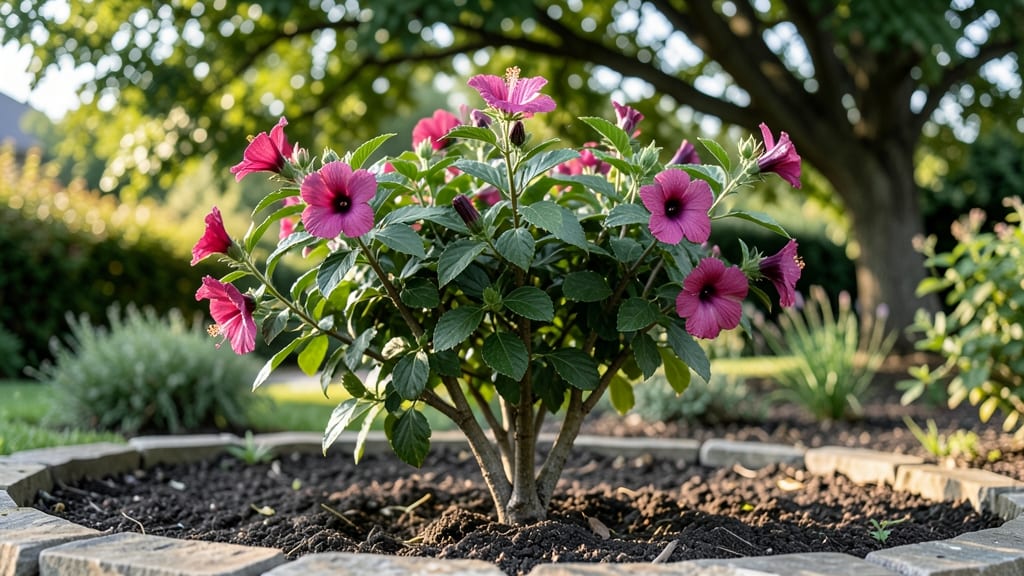
Pruning a Rose of Sharon tree isn’t just about shaping—it’s the secret to turning one summer burst of blooms into a year-round floral show.
I learned this the hard way after my first tree put on a single spectacular show in July and then sat bare for the rest of the year. The trick? Strategic cuts that encourage new growth exactly when you want it.
This tree thrives on bold pruning—think of it like giving it a haircut that wakes it up. You’ll need sharp pruners, a ladder (for taller trees), and a clear plan: late winter for structural cuts, summer for shaping, and light trims after blooms fade.
The payoff? Clusters of fragrant blooms from June through frost, with some varieties even flowering into winter in mild climates.
What you end up with is a tree that looks like it belongs in a botanical garden, not your backyard. The blooms—purple, pink, or white—come in dense clusters that hum with pollinators, and the foliage stays lush even after flowers drop.
Best of all, it’s drought-tolerant once established, so once you get the pruning rhythm down, maintenance is effortless.
Works for both small yards (dwarf varieties) and large landscapes (standard trees). Here’s how to make it work without turning your tree into a bare stick—because nobody wants that.
📚 In This Guide
- What you need
- Instructions
- Tips and common mistakes
- Wrapping up and next steps
What you need
- ● Pruning shears – Sharp, clean, and bypass-style (for precision cuts on smaller branches).
- ● Loppers – For thicker branches (up to 2 inches in diameter).
- ● Pruning saw – For branches larger than 2 inches (ensure it’s disinfected with rubbing alcohol).
- ● Gloves – Heavy-duty gardening gloves to protect hands from thorns and debris.
- ● Disinfectant solution – 1 part bleach to 9 parts water (or a commercial pruning sealant).
- ● Rag or paper towels – For wiping tools between cuts to prevent disease spread.
- ● Ladder or step stool – If your tree is taller than 6 feet (prioritize safety!).
- ● Trash bags or bucket – For collecting pruned branches (compost or dispose responsibly).
- ○ Permanent marker – Optional, for marking branches to remove (helpful for complex pruning).
- ● Hand pruners with a bypass blade – For finer details on smaller stems.
- ● Pruning sealant – Only use if cutting large branches (controversial; research first!).
- ● Tree wound dressing – Avoid unless dealing with major cuts (modern horticulture often skips this).
- ● Spray bottle with water – To clean tools quickly between cuts.
- ● Camera or phone – Snap before/after photos to track progress!
How to prune a Rose of Sharon tree for continuous flowering
Here's the simple, effective method I use to keep my Rose of Sharon blooming all season long.
Prune After the First Major Bloom Cycle
Start your pruning right after the first big flush of flowers in early summer. This is the moment that matters: you're shaping the tree for its next round of blooms. Look for spent flower clusters—these will be brown or wilting—and cut them back to the nearest outward-facing bud or branch junction. I like to make my cuts at a 45-degree angle just above the bud to prevent water from pooling and rotting the stem.
Remove any crossing branches or those growing inward toward the center of the tree. These compete for energy and weaken the overall structure. You'll notice the tree's natural shape emerges as you work—let that guide you. Aim to open up the center for better airflow and sunlight penetration, which prevents fungal diseases that can ruin blooms.
Lightly Trim in Late Summer for Renewal
About 6-8 weeks after your first pruning, give the tree a second, gentler trim in late summer. Focus on any branches that look overcrowded or are growing too vigorously. Cut back these stems by about one-third to encourage new growth that will produce fall flowers. This is where many gardeners make a mistake—they skip this step, and the tree puts all its energy into wood production instead of blooms.
Pay special attention to the tips of branches. If you see new growth that's too leggy or weak, trim it back to a stronger lateral branch. You'll see fresh green leaves emerging from the cut—this is your signal that the tree is responding well. Avoid heavy pruning now; you're just shaping, not reshaping. The goal is to wake up dormant buds that will form next year's flowers.
Clean Up in Late Winter for Spring Growth
When winter dormancy arrives, do a final cleanup prune in late February or early March, just as new growth begins to swell. Remove any dead, diseased, or broken branches first—they're easy to spot as they'll be brown, brittle, or missing bark. Cut these back to healthy wood, making clean cuts at the branch collar where the branch meets the trunk.
Next, thin out about one-third of the oldest stems at the base of the tree. These are usually the thickest branches and produce fewer flowers. Cut them back to the ground to encourage fresh, younger growth that will bloom more abundantly. You'll see the tree's structure become more open and airy after this step, which is exactly what you want for spring.
Maintain Through the Growing Season
Once the growing season starts, your pruning shifts to maintenance. Remove spent blooms regularly—this is called "deadheading"—to encourage more flowers. Cut back to the nearest leaf node or bud, and you'll often see new flower buds forming within 2-3 weeks. I like to do this every 7-10 days during peak bloom periods to keep the tree looking tidy and productive.
Watch for any branches that are growing too aggressively or in awkward directions. Light pruning throughout the season keeps the tree balanced and prevents it from becoming top-heavy. If you notice any suckers growing from the base, remove them immediately—they drain energy from the main tree. A little attention now means bigger, more abundant blooms later in the season.
Tips & tricks for perfect Rose of Sharon tree pruning
These simple strategies will help you master the art of pruning your Rose of Sharon for a stunning, continuous display of blooms.
Timing is Everything: The 6-8 week interval between your first pruning in early summer and the second light trim in late summer is crucial. This timing allows the tree to recover and develop new growth that will produce fall flowers. If you're in a particularly warm climate, you might need to adjust this window slightly—watch for new growth rather than relying strictly on the calendar. This is where many gardeners miss the mark by either pruning too early or too late.
Tool Prep Matters: Before you begin, sharpen your pruning shears and sterilize them with rubbing alcohol. Dull blades can crush stems instead of making clean cuts, which stresses the tree. I also like to have a small bucket of water nearby to dip my shears in between cuts—this prevents the spread of any potential diseases from branch to branch. A clean workspace means healthier blooms down the road.
Visual Cues for Pruning: When removing one-third of the oldest stems in Step 3, look for branches that are thicker than a pencil and have fewer leaves. These are the ones that have been producing for years and are now less productive. Cut them back to the ground, and you'll notice fresh, vibrant growth emerging from the base within weeks. This is your tree's way of telling you it's ready for a new lease on blooming life.
Seasonal Maintenance: During the growing season, make deadheading a regular habit—every 7-10 days during peak bloom periods. This might seem like a lot, but it's these small, consistent efforts that lead to that spectacular continuous flowering. I set a reminder on my phone so I don't miss this crucial step. The key is to cut back to the nearest leaf node or bud, not just snip off the spent blooms.
Pro Tips for Rose Of Sharon Tree
- These simple strategies will help you master the art of pruning your Rose of Sharon for a stunning, continuous displa...
- Timing is Everything: The 6-8 week interval between your first pruning in early summer and the second light trim in l...
- Tool Prep Matters: Before you begin, sharpen your pruning shears and sterilize them with rubbing alcohol. Dull blades...
Frequently asked questions
Got questions about keeping your Rose of Sharon (Hibiscus syriacus) tree blooming beautifully? Here are answers to the most common ones—so you can prune like a pro!
When is the best time to prune a Rose of Sharon tree?
The ideal time is late winter or early spring (before new growth starts), but you can also do light pruning after blooming to shape the tree. Avoid heavy cuts in fall—this plant needs time to harden off for winter. Pro tip: If you prune too late, you might sacrifice next year’s flowers!
How much can I cut back my Rose of Sharon tree?
You can safely remove up to one-third of the tree’s height in a single pruning session. For rejuvenation, cut back old wood to 12–18 inches from the ground—this encourages fresh, vigorous growth. Just avoid over-pruning, or you might stress the tree.
Why isn’t my Rose of Sharon blooming after pruning?
Lack of blooms often means too much shade, poor nutrition, or pruning at the wrong time. Ensure it gets 6+ hours of sunlight and fertilize in early spring with a balanced 10-10-10 formula. If you pruned after summer, wait until next spring for flowers to return.
Can I grow a Rose of Sharon tree in a container?
Yes! Just choose a large pot (at least 15 gallons) with drainage holes and use well-draining soil. Prune regularly to control size, and move the container to a sunny spot in summer. In winter, bring it indoors if temps drop below 15°F (-9°C).
Are Rose of Sharon trees deer-resistant?
Not entirely! While deer usually avoid them, they may nibble if other food is scarce. To deter them, try deer repellent sprays or fencing. The tree’s thorns can also help—just don’t expect it to be foolproof!
Wrapping up and next steps
The Rose of Sharon tree is a stunning addition to any garden, and with the right pruning techniques, you can enjoy its breathtaking blooms year after year.
By following the seasonal guidelines—light cuts in early spring, shaping in late winter, and minimal trimming in fall—you’ll encourage healthy growth and vibrant flowers. Remember, confidence in your cuts makes all the difference! 🌸
Ready to transform your outdoor space? Grab your pruners, review your notes, and get started—your future blooms will thank you! For extra inspiration, explore seasonal care tips or share your progress with fellow gardening enthusiasts.