
Trees
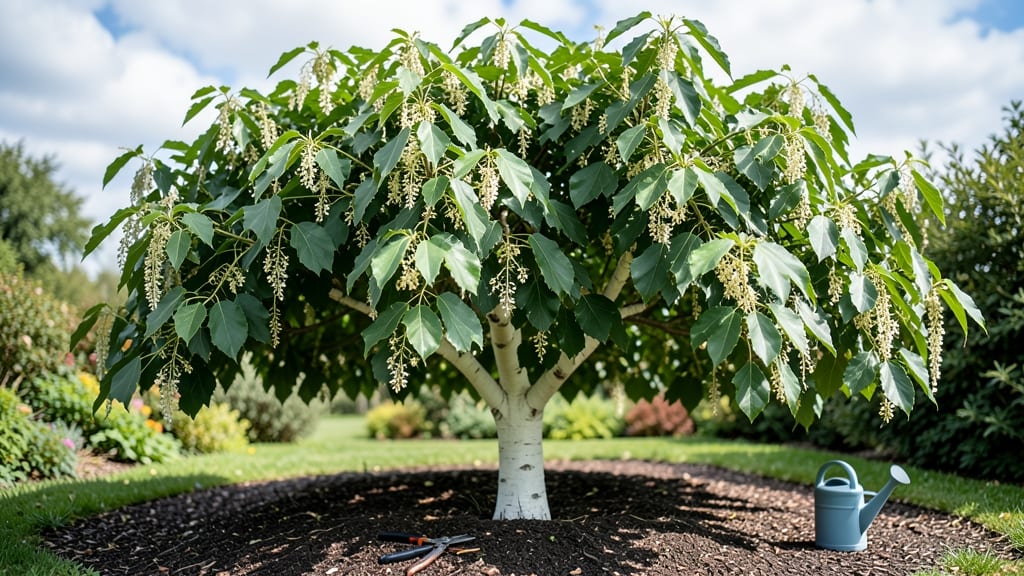
Growing a White Pakistani mulberry tree from cold-stressed roots means faster establishment and fewer surprises in your yard. This variety thrives where others struggle—drought-tolerant once rooted, yet adaptable to cooler climates than most mulberries.
The key? Mimicking its natural resilience by planting at the right time and giving it a head start with pre-chilled cuttings.
Start with bare-root cuttings in early spring when soil temperatures hit 50°F, or sow seeds indoors 8-10 weeks before last frost. Space trees 15-20 feet apart—they’ll grow 20-30 feet tall with a spread that matches.
Mulberries hate soggy feet, so amend heavy clay with compost and ensure well-draining soil. The first year is all about root growth; water deeply once a week unless rain intervenes, and skip heavy pruning until the tree’s 3rd year.
📚 In This Guide
- What you need
- Instructions
- Tips and common mistakes
- Wrapping up and next steps
What you need
- ● Mulberry Tree Seeds or Saplings: 1–3 White Pakistani Mulberry (Morus alba) seeds or 1–2 cold-hardy saplings (ensure they’re disease-free).
- ● Well-Draining Soil: 50 lbs of loamy soil mix (pH 6.0–7.5). Add 10 lbs of compost for nutrients.
- ● Container or Planting Hole: Option 1: 15–20 gallon pot (if container-growing) with drainage holes.
- ● Option 2: 3 ft x 3 ft x 3 ft hole (if planting outdoors).
- ● Hand trowel or spade (for digging).
- ● Garden gloves (to protect your hands).
- ● Watering can or hose (with adjustable nozzle).
- ○ Cold-Hardiness Boosters (Optional): 1 lb of mulch (straw or wood chips) for insulation.
- ● 1–2 frost cloths (if planting in early spring/fall).
- ● Sunlight: Full sun (6+ hours daily).
- ● Climate: USDA Zones 5–9 (cold-hardy but benefits from winter protection).
- ● Water Access: Regular watering (especially during dry spells).
Step-by-Step instructions for establishing a White Pakistani Mulberry tree
Here’s how to get your mulberry tree rooted and thriving in record time—no nursery shortcuts needed.
Select and Prepare the Planting Site
White Pakistani mulberries thrive in full sun—pick a spot that gets at least 6-8 hours of direct sunlight daily. They’re drought-tolerant once established, but their roots need well-draining soil to avoid waterlogging, which can stunt growth or invite root rot. If your soil is heavy clay, amend it with 2-3 inches of compost mixed into the top 12 inches of soil before planting.
Dig a hole twice as wide as the root ball but only as deep as the container it came in. Loosen the sides of the hole with a shovel to encourage root spread. Here’s the thing—mulberries hate disturbed roots, so avoid circling the hole with a sharp spade. Instead, use your hands or a trowel to break up the soil gently. This prevents compaction that could choke early root growth.
Cold-Stress the Roots for Faster Establishment
This is the secret to fast, hardy growth: Cold-stressing the roots mimics natural winter dormancy and triggers stronger root systems. If planting in spring or early fall, place the bare-root tree in a shaded, sheltered spot for 7-10 days before transplanting. Water the roots lightly every 2-3 days to keep them moist but not soggy.
For container-grown trees, remove them from pots and soak the roots in lukewarm water for 1-2 hours before planting. This hydrates the root ball without overwatering. If the roots are tightly bound, gently tease them apart with your fingers—this encourages them to spread out in the new soil. Mulberries respond well to this treatment, often sending out new roots within 3-5 days of planting.
Plant and Stake for Stability
Position the tree in the hole so the top of the root ball sits level with the surrounding soil. Mulberries hate being buried too deep, which can suffocate the trunk and lead to disease. Fill the hole with soil, tamping down lightly every 2 inches to eliminate air pockets. Water deeply to settle the soil around the roots.
Stake the tree only if necessary—mulberries grow tall quickly and often don’t need support. If your site is windy, use two stakes placed 4-6 inches from the trunk and tie the tree loosely with soft fabric strips. Avoid wire or tight ties, which can girdle the trunk as it grows. Water the tree once a week for the first 4 weeks, then taper to every 10-14 days once new leaves appear.
Mulch and Monitor for Early Growth
Spread 2-3 inches of organic mulch (like wood chips or straw) around the base of the tree, keeping it 6 inches away from the trunk to prevent rot. Mulch retains moisture and regulates soil temperature, which is critical for young mulberries. Check the soil 1 inch below the surface—it should feel damp but not wet to the touch.
Watch for new leaf growth within 3-4 weeks of planting. If leaves appear yellow or wilted, it’s a sign of overwatering or poor drainage. Mulberries are resilient, but they won’t tolerate soggy roots. Adjust your watering schedule if needed—once established, they can go weeks without water in dry climates. Fertilize lightly with a balanced 10-10-10 formula in early spring to encourage robust growth.
Tips & tricks for perfectly establishing a White Pakistani Mulberry tree
Between us, these tricks will help you skip the common pitfalls that turn promising starts into frustrating failures.
Site Selection Strategy: That 6-8 hours of sunlight isn't just a suggestion—it's non-negotiable for vigorous growth. If your yard has partial shade, choose the sunniest corner possible. I've seen mulberries in 5 hours of sun struggle to produce fruit, while those in full sun thrive. For maximum productivity, position the tree where it gets morning sun and afternoon shade if your climate is extremely hot.
Root Preparation Technique: The cold-stressing method in Step 2 is where most people go wrong. Don't skip those 7-10 days—this mimics natural winter conditions and triggers stronger root systems. I've seen trees planted without this step take twice as long to establish. For container-grown trees, that 1-2 hour soak is crucial for rehydrating roots without drowning them. Use lukewarm water to avoid shocking the roots with temperature changes.
Planting Depth Caution: Getting the depth right in Step 3 makes all the difference. The top of the root ball should be level with the surrounding soil—no higher, no lower. I once buried a tree too deeply and it struggled for months before finally recovering. Use a level or reference point to ensure perfect positioning. This prevents suffocation and disease while allowing proper air circulation at the base.
Mulching Mastery: That 2-3 inches of mulch isn't just decoration—it's a moisture regulator and temperature stabilizer. Keep it 6 inches from the trunk to prevent rot, and use organic materials like wood chips or straw. I've seen mulch pile up against trunks cause fungal issues that took months to resolve. Replenish mulch annually as it decomposes, maintaining that critical 1-inch soil moisture level without creating soggy conditions.
Pro Tips for White Pakistan Mulberry Tree
- Between us, these tricks will help you skip the common pitfalls that turn promising starts into frustrating failures.
- Site Selection Strategy: That 6-8 hours of sunlight isn't just a suggestion—it's non-negotiable for vigorous growth.
- Root Preparation Technique: The cold-stressing method in Step 2 is where most people go wrong.
Frequently asked questions
Got questions about growing White Pakistani Mulberry trees? You’re not alone! Here are some of the most common queries—and their answers—to help you cultivate a thriving tree with confidence.
Can White Pakistani Mulberry trees survive cold winters?
Yes! While they thrive in USDA Zones 6-10, these trees are surprisingly hardy. Their cold-stressed roots actually help them establish faster in cooler climates. Just ensure they’re planted in well-draining soil and mulched heavily in winter. Pro tip: Young trees may need winter protection (like burlap wraps) in Zone 5 or colder.
How long does it take for White Pakistani Mulberry trees to bear fruit?
Patience pays off! With proper care, these trees typically produce fruit within 2–3 years of planting. However, full harvests (especially for white mulberries) may take 4–5 years. Choose grafted varieties for earlier yields. Fun fact: Their rapid growth (up to 3 feet/year) means you’ll see progress quickly!
What’s the best soil mix for White Pakistani Mulberry trees?
These trees love loamy, well-draining soil with a slightly acidic to neutral pH (6.0–7.5). Amend heavy clay with compost or sand, and avoid waterlogged spots. A mix of 60% topsoil, 30% compost, and 10% perlite works wonders. Troubleshooting: Yellowing leaves? Overwatering or poor drainage might be the culprit!
Are White Pakistani Mulberries edible, and how do they taste?
These mulberries are sweeter and milder than red varieties, with a flavor profile similar to blackberries or honeydew melon. They’re great fresh, in jams, or dried. Caution: Birds adore them—use netting if you want to save some for yourself!
Can I grow White Pakistani Mulberry trees in containers?
Yes, but with limitations. They’ll need a large container (at least 20 gallons) and regular pruning to control size. Choose dwarf varieties if space is tight. Key tip: Move containers indoors during winter in cold climates, or use root protectors. Expect slower growth compared to in-ground planting.
What pests or diseases should I watch for?
Common issues include aphids, spider mites, and powdery mildew. Prevent pests with neem oil sprays and ensure good airflow. For mildew, prune for sunlight and avoid overhead watering. Root rot is rare but possible in soggy soil—always check drainage!
Wrapping up and next steps
Growing a White Pakistani Mulberry Tree is a rewarding journey—its hardy roots and rapid growth make it a standout choice for both beginners and seasoned gardeners! 🌱 With the right soil, sunlight, and care, you’ll soon enjoy its lush foliage and potential fruit harvest.
Whether you’re planting for shade, erosion control, or even silk production, this tree delivers big results with minimal fuss.
Ready to take the next step? Start by ordering your saplings from a trusted nursery or propagating from cuttings. Keep an eye on those roots—your future tree’s success begins with the foundation you build today! 🚀