
Companion Plants
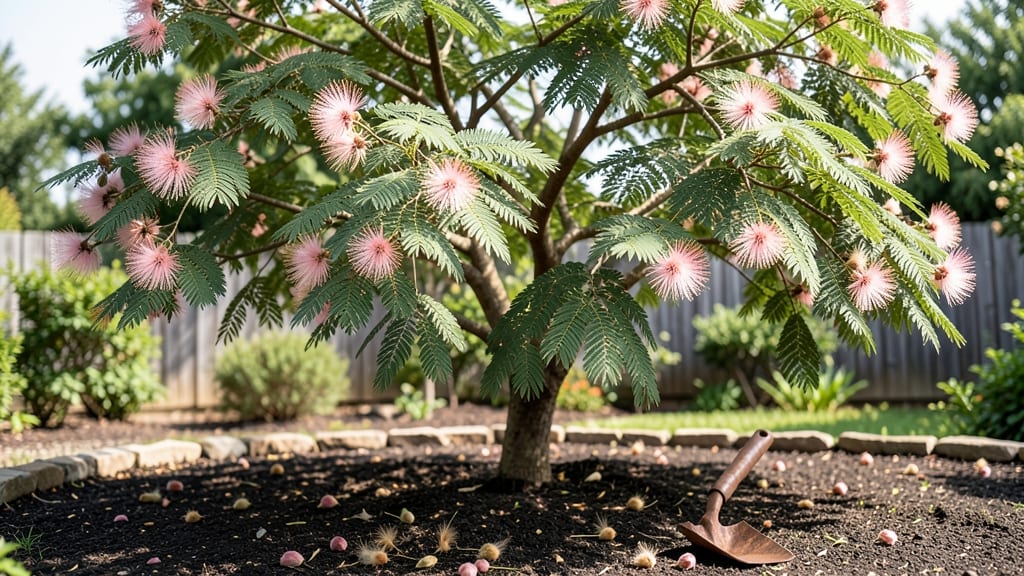
The silk tree plants bring a touch of magic to any landscape with their delicate pink puffball flowers and fern-like foliage. 🌸 I fell in love with these trees after seeing their fragrant spring canopy transform a dull corner of my yard into a whimsical paradise.
Their cold-hardiness makes them perfect for gardeners in zones 6 through 9, where they thrive without fuss.
These trees aren't just pretty—they're practical too. They grow quickly, reaching heights of 25 to 35 feet, and their lightweight branches make them ideal for training against fences or trellises. The secret to their success lies in well-draining soil and full sun exposure, though they tolerate partial shade once established.
Planting one means adding both beauty and value to your outdoor space.
You'll be amazed by how effortlessly they adapt to different conditions once planted. Their unique foliage stays lush even through summer heat, and the fragrant flowers attract pollinators while adding a romantic touch to your garden.
With minimal pruning and regular watering during their first year, you'll have a stunning, low-maintenance climber that keeps giving back for decades.
Perfect for gardeners who want both drama and durability, silk trees bring a touch of elegance without the high maintenance. Whether you're training it as a climber or letting it grow as a small tree, its adaptability makes it a standout choice for any landscape. Let's get yours growing strong!
📚 In This Guide
- What you need
- Instructions
- Tips and common mistakes
- Wrapping up and next steps
What you need
- ● Silk tree seeds or young saplings: Choose high-quality seeds or nursery-grown plants (3–5 inches tall for best results).
- ● Well-draining potting mix: A blend of 60% garden soil, 30% perlite, and 10% compost (or a pre-mixed cactus/succulent mix).
- ● Containers or garden space: For containers: 5–7 gallon pots with drainage holes (1 plant per container).
- ● For in-ground planting: A sunny spot with at least 6–8 hours of sunlight daily and space for roots to spread (10+ feet apart for mature trees).
- ● Watering can or hose with a gentle spray nozzle: Silk trees dislike soggy roots.
- ○ Fertilizer (optional but helpful): A balanced, slow-release fertilizer (10-10-10) or organic options like worm castings.
- ● Gloves: Protect your hands from thorns (especially on mature plants).
- ● Pruning shears: For shaping and maintaining growth (sterilize with rubbing alcohol before use).
- ○ Mulch (optional): Shredded bark or wood chips to retain moisture and regulate soil temperature.
- ● Cold-hardy zone knowledge: Silk trees thrive in USDA Zones 5–9. If you’re in a colder zone, opt for container growing or winter protection.
How to plant and care for silk tree climbers in your garden
These fragrant, fast-growing vines thrive with minimal fuss—here's how to get them established.
🌱 Step 1: Choose the Perfect Planting Location
Silk trees need a spot with morning sun and afternoon shade—think east-facing walls or partially shaded patios. I always look for areas with well-draining soil first, since these plants hate soggy roots. Test your spot by digging a 6-inch hole and checking if water drains within 15 minutes. If not, amend the soil with 2 inches of compost mixed into the top 12 inches of soil.
Here's the thing—these vines grow 10-20 feet per year, so plant them 10-15 feet from structures unless you want them to smother your house. I've seen them cling to fences, trellises, or even old wooden arbors with ease. The key is giving them something sturdy to grip right from the start.
🪴 Step 2: Plant at the Right Time and Depth
Wait until spring after the last frost date—usually mid-April to early May in most zones. The soil should be warm to touch (60°F+) and slightly damp. Dig a hole twice as wide as the root ball but only as deep as the container it came in. Silk trees resent having their roots buried too deeply.
Gently remove the plant from its container and loosen any circling roots with your fingers. Place it in the hole so the top of the root ball sits level with the surrounding soil. Backfill with native soil mixed with 1 part compost to improve drainage. Water deeply until the soil 1 inch below the surface feels moist.
☀️ Step 3: Provide Support and Prune for Growth
Install a strong trellis, fence, or arbor within 2 feet of the planting site—these vines need something to climb immediately. I use metal or wooden lattice because it lasts longer than plastic. Train the main stems along the support by gently tying them with soft plant ties every 6 inches as they grow.
Prune in late winter to shape the plant and encourage new growth. Cut back one-third of the oldest stems to the ground and trim any leggy growth back to a leaf node. This keeps the plant bushy and prevents it from becoming top-heavy. Watch for new shoots emerging from the base—these are your insurance for a fuller canopy.
💧 Step 4: Water and Feed for Maximum Bloom
Water deeply once a week during the first growing season, soaking the soil to 12 inches deep. You'll know it's enough when water runs out the drainage holes if planted in containers. After establishment, silk trees tolerate drought once rooted, but they reward you with more fragrant blooms if you keep the soil evenly moist during dry spells.
Fertilize in early spring with a balanced 10-10-10 formula—use ½ cup per year of plant maturity. I scatter it around the drip line (the edge of the plant's canopy) and water it in. Avoid high-nitrogen fertilizers—they promote leafy growth at the expense of those stunning white, fragrant flowers.
Tips & tricks for perfect silk tree planting
These simple strategies will help your silk tree climbers thrive with minimal effort—once you know the secrets.
Soil Test Tip: That 15-minute drainage test in Step 1 is crucial—if water pools longer, mix in an extra inch of compost or even some coarse sand to improve drainage. I've seen silk trees struggle in heavy clay soil, so don't skip this check, even if your garden looks fine. The roots need to breathe, especially in cooler climates where they're less active.
Planting Depth Secret: When placing your silk tree in Step 2, imagine the root ball sitting like a pancake on the soil—never deeper than its container level. I learned this the hard way when a buried root ball caused my plant to rot. The top should be flush with ground level, not buried or mounded. This ensures proper air circulation at the stem base.
Support Strategy: For Step 3, install your trellis or arbor before planting—these vines are aggressive climbers and will smother anything in their path if given the chance. I use metal lattice because it lasts 10+ years without rotting, and the vertical slats give the vines plenty of grip points. If you're planting near a fence, make sure it's sturdy enough to handle 20+ feet of vine weight!
Pruning Hack: When pruning in late winter (Step 3), look for those little buds at the base of your plant—they're your secret weapon for a fuller canopy. Cut back the oldest stems first, then trim any leggy growth to just above a leaf node. This forces new shoots to emerge from the base, creating that lush, bushy look without sacrificing height.
Pro Tips for Silk Tree Plants
- These simple strategies will help your silk tree climbers thrive with minimal effort—once you know the secrets.
- Soil Test Tip: That 15-minute drainage test in Step 1 is crucial—if water pools longer, mix in an extra inch of compost or even some coarse sand to improve drainage.
- Planting Depth Secret: When placing your silk tree in Step 2, imagine the root ball sitting like a pancake on the soil—never deeper than its container level.
Frequently asked questions
Got questions about silk tree plants?
Here are answers to the most common ones—from care tips to troubleshooting—so you can grow these fragrant climbers with confidence!
How cold-hardy are silk trees, and do they survive winter?
Silk trees (Albizia julibrissin) are surprisingly tough! They thrive in USDA zones 6-9, tolerating temps down to -10°F (-23°C) once established. Young trees may need winter mulch in colder zones, but mature specimens often bounce back even after light frost damage. Pro tip: Prune dead branches in early spring to encourage fresh growth!
When is the best time to plant silk trees?
Plant silk trees in early spring or fall for optimal success. This gives roots time to establish before extreme heat or cold. Avoid planting in late summer or winter, as roots struggle in frozen or waterlogged soil. If transplanting, water deeply 1-2 times weekly for the first month to reduce shock.
Can silk trees grow in containers, or do they need to be planted in the ground?
While silk trees prefer ground planting (they can grow 20-30 feet tall!), young specimens can thrive in large containers (15+ gallons) for 1-2 seasons. Use well-draining potting mix and a container with drainage holes. Warning: They’re not ideal for small spaces—their roots and canopy spread widely. Consider dwarf varieties like Albizia julibrissin ‘Summer Chocolate’ for smaller yards.
Are silk trees good for pollinators, or do they attract pests?
Silk trees are pollinator magnets! Their fragrant pink flowers draw bees, butterflies, and hummingbirds in spring. However, they can also attract aphids or spider mites if stressed (e.g., drought or poor soil). Solution: Spray with neem oil or introduce ladybugs to keep pests in check. Bonus: Their fuzzy seed pods add winter interest for birds!
Why are my silk tree leaves yellowing or dropping?
Yellow leaves often signal overwatering, underwatering, or nutrient deficiencies. Check soil moisture—silk trees prefer moderately moist but well-draining soil. Other culprits:
- Iron deficiency (yellow leaves with green veins): Amend soil with chelated iron.
- Fungal issues (black spots): Prune affected branches and avoid overhead watering.
- Transplant shock: Give newly planted trees 2-3 weeks to adjust.
If leaves drop suddenly, it may be heat stress—provide afternoon shade in extreme heat.
Wrapping up and next steps
Silk tree plants (Albizia julibrissin) are a fantastic addition to any garden, offering stunning spring blooms, fragrant canopies, and impressive cold hardiness—perfect for climbers or standalone specimens.
Whether you're drawn to their delicate flowers, drought tolerance, or low-maintenance care, these trees bring beauty and resilience to your outdoor space. 🌸
Ready to transform your garden? Start by selecting the right variety for your climate, then plant with confidence—your future silk tree will reward you with years of effortless elegance! Now’s the time to dig in and let nature do the rest. 🌱