
Pruning
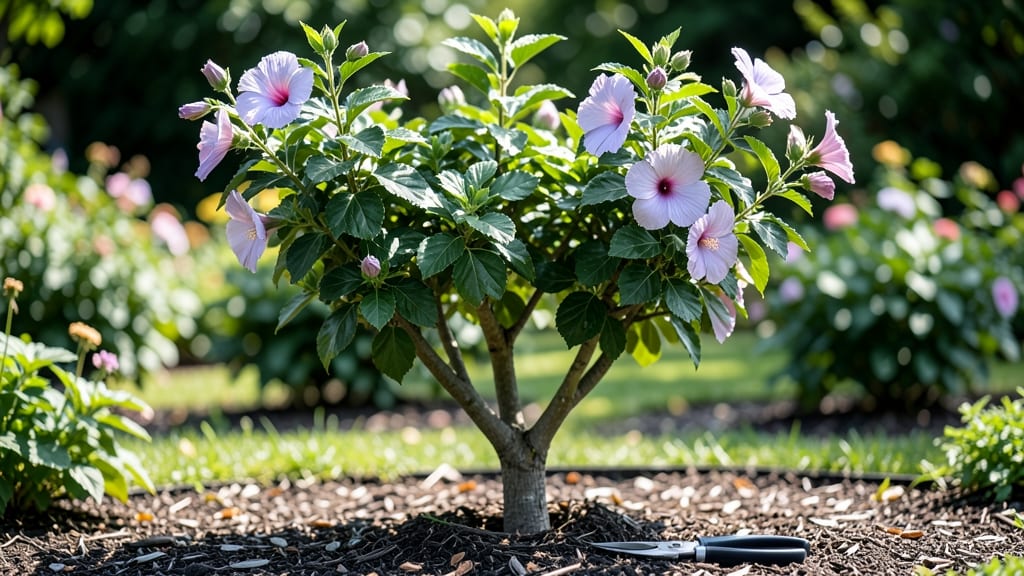
Transforming your Rose of Sharon into a stately tree form isn't just pruning—it's sculpting a living centerpiece that blooms like crazy from midsummer through fall. 🌿 I learned the hard way that aggressive cuts in early spring create leggy monsters, but the right timing and technique turns this shrub into a 5-6 foot vertical showstopper with a single trunk and layered branches.
The secret lies in three key cuts: first, removing all but one central leader when young, then thinning out competing stems annually, and finally, heading back side branches to encourage outward growth.
You'll need sharp loppers, a sturdy ladder, and patience—this isn't a weekend project, but the payoff is year-round interest with those iconic trumpet-shaped blooms in shades of pink, purple, or white.
What you end up with is a small tree that handles urban spaces beautifully, resists storm damage better than shrub forms, and flowers more prolifically.
The first year after proper pruning, you'll see dense new growth at the branch tips where you made cuts, and by year three, that single trunk will be unmistakable. Even my black thumb can't kill these once established.
Works in zones 5-9, handles both city pollution and rural soils, and thrives in full sun to partial shade. The only real challenge is resisting the urge to prune too early—wait until late winter or early spring before buds swell for best results. Let's get those branches shaping up!
📚 In This Guide
- What you need
- Instructions
- Tips and common mistakes
- Wrapping up and next steps
What you need
- ● Pruning shears – Sharp, bypass-style shears (for clean cuts on branches up to ½ inch thick). Quantity: 1 pair.
- ● Loppers – For thicker branches (½ to 1½ inches). Quantity: 1 pair.
- ● Pruning saw – For any branches thicker than 1½ inches. Quantity: 1.
- ● Gloves – Heavy-duty gardening gloves (thorn protection!). Quantity: 1 pair.
- ● Disinfectant (70% isopropyl alcohol or bleach solution) – To sterilize tools between cuts and prevent disease. Quantity: Small bottle.
- ● Rubbing alcohol or hand sanitizer – For cleaning hands before and after pruning.
- ○ Pruning sealant (optional but recommended) – For larger cuts (½ inch or wider) to prevent sap loss and pests. Quantity: Small tube.
- ● Extension pole – For reaching high branches safely. Quantity: 1.
- ● Ladder – If your Rose of Sharon is over 6 feet tall. Quantity: 1.
- ● Marking spray or tape – To tag branches for removal (if planning a multi-step pruning session).
- ● Pruning guide or ruler – For measuring branch thickness and ensuring proper cuts.
- ● Compost bin or bag – For collecting pruned branches and leaves.
Step-by-step pruning guide for Rose of Sharon tree form
Transform your shrub into a stunning tree form with these simple pruning techniques.
✂️ Step 1: Choose the Right Time to Prune
Prune your Rose of Sharon in late winter or early spring, just before new growth begins. This timing ensures you shape the tree while avoiding late-season blooms. I like to wait until the threat of hard frost has passed—usually around mid-March in most climates. Avoid pruning in fall, as new growth won't harden off before winter.
Look for dormant buds along the stems—these are your guide. When you see swollen buds preparing to open, it's time to start shaping. If you prune too early, you risk encouraging tender new growth that won't survive late frosts. If you wait too long, you'll cut back blooms already forming for the season.
✂️ Step 2: Select and Remove the Central Leader
Identify the strongest, straightest stem in the center of your shrub—this will become your tree's trunk. Use clean, sharp pruners to remove all competing stems at their base, cutting just above a bud facing outward on the remaining central leader. This encourages upward growth and prevents a bushy, multi-trunked form.
Here's the thing—don't rush this step. If your shrub has multiple stems of equal strength, choose the one with the best upward angle. You'll see new side branches form from the remaining buds, but they'll grow more controlled now that they're competing with a dominant leader.
✂️ Step 3: Shape the Lower Trunk and Canopy
Remove any branches growing below your desired trunk height—typically 3-4 feet for a standard tree form. Cut these branches back to a bud or lateral branch that grows outward. This creates a clean trunk and opens up the lower canopy for air circulation, reducing disease risk.
For the upper canopy, aim to create a rounded, vase-like shape. Prune back about one-third of the longest branches to encourage branching. Always cut just above a bud that faces outward—this ensures new growth will fill in gaps rather than grow inward toward the center.
☀️ Step 4: Maintain Year-Round with Light Pruning
After the initial shaping, perform light maintenance pruning twice a year: once in early summer after flowering and again in late winter. Remove any dead, diseased, or crossing branches first—these compete with healthy growth and block airflow. Then, thin out about 10-15% of the canopy to maintain an open structure.
Watch for suckers—these are aggressive shoots growing from the base or along the trunk. Remove them immediately, as they divert energy from your tree form. You'll notice your Rose of Sharon bloom more prolifically when you keep the center open and well-lit. A properly pruned tree will reward you with continuous blooms from summer through fall.
Tips & tricks for perfect Rose of Sharon tree form
Here's what nobody tells you about transforming your Rose of Sharon into a stunning tree form—these tricks make all the difference.
Timing is Everything: If you're in a region with unpredictable spring weather, check your local frost dates before pruning in late winter. I've seen late frosts hit as late as April in some areas—wait for at least three consecutive days above freezing before you start. This ensures your new growth won't get nipped by surprise cold snaps. For extra safety, do a quick "bud test" by gently pressing a bud—if it feels firm and doesn't crush easily, it's ready.
The Central Leader Secret: When selecting your central leader in Step 2, look for a stem that's not just straight but also has the most visible dormant buds along its length. These buds will become your future branches, so more buds mean more potential blooms. If you're unsure which stem to choose, mark all candidates with a small piece of tape and observe them for a week—the one that shows the most vigorous early growth is your winner.
Canopy Shaping Hack: For that perfect vase-like shape in Step 3, use a string or garden twine to create a temporary "guide circle" around your shrub at your desired canopy width. This visual reference helps you maintain even spacing as you prune. I've found this especially helpful for larger shrubs where it's easy to lose perspective. Remember to adjust the circle as your tree grows—it should always be about twice as wide as your trunk diameter.
Maintenance Made Easy: During your twice-yearly maintenance pruning, keep a small bucket of water nearby to immediately dip your pruners after each cut. This prevents sap from clogging the blades and makes cleanup a breeze. I've also started labeling my pruners with permanent marker—one for summer maintenance and one for winter pruning—so I always have the right tool ready at the right time.
Pro Tips for Rose Of Sharon Tree Form
- Here's what nobody tells you about transforming your Rose of Sharon into a stunning tree form—these tricks make all the difference.
- Timing is Everything: If you're in a region with unpredictable spring weather, check your local frost dates before pruning in late winter.
- The Central Leader Secret: When selecting your central leader in Step 2, look for a stem that's not just straight but also has the most visible dormant buds along its length.
Frequently asked questions
Got questions about shaping your Rose of Sharon (Hibiscus syriacus) into a stunning tree form? Here are answers to the most common ones—so you can prune with confidence!
When is the best time to prune for a tree form?
The ideal time is late winter or early spring (before new growth starts). This lets you shape the trunk and scaffold branches while the plant is dormant. Avoid heavy pruning in fall—it can stimulate tender growth vulnerable to frost. Pro tip: If you missed the window, prune in early summer, but expect fewer blooms that season.
How do I encourage a single trunk instead of multiple stems?
Select the strongest, straightest stem as your main trunk. Remove competing stems at the base using clean, sharp pruners. For stubborn side shoots, cut them back to the main trunk or remove them entirely. Key: Thin out lower branches over time to create a clear trunk. Patience is key—this can take 2-3 years!
Will pruning for a tree form reduce my blooms?
Yes, but only temporarily! Heavy pruning in early spring may cut back blooms that season, but your Rose of Sharon will rebound with vigor and produce even more flowers in summer and fall. Focus on selective pruning—remove only dead, crossing, or weak branches to maintain airflow and light.
What if my Rose of Sharon doesn’t bloom after pruning?
Check these fixes:
- Light: Ensure it gets full sun (6+ hours/day)—shady spots reduce blooms.
- Fertilizer: Use a balanced, bloom-boosting formula (like 10-10-10) in early spring.
- Watering: Deep water weekly (1-1.5 inches) during dry spells.
- Pruning timing: Avoid pruning after July 1st—new growth won’t harden off for winter.
If issues persist, your plant may need rejuvenation pruning—cut back ⅓ of the oldest stems to stimulate new growth.
Are there alternatives to pruning for a tree form?
If pruning feels overwhelming, try these low-maintenance options:
- Standard form: Train one central leader (like a small tree) but allow some lower branches for a bushier look.
- Espalier: Grow against a fence/wall in a flat, decorative pattern (great for small spaces!).
- Let it grow wild: Skip pruning entirely—your Rose of Sharon will still bloom beautifully (just expect a larger, multi-stemmed shrub).
Fun fact: Even unpruned, Rose of Sharon’s flowers last weeks on the plant—perfect for cutting or wildlife!
Wrapping up and next steps
Transforming your Rose of Sharon into a stunning, year-round blooming tree is totally within reach—just follow the right pruning techniques! 🌸 With the right tools, timing, and patience, you’ll enjoy vibrant flowers and a well-shaped tree that steals the show.
Whether you’re a pruning pro or just starting, every trim brings you closer to that dream garden centerpiece.
Ready to take the next step? Grab your pruners and schedule that first pruning session—your Rose of Sharon will thank you with blooms that last! 🌿