
Trees
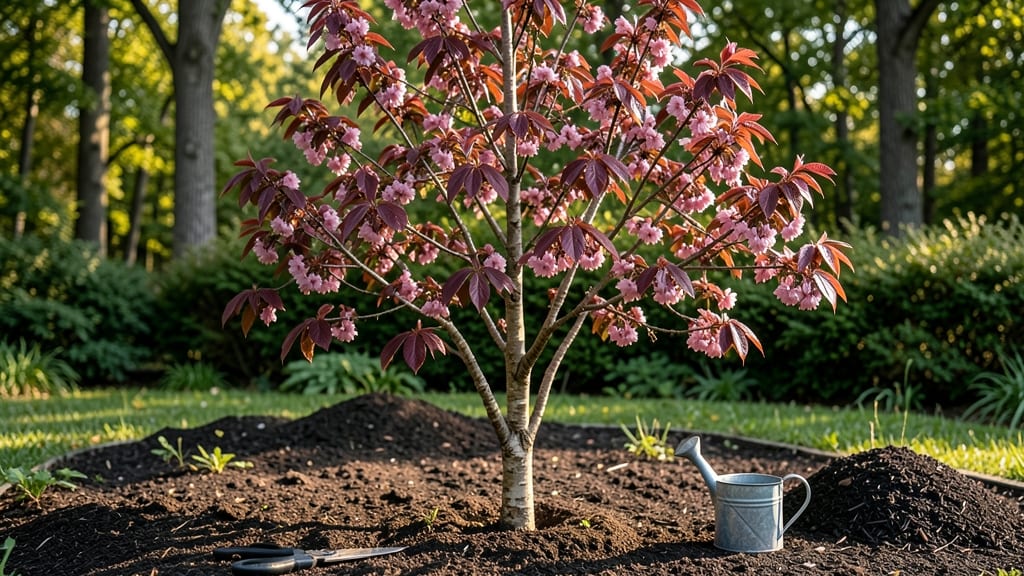
The rising sun eastern redbud tree in zone 4-8 bursts into bloom with soft pink flowers that outshine spring leaves. I planted mine in zone 5 last April, and it’s now the first tree to burst into color each year—right when I’m still dreaming of summer.
The key isn’t just the zone number but how well your microclimate matches its needs: sheltered spots in colder zones, extra moisture in hotter ones.
This tree handles winter better than most spring bloomers, but zone 4 gardeners should mulch heavily after planting—think 3-4 inches of shredded bark—to protect roots from freeze-thaw cycles. In zones 7-8, focus on consistent moisture during summer droughts; the foliage stays lushest when soil stays evenly damp.
The real magic happens in early spring when those clusters of magenta flowers appear, often before the leaves unfurl.
You’ll get 15-20 feet of graceful, arching branches with minimal care—just prune dead wood in late winter and avoid heavy shaping. The bark develops striking exfoliating patterns as it matures, adding year-round interest.
Plant it where you’ll see it from a window; its seasonal show is worth the wait, especially in colder zones where early color feels like a reward for surviving winter.
For zone 5-6 gardeners, timing matters most: plant in fall or early spring when soil is workable but not frozen. Zone 7-8 growers can extend the season by adding afternoon shade in extreme heat.
Either way, this tree delivers three seasons of interest—spring blooms, summer foliage, and winter bark—with almost no effort once established.
📚 In This Guide
- What you need
- Instructions
- Tips and common mistakes
- Wrapping up and next steps
What you need
- ● Eastern Redbud Tree ('Rising Sun'): 1–3 bare-root or container-grown saplings (3–5 ft tall for mature appearance faster)
- ● Choose certified disease-free stock from a reputable nursery
- ● Planting Site: Full sun to partial shade (6+ hours of sunlight daily for optimal blooms)
- ● Well-draining soil (amend heavy clay with compost or sand)
- ● Space: 15–20 ft apart (mature width) or 10 ft for smaller gardens
- ● Soil Amendments (if needed): 5–10 lbs of 10-10-10 fertilizer (sprinkled in planting hole)
- ● 2–3 inches of mulch (shredded bark or pine straw to retain moisture)
- ● Tools: Shovel or trenching shovel
- ● Garden fork (for aerating compacted soil)
- ● Gloves (heavy-duty for digging)
- ● Watering can or hose with gentle spray nozzle
- ● Erosion Control: Jute netting or biodegradable coir logs (for slopes)
- ● Support: Stakes + tree tie kit (for young trees in windy areas)
- ● Pest Deterrents: Neem oil spray (preventative for aphids or Japanese beetles)
- ● Seasonal Care: Slow-release fertilizer (applied in early spring)
- ● Pruning shears (for shaping after flowering)
How to plant and care for a rising sun eastern redbud tree in zones 4-8
Here's the straightforward method I've used to establish thriving redbuds in colder climates—no guesswork involved.
🌱 Step 1: Choose the Perfect Planting Spot and Prepare the Soil
Eastern redbuds thrive in full sun to partial shade, with at least 6 hours of direct sunlight daily for optimal blooming. I always pick a location with morning sun exposure—this helps prevent afternoon heat stress in hotter zones. Avoid low spots where cold air pools, as redbuds are sensitive to late spring frosts that can damage emerging flowers.
Test your soil first—redbuds prefer well-draining, slightly acidic soil with a pH between 6.0 and 7.0. If your soil is heavy clay, mix in 2-3 inches of compost and a handful of sand to improve drainage. Dig a hole twice as wide as the root ball but only as deep—planting too deep can suffocate the roots. Loosen the sides of the hole with a shovel to encourage root spread.
🪴 Step 2: Plant Your Eastern Redbud with Care
Gently remove the tree from its container and loosen any circling roots with your fingers—this prevents girdling as the tree matures. Place the redbud in the hole so the top of the root ball sits level with the surrounding soil. Press the backfill soil firmly around the roots to eliminate air pockets, but don’t compact it like concrete. Water deeply to settle everything in place.
Here's the thing—mulch properly to retain moisture and regulate soil temperature. Spread 3 inches of mulch (like shredded bark) around the base, keeping it 6 inches away from the trunk to prevent rot. Water again until the soil is evenly moist to a depth of 12 inches. You’ll know it’s right when water drains through the hole without pooling.
☀️ Step 3: Water and Fertilize for Strong Establishment
For the first year after planting, water your redbud deeply once a week—aim for 1-2 gallons per watering—unless rainfall provides 1 inch of moisture. Overwatering is a common mistake; you’ll see yellowing leaves or mushrooms if the soil stays soggy. Redbuds are drought-tolerant once established, but young trees need consistent moisture to develop strong roots.
Wait 6-8 weeks before fertilizing to let the roots recover from transplant shock. Then, apply a balanced, slow-release fertilizer (like 10-10-10) in early spring. Scatter the granules 6 inches from the trunk and water thoroughly to activate them. Avoid high-nitrogen fertilizers—they promote leafy growth at the expense of flowers, which is the redbud’s star feature.
⏰ Step 4: Prune and Protect for Long-Term Health
Prune your redbud immediately after flowering in late spring. Remove any dead, diseased, or crossing branches with clean cuts just outside the branch collar. Thin out crowded branches to improve airflow—this reduces the risk of fungal diseases. Never prune in fall or winter, as it stimulates new growth that can’t harden off before cold snaps.
In Zone 4 gardens, protect young trees during their first winter with burlap wraps or tree guards to shield against rodent damage and harsh winds. Mature redbuds handle cold well, but their bark is tender when young. You’ll notice healthier growth the following spring if you’ve taken these precautions.
🌿 Step 5: Enjoy and Maintain for Decades of Beauty
Eastern redbuds are low-maintenance once established, but a little attention keeps them stunning. Deadhead spent flowers in early summer to encourage a second, smaller bloom cycle. Watch for Japanese beetles—they love redbud leaves. A neem oil spray applied in late spring keeps them at bay without harming beneficial insects.
Your tree will reward you with vibrant pink blooms in early spring, followed by heart-shaped leaves that turn golden in fall. With proper care, a redbud can live for 50+ years, becoming a cherished focal point in your landscape. The best part? It’s one of the first trees to bloom, signaling the arrival of spring every year.
Tips & tricks for perfect eastern redbud tree planting
Took me years to learn these cold-climate secrets—here's how to give your redbud the best start possible.
Sunlight Strategy: That 6 hours of daily sunlight is non-negotiable for spring blooms, but here's the trick: if you're in Zone 8, provide afternoon shade during summer to prevent leaf scorch. I've seen redbuds in hotter microclimates struggle when they get full afternoon sun—watch for leaves curling at the edges as your warning sign.
Soil Science: The pH test is crucial, but don't stop there. For heavy clay soils, I mix in equal parts compost and coarse sand (not fine sand) to create pockets for root expansion. You'll know you've done it right when water drains through the hole in about 30 minutes—no puddling, no bone-dry soil. Too much sand can actually suffocate roots, so aim for a 20% sand ratio maximum.
Watering Wisdom: Those 1-2 gallons per week might seem like a lot, but think about it this way: a young redbud's root system needs to spread 12 inches deep in its first year. I use a soaker hose placed 6 inches from the trunk to deliver water slowly and evenly. The key is consistent moisture—not soggy soil. You'll notice the difference when leaves stay vibrant green instead of yellowing at the edges.
Winter Protection: For Zone 4 gardens, I've found that wrapping young trees with burlap (not plastic) during their first winter prevents sunscald damage. The secret is to leave the top third of the trunk exposed—this allows for natural air circulation while protecting the vulnerable lower bark. You'll see healthier bark growth the following spring if you've done this right.
Pro Tips for Rising Sun Eastern Redbud Tree Zone
- Took me years to learn these cold-climate secrets—here's how to give your redbud the best start possible.
- Sunlight Strategy: That 6 hours of daily sunlight is non-negotiable for spring blooms, but here's the trick: if you're in Zone 8, provide afternoon shade during summer to prevent leaf scorch.
- Soil Science: The pH test is crucial, but don't stop there.
Frequently asked questions
Got questions about growing the stunning Rising Sun Eastern Redbud in your garden?
You’re not alone! Here are answers to the most common queries—whether you’re a first-time gardener or a seasoned pro looking for tips to keep your tree thriving in zones 4-8.
What’s the best time of year to plant a Rising Sun Eastern Redbud?
The ideal planting window is early spring or early fall—when soil is workable but not frozen. This gives roots time to establish before extreme cold or heat sets in. Avoid planting in summer’s scorching heat or winter’s frost, which can stress young trees.
How cold-hardy is this tree, and will it survive winter in Zone 4?
The Rising Sun Eastern Redbud is USDA Zone 4-8 hardy and thrives in winter temperatures down to -30°F (-34°C). Just ensure it’s planted in well-draining soil and mulched heavily (3–4 inches) to protect roots from freeze-thaw cycles.
Can I grow a Rising Sun Eastern Redbud in a container, or is it best planted in the ground?
While possible, containers are not ideal for long-term growth—this tree can reach 10–15 feet tall with a spread of 10–15 feet. If you’re container-bound, use a large (20+ gallon) pot with drainage holes and repot every 2–3 years. For best results, plant in the ground for stability and root expansion.
Are Rising Sun Eastern Redbuds prone to pests or diseases, and how do I prevent them?
These trees are generally pest- and disease-resistant, but watch for aphids or Japanese beetles on new growth. Spray with neem oil or insecticidal soap if needed. Fungal issues (like powdery mildew) can occur in humid climates—improve airflow by pruning and avoid overhead watering.
Why isn’t my Rising Sun Eastern Redbud blooming as much as expected?
Bloom quantity depends on sunlight, age, and care. Ensure it gets full sun (6+ hours/day) and well-draining soil. Young trees (under 3 years) may bloom lightly—patience! Over-fertilizing can reduce flowers, so use a balanced, slow-release fertilizer in early spring. Prune in late winter to encourage vibrant blooms.
What’s a good alternative if I want a similar tree but with fewer mess or allergies?
If you love the Rising Sun’s spring color but want low-maintenance options, consider:
- Korean Spice Viburnum (Viburnum carlesii) – Fragrant blooms, Zone 4-8, minimal pests.
- Serviceberry (Amelanchier) – Edible berries, white flowers, Zone 4-8.
- Dwarf Fothergilla (Fothergilla gardenii) – Compact, fragrant blooms, Zone 5-8.
Wrapping up and next steps
The Rising Sun Eastern Redbud Tree is a stunning, cold-hardy addition for gardens in zones 4-8, offering vibrant spring blooms and year-round charm. Whether you're a seasoned gardener or just starting, this tree brings effortless beauty and resilience—perfect for transforming your outdoor space with minimal fuss.
Ready to invite this easy-care wonder into your landscape? Start by checking your local nursery or planning your planting spot today—your future garden will thank you! 🌸🌿