
Pruning
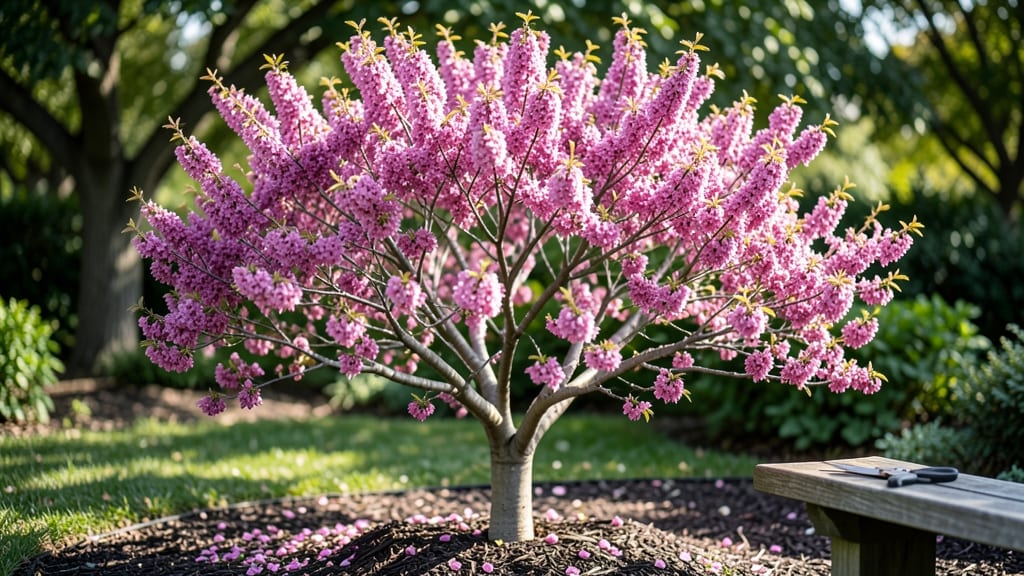
Your Rising Sun Redbud tree’s spring pruning is the secret to those jaw-dropping pink blooms that steal the show every summer. I’ve learned that timing cuts right after flowering—when those delicate petals fade—lets the tree focus its energy on next year’s display instead of struggling with new growth.
The key is patience: wait until the flowers drop completely before touching the branches.
This isn’t about aggressive trimming—just strategic cuts to open up the canopy and remove dead wood. You’ll need sharp pruners, a clean towel to wipe them between cuts, and about 30 minutes of focused work.
The goal is to shape the tree while keeping its natural grace, not turn it into a topiary masterpiece. Think of it as giving your tree a spa day: less stress, more beauty.
What you’ll end up with is a tree that bursts into color earlier and stays vibrant longer, with fewer bare spots where pests or disease could take hold. The blooms arrive in waves, starting from the bottom and working upward, creating a stunning vertical display that’s pure spring magic.
Plus, the heart-shaped leaves add texture as the flowers fade, keeping the show going all season.
Works just as well for young trees as established ones—just scale back the cuts accordingly. And don’t worry if you miss the perfect window; the tree’s resilient. Here’s how to make sure your Rising Sun Redbud puts on its best performance yet.
📚 In This Guide
- What you need
- Instructions
- Tips and common mistakes
- Wrapping up and next steps
What you need
- ● Pruning shears: Bypass pruners (sharp, clean, and sterilized with rubbing alcohol to prevent disease spread). Recommended: Felco F-2 or similar.
- ● Loppers: For thicker branches (1–2 inches in diameter). Look for: 8–12-inch handles with a ratcheting mechanism for ease.
- ● Pruning saw: Curved-tooth saw for branches over 2 inches thick. Bonus: A bypass blade for cleaner cuts.
- ● Gloves: Heavy-duty, cut-resistant gloves (e.g., Mechanix or similar) to protect hands from thorns.
- ○ Disinfectant: 70% isopropyl alcohol or a pruning sealant (optional but highly recommended for large cuts).
- ● Ladder: Sturdy, extendable ladder (12–16 feet) if your tree is tall. Safety first: Use non-slip feet and a spotter.
- ● Trash bags: Heavy-duty bags (2–3) for collecting pruned branches.
- ○ Marking twine or tape: To flag branches for removal (optional but helpful for planning).
- ● Handheld leaf blower: Clears debris from the work area quickly.
- ● Knee pads: For comfort if you’re working on the ground.
- ● Pruning paint: Seals large cuts (over ½ inch) to prevent disease. Choose: Copper-based or tree-specific sealant.
- ● Camera or phone: Snap before/after photos to track your tree’s progress!
Step-by-Step guide for pruning your Rising Sun Redbud tree in spring
Here's how to refresh your tree's shape while encouraging those stunning summer blooms.
Time Your Pruning for Optimal Bloom Production
Prune your Rising Sun Redbud immediately after flowering, typically in late April to early May when the blooms begin to fade. This timing ensures you don't cut off next year's flower buds, which form after blooms drop. The tree's natural cycle makes this the perfect window—waiting too long risks removing potential blooms.
Look for spent flowers turning brown and falling away. This is your cue that the tree has finished its spring show and is ready for maintenance. If you prune too early, you might accidentally remove flower buds that haven't fully developed yet. If you wait too late, you'll miss the best opportunity to shape the tree for summer growth.
Remove Dead, Damaged, or Crossing Branches First
Start by identifying and removing any dead, diseased, or broken branches—these are easy to spot as they're often brown, brittle, or missing bark. Cut these back to the main trunk or a healthy lateral branch. Next, look for branches that are rubbing against each other—these will eventually create wounds where pests or diseases can enter.
Use clean, sharp pruning shears to make 45-degree cuts just outside the branch collar, the swollen area where the branch meets the trunk. Avoid leaving stubs, as they can invite rot or decay. If a branch is larger than 1 inch in diameter, use a pruning saw instead. Always make cuts on the underside of the branch to prevent water from pooling and damaging the tree.
Thin the Canopy to Improve Airflow and Light Penetration
Step back and assess the tree's overall shape. Your goal is to open up the canopy so sunlight and air can reach the inner branches. Focus on removing branches that are growing inward or downward—they compete with others for space and often lead to a dense, tangled mess. Aim to reduce the canopy by about 20-25% to encourage new, vigorous growth.
When thinning, prioritize branches that are thinner than a pencil—these are easier to remove and less likely to leave large wounds. Make your cuts at the branch collar, and avoid over-pruning in one area. The Rising Sun Redbud responds well to light thinning, so don't be afraid to remove a few branches to improve the tree's structure. You'll see healthier foliage and more abundant blooms in the coming seasons.
Shape the Tree for a Balanced, Natural Look
Now it's time to refine the tree's shape. Look for branches that are growing at awkward angles or disrupting the tree's natural form. You can shorten branches by up to one-third of their length to maintain balance, but avoid heavy pruning—this can stress the tree and reduce flowering. Focus on creating an open, vase-like shape that allows light to filter through to the lower branches.
Use your pruning shears to make clean cuts just above a bud or lateral branch, angled slightly away from the bud. This encourages new growth in the right direction. Avoid cutting back to a stub or leaving a jagged edge, as this can lead to decay. Step back frequently to check your progress—you want the tree to look natural and balanced, not overly manicured.
Clean Up and Monitor for New Growth
After pruning, gather all the debris and dispose of it properly—either in a sealed bag or by burning it (if allowed in your area). This helps prevent the spread of diseases. Next, apply a layer of mulch around the base of the tree, keeping it 2-3 inches deep and 6 inches away from the trunk to protect the roots and retain moisture.
Over the next few weeks, watch for new shoots emerging from the pruned areas. This is a sign that the tree is responding well to the cuts. Water the tree deeply once a week if rainfall is scarce, and avoid fertilizing immediately after pruning—let the tree focus on healing first. By summer, you should see a fuller, healthier tree with plenty of energy stored for next year's spectacular blooms.
Tips & tricks for perfect Rising Sun Redbud spring pruning
Timing and technique make all the difference when pruning your Rising Sun Redbud—here's how to get it right.
Timing is Everything: The window for pruning after blooms fade is narrow—late April to early May is critical. I learned this the hard way after accidentally pruning too early and losing potential blooms. Look for those spent flowers turning brown and falling away; that's your exact cue. If you're unsure, wait until you see at least 50% of the blooms have dropped before starting.
Tool Prep Matters: Before you begin, sharpen your pruning shears and clean them with rubbing alcohol to prevent disease spread. I always sanitize tools between cuts on different branches, especially when dealing with potential infections. For branches over 1 inch thick, use a pruning saw—your shears won't cut cleanly otherwise. The underside cut technique (as mentioned in Step 2) is crucial for preventing water pooling that leads to rot.
Visual Cues for Pruning: When thinning the canopy (Step 3), think of creating a "sunburst" effect—you want light to penetrate all the way to the inner branches. Focus on removing branches that are growing straight up or downward; these compete with others for sunlight. A good rule of thumb is to remove any branch that's thinner than a pencil—these are easier to cut and less likely to leave large wounds. Step back frequently to check your progress from all angles.
Recovery Watch: After pruning, monitor for new shoots emerging within 3-4 weeks. This is your confirmation that the tree is responding well. If you don't see new growth within 6 weeks, you may have been too aggressive with your cuts. Remember, the Rising Sun Redbud responds best to light pruning—think of it as giving your tree a gentle haircut rather than a drastic makeover.
Pro Tips for Rising Sun Redbud Tree Spring
- Timing and technique make all the difference when pruning your Rising Sun Redbud—here's how to get it right.
- Timing is Everything: The window for pruning after blooms fade is narrow—late April to early May is critical.
- Tool Prep Matters: Before you begin, sharpen your pruning shears and clean them with rubbing alcohol to prevent disease spread.
Frequently asked questions
Got questions about pruning your Rising Sun Redbud Tree for stunning spring blooms? You’re in the right place! Here are some of the most common questions—and answers—to help you master the timing, technique, and care of this showstopper.
When is the best time to prune a Rising Sun Redbud Tree?
The ideal window is late winter to early spring, right after the last hard frost but before buds swell (typically February–March in most climates). This timing promotes healthy growth and vibrant blooms. Avoid pruning in fall or during active bloom—it stresses the tree and can reduce next year’s flowers. Pro tip: If you miss the spring window, wait until after blooming (late spring) but don’t delay too long!
How do I know if I’ve pruned too late?
If you prune after the buds open (when pink or purple blooms appear), you risk cutting off next year’s flowers since they form on last year’s wood. Signs of late pruning include stunted new growth or fewer blooms the following spring. Don’t panic—just focus on light shaping in future years and prioritize spring pruning going forward.
Can I prune a Rising Sun Redbud Tree in summer?
Summer pruning is possible but less ideal. If you must prune, do it after blooming (June–July) to avoid stressing the tree. Limit cuts to dead, diseased, or crossing branches—never remove more than 20% of the canopy at once. Summer pruning can stimulate weak, leggy growth, so it’s best reserved for emergencies or minor touch-ups.
Will pruning reduce the number of flowers on my Rising Sun Redbud?
Not if done correctly! Pruning removes old, congested wood and opens the canopy to sunlight, which actually encourages more blooms. Just avoid heavy pruning (over 30% of branches) in one season—this can temporarily reduce flowers. Focus on selective cuts to maintain an airy shape, and you’ll see lush, abundant blooms year after year!
What should I do if my Rising Sun Redbud isn’t blooming well?
Poor blooming often stems from over-pruning, poor sunlight, or nutrient deficiencies. Check these fixes:
- Sunlight: Ensure it gets full sun (6+ hours/day)—partial shade can reduce blooms.
- Pruning habits: Avoid cutting back old wood (where flowers form).
- Fertilizer: Apply a balanced, slow-release fertilizer in early spring.
- Watering: Deep water 1–2 times per week during dry spells.
Wrapping up and next steps
The Rising Sun Redbud Tree rewards your efforts with bursts of pink spring blooms that brighten any landscape—and it all starts with the right pruning.
By timing your cuts in late winter or early spring and following the techniques shared here, you’ll set the stage for lush foliage and vibrant summer growth. Now’s the perfect moment to grab those pruners and get started!
🌱 Your Next Step:
- Mark your calendar for late February to early March—ideal timing for pruning.
- Gather your tools (clean, sharp pruners + gloves) and head outdoors.
- Watch your Redbud transform into a springtime showstopper!