
Pruning
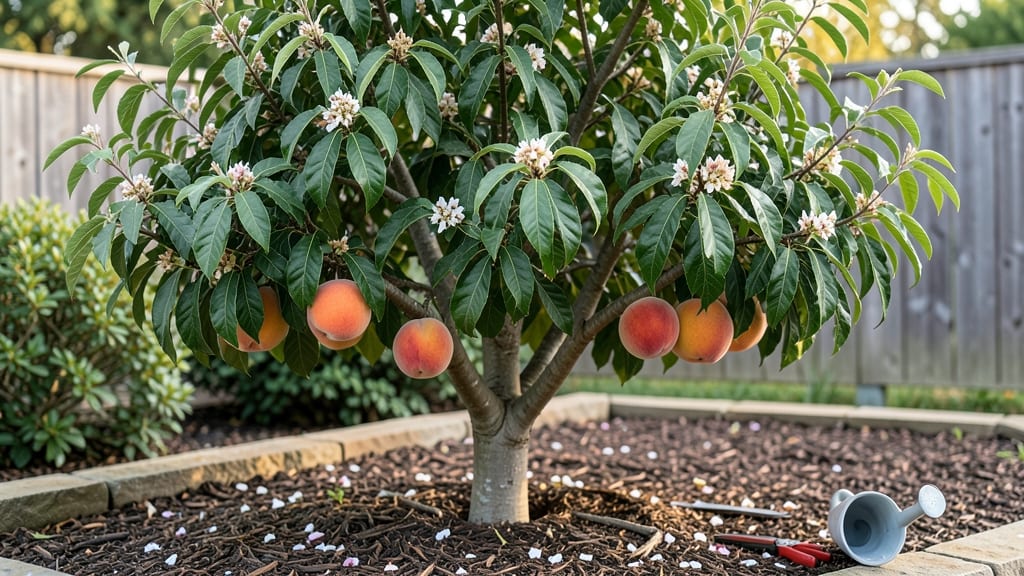
Growing a Rich Lady peach tree means summer after summer of sweet, juicy fruit that tastes like childhood memories—if you prune it right.
I’ve learned the hard way that skipping winter cuts leads to tangled branches and tiny, sour peaches, but mastering this tree’s unique needs transforms it into the most rewarding plant in your yard.
The secret starts with three key pruning sessions: late winter (before buds swell), summer (after harvest), and light touch-ups in fall. You’ll need sharp bypass pruners, a ladder, and a clear day to see the branches properly—no guesswork allowed.
This isn’t just about shaping; it’s about sunlight, airflow, and forcing the tree to focus its energy on fruit, not wild shoots.
By summer’s end, you’ll have a tree bursting with bright red peaches so sweet they’ll make neighbors ask for recipes. The right cuts mean fewer pests, easier harvesting, and trees that live for decades. Even if you’ve killed peach trees before, this method works—just follow the seasonal rhythm.
Works in zones 5-9, though southern growers should adjust timing to avoid late frosts. The same principles apply whether you’ve got a backyard or a small urban lot—just scale the tools. Let’s get those branches under control for a harvest that’ll make every bite worth the effort.
📚 In This Guide
- What you need
- Instructions
- Tips and common mistakes
- Wrapping up and next steps
What you need
- ● Pruning shears: Sharp, bypass-style shears (for clean cuts on branches up to ½ inch thick). Quantity: 1 pair.
- ● Pruning saw: A curved-tooth saw for thicker branches (½ inch and above). Quantity: 1.
- ● Loppers: Heavy-duty loppers for branches 1–2 inches thick. Quantity: 1 pair.
- ● Gloves: Leather or heavy-duty gardening gloves (to protect from thorns and sharp tools). Quantity: 1 pair.
- ● Disinfectant: 70% isopropyl alcohol or a pruning sealant (to prevent disease spread). Quantity: Small bottle.
- ○ Pruning sealant (optional): For larger wounds (over ½ inch), use a tree wound dressing or pruning paste.
- ● Ladder or step stool: If your tree is taller than 6 feet. Height: Adjustable or 8+ feet tall.
- ● Marking twine or flags: For tagging branches to prune later. Quantity: Small roll.
- ● Bucket or tarp: To collect pruned branches and debris. Size: Medium (5+ gallons).
- ○ Water spray bottle: For cleaning tools between cuts (optional but helpful).
- ● Weather check: Prune on a dry, cloudy day (avoid wet or windy conditions).
- ● Tree health assessment: Inspect the tree for diseases (e.g., brown rot) or pests before pruning.
- ● Safety gear: Safety glasses (to protect from debris) and closed-toe shoes.
- ● Clean workspace: Clear the area around the tree of obstacles (e.g., lawn furniture, pets).
- ● Pruning plan: Sketch a rough outline of cuts (focus on open center shape for peach trees). Pro tip: 💡 Use a reference image of a well-pruned Rich Lady peach tree!
- ● Extension pole saw: For high branches without a ladder.
- ● Tree pruning rope: For stabilizing larger branches during removal.
- ● Camera or phone: To document “before” and “after” shots of your pruning progress!
- ● Compost bin: For recycling pruned branches into mulch.
How to prune a Rich Lady peach tree for maximum fruit production
This is the pruning schedule I’ve used for years to keep my Rich Lady peach tree thriving—sweet, abundant fruit every season.
✂️ Step 1: Late Winter Pruning for Structure and Airflow
Start as soon as the tree is dormant but before buds swell—usually February or early March in most climates. This is when the tree’s energy is still conserved, and you won’t risk damaging new growth. Remove any dead, diseased, or crossing branches first; these compete with fruit production and invite pests.
Look for branches growing inward or rubbing against others—these will create weak spots and limit sunlight penetration. Cut them back to the trunk or a strong outward-growing branch. Aim to open the center of the tree so light reaches all branches. A good rule is to keep the center at least 12 inches wide for proper airflow.
Thin out branches that are too close together, leaving the strongest, most vigorous ones. You’ll see new buds forming along the remaining branches—these will become next year’s fruit clusters. Don’t worry if the tree looks sparse now; it’ll fill in beautifully by summer.
☀️ Step 2: Light Summer Pruning to Encourage Fruit Set
After the tree flowers but before the fruit sets, do a quick check in late May or early June. This isn’t about heavy pruning—just removing any suckers (shoots growing from the base or trunk) and any branches that are growing too vigorously at the expense of fruit production.
Look for branches with excessive leaf growth but few fruit buds. These are stealing energy from the developing peaches. Trim them back by one-third to redirect that energy. You’ll also want to remove any fruit clusters that are too close together—this prevents overcrowding and ensures larger, sweeter peaches.
Here’s the thing—peach trees produce fruit on both old and new wood, so don’t over-prune. Just enough to keep the tree balanced and healthy. If you see any branches with signs of disease (like brown, crumbly spots), prune those out immediately and sterilize your tools with rubbing alcohol.
✂️ Step 3: Post-Harvest Pruning for Winter Prep
Once you’ve harvested the last of your peaches—usually late August or September—give the tree a final trim. This isn’t about shaping so much as preparing for dormancy. Remove any branches that bore fruit this year but are now weak or dying. These won’t produce well next season.
Also, trim back any shoots that grew too fast after summer pruning. These are often leggy and won’t contribute much to next year’s harvest. Cut them back to a strong lateral branch or bud. This encourages a more compact, productive tree.
Finally, thin out any branches that are growing too close to the ground. These can harbor pests and diseases over winter. A good pruning session now means fewer surprises come spring. After pruning, apply a 2-3 inch layer of mulch around the base (but not touching the trunk) to protect roots from freezing temperatures.
⏰ Step 4: Ongoing Maintenance Throughout the Year
Pruning isn’t just a seasonal task—it’s an ongoing conversation with your tree. Check your Rich Lady peach tree monthly for any branches that are growing erratically or showing signs of stress. Remove them as soon as you spot them to keep the tree in top shape.
Pay special attention to water sprouts—these are fast-growing, vertical shoots that pop up after pruning or heavy fruiting. They look like they’re trying to reach for the sky, but they’re actually stealing energy from the rest of the tree. Snip them off at the base as soon as they appear.
If you notice any branches with peach leaf curl (a common fungal disease), prune those out immediately and dispose of them in the trash—not the compost. Sterilize your pruners with rubbing alcohol between cuts to prevent spreading disease. A little vigilance now saves a lot of heartache later.
Tips & tricks for perfect Rich Lady peach tree pruning
A few key insights that will help your Rich Lady peach tree thrive and produce those sweet, juicy peaches year after year—without the guesswork.
Timing is Everything: The February/March late winter pruning window is critical because it allows the tree to heal before new growth begins. I've seen trees stressed by pruning too early when buds are already swelling—this can lead to poor fruit set. If you miss this window, wait until just before buds break, but don't delay past early spring. The goal is to shape the tree while it's still dormant but ready to wake up.
Branch Selection Strategy: When choosing which branches to keep during Step 1, look for ones that grow outward at a 45-degree angle from the trunk. These will naturally form the tree's framework. I've learned the hard way that keeping too many vertical branches creates a "Christmas tree" shape that blocks sunlight from reaching the center. Aim for a more open vase shape—this maximizes sunlight exposure and airflow, both essential for fruit production.
Disease Prevention: Sterilizing your pruners with rubbing alcohol between cuts is more important than most gardeners realize. I've had to completely remove trees in the past because I skipped this step and spread peach leaf curl between branches. Always clean your tools before starting and after each diseased branch. Also, dispose of infected branches in the trash—not the compost—where the spores can survive and reinfect your tree.
Mulching Matters: That 2-3 inch layer of mulch after post-harvest pruning does more than just protect roots from freezing temperatures. It also helps retain moisture and regulates soil temperature. I've noticed my trees handle summer droughts much better when properly mulched. Just remember to keep the mulch 2-3 inches away from the trunk to prevent rot—this is a common mistake that can actually harm your tree.
Pro Tips for Rich Lady Peach Tree
- A few key insights that will help your Rich Lady peach tree thrive and produce those sweet, juicy peaches year after year—without the guesswork.
- Timing is Everything: The February/March late winter pruning window is critical because it allows the tree to heal before new growth begins.
- Branch Selection Strategy: When choosing which branches to keep during Step 1, look for ones that grow outward at a 45-degree angle from the trunk.
Frequently asked questions
Got questions about growing a Rich Lady peach tree? You’re not alone!
Here are answers to the most common queries—from pruning tips to troubleshooting—so you can keep your tree thriving and productive year-round.
When is the best time to prune a Rich Lady peach tree?
The Rich Lady peach tree benefits from two pruning sessions: late winter/early spring (before buds swell) to shape the tree and remove dead wood, and summer (after harvest) to thin out overcrowded branches. Avoid heavy pruning in fall—it stresses the tree and invites disease. Pro tip: Prune on a dry, sunny day to help wounds heal faster!
How do I know if I’m pruning too much or too little?
Over-pruning (removing more than 25% of the canopy at once) weakens the tree, while under-pruning leads to dense growth and poor fruit quality. Aim for 15–25% removal per year, focusing on:
- Dead, diseased, or crossing branches (cut at the branch collar).
- Suckers (shoots at the base) and water sprouts (vertical shoots).
- Thinning branches to improve airflow (aim for 6–8 main scaffold branches).
Rich Lady trees reward patience—light, strategic cuts yield sweeter fruit!
Will pruning affect the size or sweetness of the peaches?
Proper pruning boosts fruit size and sweetness by:
- Directing energy to fewer, larger peaches (vs. tiny, crowded ones).
- Improving sunlight penetration, enhancing sugar development.
- Reducing disease risk (fungus thrives in dense, shaded branches).
For Rich Lady trees, summer pruning after harvest is key—it balances growth and fruit load for next season’s bounty.
What should I do if my Rich Lady tree gets pests or diseases after pruning?
Pruning opens wounds, so act fast if you spot:
- Peach tree borers: Apply beneficial nematodes or borer-specific sprays in early spring.
- Powdery mildew: Spray with neem oil or baking soda mix (1 tbsp baking soda + 1 quart water + a drop of soap).
- Cankers: Prune infected branches 6 inches below the damage and sterilize tools with rubbing alcohol.
Preventative tip: Seal large pruning cuts with pruning sealant (for cuts > ½ inch) to deter pests.
Can I grow a Rich Lady peach tree in a container?
Yes, but with limitations! Rich Lady trees thrive in large containers (20+ gallons) with:
- Well-draining soil (mix potting soil + perlite).
- Full sun (6+ hours daily).
- Regular watering (containers dry faster—check soil weekly!).
Wrapping up and next steps
Growing a Rich Lady peach tree that bursts with sweet, juicy fruit year-round is totally within reach—with the right pruning know-how! 🌿 The key takeaway? Consistent, seasonal pruning keeps your tree healthy, productive, and disease-free, whether you're shaping it in winter or managing summer growth.
Start small, stay patient, and soon you’ll be harvesting abundant, flavorful peaches that’ll make your neighbors jealous.
Ready to take the next step? Grab your pruners, sketch a quick plan based on your tree’s age, and schedule your first pruning session—your future peach harvests will thank you!