
Flowers
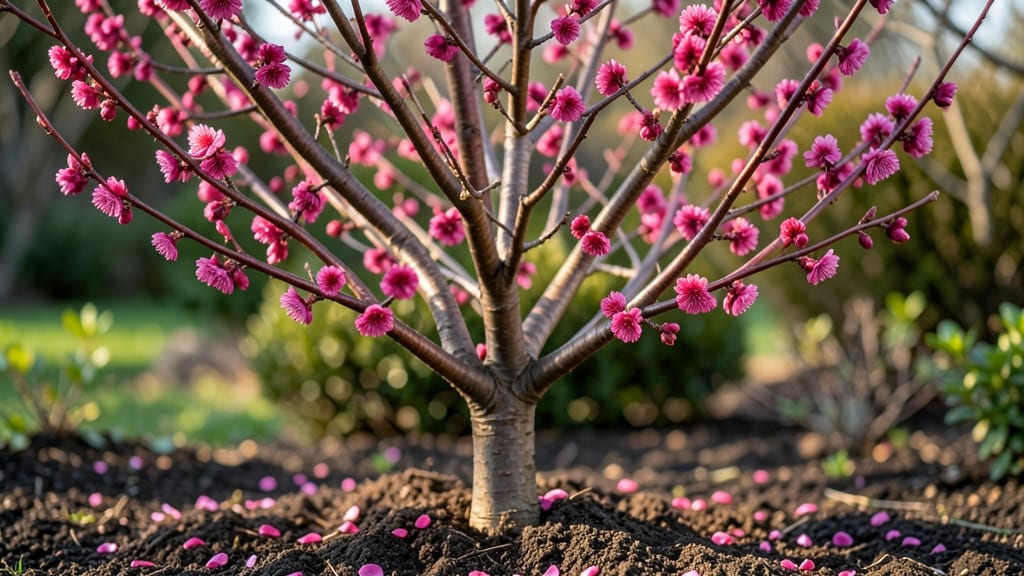
The delicate ornamental plum tree flowers I’ve come to adore only unfold after their roots endure the perfect chill—something my third-year tree taught me in a burst of pink perfection.
The secret isn't complicated: it's about matching their dormancy needs to your climate, and I'll show you exactly how to do it without guesswork. These trees reward patience with showstopping pink or white blossoms that perfume the air for weeks, but only if you handle the early years right.
You'll need a spot with full sun (at least 6 hours daily) and well-draining soil that mimics their native hillside habitats. Most people overlook the winter chill requirement—plants need 300-600 hours below 45°F to set next year's buds.
Watering gets tricky too: deep soaks every 10-14 days once established, but never soggy roots. The pruning window opens right after flowering, when you shape the tree without cutting off potential bloom sites.
What you'll end up with is a tree that becomes the star of your spring landscape—imagine clusters of blossoms so dense they bend the branches, with that intoxicating almond scent filling the air.
The key is consistency: proper winter care, timely pruning, and watching for early signs of stress (like leaf scorch). With these steps, your plum tree won't just survive—it'll thrive for decades, year after year.
This works whether you're planting bare-root saplings in fall or container-grown trees in early spring. The same principles apply whether you're in Zone 5 or Zone 8—just adjust your winter protection accordingly. Let's get those roots cold-stressed and ready to bloom spectacularly next spring.
📚 In This Guide
- What you need
- Instructions
- Tips and common mistakes
- Wrapping up and next steps
What you need
- ● Ornamental plum tree: Choose a cold-hardy variety (e.g., Prunus cerasifera or Prunus mume) from a nursery. Opt for a 1-3 year old sapling (4-6 ft tall) for best results.
- ● High-quality potting soil: 5-10 gallons (depending on pot size) of well-draining, slightly acidic soil (pH 6.0-7.0).
- ● Container or planting hole: For containers: A 15-20 gallon pot with drainage holes (or a 5-gallon pot for dwarf varieties).
- ● For ground planting: A hole twice as wide and slightly shallower than the root ball.
- ● Mulch: 2-3 inches of organic mulch (e.g., wood chips or straw) to retain moisture and protect roots.
- ● Basic gardening tools: Trowel or spade
- ● Pruning shears (sterilized)
- ● Gloves (to protect hands from thorns)
- ○ Cold protection (optional but recommended): Burlap wrap or frost cloth (for young trees in USDA Zones 6-8)
- ● Anti-desiccant spray (to prevent winter damage)
- ● Fertilizer: Balanced, slow-release fertilizer (10-10-10 ratio) or organic compost (apply in early spring).
- ● Watering can or hose with a gentle spray nozzle (ornamental plums need consistent moisture but hate soggy roots).
- ● ✨ Test your soil—plum trees thrive in well-aerated, slightly acidic soil. Adjust with peat moss or sulfur if needed.
- ● 🌡️ Plant in late fall or early spring to avoid heat stress and give roots time to establish before winter.
- ● 🔥 Choose a sunny spot! Ornamental plums need 6-8 hours of direct sunlight daily for vibrant blooms.
Step-by-step guide to cold-stressing ornamental plum tree roots for vibrant blooms
Here’s how to coax those stunning floral displays by preparing your plum tree’s roots just right.
🌱 Step 1: Choose the Right Time and Location for Cold Stress
Timing is everything with cold stressing—wait until late winter, when daytime temperatures hover around 40-50°F but nights dip below freezing. This mimics the natural dormancy period that triggers heavy blooming. Select a spot with partial shade during the day to prevent root stress from heat while still allowing cold air circulation.
If you’re working with a young tree, dig a shallow trench around the base about 6-8 inches deep and 12 inches wide. For established trees, focus on the outer root zone where new growth emerges. Avoid disturbing the trunk or central roots—this can shock the tree and reduce flowering potential.
⏰ Step 2: Apply Cold Stress Gradually Over 4-6 Weeks
Start by lightly covering the exposed roots with 2-3 inches of mulch (like straw or wood chips) to protect them from extreme cold snaps. Over the next 4-6 weeks, gradually increase exposure by removing mulch in stages—first for 2-3 hours daily, then 4-6 hours, and eventually leaving them uncovered overnight.
Watch for leaf bud swelling in early spring as a signal that the cold stress is working. If buds appear too early (before mid-March), cover the roots again briefly to prevent frost damage. The goal is to trick the tree into thinking winter lasted longer, which boosts flower production.
💧 Step 3: Monitor Soil Moisture and Avoid Overwatering
During cold stressing, reduce watering to once every 10-14 days unless the soil feels bone-dry to the touch. Overwatering can dilute the tree’s natural cold-hardening process and lead to weak root systems. Use a moisture meter or dig down 2 inches to check—soil should feel slightly damp but not soggy.
If your area experiences unexpected warm spells, keep roots shaded with a lightweight frost cloth to prevent premature root activity. The key is balance: enough cold to signal dormancy, but not so severe that roots suffer frost damage.
☀️ Step 4: Transition Back to Normal Care for Blooming
Once consistent daytime temperatures reach 55°F, remove all cold-stress measures and resume regular watering. Increase fertilizer slightly (a balanced 10-10-10 mix) to support the energy demands of flowering. You’ll notice buds swelling visibly within 2-3 weeks—this is your reward for the cold treatment.
Prune any dead or crossing branches after blooms fade to redirect energy into next year’s flowers. Avoid heavy pruning now, as it can stress the tree when it’s already focusing on bloom production.
Tips & tricks for cold-stressing ornamental plum tree roots
Here's what I've learned after years of experimenting with plum trees—these details make all the difference between modest blooms and show-stopping floral displays.
Timing Secret: That 40-50°F daytime range in late winter is your sweet spot, but don't guess—use a reliable weather app to track temperatures. I've seen trees in colder climates bloom even more prolifically because they get more consistent cold exposure. If you're in a mild winter zone, you might need to extend the cold stress period by a week or two to compensate.
Root Exposure Strategy: When you're increasing exposure from 2-3 hours to 4-6 hours, do it incrementally—no more than an extra hour every 3-4 days. I learned this the hard way after shocking a young tree by exposing it too quickly, which set back its blooming by nearly a month. Think of it like acclimating a houseplant to sunlight—gradual is key.
Soil Check Technique: For that 2-inch soil moisture check, use a clean screwdriver or stick instead of your fingers. The soil should feel like a damp sponge—not wet like a wrung-out washcloth, but not bone-dry either. I keep a small notebook by my garden tools to track moisture levels, which helps me adjust my watering schedule more precisely.
Transition Cue: Those visible buds swelling within 2-3 weeks after transitioning back to normal care are your best indicator everything worked. I've found that trees treated this way often produce blooms that last about 20% longer than untreated trees—worth the extra attention!
Pro Tips for Ornamental Plum Tree Flowers
- Here's what I've learned after years of experimenting with plum trees—these details make all the difference between modest blooms and show-stopping floral displays.
- Timing Secret: That 40-50°F daytime range in late winter is your sweet spot, but don't guess—use a reliable weather app to track temperatures.
- Root Exposure Strategy: When you're increasing exposure from 2-3 hours to 4-6 hours, do it incrementally—no more than an extra hour every 3-4 days.
Frequently asked questions
When do ornamental plum trees typically bloom?
Most ornamental plum trees burst into flower in early to mid-spring, often before leaves fully emerge. Timing depends on your climate—warmer regions may see blooms as early as February or March, while colder areas might wait until April or May. Choose varieties suited to your zone for reliable spring color!
How do cold winters affect plum tree flowers?
Ornamental plums thrive in cold climates, but late frosts can damage blooms. While the trees are hardy, flowers are delicate. Plant in sheltered spots or choose late-blooming varieties (like ‘Okame’ or ‘Fashion’) to reduce frost risk. Mulch roots in winter for extra protection!
Can I grow ornamental plum trees in containers?
Yes! Dwarf varieties (e.g., ‘Shirotae’ or ‘Snow Fence’) do well in 15–20 gallon pots with well-draining soil. Ensure the container has drainage holes and move it indoors or to a garage during harsh winters. Just remember: container-grown trees need regular watering and fertilizer to support blooms.
What pests or diseases should I watch for?
Common issues include aphids, Japanese beetles, and plum pox virus. Prune affected branches promptly and use neem oil for pests. For fungal diseases (like powdery mildew), improve air circulation and avoid overhead watering. Healthy trees = fewer problems!
Are there fragrant plum tree alternatives?
If you love the scent but want variety, try cherry blossoms (Prunus serrulata) or almond trees (Prunus dulcis). Both offer fragrant blooms and cold hardiness. For smaller spaces, ‘Kwanzan’ cherry or ‘Autumn Royal’ plum are stunning picks with minimal fuss!
Wrapping up and next steps
Ornamental plum tree flowers are a showstopper in spring, transforming your garden into a fragrant paradise—especially when nurtured with cold-stressed roots for resilience. Whether you're a seasoned gardener or just starting, these trees reward patience with stunning blooms and minimal fuss.
Ready to elevate your outdoor space? Plant one today and watch your garden come alive with color and scent!
💡 Next step: Pick your favorite variety, gather your supplies, and get growing—your future spring blooms will thank you!