
Pruning
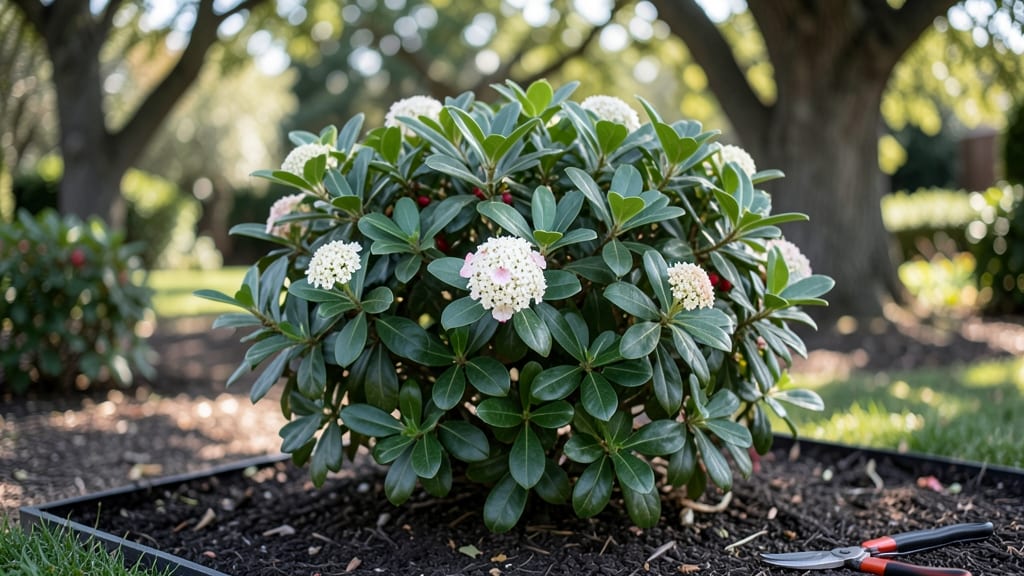
Your Italian Christmas tree thrives with strategic pruning—the secret to keeping its glossy leaves vibrant through winter and beyond. I learned this the hard way when my first Skimmia shrub turned into a lopsided mess after holiday decorations came down.
The key isn’t just cutting back, but timing it right to encourage dense growth before the cold sets in.
This evergreen gem handles frost like a champ, but it still needs a little help staying lush. Prune right after flowering in late winter or early spring, removing one-third of the oldest stems at the base.
For holiday displays, you can lightly shape it in fall—just avoid heavy cuts that stress the plant before winter. A well-pruned tree stays compact, bushier, and ready for next year’s berries.
You’ll end up with a shrub that looks as good in January as it does in December, whether it’s gracing your patio or tucked against a winter window. The glossy leaves stay rich green, and those red berries (if you have a female plant) add a pop of color year-round.
Plus, it’s tough enough to handle snow and wind, making it the perfect low-maintenance holiday star.
Works equally well as a container plant on a porch or planted in the ground near a festive entryway. The same pruning rules apply—just adjust for your climate. Let’s get those shears ready for cuts that keep your tree thriving through every season.
📚 In This Guide
- What you need
- Instructions
- Tips and common mistakes
- Wrapping up and next steps
What you need
- ● Pruning shears: Bypass pruners (for small branches, 2–4 inches thick). Pro tip: 💡 Choose sharp, stainless-steel blades for clean cuts.
- ● Loppers: For medium branches (4–12 inches thick). Pro tip: 🔥 Opt for bypass loppers to avoid crushing stems.
- ● Pruning saw: For thick branches (over 12 inches). Pro tip: ✨ A curved blade glides through wood effortlessly.
- ● Extension pole: 6–10 feet long (for high branches). Pro tip: 🎯 Look for a telescoping pole with a saw attachment.
- ● Gloves: Heavy-duty, cut-resistant (to protect hands from thorns or rough bark).
- ● Disinfectant (70% isopropyl alcohol or bleach solution): To sterilize tools between cuts and prevent disease. Pro tip: 🌡️ Wipe tools before and after use!
- ● Italian Christmas tree (e.g., Cupressus macrocarpa, Picea pungens, or Abies concolor): Mature tree (5–15 years old) with dense foliage.
- ○ Pruning sealant (optional but recommended): For large cuts to prevent disease (e.g., Tanglefoot Tree Wound Pruning Sealer).
- ● Tarp or drop cloth: To collect debris and protect the ground.
- ● Watering can or hose: For post-pruning hydration.
- ● Weather check: Prune on a dry, calm day (avoid wind or rain).
- ● Safety gear: Safety glasses (to shield from debris).
- ● Knowledge of tree anatomy: Familiarize yourself with leader cuts, thinning cuts, and heading cuts for Italian varieties.
- ● Time commitment: 2–4 hours for a medium-sized tree (plan for breaks!).
How to prune an Italian Christmas tree for year-round growth
Here's how to keep your Italian Christmas tree thriving—no dead branches or bare spots in sight.
Time Your Pruning for Maximum Growth
Prune your Italian Christmas tree in early spring (March) when new growth begins. This is the best time because the plant is entering its active growing season, and cuts will encourage fresh, lush foliage. Avoid pruning in late fall or winter, as the plant is dormant and won’t recover well.
If you notice leggy growth or sparse branches, a light trim in late summer (August) can also help. Just avoid heavy pruning then—focus on shaping rather than removing large sections. The key is to work with the tree’s natural rhythm, not against it.
Use the Right Tools and Technique
Grab your sharp, clean pruning shears—dull blades tear stems and leave ragged cuts that heal poorly. Sterilize them with rubbing alcohol before and after use to prevent spreading disease. For thicker branches, use bypass pruners to make clean cuts without crushing the stem.
When pruning, cut just above a leaf node (the point where leaves or branches grow). This encourages new growth from that spot. Avoid cutting into old wood—if a branch is bare and woody, it won’t regrow, so skip it. Focus on branches that are overcrowded, crossing, or dead to improve airflow and sunlight penetration.
Shape for Balance and Airflow
Step back and assess your tree’s shape before making cuts. The goal is to maintain a natural, open structure—this prevents disease and makes the tree easier to care for. Remove any branches that rub against others or grow inward, as these can cause damage or block light from reaching the center.
For a fuller look, trim back the outermost growth slightly to encourage bushier inner branches. Avoid shearing (cutting evenly all around), as this can make the tree look unnatural and stunted. Instead, work selectively to fill gaps and maintain a rounded, balanced silhouette.
Post-Pruning Care for Healthy Recovery
After pruning, give your tree a light watering to help it recover. The stress of cutting stimulates new growth, but the plant needs moisture to support it. Avoid fertilizing right after pruning—wait until 4-6 weeks later when new growth appears. This gives the tree time to heal without competing with nutrient uptake.
Keep an eye on the pruned areas over the next few weeks. If you see yellowing leaves near cuts, it’s normal—the tree is redirecting energy. If the leaves turn brown or crispy, you may have pruned too late in the season. Adjust your timing next year for better results.
Tips & tricks for perfect Italian Christmas tree pruning
Took me years of trial and error to figure out these game-changing tricks for keeping your Italian Christmas tree looking lush year-round.
Timing Secret: The early spring pruning in March is non-negotiable for best results, but here's what nobody tells you—if you miss that window, don't panic. A light shaping trim in August can still help, but focus only on removing dead branches or crossing growth. The key is to never remove more than 25% of the tree's foliage in any single session, or you'll shock the plant's growth cycle.
Tool Technique: I learned this the hard way after ruining three branches—always sterilize your pruning shears with rubbing alcohol before AND after each cut. The sap from Italian Christmas trees contains natural oils that can harbor bacteria between cuts. For thicker branches, use bypass pruners to make clean cuts without crushing the stem, which prevents disease entry points. And here's a pro move: Wipe down the blades with a damp cloth after each session to remove any residual sap.
Shape Strategy: When assessing your tree's shape, think of it like sculpting—you're not just cutting branches, you're creating airflow pathways. Remove any branches that grow inward or rub against others first, as these are the biggest culprits for disease. For that fuller look, trim back the outermost growth by about 1/3, but never cut into old wood. The tree will only grow from fresh green stems where leaf nodes are visible.
Recovery Hack: After pruning, give your tree a light watering but don't overdo it—the roots need time to recover from the stress. Here's what I do: Water thoroughly once, then wait 3-4 days before watering again. This mimics natural rainfall patterns and prevents root rot. And remember, the 4-6 week wait before fertilizing is crucial—your tree is redirecting all its energy to healing those cuts, not growing new leaves.
Pro Tips for Italian Christmas Tree
- Took me years of trial and error to figure out these game-changing tricks for keeping your Italian Christmas tree looking lush year-round.
- Timing Secret: The early spring pruning in March is non-negotiable for best results, but here's what nobody tells you—if you miss that window, don't panic.
- Tool Technique: I learned this the hard way after ruining three branches—always sterilize your pruning shears with rubbing alcohol before AND after each cut.
Frequently asked questions
Got questions about keeping your Italian Christmas tree (like Pinus pinea or Cupressus sempervirens) lush year-round? Here are some common ones—and expert answers to keep your tree thriving!
When is the best time to prune an Italian Christmas tree?
Prune your tree late winter to early spring (February–March) before new growth starts. Avoid heavy pruning in summer or fall, as it stresses the tree. For light shaping, you can trim after Christmas, but never during winter dormancy—it weakens the tree. Pro tip: Use clean, sharp shears to prevent disease!
How much should I trim off my Italian Christmas tree?
Never remove more than 25% of the foliage in one session. Focus on:
- Dead or crossing branches
- Overgrown tips to encourage bushier growth
- Branches blocking sunlight from inner foliage
Can I prune my Italian Christmas tree after it’s been decorated?
Yes! After removing holiday ornaments, inspect the tree for damaged branches (from lights, tinsel, or weight). Trim only the affected areas—never prune healthy growth just because it’s post-holiday. Brush off dust or sap residue first to avoid spreading pests.
What if my tree looks sparse after pruning?
Sparse growth often means over-pruning or poor soil/nutrients. Try these fixes:
- Fertilize in spring with slow-release, acidic fertilizer (Italian pines love pH 5.0–6.5).
- Water deeply 1–2 times per week (drought stress causes thinning).
- Mulch the base with pine bark or wood chips to retain moisture.
Are there alternatives to pruning for a fuller Italian Christmas tree?
If pruning feels too intense, try:
- Thinning cuts: Remove select inner branches to let sunlight reach the center.
- Pinching tips: Lightly trim new growth tips in spring to encourage branching.
- Shear lightly: Use hedge shears for Cupressus to maintain shape without harsh cuts.
Wrapping up and next steps
Transforming your Italian Christmas tree into a year-round beauty is simpler than you think! By mastering the art of strategic pruning—timing, tools, and techniques—you’ll foster lush, vibrant growth and extend its life effortlessly.
Whether you’re a seasoned gardener or a curious beginner, these steps empower you to nurture your tree with confidence.
Ready to give your tree the care it deserves? Grab your pruners, mark your calendar, and start your first cut today! 🌿✨ Your tree (and future holiday decor) will thank you.