
Pruning
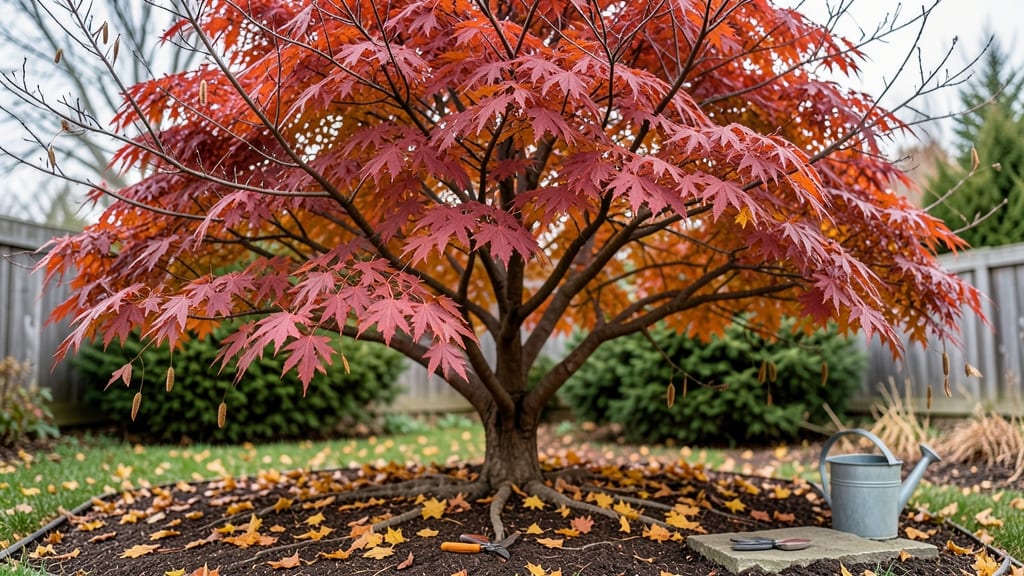
Growing a red maple tree in Colorado’s high elevations means embracing its rugged charm—these trees thrive where others falter, their fiery autumn colors brightening mountain landscapes. I’ve watched mine stand tall through Denver’s sudden frost and Fort Collins’ dry winds, proving they’re tougher than they look.
The key lies in understanding their needs: cooler nights, well-draining soil, and strategic pruning to handle our dramatic weather swings.
Planting in early spring or fall gives roots time to establish before Colorado’s harsh winters, and spacing them 15-20 feet apart prevents competition for water in our thin mountain soils. Mulch heavily to retain moisture—those first few years are critical for root development.
Once established, they’re surprisingly low-maintenance, but pruning in late winter (before buds swell) keeps their structure strong against our high-altitude winds.
You’ll love how these trees transform your yard: vibrant red foliage in fall, delicate samaras dancing in the breeze, and that iconic red bark that stands out against Colorado’s rocky terrain.
They handle our altitude like pros, even outshining native species in some cases. Just watch for leaf spot fungus—keep foliage dry and prune for airflow to avoid summer outbreaks.
For Colorado gardeners, the Autumn Blaze and October Glory varieties are top performers, their disease resistance making them ideal for our challenging climate. With the right care, your red maple will become a mountain landmark, its colors rivaling any aspen grove. Let’s get yours growing strong!
📚 In This Guide
- What you need
- Instructions
- Tips and common mistakes
- Wrapping up and next steps
What you need
- ● Pruning shears: Bypass shears (for cuts under ½ inch) – 1 pair (look for sharp, stainless steel blades for clean cuts).
- ● Loppers: Bypass or anvil type (for cuts up to 1.5 inches) – 1 pair (pivoting handle for leverage).
- ● Pruning saw: Curved-tooth or bow saw (for branches 2+ inches thick) – 1 saw (avoid straight-tooth saws—they tear wood).
- ● Extension pole: 10–15 ft telescoping pole (for high branches) – 1 unit (with a saw or shears attachment).
- ● Work gloves: Heavy-duty, cut-resistant – 1 pair (grip-enhancing for safety).
- ● Safety gear: Safety glasses (ANSI-rated)
- ● Ear protection (if using a chainsaw)
- ● Steel-toe boots or work shoes
- ● Disinfectant: 70% isopropyl alcohol or pruning sealant – small bottle (to sterilize tools and prevent disease).
- ● Heavy-duty trash bags: 20–30 gallon – 2–3 bags (for debris disposal).
- ● Chainsaw: Gas or electric (for large branches) – 1 unit (if tree is mature).
- ● Ladder: Aluminum extension ladder (20+ ft) – 1 ladder (with non-slip feet).
- ● Tree wrap: Plastic or fabric – roll (to protect bark from sun scald post-pruning).
- ● Pruning paint: Tree wound dressing – small jar (for sealing large cuts, though not always necessary).
- ● Weather check: Forecast for dry, calm conditions – essential (avoid pruning during wet or windy Colorado mountain weather).
Step-by-Step guide for pruning red maple trees in Colorado's mountain climate
High-altitude pruning demands precision—follow these season-tested techniques for vibrant growth.
Time Pruning to Colorado's Mountain Seasons
Prune red maples in late winter to early spring (February through March) when the tree is still dormant but before buds swell. This timing avoids stressing the tree during Colorado's unpredictable spring thaw cycles. In high-elevation zones above 6,500 feet, wait until mid-March to account for later bud break.
Never prune during summer heatwaves or late fall—both periods invite disease pressure from fungal spores thriving in Colorado's dry, windy conditions. I've seen maples pruned in September develop black spot infections within weeks, so timing is critical for hardy mountain growth.
Remove Dead, Diseased, or Weak Branches First
Start by eliminating deadwood—branches that snap when bent or have no green tissue beneath the bark. Use sharp loppers or pruning saws to make clean cuts just outside the branch collar. Colorado's thin mountain air accelerates decay in open wounds, so avoid leaving stubs.
Next, target crossing branches that rub together or grow inward toward the trunk. These create entry points for maple borers, a common pest in Colorado's high country. Remove these first—they're the weak points that compromise the tree's structural integrity during mountain storms.
Thin the Canopy for Light Penetration
Selectively remove branches to open the canopy to at least 50% sunlight penetration. In Colorado's dense mountain forests, shade-loving understory plants compete aggressively with young maples. Aim to maintain a balanced silhouette—no branch should exceed one-third the diameter of the trunk below it.
Look for branches that grow at acute angles (less than 45 degrees) to the trunk. These are prone to splitting during Colorado's sudden windstorms. Cut these back to a lateral branch with a stronger attachment point, always making cuts at a 45-degree angle to prevent water pooling in the wound.
Shape for Wind Resistance in Mountain Conditions
Round the tree's outline to reduce wind resistance—a critical adaptation for Colorado's exposed ridges. Avoid heavy pruning on one side, which creates an imbalance that can topple trees in 40+ mph mountain winds. If you must prune unevenly, compensate by removing equal weight from the opposite side.
Pay special attention to the upper canopy. In Colorado's high country, ice storms can accumulate 1-2 inches on branches. Prune to maintain a gradual taper from base to crown, ensuring no single branch carries excessive weight. This simple adjustment prevents the kind of catastrophic limb failure I've seen after just one mountain winter.
Clean Up and Apply Protective Measures
Remove all pruned material from the site immediately—leaving branches on the ground invites maple wilt pathogens to reinfect the tree. Sterilize your tools with 70% rubbing alcohol between cuts to prevent spreading disease between wounds.
After pruning, apply a wound dressing only if the cut exceeds 2 inches in diameter. For smaller wounds, let the tree seal naturally—modern research shows sealants often trap moisture, promoting rot in Colorado's variable humidity. Water deeply afterward to help the tree recover from the stress of pruning in the dry mountain air.
Tips & tricks for pruning red maple trees in Colorado's mountain climate
High-altitude pruning isn't just about cutting branches—it's about preserving the tree's health and resilience against Colorado's harsh conditions. Here's what I've learned from years of working with mountain maples.
Seasonal Timing Matters: The late winter to early spring window (February through March) is non-negotiable for Colorado's high country. I've seen maples stressed beyond recovery when pruned during summer heat or late fall—those conditions create perfect breeding grounds for fungal spores. In elevations above 6,500 feet, wait until mid-March to account for delayed bud break. The key is catching the tree dormant but before sap starts flowing heavily.
Cutting Technique for Mountain Conditions: When removing branches in Step 2, make your cuts just outside the branch collar at a 45-degree angle—this prevents water pooling that leads to rot in Colorado's variable humidity. I've had to replace entire limbs that failed because of improper cuts during storms. For branches thicker than 2 inches, use a pruning saw to avoid tearing the bark, which creates larger wounds vulnerable to maple borers.
Canopy Balance is Critical: The 50% sunlight penetration guideline in Step 3 isn't arbitrary—it's about creating an open structure that prevents dense shade from inviting fungal growth. I recommend using a clinometer app to measure branch angles; anything under 45 degrees to the trunk should be removed. These acute-angle branches are particularly vulnerable to splitting during Colorado's sudden windstorms that can exceed 40 mph. Always cut back to a lateral branch with a stronger attachment point.
Post-Pruning Care for Mountain Trees: After cleaning up all pruned material (Step 5), I've found that deep watering with a slow-release fertilizer helps trees recover faster in Colorado's dry mountain air. For wounds over 2 inches, apply a thin layer of wound dressing—but only after ensuring the cut is completely clean. The most important recovery tip? Sterilize your tools between cuts with 70% rubbing alcohol to prevent cross-contamination of fungal spores that thrive in our high-altitude climate.
Pro Tips for Red Maple Tree Colorado
- High-altitude pruning isn't just about cutting branches—it's about preserving the tree's health and resilience against Colorado's harsh conditions.
- Seasonal Timing Matters: The late winter to early spring window (February through March) is non-negotiable for Colorado's high country.
- I've had to replace entire limbs that failed because of improper cuts during storms.
Frequently asked questions
Got questions about growing and maintaining red maple trees in Colorado’s high elevations? You’re not alone! Here are answers to the most common concerns—from pruning tips to seasonal care—so you can keep your tree thriving in the Rockies.
When is the best time to prune a red maple tree in Colorado?
The ideal time is late winter to early spring (February–March), when the tree is dormant but before new growth begins. Avoid pruning in fall, as it can stimulate late-season growth vulnerable to frost damage. For high-elevation areas, wait until after the last hard freeze to minimize stress.
Can red maples survive Colorado’s harsh winters?
Yes! Red maples are hardy to USDA Zones 3–9, making them well-suited for Colorado’s climate. However, young trees may need winter protection (like burlap wraps) in exposed areas. Ensure proper drainage and mulch to prevent root freeze. Pro tip: Avoid heavy pruning in late summer or fall, as it reduces the tree’s ability to heal before winter.
How do I know if my red maple tree is healthy or diseased?
Healthy red maples have vibrant green leaves, no excessive leaf drop, and smooth bark. Watch for signs like:
- Yellowing leaves (nutrient deficiency or overwatering)
- Black spots or tar-like sap (fungal diseases like anthracnose)
- Dieback in branches (often caused by Verticillium wilt or environmental stress)
Should I remove large branches or hire a professional?
For branches over 3 inches in diameter, it’s safest to hire a certified arborist—especially in Colorado’s windy conditions. DIY pruning is fine for small branches, but large cuts require proper tools (like a chain saw) and knowledge of branch collar techniques to avoid damage. Pro tip: Never remove more than 25% of the canopy in one season to avoid shocking the tree.
Are there alternatives to red maples for Colorado’s high elevations?
If red maples don’t suit your site, consider these hardy alternatives:
Tree
Zone Hardiness
Key Benefit
Colorado Blue Spruce
2–7
Drought-tolerant, evergreen, and iconic for mountain landscapes
Quaking Aspen
2–6
Fast-growing, adaptable to poor soils, and stunning fall color
Green Ash
4–9
Tolerates wet soils and urban pollution
Wrapping up and next steps
Pruning your red maple tree in Colorado’s high elevations is all about patience, precision, and timing—just like mastering the art of mountain gardening! 🌲 By following the right techniques, you’ll ensure your tree thrives against the challenges of altitude, cold snaps, and thin soils.
Whether you’re a seasoned gardener or just starting, every careful cut brings you closer to a stunning, healthy specimen that paints your landscape with vibrant color for years to come.
Ready to take action? Grab your tools, mark your calendar for late winter or early spring, and get pruning! Your red maple—and your Colorado landscape—will thank you. 💪