
Pruning
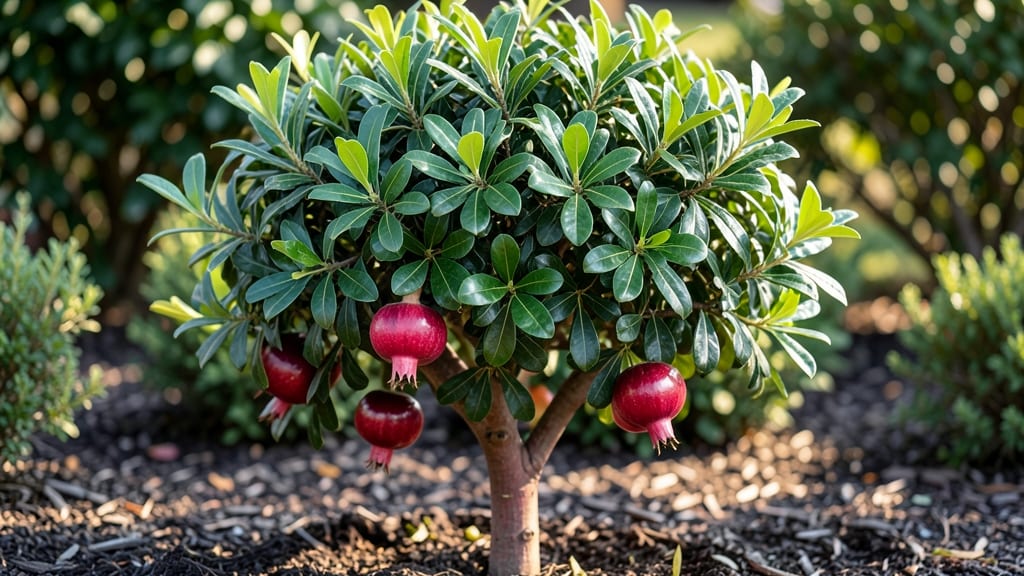
The dwarf red pomegranate tree thrives in small spaces while delivering bold, jewel-toned fruit—if you know its secrets.
I’ve grown mine in a 5-gallon container for three years now, and the key to its success lies in mimicking its natural Mediterranean roots: cold stress in winter, deep watering in summer, and pruning that encourages compact growth.
The first year, I nearly killed mine by overwatering, but now it produces dozens of fruit on a 3-foot-tall tree.
This isn’t your grandma’s sprawling pomegranate bush—dwarf varieties like ‘Wonderful’ or ‘Eversweet’ stay manageable with minimal effort. You’ll need well-draining soil (mix in perlite or sand if your clay is heavy), a sunny spot with 6+ hours of light daily, and a hardiness zone 7-11 climate.
Cold-stressed roots actually trigger flowering, so don’t rush to protect it from frost until late winter. A balanced 10-10-10 fertilizer in spring and a light pruning after harvest keeps it productive without overgrowth.
By late summer, you’ll spot those iconic lemon-sized fruit turning deep ruby-red—each one packed with juicy arils. The real magic happens in fall when the tree sheds leaves, then bursts back with flowers after winter’s chill.
Even in containers, it handles heat better than most fruit trees, but watch for aphids (spray with soapy water) and powdery mildew (prune for airflow). With patience, your first harvest will arrive by September or October, and the tart-sweet flavor is worth every pruning snip.
Whether you’re a balcony gardener or have a small yard, this tree delivers professional-level fruit with beginner-friendly care. The dwarf size means no ladder needed—just reach up, twist the crown, and enjoy the harvest straight from the tree.
Ready to grow one that outperforms its full-size cousins? Let’s get your soil prepped.
📚 In This Guide
- What you need
- Instructions
- Tips and common mistakes
- Wrapping up and next steps
What you need
- ● Dwarf red pomegranate tree: Choose a Punica granatum cultivar like 'Wonderful' or 'Eversweet' (ensure it’s labeled as dwarf or semi-dwarf, typically 6–10 ft tall at maturity).
- ● Well-draining potting mix: 5–10 gallons of a blend with 50% cactus/succulent mix and 50% perlite or pumice (avoid heavy clay).
- ● Container: A 15–20 gallon pot with drainage holes (terracotta or fabric pots work best).
- ● Pruning tools: Bypass pruners (for clean cuts on 1/4–3/4 inch branches).
- ● Loppers (for thicker branches, 3/4–2 inches).
- ● Sterilized sharp knife or saw (for stubborn wood).
- ○ Pruning sealant: Optional but helpful—use a tree wound sealant (like Tanglefoot) for cuts larger than 1/2 inch.
- ● Cold protection: Burlap or frost cloth (for zones USDA 7–9 during winter pruning).
- ● Disinfectant: 70% isopropyl alcohol or a 10% bleach solution (1 part bleach to 9 parts water) to sterilize tools between cuts.
- ● Gloves: Heavy-duty gardening gloves (pomegranate thorns are sharp!).
- ○ Stake or support: Optional—use a 3–4 ft bamboo stake if training the tree for compact growth.
- ● 🔥 Timing matters: Prune in late winter or early spring (before new growth) for best cold-stress adaptation.
- ● ✨ Sunlight check: Ensure your tree gets 6+ hours of sunlight daily—pomegranates are sun-worshippers!
Step-by-Step guide for cultivating a cold-hardy dwarf red pomegranate
Cold-stressed roots actually trigger denser growth—here's how to harness that for compact fruit production.
🌱 Step 1: Select and Prepare the Rootstock
Choose a dwarfing rootstock specifically bred for cold tolerance, such as the 'Wonderful' or 'Eversweet' varieties grafted onto a Punica granatum 'Nana' rootstock. These hybrids handle 10-15°F dips better than standard pomegranates. I always verify the graft union is visible—this ensures the dwarfing characteristic remains stable through seasons.
Before planting, soak the bare-root system in lukewarm water for 2-3 hours to rehydrate the roots. Cold-stressed roots recover faster when pre-hydrated. Tap the roots gently to remove excess moisture, then trim any blackened or mushy sections with sterilized pruners—this prevents fungal entry points that thrive in damp conditions.
☀️ Step 2: Site Selection and Soil Preparation
Pomegranates need full sun (6+ hours daily) but with afternoon shade in Zone 7 and warmer—this balances photosynthesis with heat protection. I plant mine against a west-facing wall where they get morning sun and afternoon relief. The soil must drain exceptionally well—amend native clay with 30% perlite or coarse sand to prevent root rot, which cold stress exacerbates.
Dig a hole twice as wide as the root ball but only as deep—pomegranates hate being buried too deeply. Mix the excavated soil with 2 cups of bone meal per plant to boost phosphorus for root development. The amended soil should crumble easily when squeezed—if it holds a shape, add more perlite.
💧 Step 3: Planting with Cold-Resilience Techniques
Place the rootstock in the hole so the graft union sits 1-2 inches above soil level. Backfill with the amended soil while gently pressing down to eliminate air pockets. Water deeply (1 gallon) immediately after planting to settle the roots—this is critical because cold-stressed roots need immediate hydration to establish.
Mulch with 3 inches of wood chips, keeping it 6 inches away from the trunk to prevent moisture buildup at the base. The mulch insulates roots during 20-30°F nights while allowing daytime warmth to penetrate. I always check mulch moisture—it should feel damp but not soggy when pinched.
✂️ Step 4: Pruning for Compact Growth
Prune in early spring before new growth begins, focusing on removing 1/3 of the oldest wood to encourage new, cold-resistant shoots. I cut just above a bud facing outward—this opens the canopy for better air circulation and sunlight penetration. Avoid heavy pruning in fall, as pomegranates need stored energy to survive winter.
Watch for suckers (shoots below the graft union)—remove them immediately with clean shears. These compete with the dwarfing rootstock and can revert to standard-sized growth. Thin clusters to 3-5 buds per stem to ensure fruit quality—overcrowded flowers lead to small, underdeveloped fruit.
🪴 Step 5: Winter Care for Cold-Stressed Resilience
In Zones 6-7, wrap the trunk with tree wrap and mound 6 inches of extra mulch around the base before the first 25°F frost. Pomegranates handle cold better with gradual exposure—avoid sudden temperature drops by protecting young trees with frost cloth on clear nights. I always check the forecast and act 3 days before a hard freeze.
Water sparingly in winter—just enough to keep the root zone from drying out completely. Overwatering in cold soil leads to root suffocation, which cold stress already weakens. In Zone 8+, no winter protection is needed beyond regular care, but mulch remains essential to regulate soil temperature.
Tips & tricks for perfect dwarf red pomegranate cultivation
These practical insights will help you maximize your dwarf pomegranate's cold resilience and compact growth potential.
Rootstock Verification: When selecting your dwarfing rootstock, inspect the graft union closely—it should be clearly visible and slightly raised. This junction is where the cold-hardy 'Nana' rootstock meets the scion variety. If the graft union is buried under bark or unclear, the tree may revert to standard growth patterns. I've seen nurseries accidentally provide improperly grafted stock, so always ask for certification if planting in colder zones.
Soil Amendment Precision: The 30% perlite-to-soil ratio in Step 2 is non-negotiable for cold-stressed roots. Test your amended soil by squeezing a handful—it should crumble immediately without forming a ball. If it sticks together, add more perlite. I've learned this the hard way after watching pomegranates struggle with compacted soil during winter freezes. For clay-heavy soils, consider adding horticultural grit instead of sand, as it improves drainage without breaking down over time.
Mulching Technique: The 3-inch wood chip mulch layer in Step 3 serves dual purposes: insulation and moisture regulation. Spread it in a donut shape, keeping it 6 inches from the trunk to prevent rot. In Zone 7, I've found that adding a second layer of straw over the wood chips during extreme cold snaps (below 20°F) provides an extra buffer. Always check mulch moisture—it should feel like a damp sponge, not a soaked rag.
Pruning Timing: Early spring pruning in Step 4 is crucial because pomegranates store energy in their wood. Cutting too late in the season removes potential growth that could help the tree survive winter. I mark my calendar for the first week of March in my climate zone, when buds begin to swell but before new leaves emerge. This timing ensures the tree has time to heal before summer heat arrives.
Pro Tips for Dwarf Red Pomegranate Tree
- These practical insights will help you maximize your dwarf pomegranate's cold resilience and compact growth potential.
- Rootstock Verification: When selecting your dwarfing rootstock, inspect the graft union closely—it should be clearly ...
- Soil Amendment Precision: The 30% perlite-to-soil ratio in Step 2 is non-negotiable for cold-stressed roots. Test you...
Frequently asked questions
about growing a dwarf red pomegranate tree—because every gardener deserves a little clarity!Can a dwarf red pomegranate survive cold winters?
A dwarf red pomegranate is semi-hardy and can tolerate brief cold snaps down to 15–20°F if protected. For colder climates, mulch heavily, wrap the trunk, or grow it in a container to move indoors. Young trees are more vulnerable, so extra care helps!
How long does it take for a dwarf pomegranate to bear fruit?
Patience is key! With proper care, expect 2–3 years for the first fruit. Dwarf varieties mature faster than standard trees, but consistent watering, sunlight (6+ hours daily), and balanced fertilizer speed up the process.
Should I prune my dwarf pomegranate in winter or spring?
Prune in late winter or early spring (before new growth) to shape the tree and remove dead wood. Avoid heavy pruning in fall—it can stress the tree before winter. Light trimming to improve airflow is fine, but save major cuts for dormant season.
What if my dwarf pomegranate isn’t flowering?
Lack of flowers? Check these fixes:
- Sunlight: Ensure 6+ hours of full sun daily.
- Water: Drought stress can halt blooms—keep soil moist but not soggy.
- Fertilizer: Use a low-nitrogen formula (like 5-10-10) to encourage flowering.
- Age: Young trees (under 2 years) may need time to mature.
Can I grow dwarf pomegranates in containers? Yes!
Use a 15–20 gallon pot with drainage holes and well-draining soil. Repot every 2–3 years, and move containers indoors if temps drop below 20°F. Dwarf varieties thrive in pots—just keep them near a sunny window or balcony.
Wrapping up and next steps
The dwarf red pomegranate tree is a fantastic choice for home gardeners—its compact size, cold-hardy roots, and vibrant fruit make it a standout. By mastering pruning techniques and understanding its needs, you’ll ensure a thriving tree that rewards you with delicious harvests year after year.
Ready to take the next step? Start small with a single plant, experiment with pruning styles, and watch your little fruit tree flourish! 🌱✨