
Pruning
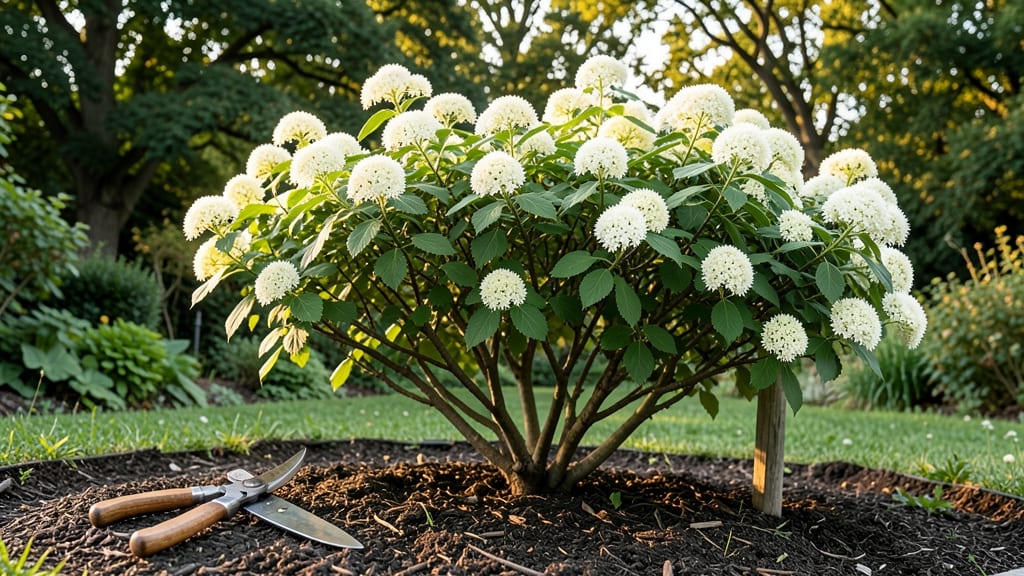
Pruning your Viburnum 'Snowball' tree transforms it from a wild shrub into a showstopping garden feature. ✨ I've pruned mine every spring for five years, and the difference in bloom density and shape is night-and-day—once you know the right cuts to make.
The secret isn't just when to prune, but how to shape it so those iconic white clusters appear even more dramatic.
You'll need just three tools: sharp bypass pruners, loppers for thicker branches, and a clean rag to wipe cuts. The best time is right after flowering, when the plant has finished its spring bloom but before summer growth gets too vigorous.
This timing ensures you never cut off next year's flower buds hidden in last year's wood. For dramatic results, focus on removing about one-third of the oldest stems each year to encourage fresh, vigorous growth.
After pruning, your Viburnum will reward you with denser clusters of blooms and a more open, airy shape that prevents disease. The key is making clean cuts at a 45-degree angle just above an outward-facing bud—this simple technique keeps the plant healthy and encourages new growth in the right direction.
Within weeks, you'll see fresh green shoots forming exactly where you want them, setting up next year's spectacular display.
This method works equally well for both young plants and mature shrubs, though established trees may need occasional rejuvenation pruning in late winter. The same principles apply whether you're shaping a small patio specimen or a large landscape focal point.
Once you master this, your Viburnum will become the envy of every neighborhood—with minimal effort after the first few years.
📚 In This Guide
- What you need
- Instructions
- Tips and common mistakes
- Wrapping up and next steps
What you need
- ● Pruning shears – Bypass pruners (sharp, clean, and rated for branches up to ½ inch thick).
- ● Loppers – For thicker branches (½ to 1½ inchesbypass-style for clean cuts.
- ● Hand saw – A pruning saw with a curved blade for branches larger than 1½ inches.
- ● Disinfectant (70% isopropyl alcohol or bleach solution) – To sterilize tools between cuts and prevent disease spread.
- ● Garden gloves – Heavy-duty, cut-resistant gloves to protect your hands from thorns and rough branches.
- ● Rag or paper towels – For wiping down tools and cleaning sap.
- ● Bucket or trash bag – To collect pruned branches and debris.
- ○ Permanent marker – For marking branches to remove (optional but helpful for planning).
- ● Pruning sealant – Tree wound dressing (like Tanglefoot Tree Wound Pruning Seal) to coat large cuts and reduce disease risk.
- ● Extension pole – For reaching high branches safely (especially useful for mature trees!).
- ● Garden kneeler or stool – For comfort when working close to the ground.
- ● Spray bottle with water – To mist tools and branches during pruning for easier cutting.
- ● Camera or sketchbook – To document the tree’s shape before pruning (great for reference!).
Step-by-step guide for pruning a viburnum Snowball tree
Here's how I keep my snowball bushes looking their best year-round.
✂️ Step 1: Prune Immediately After Flowering
This is the moment that matters: prune right after the spring blooms fade. The flowers appear on old wood, so you'll want to shape the bush while it's still fresh from its display. Use sharp, clean pruners to make cuts at a 45-degree angle, about ¼ inch above a leaf bud facing outward.
Start by removing any dead, diseased, or crossing branches. These are the easiest to spot—they'll look brown and brittle or rub against other branches. I always work from the inside out, opening up the center for better airflow and light penetration. This prevents future issues with powdery mildew or fungal problems.
Don't be afraid to cut back up to ⅓ of the plant's height if needed. Viburnum snowball bushes are tough and will bounce back beautifully. If your bush is particularly leggy, you can even reduce its height by half—it'll reward you with even more dramatic blooms next season.
✂️ Step 2: Light Summer Trim for Shape and Health
About 6-8 weeks after flowering, give your viburnum a light trim to maintain its shape. This is where you fine-tune the overall form, removing any branches that spoil the natural silhouette or grow too close together. Look for branches that are growing inward—they'll create a dense, dark center that blocks light and air.
I like to step back and look at the bush from all sides before making any cuts. This helps me see the overall shape and decide where to encourage more growth. Use your fingers to gently bend branches to test their flexibility—if they snap easily, they're too weak and should be removed. Viburnum responds well to shaping, so don't hesitate to adjust the outline.
Here's the thing—this isn't about creating a perfect geometric shape. Viburnum snowball bushes have a natural, rounded form that we're simply refining. The goal is to keep it looking full and lush, not like a topiary. Cut just enough to maintain that beautiful, rounded silhouette.
✂️ Step 3: Late Winter Cleanup for Next Season
In late winter, just before new growth begins, do a final cleanup. Remove any dead, damaged, or weak branches that have appeared over the past year. This is also the time to thin out any overly dense growth from the previous season's pruning. You'll notice some branches have grown longer and thinner—these are candidates for removal.
I always check for any suckers or water sprouts that might have appeared at the base or along the trunk. These are the fast-growing, vertical shoots that don't contribute to the bush's shape. Cut them off at the base with clean cuts. This keeps the energy focused on developing strong, flowering branches.
Real talk: this is the step where many people make mistakes. Don't be tempted to do heavy pruning in late winter—wait until after the spring blooms have faded. Heavy winter pruning removes the flower buds that formed on last year's wood, and you'll be left with no blooms for the season.
✂️ Step 4: Ongoing Maintenance Throughout the Year
Keep an eye on your viburnum throughout the year for any branches that need attention. After heavy storms, check for broken branches and prune them back to healthy wood. If you notice any signs of disease or pest damage, remove and destroy those branches immediately to prevent spread.
I also do a quick check every spring before the leaves fully emerge. This is when you can see the overall structure of the bush without the distraction of leaves. Look for any branches that are growing in the wrong direction or spoiling the shape. Make small adjustments as needed—just a few cuts here and there to keep it looking its best.
Don't skip this step, even if your bush looks perfect. Regular, light maintenance prevents the need for drastic pruning later. It's like giving your viburnum a little haircut every few months—it keeps everything looking neat and encourages healthy growth.
Tips & tricks for perfect viburnum Snowball tree pruning
These simple strategies will help you maintain a healthy, blooming viburnum bush all year long.
Timing is Everything: The post-bloom timing in Step 1 is critical because viburnum flowers on old wood. If you prune too early, you risk cutting off next year's blooms before they form. I mark my calendar for when the snowball flowers start to fade—usually late spring to early summer—and set a reminder to prune within the week. This ensures I catch it at the perfect moment when buds for next season are already developing.
Tool Preparation Matters: Before you start, sharpen your pruners and dip them in rubbing alcohol between cuts. Clean tools prevent spreading disease between branches. I also like to use a small brush to clear away fallen leaves and debris from the base of the plant—this helps prevent fungal issues from taking hold in damp conditions.
Visual Cues for Step 2: When doing your light summer trim, look for branches that create a "V" shape when viewed from above—they're growing inward and will eventually cross. These are the ones to remove to maintain that open, rounded silhouette. I find it helpful to step back every few minutes and look at the bush as a whole to see how each cut affects the overall shape.
Winter Pruning Warning: The biggest mistake people make is heavy winter pruning. In Step 3, the instructions warn about this because winter cuts remove the flower buds that formed on last year's wood. If you must prune in winter, limit yourself to removing only dead or damaged branches—never more than 10% of the plant's total growth. This keeps next season's blooms intact while still maintaining the bush's health.
Pro Tips for Pruning Viburnum Snowball Tree
- These simple strategies will help you maintain a healthy, blooming viburnum bush all year long.
- Timing is Everything: The post-bloom timing in Step 1 is critical because viburnum flowers on old wood.
- Tool Preparation Matters: Before you start, sharpen your pruners and dip them in rubbing alcohol between cuts.
Frequently asked questions
Got questions about keeping your Viburnum opulus 'Snowball' looking its best? You’re not alone! Here are some of the most common queries—and their answers—to help you prune like a pro.
When is the best time to prune my Snowball tree?
The ideal time is late winter or early spring, just before new growth begins. This ensures you don’t accidentally cut off next year’s blooms (which form on old wood). Avoid pruning in fall, as it can stimulate tender growth that may not survive winter. For light shaping, you can also prune right after flowering, but avoid heavy cuts.
How much can I trim without hurting the tree?
Never remove more than one-third of the tree’s total growth in a single season. For a mature Snowball viburnum, this might mean trimming back 3–6 inches from the tips of branches. Focus on thinning out crowded stems and removing dead or crossing branches. Over-pruning can stress the tree and reduce flowering.
Why aren’t my Snowball viburnum blooms as big as they used to be?
If your blooms are sparse or small, it could be due to over-pruning (cutting back too late in the season) or under-pruning (letting the tree get too dense). Ensure you’re pruning in late winter/early spring and avoid "heading back" (cutting into old wood). Also, check for pests like spider mites or aphids, which can weaken the tree.
Can I shape my Snowball viburnum into a hedge?
Yes! Snowball viburnums make fantastic hedges when pruned regularly. Shear lightly after flowering to maintain shape, and trim back by one-third in late winter to encourage bushiness. For a formal look, use hedge shears; for a softer, natural style, hand-prune with loppers. Just avoid heavy cuts in fall.
What should I do if my Snowball viburnum has brown, dead branches?
Dead branches should be removed immediately to prevent disease or pests from spreading. Use clean, sharp pruners to cut back to a healthy bud or branch collar. If more than 20% of the tree is dead, it may need a rejuvenation prune—cutting back all stems to 6–12 inches from the ground in late winter. The tree will regrow vigorously!
Wrapping up and next steps
Pruning your Viburnum Snowball tree might feel like a daunting task, but with the right timing and techniques, you’ll unlock stunning blooms and a well-shaped shrub year after year! 🌸 Whether you’re tackling winter cleanup or summer shaping, consistency is key—your efforts will reward you with healthier growth and breathtaking spring displays.
Now that you’re armed with the know-how, grab your pruners and give your Snowball viburnum the TLC it deserves—your garden will thank you!
Next step: Mark your calendar for late winter or early spring and start pruning with confidence! 🌿