
Pruning
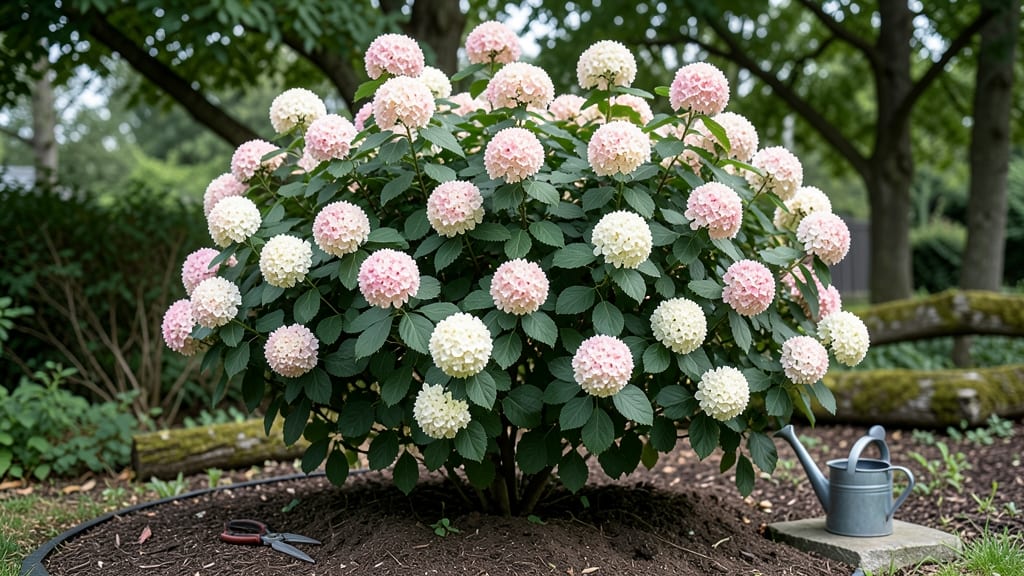
Transforming your yard into a pink snowball tree showstopper starts with understanding its four-season magic. This vibrant shrub bursts with cloud-like blooms in spring, glossy green foliage through summer, and bright red berries that feed birds in winter—all while maintaining that lush, rounded shape gardeners dream of.
The secret to keeping it picture-perfect? Strategic pruning that enhances its natural beauty without sacrificing its pollinator-friendly appeal.
What makes this tree a garden designer’s best friend is its versatility. Plant it as a focal point near patios, use it to frame entryways, or create a pollinator-friendly hedge that thrives with minimal fuss.
It handles partial shade beautifully, making it perfect for understory planting or tight urban spaces where full sun isn’t an option. Pair it with hostas for contrast or lavender for a fragrant, textured border that keeps blooms coming all season long.
With just four targeted prunes—once after flowering, again in late summer, and two light maintenance cuts in between—you’ll maintain that signature snowball shape while encouraging dense, healthy growth. The result?
A year-round canopy that outshines seasonal alternatives, from spring’s pink clouds to winter’s berry-laden branches. Even better, its low-maintenance nature means you spend more time admiring it than fussing over it.
This isn’t just a pretty face—it’s a multi-season workhorse that elevates any landscape, whether you’re going for cottage charm or modern minimalism. The key is working with its natural growth habits rather than against them, and I’ll show you exactly how to make that happen without losing those signature blooms.
Let’s get your garden ready for its star turn.
📚 In This Guide
- What you need
- Instructions
- Tips and common mistakes
- Wrapping up and next steps
What you need
- ● Pruning shears: Bypass pruners with sharp, clean blades (for clean cuts on smaller branches). Spec: 6–8" handle for comfort.
- ● Loppers: For thicker branches (½"–1" diameter). Spec: Bypass or anvil type (bypass preferred for precision).
- ● Pruning saw: For stubborn, woody stems (1"–2" diameter). Spec: Curved blade for ease.
- ● Disinfectant: 70% isopropyl alcohol or a 10% bleach solution (to sterilize tools between cuts and prevent disease).
- ● Garden gloves: Heavy-duty, cut-resistant (to protect hands from thorns and sap).
- ● Tarp or drop cloth: To collect debris and protect surfaces below.
- ● Rake or broom: For cleanup after pruning.
- ● Hand pruners: For delicate trimming of small branches (great for shaping).
- ● Pruning sealant: (e.g., tree wound dressing) for large cuts over ½" in diameter—controversial but some swear by it!
- ● Notebook/pencil: To sketch a quick map of branches you’re removing or label pruning zones.
- ● Safety glasses: If working with thick branches or near your face.
- ● Ladder or step stool: For high branches (ensure it’s stable and rated for your weight!).
- ● Know your tree’s age: Young trees (under 3 years) need lighter pruning; mature trees (5+ years) can handle more aggressive shaping.
- ● Check the season: Prune in late winter or early spring (before new growth) for best results.
- ● Weather conditions: Choose a dry, calm day—avoid pruning if rain or wind is forecasted.
- ● Safety first: Wear closed-toe shoes and avoid pruning near power lines.
Strategic pruning for a year-round pink snowball tree display
Here's how to maintain that stunning pink canopy while keeping your tree healthy and productive.
Identify the Four Pruning Windows
The secret to a lush, flowering pink snowball tree (Viburnum odoratissimum) lies in timing. Prune at four key moments: late winter (just before buds swell), immediately after flowering, mid-summer (after 50% of new growth appears), and fall cleanup (after leaves drop). Each prune serves a distinct purpose—removing dead wood, shaping for airflow, encouraging dense blooms, and preparing for winter dormancy.
Use sharp, clean pruners to make cuts at a 45-degree angle just above a bud or branch collar. Avoid leaving stubs—this invites disease. I always prune on dry days when the tree isn't actively stressed, typically between 10 AM and 2 PM when humidity is lowest. This reduces the risk of bacterial infections entering through fresh cuts.
Late Winter Pruning for Structure and Airflow
Start in February or March, when the tree is still dormant but buds are about to swell. Remove dead, diseased, or crossing branches first—they compete for energy and block sunlight from reaching inner growth. Look for branches that rub against each other; these will eventually tear bark and create entry points for pests.
Next, thin out overcrowded areas to improve airflow. Aim for an open center that lets light penetrate to the inner 1/3 of the canopy. You'll see new shoots emerging from the base—these are your tree's way of filling gaps. Leave 3-4 strong branches per main stem to maintain a balanced structure. If a branch is larger than your wrist, avoid cutting it entirely; instead, make smaller cuts to reduce its size gradually over 2-3 years.
Post-Flowering Pruning for Next Year's Blooms
Once the pink flower clusters fade (usually 6-8 weeks after blooming), it's time for the second prune. This is where you shape the tree for next year's display. Cut back last year's flowering stems by 1/3 to encourage new growth and denser blooms. Focus on stems that are thicker than a pencil—these produce the most robust flowers.
Here's the thing—pink snowball trees flower on old wood, so avoid heavy pruning on new growth. Instead, prune just outside the flower cluster to redirect energy into stronger stems. If you see suckers (shoots growing from the base or trunk), remove them immediately—they drain energy from the main canopy. After pruning, give the tree a deep watering to help it recover from the stress.
Mid-Summer Pruning for Density and Health
In July or August, when the tree has 50% of its new growth, do a light prune to maintain shape and remove any weak, leggy, or misplaced branches. This isn't about heavy cutting—think of it as a haircut to tidy up the canopy. Look for branches growing inward or upward; these will create a chaotic, unbalanced shape if left unchecked.
Also, check for diseased or insect-damaged foliage and prune it out immediately. Pink snowball trees are prone to powdery mildew in humid climates, so remove any leaves showing white, powdery spots. After pruning, apply a fungicide spray (like neem oil) as a preventative measure. This step ensures the tree stays vibrant and healthy through the fall.
Fall Cleanup for Winter Readiness
After leaves drop in October or November, do a final prune to remove all dead, broken, or weak branches. This is your chance to clean up the tree's silhouette for winter. Cut back any overly vigorous shoots that grew during the summer, as they can weaken the tree's structure before dormancy.
Don’t skip this step—leaving dead wood over winter attracts pests and diseases that will stress the tree come spring. After pruning, apply a 2-3 inch layer of mulch around the base (but not touching the trunk) to insulate roots. Water deeply once more before the ground freezes to ensure the tree has enough moisture for dormancy. This final prune sets the stage for a stronger, more productive tree next season.
Tips & tricks for perfect pink snowball tree pruning
These game-changing strategies will transform your pink snowball tree into a year-round showstopper with minimal effort.
Timing Secret: The four pruning windows in Step 1 are non-negotiable for a vibrant display. I've found that February/March pruning works best when temperatures hover around 40-50°F—cold enough for dormant trees but warm enough to prevent shock. If you miss late winter, don't panic: the tree can handle slight delays, but never prune after the summer growth appears in Step 4, as this removes next year's flower buds.
Cutting Technique: That 45-degree angle above the branch collar in Step 1 isn't just aesthetic—it's biological. The angled cut prevents water from pooling on the wound, which dramatically reduces disease risk. I always test my pruners first by making a clean cut through a pencil; if it crushes instead of slices, sharpen them immediately. For branches larger than your wrist, make the cut in three stages: first undercut, then top-cut, and finally clean up the stub.
Visual Pruning Guide: When thinning in Step 2, imagine looking at your tree through a donut—you want light in the center but not at the edges. For the inner 1/3 of the canopy, remove branches that cast shadows on others. A simple trick: hold your hand vertically at arm's length; if you can't see the sky through the branches, it's too dense. This creates that lush, layered look that makes pink snowball trees so stunning.
Post-Pruning Care: The deep watering after Step 3 and final watering in Step 5 are critical. I use a soaker hose for 20-30 minutes to ensure moisture reaches the root zone without runoff. For trees in containers, water until it drains from the bottom holes—this tells me the roots got their fill. After fall pruning, I add a 2-3 inch mulch layer but always keep it 3 inches away from the trunk to prevent rot.
Pro Tips for Pink Snowball Tree
- These game-changing strategies will transform your pink snowball tree into a year-round showstopper with minimal effort.
- Timing Secret: The four pruning windows in Step 1 are non-negotiable for a vibrant display.
- Cutting Technique: That 45-degree angle above the branch collar in Step 1 isn't just aesthetic—it's biological.
Frequently asked questions
When is the best time to prune my pink snowball tree for those iconic blooms?
The sweet spot is late winter or early spring—just as new growth begins but before buds swell. This timing ensures you don’t cut off next year’s flowers while shaping the tree. Avoid pruning in fall, as late cuts can leave branches vulnerable to winter damage. Pro tip: Mark your calendar for February/March in most climates!
How much can I trim back without harming the tree?
Pink snowball trees are tough cookies—you can safely remove up to 1/3 of the tree’s total growth per year. For mature trees, focus on dead, crossing, or overcrowded branches first. Avoid "topping" (cutting the main stem flat)—this stresses the tree and reduces flowering. Think of it like a haircut: shape, not shear!
Why aren’t my pink snowball blooms as vibrant as they used to be?
Dull or sparse blooms often signal over-pruning or nutrient deficiencies. Check for:
- Too many cuts: Prune less aggressively in the current season.
- Poor soil: Test for phosphorus/potassium (key for flowers) and amend with compost.
- Sunlight: These trees thrive in full sun (6+ hours/day)—shade reduces blooms.
Can I grow a pink snowball tree in a pot, or is it better in the ground?
Yes, but with caveats! Containers work for smaller varieties (like ‘Awabuki’), but expect slower growth and more frequent pruning to control size. Use a well-draining pot (18"+ diameter) and repot every 2–3 years. For maximum blooms, in-ground planting is ideal—roots spread freely, supporting the tree’s lush canopy.
Do pink snowball trees need winter protection in cold climates?
Most varieties (zones 7–9) handle winter well, but young trees or harsh winters (below 10°F) may need help. Wrap the canopy in burlap or use a lightweight frost cloth to shield blooms. Avoid heavy mulch around the trunk—keep it 3–4 inches deep to prevent rot. A thin layer of straw over roots adds insulation without smothering.
What’s a good alternative if my pink snowball tree isn’t thriving?
If you love pink blooms + year-round interest, try these pruning-friendly swaps:
- Dwarf Fothergilla (Fothergilla gardenii): Fragrant spring blooms + fiery fall foliage (zones 5–8).
- Japanese Snowbell (Styrax japonicus): Bell-shaped white flowers (zones 5–8).
- Abelia (Abelia × grandiflora): Continuous blooms + glossy leaves (zones 6–9).
Wrapping up and next steps
The pink snowball tree is a stunning addition to any landscape, offering year-round beauty with minimal effort—thanks to its four strategic prunes! By mastering light shaping, deadwood removal, bloom enhancement, and structural refinement, you’ll keep this tree thriving for decades. 🌸✂️
Ready to transform your garden? Grab your pruners and schedule your first prune this spring—your tree (and your neighbors!) will thank you. Happy pruning!