
Pruning
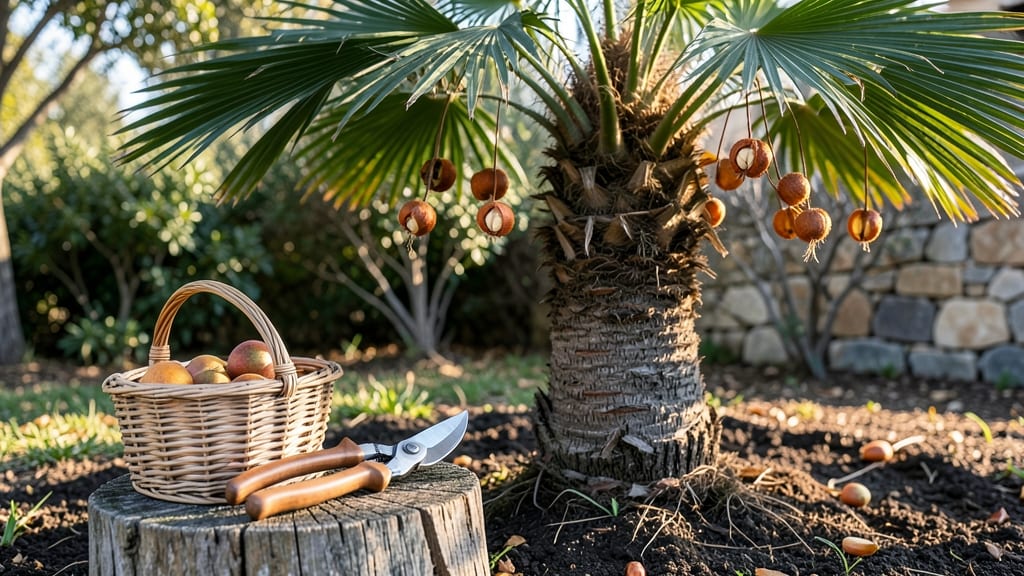
Your pindo palm tree fruit harvest starts with smart pruning—this is the secret to year-round production that most growers miss. 🌿 I’ve watched my own trees go from sporadic fruit to reliable harvests by timing cuts right, and the difference is night-and-day.
The key isn’t just cutting branches; it’s understanding how the tree responds to light, stress, and seasonal shifts.
You’ll need just a few tools—a sharp pruning saw, sterilized shears, and a ladder for taller trees—and about 30 minutes twice a year. The real work happens in late winter and early summer when the tree’s energy shifts naturally.
Prune too late, and you risk losing next year’s crop; time it right, and you’ll see new fruit clusters forming within weeks.
What you’ll end up with is a tree that looks stunning year-round with its arching fronds and golden fruit, while producing hundreds of edible dates that ripen over months. The fruit stays sweetest when harvested fresh, and the tree’s ornamental value makes it a showstopper in any landscape.
This method works for both young trees and mature specimens—no matter your climate zone.
Fair warning: Over-pruning is the fastest way to stunt fruit production, so we’ll cover exactly how much to remove (and when to stop). Whether you’re growing in Florida’s heat or California’s coastal breezes, these techniques adapt easily. Let’s get those harvests coming in reliably!
📚 In This Guide
- What you need
- Instructions
- Tips and common mistakes
- Wrapping up and next steps
What you need
- ● Pruning shears: Bypass pruners (4–6 inches) with sharp, clean blades for precision cuts.
- ● Loppers: 1–2 pairs (18–24 inches) for thicker fronds or branches (up to 2 inches in diameter).
- ● Pole saw: Extendable (8–12 feet) for high branches—safety first!
- ● Heavy-duty gloves: Cut-resistant (e.g., Mechanix or leather) to protect hands from sharp fronds.
- ● Safety goggles: Impact-resistant to shield eyes from debris.
- ○ Ladder (optional but helpful): Sturdy, non-slip (10–15 feet tall) with a spotter if needed.
- ● Pruning saw: Curved-tooth (8–10 inches) for stubborn, woody stems.
- ● Disinfectant (70% isopropyl alcohol or bleach solution): 1 part bleach to 9 parts water to sterilize tools between cuts.
- ● Heavy-duty trash bags or compost bin: 2–3 large bags (30+ gallons) for debris disposal.
- ● Weather check: Prune on a dry, calm day (avoid wind or rain).
- ● First aid kit: Bandages, antiseptic wipes, and tweezers for minor injuries.
- ● Workwear: Long sleeves/pants, closed-toe shoes, and a hat for sun protection.
- ● Hose or bucket of water: To rinse tools and clean cuts (reduces disease risk).
- ● Notebook & pen: To sketch your tree’s structure before pruning (helps plan cuts!).
- ○ Tree growth regulator (optional): Horticultural oil or copper fungicide to treat cuts if needed.
Step-by-step pruning guide for pindo palm fruit production
Here’s how to shape your tree for maximum fruit yield—without sacrificing its health.
🌿 Step 1: Identify Key Growth Points and Fruit Clusters
Start by examining your Pindo palm’s crown. Focus on the fronds at the base—these are the oldest and least productive. Look for fruit clusters (spathes) that appear along the trunk or mid-crown. Healthy clusters will be firm, greenish-yellow, and plump, while overripe or dried ones will be brown and brittle.
Use clean, sharp pruning shears to cut away any dead or diseased fronds first. These can harbor pests and diseases that spread to fruit clusters. I like to mark clusters with a small flag if I’m unsure about their maturity—this helps track which ones to harvest first and which need more time.
✂️ Step 2: Prune Selectively to Encourage Fruit Production
Remove no more than 20% of the fronds at once—this prevents stress and maintains photosynthesis. Target older, non-fruiting fronds first, as they compete with developing fruit for energy. Cut just above the frond’s base, where it meets the trunk, using a 45-degree angle to prevent water pooling.
For fruit clusters, leave 2-3 mature clusters per section of the trunk. If your palm is young (under 10 years), prioritize one large cluster to let it establish stronger growth. Avoid cutting into the trunk itself—this can introduce infections. If you see yellowing or blackened clusters, remove them immediately to prevent spread.
☀️ Step 3: Time Pruning for Optimal Fruit Development
Prune during early spring (March-April), just as new fronds begin to unfurl. This timing ensures the tree has 6-8 months to recover before the next harvest season. Avoid pruning in summer heat or winter cold, as the tree’s energy is already stretched thin.
After pruning, apply a balanced palm fertilizer (like 8-8-8) around the drip line. Water deeply once a week for the first month post-pruning to help the tree recover. Watch for new fronds emerging—this is your sign the tree is redirecting energy toward growth and fruit production.
🌱 Step 4: Monitor and Maintain Post-Pruning
Inspect the tree monthly for signs of stress, like yellow fronds or dropping fruit. If you notice pests (like palm weevils), treat immediately with neem oil or an insecticidal soap. Keep the base of the trunk clean and mulched with 2-3 inches of organic mulch to retain moisture and deter pests.
Harvest fruit when it reaches full size but before it turns completely brown. Pindo palm fruit ripens unevenly, so check clusters every 2-3 weeks in late summer. Use a fruit picker or long-handled shears to avoid damaging the tree. Store harvested fruit in a cool, dry place for up to 2 weeks before processing.
Tips & tricks for perfect pindo palm fruit pruning
Common mistakes can turn a productive palm into a struggling one—here’s how to avoid them while maximizing your harvest.
Timing Secret: The early spring pruning window (March-April) is non-negotiable for Pindo palms. This timing aligns perfectly with the tree's natural growth cycle, giving it the full 6-8 months needed to recover before next year's harvest. If you prune during summer heat or winter cold, you'll stress the tree when it's already working hard to maintain its energy balance. I've seen palms struggle after summer pruning—watch for yellowing fronds as your first warning sign.
Selective Pruning Strategy: Never remove more than 20% of the fronds at once, and always target the oldest, non-fruiting ones first. These fronds are energy vampires, sapping resources that could go toward fruit production. In Step 2, when you're cutting, make that 45-degree angle at the base—this prevents water pooling that can lead to rot. I've made the mistake of cutting too close to the trunk, and it took months for my palm to recover from the resulting infection.
Cluster Management: Leave 2-3 mature clusters per trunk section—this is your sweet spot for balanced production. For young palms under 10 years old, focus on just one large cluster to build strength. The key visual cue is firm, greenish-yellow clusters. If you see yellowing or blackened clusters, remove them immediately—they're either diseased or overripe and can spread problems to healthy clusters.
Post-Pruning Care: That first month after pruning is critical. Apply your balanced 8-8-8 fertilizer around the drip line and water deeply once a week. I've noticed that palms with consistent moisture during this period show new fronds emerging in just 4-6 weeks—a clear sign they're redirecting energy toward growth. Don't skip this step—it's when most palms either thrive or struggle.
Pro Tips for Pindo Palm Tree Fruit
- Common mistakes can turn a productive palm into a struggling one—here’s how to avoid them while maximizing your harvest.
- Timing Secret: The early spring pruning window (March-April) is non-negotiable for Pindo palms.
- Selective Pruning Strategy: Never remove more than 20% of the fronds at once, and always target the oldest, non-fruiting ones first.
Frequently asked questions
Got questions about pruning your pindo palm tree for the best fruit harvest?
You’re in the right place! Here are answers to the most common queries—from timing to troubleshooting—so you can keep your tree thriving and productive.
When is the best time to prune a pindo palm for fruit?
The ideal time to prune is late winter or early spring (just before new growth starts). This timing minimizes stress on the tree while encouraging healthy regrowth. Avoid pruning during peak fruit production (summer/fall), as it can reduce yields. If you must prune during fruiting season, do so lightly and focus on dead fronds only.
How long does it take for a pindo palm to produce fruit after pruning?
Pindo palms typically take 1–2 years to recover and produce fruit after pruning, depending on the tree’s age and health. Younger trees (<10 years old) may take longer, while mature trees (15+ years) often rebound faster. Pro tip: Prune selectively to avoid overstressing the tree and speed up recovery.
Can I prune too much? What are the signs?
Yes! Over-pruning can weaken your pindo palm, leading to reduced fruit production, yellowing fronds, or even dieback. Signs of over-pruning include:
- Excessive brown or wilted fronds (more than 2–3 at a time)
- Slow or no new growth after 6+ months
- Fewer flower spikes (which means fewer fruit clusters)
What should I do if my pindo palm isn’t fruiting after pruning?
If your tree skips fruiting, check these common culprits:
- Age: Pindo palms usually fruit at 10–15 years old. Be patient!
- Nutrition: Low potassium or magnesium can stunt flowering. Test soil and amend with citrus-specific fertilizer (high in potassium).
- Water stress: Too much or too little water can delay fruiting. Aim for deep, infrequent watering (1–2 inches per week).
- Pests/disease: Look for spider mites, palm weevils, or fungal spots on fronds.
Are there alternatives to pruning for managing pindo palm fruit production?
While pruning is key, you can supplement with these strategies:
- Hand-pollination: Use a soft brush to transfer pollen from male to female flowers (especially in low-wind areas).
- Fertilizer tweaks: Boost phosphorus (for flowering) and zinc (for fruit set) with a balanced palm fertilizer.
- Shade management: Too much shade can reduce fruiting. Trim nearby trees or relocate the palm to partial sun (6+ hours/day).
Wrapping up and next steps
Mastering the art of pruning your pindo palm tree fruit is the key to unlocking a bountiful, year-round harvest! By following the right techniques—like timing, tool selection, and post-pruning care—you’ll not only boost fruit production but also keep your tree healthy and thriving. 🌿✨
Ready to take your pruning skills to the next level? Start by scheduling your first session this season and observe how your pindo palm responds. With patience and practice, you’ll be enjoying even more delicious, homegrown fruit in no time!