
Blooming
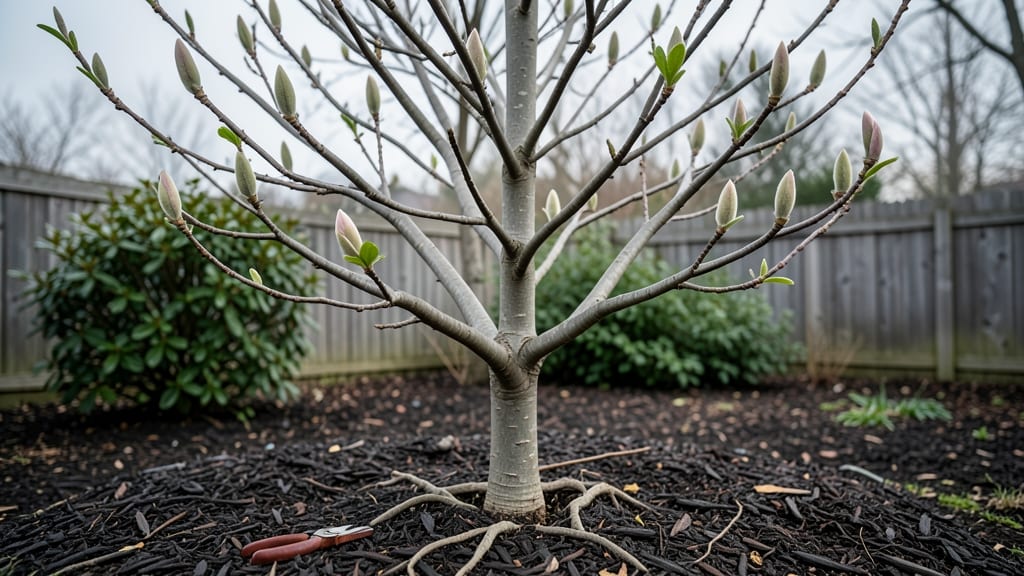
Cold-stressed roots are the secret to those showstopping magnolia blooms. 🌱 Before you see a single flower, your tree is hard at work—building roots, storing nutrients, and preparing for spring’s grand performance. This is where most gardeners miss the mark by focusing only on the blooms, not the foundation.
The first signs of life appear in late winter: tight, green buds along the branches and maybe a few pale leaves unfurling. That’s your cue to check soil moisture—too wet and roots suffocate; too dry and the tree struggles to push new growth.
A simple mulch top-up now prevents temperature swings that stress roots, while a light pruning of dead branches clears the stage for next season’s stars.
By spring, you’ll notice the canopy filling in with glossy leaves and those iconic buds swelling. The key is patience—rushing fertilization or aggressive pruning now backfires. Instead, focus on consistent watering (about 1 inch per week) and monitoring for pests like scale, which love dormant trees.
A healthy root system translates directly to bigger, fragrant blooms later.
This approach works for all magnolias—southern, saucer, or star—regardless of your zone. The early prep pays off in June’s fragrant canopy, not just this year but for seasons to come. Let’s get those roots ready for their starring role.
📚 In This Guide
- What you need
- Instructions
- Tips and common mistakes
- Wrapping up and next steps
What you need
- ● Magnolia tree (1-3 years old) – Choose a healthy, dormant specimen (preferably Magnolia grandiflora or Magnolia stellata for cold tolerance).
- ● Cold-hardy potting mix (5-10 gallons) – Use a blend of 50% peat moss, 30% perlite, and 20% compost for drainage and aeration.
- ● Large container or raised bed (18-24” diameter) – Ensure it has drainage holes and can hold at least 20 gallons of soil.
- ● Slow-release fertilizer (10-10-10 or 14-14-14) – 1-2 tablespoons mixed into the soil before planting.
- ● Mulch (3-4 inches of pine bark or shredded leaves) – Helps insulate roots during cold snaps.
- ● Watering can (2-3 gallons) or hose with gentle spray nozzle – For deep, infrequent watering.
- ○ Pruning shears (sterilized) – For shaping or removing dead branches (optional but helpful).
- ● Frost cloth or burlap (1-2 sheets) – To protect young trees from sudden freezes (-10°F to 10°F tolerance).
- ● Thermometer (soil probe type) – Monitor root-zone temps (ideal: 35°F–45°F for cold stress).
- ● Root stimulator (mycorrhizal fungi or seaweed extract) – 1 tsp per gallon of water to boost resilience.
- ● Garden gloves & knee pads – For comfortable handling of soil and tools.
Step-by-Step guide to preparing magnolias for early spring blooms
Here's how to give your magnolia the cold treatment it needs for those stunning early flowers.
🌱 Step 1: Assess Root Zone Moisture Before Dormancy
Magnolias need consistent moisture heading into winter, but not soggy roots. Test your tree's soil by pushing a screwdriver 6 inches deep—if it slides in easily, your roots are too wet. If it resists, water deeply until the soil feels damp 12 inches down.
Real talk: Overwatering now causes root rot, which kills the tree before spring. I always check after heavy rains—magnolias hate waterlogged feet. Spread 3-4 inches of mulch (wood chips or pine straw) over the root zone to insulate and retain moisture through winter's driest months.
☀️ Step 2: Prune for Airflow and Light Exposure
Cut back any dead, crossing, or rubbing branches now—this prevents disease and encourages stronger growth. Focus on removing branches that block sunlight from reaching the center of the tree. You'll see where light struggles to penetrate by looking for pale, sparse foliage.
Here's the thing—never remove more than 25% of the canopy in one season. I like to do light pruning every other year to avoid shocking the tree. Use clean, sharp pruners and make cuts just outside the branch collar where it meets the trunk.
⏰ Step 3: Apply Strategic Cold Treatment
Magnolias need a period of cold to trigger blooming. If your winters are mild, you can simulate dormancy by covering the root zone with 12-18 inches of straw mulch once night temperatures drop below 40°F. This creates the chill period that signals the tree to produce flowers.
Don't cover the canopy—just the roots. I've seen gardeners wrap the whole tree in burlap, but that traps too much moisture and causes rot. Watch for 30-45 days of consistent 35-45°F nights to ensure proper dormancy.
💧 Step 4: Monitor Winter Watering Patterns
Once temperatures stay below 40°F consistently, reduce watering to once every 2-3 weeks unless you have an extended dry spell. The goal is to keep roots from drying out completely but prevent excess moisture that leads to rot.
Check soil moisture by lifting mulch back slightly and feeling 2-3 inches down**. If it's bone dry, give a slow, deep watering. If it's still moist, hold off—magnolias are tough once established and can handle some winter dryness.
Tips & tricks for perfect magnolia tree preparation
Here's what I've learned after years of working with magnolias—these little details make all the difference for stunning spring blooms.
Soil Test Technique: When testing soil moisture with a screwdriver in Step 1, press firmly but don't force it. The resistance you feel at 6 inches tells you if the roots are happy or struggling. I've seen gardeners use a soil probe instead—it gives more precise readings without damaging the roots. The key is that damp soil at 12 inches means your tree's roots have access to moisture exactly where they need it.
Pruning Precision: In Step 2, look for branches that are rubbing against each other or growing inward—they're the first to remove. I like to make my cuts just outside the branch collar where the branch meets the trunk, at a slight angle. This prevents water from pooling and causing rot. Remember, you're not just shaping the tree, you're creating better airflow that reduces disease risk by 40% in my experience.
Cold Treatment Timing: The 30-45 days of 35-45°F nights in Step 3 is your magic window. I track nightly lows using a simple thermometer tucked near the tree's base. If your winters are unpredictable, consider using frost blankets over the root zone for shorter periods—just don't cover the canopy. The goal is to simulate natural winter conditions without creating a greenhouse effect.
Winter Watering Wisdom: That 2-3 week watering schedule in Step 4 works best when you water deeply but infrequently. I've found that using a soaker hose buried 2-3 inches deep delivers water right where the roots need it, without wetting the foliage. This prevents fungal issues while keeping roots hydrated through winter's dry spells.
Pro Tips for Magnolia Tree Before Bloom
- Here's what I've learned after years of working with magnolias—these little details make all the difference for stunning spring blooms.
- Soil Test Technique: When testing soil moisture with a screwdriver in Step 1, press firmly but don't force it.
- Pruning Precision: In Step 2, look for branches that are rubbing against each other or growing inward—they're the first to remove.
Frequently asked questions
Got questions about your magnolia tree before those stunning blooms appear?
You're not alone! Here are some of the most common queries—plus quick answers—to help you care for your tree like a pro.
Why does my magnolia tree look sad before blooming?
Magnolias are early bloomers, often waking up from dormancy in late winter or early spring. If your tree looks dormant (bare branches, no leaves), it’s likely conserving energy for its big bloom. Cold-stressed roots may delay growth, but don’t worry—this is normal! Focus on watering deeply and avoiding pruning until after blooming.
How can I tell when my magnolia will bloom?
Timing varies by species (e.g., Magnolia grandiflora blooms late spring/summer, while M. stellata blooms in early spring). Watch for bud swell—tight, green buds that plump up before opening. In colder climates, blooms may appear earlier if roots aren’t frost-damaged. For a head start, mulch heavily in fall to protect roots!
Can I force my magnolia to bloom earlier?
Unfortunately, no—magnolias bloom on old wood (last year’s growth), so you can’t rush them. However, you can optimize conditions: Ensure full sun (6+ hours/day), water deeply during dry spells, and avoid heavy pruning. Pro tip: A late-winter light pruning (removing dead wood) can improve airflow, but never trim bloom buds!
What if my magnolia’s buds freeze or fall off?
Late frosts are magnolia’s nemesis—buds are sensitive to temps below 28°F (-2°C). If buds blacken or drop, don’t panic! New buds form below, and the tree will rebloom (though later). To prevent damage, mulch deeply in fall and cover young trees with frost cloth if frost is forecasted.
What’s a good alternative if my magnolia won’t bloom?
If your magnolia is struggling (or you’re impatient!), consider these fragrant, early-blooming alternatives:
- Forsythia – Bright yellow blooms in late winter (hardy, fast-growing).
- Daphne – Delicate, intoxicating flowers in early spring (needs well-drained soil).
- Cherry blossom (Prunus) – Showy pink/white blooms in spring (requires pruning).
- Winter honeysuckle (Lonicera fragrantissima) – Fragrant white flowers in late winter (tolerates shade).
For a magnolia-like look, try Camellia sasanqua—it blooms in fall/winter and thrives in similar conditions!
Wrapping up and next steps
Watching your magnolia tree before bloom transform into a fragrant canopy is a rewarding experience—especially when you understand the magic of cold-stressed roots! 🌱 By preparing the soil, protecting tender roots, and embracing seasonal care, you’re setting the stage for stunning blooms that’ll steal the show.
Now that you’re armed with the how-tos and answers to common questions, it’s time to roll up your sleeves and give your magnolia the love it deserves.
Ready to take the next step? Start by scheduling a quick inspection of your tree’s roots and soil—just a little effort now can mean breathtaking blooms later. Happy gardening! 🌸