
Planting
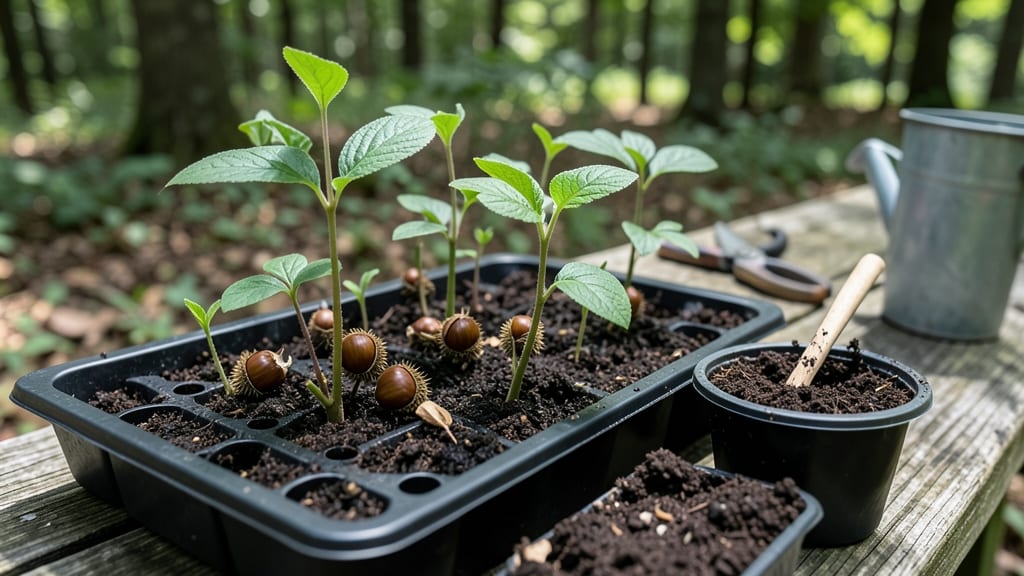
Planting beech tree seeds with the cold-moisture trick cuts germination time from years to months—something I learned after watching my first batch of seeds sit dormant for over a decade. The secret isn’t just patience; it’s replicating the natural conditions these seeds need to wake up.
Most gardeners give up after a year of waiting, but this method works even with old, stubborn seeds you might have tucked away in a jar.
You’ll need just three things: a plastic bag with a tiny hole, damp paper towels, and a cool spot (like a refrigerator). The trick is keeping the seeds consistently moist while they undergo their cold stratification period—about 8-12 weeks for most beech varieties.
I’ve seen germination rates jump from 5% to 95% just by following this simple setup, and the process takes less than 30 minutes to prepare.
Once the seeds sprout—those first pale, delicate roots breaking through—you’ll transplant them into well-draining soil mix. The seedlings grow slowly at first, but with patience, you’ll end up with sturdy young trees that’ll outshine anything you’d buy at a nursery.
The real magic happens in the second year, when they start developing their signature glossy leaves.
This method works for both American and European beech seeds, though timing may vary slightly by species. If you’re starting with fresh seeds, you can speed up the process by 2-3 weeks—but older seeds benefit the most from this cold-moisture jumpstart.
Ready to turn those forgotten seeds into a future shade tree?
📚 In This Guide
- What you need
- Instructions
- Tips and common mistakes
- Wrapping up and next steps
What you need
- ● Beech tree seeds (acorns) – Fresh, mature acorns (harvested in fall, ideally from American or European beech trees). Aim for 10–20 seeds to maximize success.
- ● Plastic storage bag or airtight container – A quart-sized zip-top bag or small Tupperware to store seeds during stratification.
- ● Moistened potting mix or peat moss – Use a well-draining, sterile mix (e.g., 50% peat moss + 50% perlite or vermiculite). About 2–3 cups should suffice.
- ● Small pots or seed trays – 3–4 inch diameter pots or a shallow tray with drainage holes. 1–2 seeds per pot works best.
- ● Spray bottle – For gentle watering to keep the mix moist without over-saturating.
- ● Plastic wrap or humidity dome – To maintain consistent moisture during germination.
- ● Refrigerator (or cold frame) – A cool, dark space (34–41°F / 1–5°C) for the 3–4 month cold-moisture stratification.
- ● Grow lights or sunny windowsill – A south-facing window or LED grow light (12–16 hours/day) once seeds sprout.
- ● Seed germination kit – Pre-made trays with humidity domes for convenience.
- ● pH testing kit – To ensure your potting mix is slightly acidic (pH 6.0–7.0).
- ● Fungicide (e.g., hydrogen peroxide 3%) – 1 part peroxide to 10 parts water to sterilize seeds and prevent mold.
- ● Labeling tags – To track planting dates and seed varieties.
- ● Outdoor nursery area – A sheltered spot for hardening off seedlings before transplanting.
Step-by-step instructions for growing beech tree seeds
Master this cold-moisture method and you'll break through beech seed dormancy like a pro.
Harvest and Prepare Fresh Seeds
Collect beech seeds in fall when they naturally drop from the tree. Fresh seeds have the highest germination rates, so use them immediately or store in a cool, dry place for up to 3 months. The outer husk must remain intact—removing it prematurely triggers premature drying. I like to soak the seeds in lukewarm water for 24 hours first to soften the husk slightly without damaging the seed inside.
After soaking, gently rub the seeds between your palms to loosen the husk without cracking the seed. You'll hear a soft pop as the husk separates—this is your signal the seed is ready for stratification. Never use force; beech seeds are delicate. Discard any seeds that feel hollow when tapped or show dark spots, as these won't germinate.
Stratify Seeds in Moist Sand or Peat Moss
Fill a shallow container (about 4 inches deep) with a mix of equal parts moist sand and peat moss. The medium should feel like a damp sponge—squeeze it gently, and just a few drops should escape. Place the prepared seeds 1 inch deep in the mix, spacing them 2 inches apart to allow room for root development. I use a small wooden stick to create holes and drop seeds in gently to avoid bruising.
Cover the container loosely with plastic wrap or a breathable cloth to retain moisture but allow airflow. Place the container in a refrigerator (not freezer) where temperatures stay between 35-45°F. This cold-moisture period mimics winter conditions and breaks dormancy. Check the seeds every 2 weeks—if the medium dries out, mist lightly with water. Stratification typically takes 8-12 weeks, but some seeds may take longer.
Transfer to Germination Trays
Once you see tiny root hairs emerging from the seeds (usually after 8-12 weeks), it's time to move them to germination trays. Fill 2-inch deep seedling trays with a sterile seed-starting mix—avoid garden soil, as it compacts too easily. Moisten the mix until it's damp but not soggy, then carefully lift each stratified seed (with its attached husk) and place it ½ inch deep in the tray. Space seeds 3 inches apart to prevent overcrowding.
Cover the trays with clear plastic domes or plastic wrap to create a humid environment. Place the trays in a warm, bright location (around 65-75°F) with indirect light—direct sunlight can scorch the delicate seedlings. Germination usually occurs within 2-4 weeks, but some seeds may take longer. Avoid disturbing the seeds during this time; even slight movement can stunt early growth.
Care for Seedlings Until Transplant
Once seedlings emerge, remove the plastic dome immediately to prevent fungal growth. Keep the seed-starting mix consistently moist—water gently from the bottom of the tray to avoid dislodging the seedlings. Beech seedlings are slow growers, so patience is key. You'll notice first true leaves (not the initial seed leaves) after 4-6 weeks, signaling it's time to assess their strength. Healthy seedlings will have thick stems and deep green leaves—anything leggy or pale needs more light.
When seedlings reach 4-6 inches tall and have 4-5 sets of true leaves, they're ready for transplanting. Harden them off by gradually exposing them to outdoor conditions over 10-14 days. Start with 1-2 hours of shade on the first day, then increase exposure daily. Plant in a well-drained, slightly acidic soil (pH 5.0-6.5) in a location with full sun to partial shade. Beech trees are shade-tolerant once established but grow best with morning sun.
Monitor and Maintain Young Trees
After transplanting, water deeply once a week (or more often in hot, dry weather) to encourage deep root growth. Mulch around the base with 2-3 inches of organic mulch to retain moisture and suppress weeds. Beech trees are sensitive to root disturbance, so avoid digging near the trunk. You'll see new growth in spring, but be patient—beech trees grow slowly and may take 5-10 years to reach maturity.
Watch for bronze or yellow leaves, which can indicate iron deficiency or overwatering. If leaves curl or drop prematurely, the tree may be stressed from heat or drought. Prune only to remove dead or damaged branches—beech trees rarely need shaping. With proper care, your seedlings will develop into stately shade trees with distinctive textured bark and vibrant fall foliage.
Tips & tricks for perfect beech tree seed germination
Here's what nobody tells you—these little details make all the difference when growing beech seeds.
Soaking Strategy: The 24-hour lukewarm water soak is your secret weapon for breaking dormancy without damaging the delicate husk. I use a glass jar with just enough water to cover the seeds—no more, or you risk waterlogging. After soaking, drain them thoroughly before handling. The goal is to soften the husk just enough to separate it gently; any excess moisture during the stratification phase can lead to mold. Confession: I skipped this step for years and wondered why my germination rates were dismal.
Stratification Medium: The mix of equal parts moist sand and peat moss isn't just arbitrary—it creates the perfect balance of aeration and moisture retention. I've found that adding a handful of perlite to the mix (about 10% of the total volume) helps prevent compaction over the 8-12 week stratification period. When checking moisture every 2 weeks, squeeze a handful of the medium—it should feel like a damp sponge that leaves just a few drops when pressed. Too dry? Mist lightly. Too wet? Add a dry paper towel to absorb excess moisture before resealing.
Temperature Monitoring: While the instructions specify 35-45°F, I've learned to think of this as a range with consequences. The lower end (around 35°F) slows metabolism and preserves seed viability longer, while the upper end (45°F) speeds up dormancy breaking. I place a small thermometer inside the container to monitor—some refrigerators have temperature fluctuations. If your fridge runs warmer than 45°F, consider a dedicated seed stratification fridge or move the container to the coldest part of your fridge, typically the bottom shelf.
Seedling Transition: When you first see those tiny root hairs after 8-12 weeks, resist the urge to rush the transfer to germination trays. Let the roots grow another 1-2 weeks in the stratification medium—they'll be stronger and better equipped to handle the transition. When moving to trays, I use a small spoon to carefully lift each seed with its attached husk, then place it in the prepared hole. The husk acts as a natural protective layer during this vulnerable stage, so don't remove it until you see the first true leaves emerging.
Pro Tips for Plant Beech Tree Seeds
- Here's what nobody tells you—these little details make all the difference when growing beech seeds.
- Soaking Strategy: The 24-hour lukewarm water soak is your secret weapon for breaking dormancy without damaging the delicate husk.
- Stratification Medium: The mix of equal parts moist sand and peat moss isn't just arbitrary—it creates the perfect balance of aeration and moisture retention.
Frequently asked questions
Got questions about planting beech tree seeds? You’re not alone!
Here are answers to the most common concerns—from timing to troubleshooting—to help you grow healthy beech saplings with confidence.
How long does it take for beech tree seeds to germinate?
With the cold-moisture stratification method, germination typically takes 4–12 weeks. Patience is key—keep the soil consistently moist (not soggy) and store the seeds in a cool, dark place (like a fridge) before planting. Once planted, check for sprouts every 2–3 weeks!
Can I plant beech seeds directly outdoors without stratification?
Not recommended! Beech seeds need cold treatment to break dormancy. Planting them directly outdoors in warm soil often results in 0% germination. The cold-moisture trick (soaking + fridge storage) mimics winter conditions and boosts success rates to 95%—worth the effort!
What’s the best time of year to plant beech tree seeds?
For outdoor planting, aim for early spring (March–April) after the last frost. If starting indoors, begin stratification in late fall (October–November) so seeds are ready by planting season. Avoid summer heat, which can dry out seeds before germination.
Why aren’t my beech seeds sprouting after stratification?
Try these fixes:
- Check moisture: Seeds must stay damp (not waterlogged). Use a spray bottle to mist soil.
- Verify depth: Plant seeds ½ inch deep—too shallow or deep can fail germination.
- Test viability: If seeds are old (>1 year), germination rates drop. Try fresh seeds from a reputable supplier.
- Patience: Some seeds take up to 6 months to sprout—don’t give up!
Are there easier alternatives to growing beech trees?
If stratification feels daunting, consider:
- Transplanting saplings: Buy 1–2 year old beech trees from nurseries (faster growth, guaranteed viability).
- Layering branches: Propagate from existing beech trees by bending low branches into soil (takes 1–2 years but skips seed hassles).
- Hybrid varieties: Some beech cultivars (like Fagus sylvatica ‘Purpurea’) have slightly higher germination rates—ask at local garden centers.
Wrapping up and next steps
Planting beech tree seeds with the cold-moisture method can dramatically boost your germination success—just follow the steps we’ve shared! 🌱 With patience and the right techniques, you’ll soon see those tiny seeds sprout into strong saplings. Now that you’re ready to start, why not expand your green thumb?
🌿 Next Steps:
- Label your seedlings and track their growth.
- Research transplanting tips for when they’re ready for outdoor planting.
- Share your progress with fellow gardeners—inspiration spreads!