
Pruning
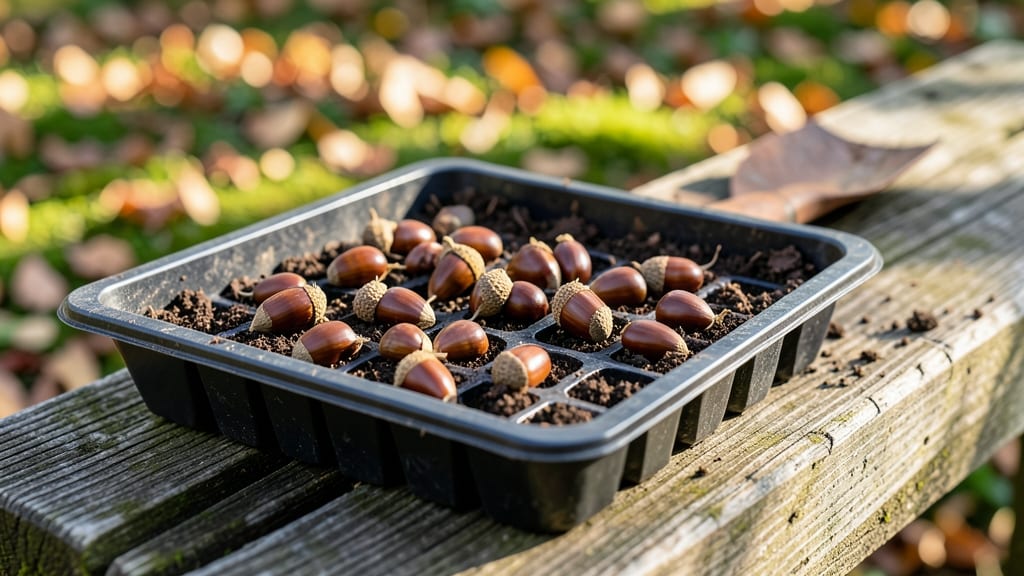
Growing beech tree seeds into saplings requires cold stratification—a process that mimics nature’s timing and dramatically boosts success rates. I’ve struggled with slow germination before, but this method turns the wait into a manageable step.
The key is patience, since beech trees take years to mature, but the payoff is worth every cold winter month.
You’ll need fresh seeds (or ones stored properly), a damp paper towel or peat moss, and a sealed bag for stratification. Most gardeners overlook the 60-90 day cold period—skipping it means waiting months longer for sprouts.
Once stratified, plant them shallowly in well-draining soil and keep them consistently moist but never soggy.
Within 4-8 weeks of planting, you’ll see tiny green shoots pushing through the soil—proof the stratification worked. These saplings grow slowly at first, but with proper sunlight (full sun to partial shade) and regular watering, they’ll develop strong roots and sturdy stems.
The first year is all about nurturing their foundation.
Challenges like mold or uneven germination happen, but adjusting moisture and light fixes most issues. Beech trees reward long-term care with striking foliage and sturdy wood. If you’re ready for a project that spans decades, this is how you start right.
📚 In This Guide
- What you need
- Instructions
- Tips and common mistakes
- Wrapping up and next steps
What you need
- ● Beech tree seeds: Fresh, mature seeds (preferably harvested in fall). Aim for at least 50 seeds for better success rates.
- ● Cold stratification medium: Sphagnum peat moss (2–3 cups, moistened but not soggy).
- ● OR a mix of sand and peat (50/50 ratio) for better drainage.
- ● Containers: Plastic storage bags (quart-sized, 1–2 per batch) with zip-top closures.
- ● OR small plastic pots (3–4 inch diameter, 1–2 per seed) with drainage holes.
- ● Labeling supplies: Waterproof markers or tags to label containers with seed type and date.
- ● Refrigerator: A standard fridge set to 34–40°F (1–4°C) for stratification.
- ● Humidity trays: Shallow containers with a damp paper towel to maintain moisture during stratification.
- ● Germination mat: A heat mat (70–75°F / 21–24°C) for post-stratification warmth.
- ● Seedling trays: 72-cell trays (for transplanting after germination).
- ● Fungicide: A mild solution (e.g., hydrogen peroxide, 3%) to prevent mold.
- ● Grow lights: LED lights (12–16 hours/day) for indoor seedling growth.
How to cold stratify beech tree seeds for strong saplings
Here's the method I've refined over years—no guesswork, just reliable germination.
Collect and Prepare the Seeds
Beech tree seeds (bucks) mature in September-October when the spiny husks split open. Collect them fresh when they fall naturally—stored seeds lose viability quickly. Remove the husks by hand or soak in warm water for 24 hours to soften them before peeling away the fibrous outer layer. You'll need about 4-6 seeds per sapling since germination rates average 50-70% even with stratification.
Inspect each seed for cracks or soft spots—discard any damaged ones. The seeds should feel firm and plump, with a smooth, glossy surface. I like to label them with the collection date since freshness directly impacts germination success. Store them in a paper envelope (not plastic) in a cool, dry place until stratification begins.
Perform Cold Stratification
Place the cleaned seeds in a moistened mix of perlite and peat moss (equal parts) inside a sealed plastic bag. The moisture level should be like a wrung-out sponge—enough to keep the medium damp but not soggy. Seal the bag and refrigerate it for 90-120 days at 35-40°F. This mimics winter conditions and breaks seed dormancy.
Check the bag monthly to ensure the medium hasn't dried out. If it feels dry, mist it lightly and reseal. After 90 days, transfer the bag to a warmer spot (65-70°F) for 2-4 weeks to simulate spring. This gradual temperature shift triggers root development before shoot emergence. You'll know stratification worked when the seeds begin to swell slightly—this happens 2-3 weeks into the warm-up phase.
Sow Stratified Seeds
Fill 4-inch deep pots with a sterile seed-starting mix (never garden soil—it's too dense). Plant 2-3 seeds per pot at a depth of ½ inch, spacing them 1 inch apart. Press the soil gently around them to ensure good contact. Label each pot with the variety and sowing date since beech seedlings grow slowly.
Water lightly from below by placing the pots in 1 inch of water for 10 minutes—this prevents seed movement and ensures even moisture. Keep the soil consistently moist but never waterlogged. Place the pots in a shaded area (50% light) until germination, which typically occurs in 4-8 weeks. You'll see the first true leaves emerge as small, rounded cotyledons—this is your signal to move them to brighter conditions.
Care for Young Saplings
Once seedlings reach 3-4 inches tall, transplant them into individual 6-inch pots with the same seed-starting mix. Beech trees hate root disturbance, so use the slip-and-slide method: slide a trowel under the seedling, lift it gently, and transfer it with the intact root ball. Water immediately after transplanting to settle the soil around the roots.
Gradually introduce them to full sun over 2 weeks, starting with 2-3 hours daily and increasing by 1 hour every 3 days. Beech seedlings need bright, indirect light to prevent leggy growth. Keep the soil evenly moist—let the top ½ inch dry out between waterings. You'll notice strong, dark green leaves developing within 6-8 weeks, indicating healthy growth.
Harden Off and Transplant Outdoors
Begin hardening off 6 weeks before the last frost date by placing seedlings outside in a sheltered, shaded spot for 1 hour daily. Gradually increase their outdoor time by 1 hour each day until they can tolerate full sun for 6+ hours. This process should take 3-4 weeks—rushing it causes transplant shock.
Choose a partially shaded location with well-draining soil for permanent planting. Dig a hole twice as wide as the root ball but only as deep as the container. Amend the native soil with compost if it's heavy clay. Water deeply before and after transplanting to reduce stress. Mulch with 2 inches of wood chips to retain moisture and protect roots from temperature swings.
Tips & tricks for perfect beech tree seed stratification
These refined strategies will help you maximize germination rates and grow sturdy beech saplings with confidence.
Seed Selection Tip: When collecting beech seeds in September-October, focus on the plumpest specimens with intact husks—these are the most viable. I've found that seeds with a glossy, slightly sticky surface tend to germinate more reliably. If you're working with stored seeds, soak them in warm water for exactly the 24 hours specified to soften the husks without overhydrating them, which can cause premature germination. Discard any seeds that float during this process—they're likely non-viable.
Stratification Environment: The 90-120 day cold stratification period at 35-40°F is non-negotiable for breaking dormancy, but consistency matters just as much as duration. I recommend using a refrigerator's crisper drawer where temperatures stay most stable. Place a small thermometer inside the bag to monitor conditions—fluctuations above 45°F can reduce germination success. The gradual warm-up to 65-70°F after 90 days should happen naturally as you move the bag to a warmer room, not through forced heat.
Sowing Technique: In Step 3, when planting your stratified seeds, resist the urge to press them too firmly into the soil—beech seeds need good air circulation around them. The ½-inch depth recommendation is ideal because deeper planting can delay germination. After sowing, I've found that placing pots on a seedling heat mat (set to 70°F) during the germination period can speed up emergence by 1-2 weeks, especially in cooler climates. Just monitor moisture closely with this method as heat mats can dry out soil faster.
Transplanting Strategy: The slip-and-slide method mentioned for transplanting is particularly important with beech seedlings because their delicate root systems can easily break. When moving seedlings to 6-inch pots, I recommend using a clean, sharp knife to loosen the soil around the edges before sliding—this helps preserve the root ball's integrity. After transplanting, water thoroughly but avoid letting water pool in the saucer, which can lead to root rot in these moisture-sensitive seedlings.
Pro Tips for Beech Tree Seeds
- These refined strategies will help you maximize germination rates and grow sturdy beech saplings with confidence.
- Seed Selection Tip: When collecting beech seeds in September-October, focus on the plumpest specimens with intact husks—these are the most viable.
- Stratification Environment: The 90-120 day cold stratification period at 35-40°F is non-negotiable for breaking dormancy, but consistency matters just as much as duration.
Frequently asked questions
How long does cold stratification take for beech tree seeds?
Cold stratification for beech tree seeds typically requires 3 to 6 months in a moist, chilled environment (like a refrigerator). Some growers extend this to 8–12 months for better germination rates. Patience pays off—rushing can lead to poor or uneven sprouting!
Can I use a freezer instead of a fridge for cold stratification?
While a freezer (32–35°F) works, it’s riskier than a fridge (34–40°F). Freezers can cause temperature fluctuations or even freeze seeds, killing them. If you use one, place seeds in a sealed container with a thermometer to monitor temps—never let them drop below 32°F.
What’s the best way to test if beech seeds are still viable?
Do the float test: Fill a bowl with water and drop seeds in. If they sink within 10 seconds, they’re likely viable. Floaters are usually empty or damaged. For extra accuracy, cut open a few—a firm, plump seed with no mold is a good sign!
Why aren’t my beech seeds germinating after stratification?
Check these common culprits:
- Dry seeds: Keep them moist but not soggy during stratification.
- Improper timing: Some seeds need longer stratification (up to a year).
- Warmth too soon: Let seeds acclimate to room temp gradually before planting.
- Old seeds: Beech seeds lose viability in 1–2 years.
Are there faster alternatives to growing beech trees from seed?
Yes! Consider these options:
- Transplanting saplings: Buy 1–2 year old beech seedlings from nurseries for instant growth.
- Grafting: If you want a specific variety, grafting onto a rootstock is efficient (best for experienced gardeners).
- Layering: Propagate from existing beech branches by bending and burying a low-hanging limb.
Wrapping up and next steps
Growing beech tree seeds into strong saplings is a rewarding journey—especially when you master cold stratification! With the right materials, patience, and a few key steps, you’ll unlock the potential of these resilient trees.
Whether you’re restoring a forest or simply adding shade to your yard, your efforts will bloom into lush, thriving greenery. 🌱
Ready to take the next step? Start by gathering your supplies, then dive into the process with confidence. Your future beech trees are waiting!