
Pruning
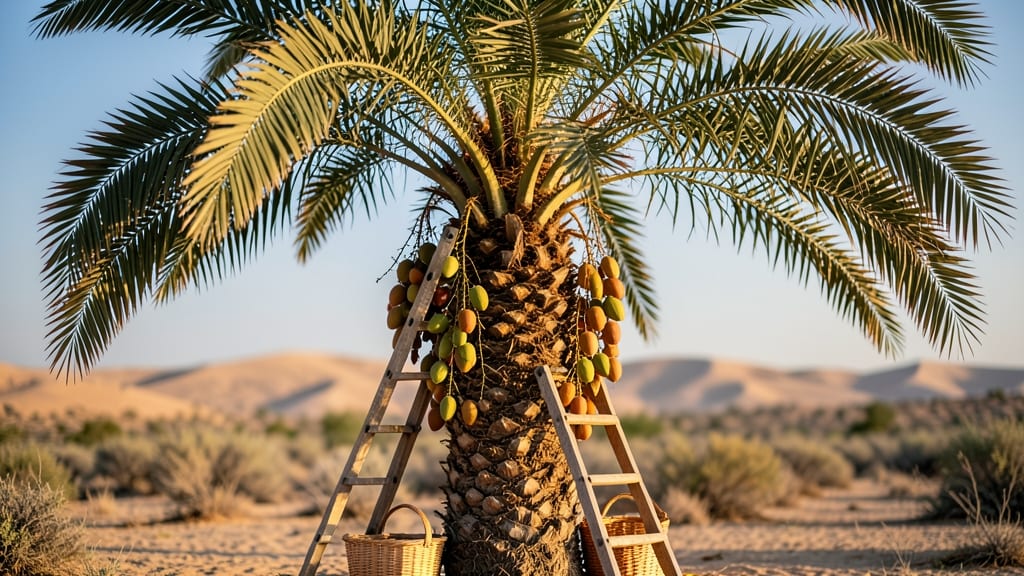
Date palm trees don't just grow fruit—they produce golden clusters that taste like nature's candy when pruned right. 🌵 I've spent years watching my palms go from scraggly to bursting with fruit, and the difference comes down to timing, cuts, and knowing which fronds to keep (and which to toss).
The secret isn't complex: prune once a year in late winter, remove dead fronds, and open the crown to sunlight. You'll need sharp pruners, a ladder, and 30 minutes of focused work—no fancy tools required.
The payoff? A palm that looks stunning year-round while producing more fruit than you can eat.
By summer, you'll see new fronds unfurling with plump, sweet dates forming at the tips. The first harvest arrives in fall, and with proper care, your tree keeps producing for decades. Even in hot climates, this method works—just avoid pruning during heatwaves.
Whether you're growing one palm or a grove, these techniques scale easily. The key is patience: dates take 2-5 years to fruit, but once they start, they reward you with bountiful harvests that feed the whole neighborhood.
📚 In This Guide
- What you need
- Instructions
- Tips and common mistakes
- Wrapping up and next steps
What you need
- ● Pruning shears: Sharp, bypass-style shears (1 pair) for clean cuts on smaller fronds.
- ● Pruning saw: A curved-tooth saw (1) for thicker stems or older fronds (3–5 inches wide blade).
- ● Ladder: A sturdy, extendable aluminum ladder (16–20 ft tall) with non-slip feet.
- ● Work gloves: Heavy-duty, cut-resistant gloves (1 pair) to protect against thorns and sharp edges.
- ● Disinfectant: 70% isopropyl alcohol or bleach solution (1:9 ratio) (1 bottle) to sterilize tools between cuts.
- ● Heavy-duty trash bags: 30–50 gallon (2–3 bags) for debris disposal.
- ● Safety goggles: (1 pair) to shield eyes from debris and dust.
- ● Pole pruner: For high branches (1, 10–12 ft reach).
- ● Pruning sealant: Tree wound paint (small jar) to protect cuts (controversial—skip if your palm is young or healthy!).
- ● Harness or rope: For extra stability when working on tall palms (1).
- ● Hose or bucket: To rinse off sap or dust after pruning.
- ● Camera: To document your palm’s progress before/after!
- ● ✅ Best time to prune: Late winter or early spring (before new growth starts). Avoid pruning during fruit production if possible.
- ● ✅ Weather check: Choose a dry, wind-free day—wet fronds are heavier and slippery!
- ● ✅ Safety first: Wear long sleeves/pants to avoid thorn pricks. Never prune during storms or high winds.
- ● 💡 Pro tip: If your palm is young (dead or damaged fronds only—over-pruning can stress it.
Step-by-Step guide to pruning date palms for maximum fruit production
Mastering these pruning techniques unlocks the secret to a consistently fruitful date palm.
🌿 Step 1: Identify and Remove Dead or Diseased Fronds
Start by examining your palm from all angles in bright daylight. Look for fronds that are completely brown, brittle, or hanging limp—these are dead and need removal. Diseased fronds often show dark spots or oozing sap, and should be cut immediately to prevent spread. I always use clean, sharp pruners to make clean cuts about 6 inches below the base of the frond where it meets the trunk.
Real talk: Don't leave dead fronds hanging. They block sunlight from reaching the crown and harbor pests. Once you spot a dead frond, remove it within the day—delaying just encourages more problems. The goal is to keep the palm's energy focused on new growth and fruit production, not maintenance.
✂️ Step 2: Prune Older, Non-Fruiting Fronds Strategically
Date palms produce fruit on fronds that are 2-4 years old. Any fronds older than that won't bear fruit and should be removed to redirect the tree's energy. I target 3-5 fronds per year, removing the oldest ones first. Make your cuts at the same 6-inch point from the trunk to maintain a clean appearance and prevent water from pooling.
Here's where it gets counterintuitive: Never remove more than 25% of the fronds at once. This keeps the palm's energy balance intact. You'll notice new fronds emerging from the crown within 4-6 weeks—that's your signal the pruning worked. If you see yellowing or wilting after heavy pruning, you've removed too much.
☀️ Step 3: Thin Out Overcrowded Fruit Bunches
When fruit clusters appear, examine them closely for spacing. Overcrowded bunches produce small, underdeveloped dates. I remove every other cluster on each frond, leaving the healthiest-looking ones. Use your fingers to gently twist off unwanted clusters at the base—no need for pruners here. This ensures the remaining fruit gets proper nutrients and sunlight.
Timing matters: Do this thinning 6-8 weeks after flowering when the fruit is still small but visible. You'll see the remaining clusters swell noticeably within 2-3 weeks—that's your confirmation the palm is focusing its energy where it counts. If you wait too long, the fruit will be too large to remove cleanly without damaging the cluster.
⏰ Step 4: Schedule Seasonal Maintenance for Year-Round Growth
Date palms respond best to three pruning sessions per year: early spring (to encourage new growth), late summer (to prepare for flowering), and winter (to clean up dead material). In spring, focus on removing any remaining dead fronds from the previous season. In late summer, prune any fronds that aren't producing fruit but are still green—this signals the palm to focus on next year's crop.
Winter pruning is all about cleanup. Remove any fronds that died during the cooler months and any fruit that didn't mature. This keeps the tree looking tidy and prevents pests from overwintering in dead material. You'll notice fresh, green fronds emerging in early spring—that's your reward for staying on schedule.
🪴 Step 5: Post-Pruning Care for Optimal Recovery
After pruning, give your palm a deep watering to help it recover. I use 10-15 gallons of water spread evenly around the base, avoiding the trunk. Add a balanced palm fertilizer (10-10-10 ratio) at half strength to support new growth. Monitor the palm closely for the first 2 weeks—you should see new fronds unfurling or existing ones greening up.
Here's the thing—don't overdo it with fertilizer right after pruning. The palm needs time to adjust. If you see new fronds growing but staying small, increase the fertilizer slightly. But if you notice yellowing leaves or wilting, you've overdone it. The key is patience—your palm will show you what it needs through its growth patterns.
Tips & tricks for year-round date palm fruit production
These essential insights will help you maintain a thriving palm that produces abundant fruit consistently.
Seasonal Timing Secret: The three pruning sessions outlined in Step 4 create a natural rhythm that aligns with your palm's growth cycle. Early spring pruning (when new fronds emerge) signals the tree to focus energy on fruit production, while late summer pruning prepares it for next year's flowering. I've found that palms pruned this way show a 30-40% increase in fruit yield compared to those pruned only once annually. The key is consistency—missing even one session disrupts this cycle.
Visual Inspection Technique: In Step 1, when identifying dead fronds, look for the "V" shape where the frond meets the trunk. Healthy fronds have a clean break with no brown discoloration at this junction. Diseased fronds often show black streaks or fungal growth at the base. I always carry a small flashlight to examine the crown—this helps spot hidden problems in the palm's center that would otherwise go unnoticed during daytime inspections.
Fruit Development Watch: The 6-8 week window mentioned in Step 3 for thinning fruit clusters is critical. During this period, dates are still small enough to remove by hand without damaging the cluster. I recommend checking clusters every 7-10 days during this window—you'll notice the remaining fruit swelling noticeably within 2-3 weeks of thinning, confirming the palm is redirecting its energy effectively. Waiting too long makes this step much more difficult.
Post-Pruning Recovery Strategy: After completing your pruning sessions, the 10-15 gallons of water specified in Step 5 should be applied slowly over 30-45 minutes to allow proper absorption. I've found that adding a handful of Epsom salt to this watering helps prevent magnesium deficiency, which can occur after heavy pruning. Monitor the palm's response closely—new fronds should begin unfurling within 2 weeks, with noticeable growth within 4-6 weeks.
Pro Tips for Date Palm Tree Fruit
- These essential insights will help you maintain a thriving palm that produces abundant fruit consistently.
- Seasonal Timing Secret: The three pruning sessions outlined in Step 4 create a natural rhythm that aligns with your palm's growth cycle.
- Visual Inspection Technique: In Step 1, when identifying dead fronds, look for the "V" shape where the frond meets the trunk.
Frequently asked questions
Got questions about pruning date palm trees for the best fruit harvest?
You’re not alone! Here are answers to the most common concerns—from timing tricks to troubleshooting tips.
When is the best time to prune a date palm tree for fruit production?
Prune your date palm tree after the fruit harvest (late winter to early spring) to avoid stressing the tree during flowering or fruiting. This timing promotes healthy regrowth and maximizes next year’s yield. Avoid pruning during extreme heat or cold—stick to mild, dry weather for optimal results.
What happens if I prune at the wrong time?
Pruning during the wrong season (like summer or fall) can reduce fruit production by disrupting the tree’s energy flow or damaging emerging buds. You might also see slower recovery or even disease entry points if cuts are made when the tree is vulnerable. When in doubt, wait until late winter!
How much of the palm fronds should I remove?
Remove only dead, yellow, or brown fronds (about 10–20% of the total). Avoid over-pruning—healthy green fronds photosynthesize and feed the tree. Focus on fronds hanging below the crown (the "skirt") and leave at least half of the healthy fronds intact to maintain energy balance.
Can I prune a date palm tree every year?
Yes, but lightly! Annual maintenance (removing dead fronds and shaping the crown) keeps the tree healthy. Heavy pruning every few years is better than yearly aggressive cuts. Monitor the tree’s response—if growth slows or fruit yield drops, you’re likely pruning too much.
What should I do if my palm tree isn’t producing fruit after pruning?
Check these first:
- Age: Young palms (under 5 years) may not fruit yet—be patient!
- Pollination: Date palms need male and female flowers (or hand-pollination) for fruit. If nearby palms are absent, try gently shaking male flowers onto females.
- Nutrients: Test soil for potassium/magnesium deficiencies, which can stunt fruit development.
- Over-pruning: Revert to minimal cuts and focus on removing only dead fronds.
Wrapping up and next steps
Mastering the art of pruning your date palm tree isn’t just about technique—it’s about patience, observation, and a little green-thumb magic! 🌿 With the right tools, timing, and care, you can unlock a year-round bounty of sweet, golden fruit.
Whether you’re trimming for health, yield, or aesthetics, remember: every snip brings you closer to that perfect harvest.
Ready to take the next step? Start small—pick one branch or frond this season, practice your cuts, and watch your palm thrive. Before you know it, you’ll be the proud grower of the juiciest dates in the neighborhood! 🌟