
Pruning
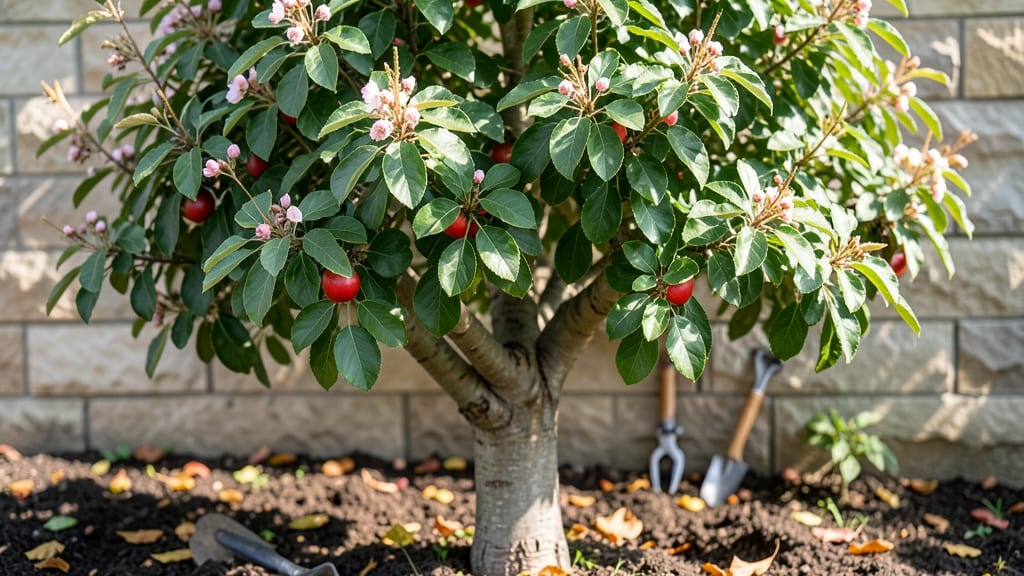
Planting a crabapple fruit tree transforms your yard into a four-season showpiece—crisp white blossoms in spring, glossy red fruit in summer, fiery fall foliage, and stark winter silhouettes against the sky.
I’ve grown mine for eight years, and every season delivers something new, from the first flush of pink buds to the last stubborn apple clinging to the branches.
The secret to their cold-hardy magic lies in choosing the right variety and giving them proper care. You’ll need well-draining soil, full sun, and a little patience during the first few years while roots establish.
My favorite variety, ‘Dolgo,’ handles Zone 3 winters like a champ, while others like ‘Adams’ produce edible fruit that birds adore. The pruning isn’t complicated—just remove dead wood and shape the tree in late winter—but timing matters.
By summer, you’ll be harvesting clusters of tart-sweet crabapples perfect for jellies or wildlife snacks, while the tree’s dense canopy provides shade and privacy. The real reward? A landscape that stays stunning even when other plants fade. Let’s get your tree thriving from day one.
Whether you’re in a suburban yard or a small urban lot, crabapples adapt beautifully. They’re low-maintenance once established, drought-tolerant once rooted, and their compact size makes them ideal for tight spaces. The only trade-off? You’ll need to accept some fruit drop—nature’s way of feeding the birds.
📚 In This Guide
- What you need
- Instructions
- Tips and common mistakes
- Wrapping up and next steps
What you need
- ● Crabapple tree sapling: Choose a cold-hardy variety (e.g., 'Adams,' 'Dolgo,' or 'Sargent') from a reputable nursery. Quantity: 1 (or more, if planting multiple trees).
- ● Shovel: A sturdy digging shovel (16–18 inches wide) for planting.
- ● Pruning tools: Bypass pruners (for small branches, 6–8 inches)
- ● Loppers (for thicker branches, 18–24 inches)
- ● Hand saw (for large limbs, 16–20 inches)
- ● Gloves: Heavy-duty gardening gloves (cut-resistant for pruning).
- ● Mulch: Organic mulch (wood chips, straw, or pine bark) to retain moisture and suppress weeds.
- ● Fertilizer: Slow-release granular fertilizer (10-10-10 or 5-10-10 NPK ratio) for young trees.
- ● Watering can or hose: With a gentle spray nozzle for post-planting hydration.
- ● Tree stakes and ties (for young, unstable saplings).
- ● Pruning sealant (to protect large cuts from disease).
- ● Soil test kit (to check pH and nutrient levels before planting).
- ● Bird netting (to protect fruit from pests like birds or squirrels).
- ● Tree guard or protective wrap (for young trees in harsh climates).
Step-by-step guide to planting and caring for cold-hardy crabapple trees
Here's how to get your crabapple tree thriving in cold climates—with stunning blooms and fruit year after year.
🌱 Step 1: Choose the Right Location and Prepare the Soil
Crabapple trees need full sun—at least 6-8 hours daily—to produce abundant blooms and fruit. I always pick a spot with morning sun and afternoon shade if summers are scorching in your area. The soil should drain well; crabapples hate soggy roots, so avoid low spots where water pools.
Before planting, loosen the soil to a depth of 12-18 inches using a garden fork. Mix in 2-3 inches of compost to enrich the soil without compacting it. Crabapples tolerate a range of soil types but prefer slightly acidic to neutral pH (6.0-7.0). If your soil is heavy clay, amend it with sand or perlite to improve drainage.
🪴 Step 2: Plant Your Tree at the Correct Depth and Stake for Support
Dig a hole twice as wide as the root ball but no deeper. Place the tree so the top of the root ball sits 2-3 inches above ground level—this prevents settling and root rot. Gently remove the tree from its container and tease the roots outward if they’re circling tightly.
Backfill the hole with native soil, tamping it lightly every 6 inches to remove air pockets. Create a watering basin around the base by mounding soil outward. Stake the tree only if necessary (young trees in windy areas), using two stakes and soft tree ties to avoid girdling the trunk. Water deeply right after planting to settle the soil.
☀️ Step 3: Water and Mulch for Healthy Early Growth
Water your crabapple tree deeply once a week for the first two months, ensuring moisture reaches 12-18 inches down. You’ll know it’s enough when the soil feels damp but not waterlogged. After that, water every 10-14 days unless your area experiences drought. Overwatering is worse than underwatering—crabapples are tough once established.
Spread 3-4 inches of mulch (wood chips or shredded bark) around the base, keeping it 3 inches away from the trunk to prevent rot. Mulch helps retain moisture and regulates soil temperature. Replenish mulch annually as it breaks down. Avoid piling mulch against the trunk—this can trap moisture and invite pests.
✂️ Step 4: Prune for Shape and Health in Late Winter or Early Spring
Prune your crabapple tree before buds swell in late winter or early spring to encourage strong new growth. Remove dead, diseased, or crossing branches first—these are easy to spot and improve airflow. Cut back to a healthy bud or branch collar, using clean, sharp pruners to avoid tearing the bark.
Thin out overcrowded branches to open the center of the tree, which reduces disease risk. Aim for an open vase shape that lets sunlight reach all parts. Avoid heavy pruning in fall—it stimulates late-season growth that won’t harden off before winter. Seal larger cuts (over ½ inch) with pruning sealant to prevent disease entry.
🌿 Step 5: Fertilize and Monitor for Pests/Diseases Year-Round
Apply a balanced, slow-release fertilizer (10-10-10) in early spring when new growth begins. Use ½ pound per inch of trunk diameter, spread evenly in a 4-inch-wide band around the drip line. Avoid fertilizing in fall—it encourages tender growth that may not survive winter. Crabapples are generally low-maintenance, but a light feeding keeps them vigorous.
Watch for apple scab, fire blight, or aphids—common issues for crabapples. Treat fungal diseases with copper fungicide in early spring as a preventative. For pests, spray neem oil or insecticidal soap if you see clusters of insects. Healthy trees handle stress better, so prioritize proper watering and pruning to reduce vulnerabilities.
Tips & tricks for perfect cold-hardy crabapple tree planting and care
These practical strategies will help your cold-hardy crabapple thrive for decades with minimal fuss.
Location is Everything: While the instructions mention full sun, I've found that trees in northern climates actually benefit from afternoon shade during peak summer months. The morning sun provides the energy boost they need, while afternoon shade prevents heat stress that can reduce fruit production. Test your site by observing how much sun it gets between March and September.
Root Preparation Matters: When loosening soil to 12-18 inches, don't just scratch the surface—break up any compacted layers with a garden fork. The goal is to create a loose, airy environment that encourages root expansion. If you encounter hardpan, consider adding extra compost or sand to improve drainage in that layer. This extra effort pays off with stronger root systems that handle winter better.
Watering Wisdom: The deep watering instructions are spot-on, but here's the secret: water in the morning between 6-9 AM to give roots time to absorb moisture before evaporation. If your soil drains too quickly (like sandy soil), water twice weekly for the first two months instead of once. You'll know you're doing it right when water appears at the 12-inch depth about 30 minutes after watering.
Pruning Pro Tips: When pruning before buds swell, look for "water sprouts"—those fast-growing, vertical shoots that appear after heavy pruning. These sap-suckers drain energy from your tree. Remove them completely at the base rather than cutting back to a bud. Also, sterilize your pruners between cuts with rubbing alcohol to prevent spreading fungal spores between branches.
Pro Tips for Crabapple Fruit Tree
- These practical strategies will help your cold-hardy crabapple thrive for decades with minimal fuss.
- Location is Everything: While the instructions mention full sun, I've found that trees in northern climates actually benefit from afternoon shade during peak summer months.
- Root Preparation Matters: When loosening soil to 12-18 inches, don't just scratch the surface—break up any compacted layers with a garden fork.
Frequently asked questions
Got questions about growing and caring for crabapple trees? You’re not alone!
Whether you're a beginner or a seasoned gardener, these answers will help you navigate pruning, harvesting, and troubleshooting like a pro.
1. When is the best time to prune a crabapple tree for optimal fruit and flower production?
Prune your crabapple tree during late winter or early spring (February–March), just before buds swell but before new growth starts. This timing ensures you remove dead or diseased branches while encouraging vibrant blooms and fruit. Avoid heavy pruning in fall, as it can stimulate late-season growth vulnerable to frost damage. For shaping, light pruning can also be done in summer after flowering.
2. Why aren’t my crabapples producing fruit, even though the tree is flowering beautifully?
Crabapples need both male and female flowers (or self-fertile varieties) to produce fruit. If your tree isn’t fruiting, it might be dioecious (separate male/female trees) or lacking pollinators like bees. Try planting a second variety nearby or hand-pollinate with a soft brush. Also, ensure the tree gets 6–8 hours of sunlight and isn’t over-fertilized with high-nitrogen mixes, which prioritize foliage over fruit.
3. Are crabapple trees truly cold-hardy? What zones do they tolerate?
Most crabapple varieties thrive in USDA Zones 3–8, with some hardy types (like ‘Adirondack’ or ‘Dolgo’) surviving down to -40°F (-40°C). However, young trees or tender blossoms may need protection from late spring frosts. Choose native or hybrid cultivars bred for your region to maximize resilience. Mulch around the base in winter to shield roots from extreme cold.
4. How do I deal with pests like aphids or borers on my crabapple tree?
Start with preventative care: Prune to improve airflow, remove fallen fruit to deter pests, and water deeply during dry spells. For aphids, blast them off with a strong spray of water or use insecticidal soap. Borers require more effort—apply beneficial nematodes or prune infested branches (sterilize tools with rubbing alcohol). For severe cases, consult a local extension service for organic or chemical solutions tailored to your area.
5. Can I eat crabapples raw, or do I need to cook them first?
Raw crabapples are tart and astringent, best suited for jellies, jams, or sauces. Soak and cook them to soften the texture and reduce bitterness. For fresh eating, try ‘Harvest Gold’ or ‘Centennial’ varieties, which are slightly sweeter. Always remove seeds (they contain cyanide) and cook thoroughly to enhance flavor. Pro tip: Pair with honey or cinnamon to balance the tang!
| Quick Troubleshooting Guide |
|---|
| Problem: Yellow leaves in summer |
| Likely Cause: Overwatering, nutrient deficiency (e.g., iron), or fungal leaf spot. Fix: Test soil moisture, amend with compost, or apply iron chelate. |
| Problem: No flowers |
| Likely Cause: Over-pruning, poor sunlight, or stress. Fix: Reduce pruning, ensure full sun, and check for root damage. |
Wrapping up and next steps
Growing a crabapple fruit tree is a rewarding way to add beauty, structure, and seasonal interest to your landscape—whether you’re harvesting fruit, admiring blossoms, or pruning for health. Cold-hardy varieties like Malus ‘Adirondack’ or ‘Sargent’ thrive in tough climates while offering year-round charm.
With the right tools, timing, and techniques, you’ll keep your tree flourishing for decades.
Ready to transform your yard? Start by sketching a pruning plan based on your tree’s age and goals—then grab your shears and get pruning! 🌳✂️