
Pruning
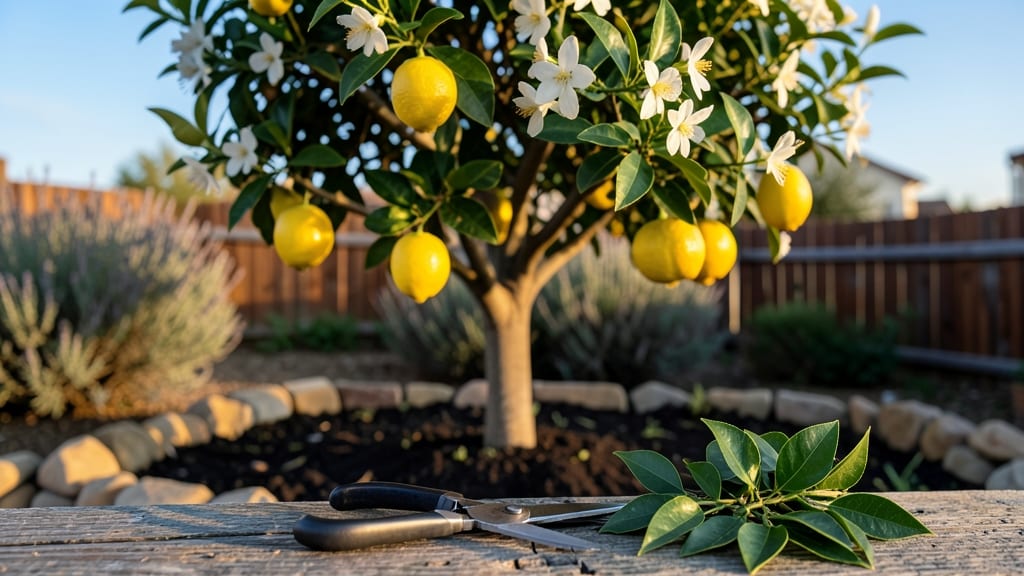
When you cut back your lemon tree properly, you unlock three times more fruit and leaves so lush they look like a tropical postcard. 🌿 I learned this the hard way after my first aggressive pruning session left the tree looking like a sad bonsai.
The key isn't just trimming—it's understanding when to prune for growth versus when to prune for shape, and how to make each cut work for the tree's health.
You'll need just three basic tools: sharp pruning shears for small branches, loppers for thicker stems, and a sterilized saw for anything over an inch thick. Timing matters too—spring and summer are for shaping, while winter's the best time to remove dead wood.
Most gardeners overdo it in winter, but lemon trees actually thrive with minimal pruning then if you focus on cleaning up instead of reshaping.
After pruning, you'll notice new shoots emerging within 4-6 weeks, and those become your future fruit-bearing branches. The air circulation improves, so fewer diseases cling to the leaves, and the tree directs energy toward producing sweet, abundant lemons instead of just foliage.
It's the difference between a tree that gives you a handful of fruit and one that feeds your whole family for months.
This method works for both potted lemon trees and those planted in the ground, though container-grown trees need slightly more frequent pruning to stay compact. Whether you're dealing with a young tree or one that's been neglected, the same principles apply—just adjust the intensity. Let's get those branches looking intentional!
📚 In This Guide
- What you need
- Instructions
- Tips and common mistakes
- Wrapping up and next steps
What you need
- ● Bypass pruning shears: Sharp, clean shears (4-6 inch blades) for cutting small to medium branches. Pro tip: 💡 Sanitize blades with rubbing alcohol before and after use to prevent disease spread!
- ● Pruning saw: A curved-tooth saw (8-10 inch blade) for thicker branches (½ inch or larger). Look for one with a comfortable grip for extended use.
- ○ Gloves: Heavy-duty gardening gloves (nitrile-coated for grip and protection). Optional: thin, breathable gloves if you prefer dexterity.
- ● Disinfectant: 70% isopropyl alcohol or a pruning sealant (like Tanglefoot Tree Wound Pruning Seal) to treat cuts.
- ● Ladder or step stool: A sturdy, non-slip ladder (if your tree is over 6 feet tall). Safety first! 🔥
- ● Bucket or bag: A 5-gallon bucket or mesh bag to collect pruned branches (for compost or disposal).
- ● Sharpie or marker: Permanent marker to label cuts (e.g., "Fruit Wood" or "Dead Branch") if needed for tracking.
- ● Hand pruners (felco or anvil type): For precision cuts on tiny branches (⅛ inch or smaller).
- ● Tree tie or zip ties: To secure branches if you’re doing structural pruning (e.g., staking new growth).
- ● Hose or spray bottle: To rinse tools between cuts (keeps sap from clogging blades).
- ● Pruning guide or ruler: A 12-inch metal ruler with a notch to measure cuts (aim for ¼ inch above a bud).
- ● Compost bin or trash bags: If you plan to compost pruned material, a compostable liner helps contain debris.
Instructions for pruning your lemon tree year-round
Here's how to shape your citrus tree for better fruit and healthier growth.
✂️ Step 1: Identify and Remove Dead or Diseased Branches
Start by inspecting your lemon tree for any branches that are brown, brittle, or showing signs of disease like black spots or fungal growth. These are your first targets—they won't recover and will only drain energy from the rest of the tree. Use sharp pruning shears to make clean cuts just outside the branch collar, where the branch meets the trunk. This prevents tearing and promotes faster healing.
I always prune dead branches first because they can harbor pests and diseases that might spread to healthy growth. If a branch is larger than ½ inch in diameter, use a pruning saw instead of shears to avoid damaging the tree. Look for any suckers growing from the base or trunk—these are aggressive, non-fruiting shoots that compete with your main tree. Snip them off at the base immediately.
✂️ Step 2: Thin Out Crowded Growth for Better Airflow
Lemon trees produce dense foliage, but too much can block sunlight and air from reaching the center of the tree. Focus on removing branches that grow inward or cross over others. Your goal is to create an open, vase-like shape that allows sunlight to penetrate to the inner branches. This is especially important in humid climates, where poor airflow encourages fungal diseases.
When thinning, never remove more than 25% of the tree's foliage in one session—this prevents shock. Start with the smallest branches first, as they're easier to remove and less likely to leave large wounds. You'll know you're doing it right when you can see light filtering through the center of the tree and air can circulate freely around the branches.
✂️ Step 3: Shape the Tree for Optimal Fruit Production
Lemon trees fruit best on mature wood, so your pruning should encourage strong, woody branches. Focus on cutting back branches that are growing too close together or competing for space. Aim to create a balanced shape with a central leader (main upward-growing branch) and well-spaced side branches. For dwarf varieties, keep the height manageable—typically between 6 and 8 feet—to make harvesting easier.
Here's the thing—you don't need to prune every branch evenly. Instead, look for branches that are growing in the direction you want the tree to expand. If a branch is growing straight up but you want to encourage outward growth, cut it back by about one-third. This will stimulate lateral branches to fill out the tree. Always make cuts just above a leaf node or bud to encourage new growth in the right direction.
✂️ Step 4: Prune for Seasonal Growth and Fruit Development
Timing matters with lemon trees. In late winter or early spring, just before new growth begins, is the best time to do major pruning. This encourages vigorous new growth that will bear fruit later in the season. If your tree is heavily laden with fruit, you might also prune lightly in early summer to reduce the load and prevent branch breakage. Avoid heavy pruning in fall or winter, as the tree needs its foliage to protect it from cold and to store energy for the next growing season.
Watch for any water sprouts—these are fast-growing, vertical shoots that pop up after pruning. They're a sign your tree is trying to fill in gaps, but they often grow weakly and don't produce fruit. Remove them as soon as you spot them to redirect the tree's energy into stronger, fruit-bearing branches. After pruning, give your tree a light application of citrus-specific fertilizer to support new growth.
Tips & tricks for perfect lemon tree pruning
Your lemon tree's health—and that harvest—depends on smart pruning. Here's what I've learned after years of shaping my own citrus trees.
Tool Selection: Never use dull shears or saws—they tear branches instead of making clean cuts. I keep a pair of sharp bypass pruners for branches under ½ inch and a folding pruning saw for anything thicker. A clean cut heals faster and prevents disease entry points. Invest in quality tools if yours struggle to cut through woody branches.
Seasonal Timing: The late winter/early spring timing in Step 4 is non-negotiable for major pruning. This aligns with the tree's natural dormancy period, giving it time to recover before summer's heat stress. For minor adjustments, you can prune lightly during summer's fruiting season, but avoid heavy cuts—this stresses the tree when it's already working hard to produce fruit.
Visual Pruning Cues: When shaping in Step 3, look for branches that form a "V" shape with others—these crossovers block sunlight and create disease pockets. Also watch for branches growing directly upward from the trunk (called "water sprouts") that appear after pruning. These weak shoots steal energy from fruit production. Remove them as soon as you spot them to redirect the tree's resources where you want them.
Pro Tips for Cutting Back Lemon Tree
- Your lemon tree's health—and that harvest—depends on smart pruning.
- Tool Selection: Never use dull shears or saws—they tear branches instead of making clean cuts.
- Seasonal Timing: The late winter/early spring timing in Step 4 is non-negotiable for major pruning.
Frequently asked questions
Got questions about pruning your lemon tree? You’re not alone! Here are some of the most common concerns—and their straightforward answers—to help you tackle cutting back with confidence.
When is the best time to prune a lemon tree for fruit production?
The ideal time is late winter or early spring (just before new growth starts), but you can do light pruning after harvest too. Avoid heavy cuts in summer—it stresses the tree and delays fruiting. For tropical climates, prune in dry seasons to minimize disease risk.
How much can I cut back a lemon tree without hurting it?
For established trees, trim no more than 25-30% of the foliage in one session. Focus on removing dead, crossing, or overcrowded branches first. Young trees can handle slightly more aggressive pruning (up to 40%) to shape their structure, but always prioritize healthy growth over drastic cuts.
Will pruning my lemon tree reduce its fruit yield?
Not if done right! Pruning actually boosts fruit quality and quantity by improving airflow and sunlight penetration. However, over-pruning (especially in flowering season) can temporarily reduce yield. Balance is key—aim for open, airy branches with plenty of light exposure.
What should I do if my lemon tree bleeds sap after pruning?
Sap bleeding (or "weeping") is normal but can attract pests. To minimize it, use sharp, clean tools and cut at a 45-degree angle just above a leaf node. Seal larger cuts with pruning sealant (optional for small branches). Avoid pruning during hot, dry weather to reduce stress.
Can I prune a lemon tree in a pot, or is it better to wait until it’s planted?
Yes! Potted lemon trees can be pruned year-round (lightly), but focus on root-bound or overgrown branches first. If the tree is root-bound, prune before repotting to encourage new growth. Just ensure the pot has drainage holes and use well-draining soil to prevent root rot from stress.
Wrapping up and next steps
Cutting back your lemon tree isn’t just about shaping—it’s about unlocking its full potential! With the right tools, timing, and techniques, you’ll encourage healthier growth, more vibrant blooms, and a bountiful harvest. Remember, patience and consistency are key—your tree will thank you with lush foliage and sweet, juicy lemons!
Ready to take the next step? Start small—pick one pruning session this week and observe how your tree responds. Over time, you’ll build confidence and a thriving citrus companion. Happy pruning! 🌿✂️