
Pruning
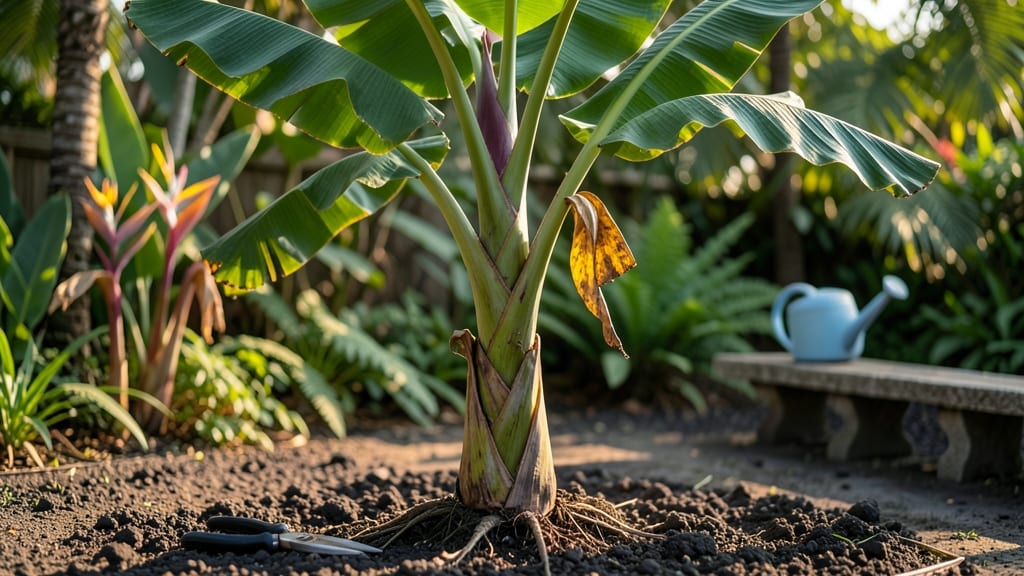
The banana tree hardiness zone may limit where you can plant them permanently in USDA zones 10-12—but with clever tricks, you can coax them to life even in cooler climates, like my zone 9 survivors. 🌿 even zone 7 gardeners can grow them in containers.
The key lies in understanding frost triggers and microclimates that extend their growing season.
Most banana varieties—like the cold-hardy Dwarf Cavendish or Red Dacca—can handle brief dips below freezing if sheltered, but prolonged cold kills them to the ground. In cooler zones, containers let you move plants indoors before frost, while mulching and windbreaks create a warmer microclimate.
Even in harsh winters, a well-protected banana can bounce back with new shoots in spring.
You’ll end up with lush, fruit-bearing plants that reward your efforts with bold leaves and—if conditions are right—sweet, creamy bananas. The trick is balancing protection with enough sunlight and warmth to keep growth steady. Whether you’re in a frost-free paradise or a chilly suburb, these techniques make banana gardening possible.
For advanced growers, overwintering banana plants indoors or in greenhouses adds another layer of control. Beginners can start with container-grown plants and test their local microclimates. Either way, the payoff is worth the effort—imagine fresh bananas from your own backyard, no matter where you live.
📚 In This Guide
- What you need
- Instructions
- Tips and common mistakes
- Wrapping up and next steps
What you need
- ● Banana plant (cold-hardy variety): Choose Musa acuminata (e.g., 'Dwarf Cavendish' or 'Red Dacca') or Musa balbisiana hybrids (e.g., 'Ice Cream' or 'Fe'i'). 1-2 plants per growing spot.
- ● Well-draining soil mix: 50% native soil + 30% compost + 20% perlite/sand (pH 5.5–7.0). 1 cubic yard per tree.
- ● Organic mulch: 3–4 inches of straw, wood chips, or pine needles to insulate roots.
- ○ Container (optional for Zones 7–8): 15–25 gallon pot with drainage holes (use if planting in-ground isn’t feasible).
- ● Garden trowel or shovel (for planting/transplanting).
- ● Pruners or loppers (sterilized with rubbing alcohol).
- ○ Soil pH tester (optional but helpful for adjustments).
- ● Thermometer (to monitor frost risk in marginal zones).
- ● Burlap or frost cloth (10x10 ft sheet) for winter protection.
- ● Sunlight: Full sun (6+ hours/day) in Zones 9–11; partial shade (4–6 hours) in Zones 7–8.
- ● Water access: Drip irrigation or hose for consistent moisture (banana trees hate soggy roots!).
- ● Frost-free zone: Avoid planting in-ground in Zones 6–7 unless using microclimate tricks (e.g., near south-facing walls).
- ● Patience: Cold-hardy bananas take 1–2 years to bear fruit in cooler zones!
How to choose and care for cold-resistant banana trees
Cold-hardy banana varieties can thrive in cooler climates with the right preparation and care.
🌱 Step 1: Identify Your Hardiness Zone
First, determine your USDA hardiness zone using the zone map. Cold-resistant banana varieties like Musa acuminata 'Dwarf Cavendish' or Musa basjoo tolerate zones 7-11, but Musa basjoo (Japanese fiber banana) extends survival to zone 6 with protection. Check your local climate data—bananas need at least 200 frost-free days annually.
If you're in zone 5 or colder, focus on container-grown varieties. I've grown Musa basjoo successfully in zone 6 by overwintering pots indoors. The key is understanding your minimum winter temperatures—bananas can't handle prolonged exposure below 28°F. Even hardy varieties suffer damage when temps dip below 20°F for more than a few hours.
☀️ Step 2: Select the Right Variety for Your Climate
For zones 7-9, choose Musa acuminata cultivars like 'Dwarf Cavendish' or 'Ice Cream' banana. These handle brief cold snaps down to 25°F with proper mulching. In zones 10-11, tropical varieties like 'Lady Finger' or 'Red Dacca' thrive year-round but need protection from wind and heavy rain.
Here's the real talk: Musa basjoo is your best bet for cooler regions. It's not edible but produces stunning foliage and can survive 15°F with mulch. I've seen it bounce back from 10°F with heavy winter wrap. For edible fruit in colder zones, 'Red' or 'Bluggoe' bananas are your only options—they're less cold-hardy but worth the effort.
🪴 Step 3: Plant in Optimal Conditions
Bananas need full sun (6-8 hours daily) and well-draining soil with a pH of 5.5-7.5. Amend heavy clay with 3-4 inches of compost and sand to prevent root rot. In containers, use a mix of 60% potting soil, 20% perlite, and 20% compost. The pot must be at least 18 inches deep with drainage holes—banana roots need room to spread.
Plant in spring after last frost when soil temps reach 60°F. Dig a hole twice as wide as the root ball but no deeper. Water deeply before planting, then backfill with native soil mixed with 1 cup of balanced 10-10-10 fertilizer. Mulch with 3-4 inches of straw to retain moisture and insulate roots—this is critical for cold resistance.
⏰ Step 4: Prepare for Winter Protection
In zones 6-9, start winter prep when night temps drop below 40°F. Wrap the trunk and pseudostem with burlap or frost cloth, securing with twine. For container bananas, move pots to a garage or sheltered porch where temps stay above 45°F. If you must leave them outside, bury the pot halfway in straw or leaves for insulation.
Here's where it gets tricky: never let the soil freeze. In zone 6, I've used heat cables wrapped around container roots to maintain 50°F+ soil temps. Prune back fronds to 2 feet in fall to reduce transpiration. The goal is to keep the crown (top of roots) alive—it's the regrowth engine for spring.
💧 Step 5: Spring Revival and Ongoing Care
When daytime temps hit 60°F in spring, unwrap the trunk and remove winter mulch. Water deeply once a week (more in containers) until new shoots appear. Fertilize with 5-5-5 fertilizer when fronds emerge, then switch to 8-3-9 once flowering begins. Bananas are heavy feeders—don't skimp on nutrients if you want fruit.
Watch for new suckers (shoots) at the base. Thin to 2-3 strongest per plant to avoid overcrowding. In zones 7-9, you can leave suckers for natural propagation. In colder zones, dig and pot up the strongest sucker for overwintering—this is how I've expanded my collection from one plant to four in five years.
Tips & tricks for thriving cold-resistant banana trees
Cold-resistant banana trees demand precision and patience—here's how to give them the best shot at survival and success.
Zone-Specific Survival Secrets: The 200 frost-free days requirement isn't just a number—it's your plant's lifeline. In zone 6, I've found that Musa basjoo thrives when you combine its natural hardiness with strategic overwintering. The key is protecting the crown (where roots meet trunk) from prolonged exposure below 28°F. I've used heat cables wrapped around container roots to maintain 50°F+ soil temps during extreme cold snaps, which has saved my plants from winter kill.
Variety Selection Matters: Don't assume all cold-resistant bananas are created equal. 'Dwarf Cavendish' handles brief 25°F dips with proper mulching, but 'Bluggoe' can tolerate 20°F for short periods. For zones 7-9, I recommend 'Ice Cream' banana—it produces edible fruit while handling cold snaps better than most tropical varieties. The trade-off? It won't survive zone 6 winters without protection. Always check your local microclimate—urban areas often have 2-5°F warmer winters than rural zones.
Soil Temperature is Non-Negotiable: The 60°F soil temperature requirement in Step 3 isn't just for planting—it's your entire growing season's foundation. I've learned this the hard way after planting in cool spring soil that never warmed properly. Use a soil thermometer to verify temps before planting. For container growers, black pots absorb heat faster than white ones, which can be critical in marginal zones. And remember: the 45°F minimum for overwintering containers is absolute—banana roots simply won't survive colder soil.
Winter Protection Hacks: The standard 3-4 inches of straw mulch is a great start, but I've found that adding a layer of bubble wrap underneath the mulch creates an extra insulating barrier. For container bananas, I've successfully used insulated plant saucers filled with leaves or straw to prevent heat loss from the bottom. The goal is to mimic the soil's natural insulation—think of what would protect the plant's roots in its native tropical forest environment.
Pro Tips for Banana Tree Hardiness Zone
- Cold-resistant banana trees demand precision and patience—here's how to give them the best shot at survival and success.
- Zone-Specific Survival Secrets: The 200 frost-free days requirement isn't just a number—it's your plant's lifeline.
- Variety Selection Matters: Don't assume all cold-resistant bananas are created equal.
Frequently asked questions
Got questions about growing banana trees in your climate? We’ve got answers! Whether you’re worried about frost, curious about planting times, or exploring alternatives, here’s what you need to know to keep your banana tree thriving.
Can banana trees survive winter in Zone 7 or colder?
Most banana trees (Musa spp.) are tropical and won’t survive frost, but cold-hardy varieties like the Musa acuminata ‘Dwarf Cavendish’ or Ensete ventricosum (false banana) can tolerate brief dips to 20–25°F
For Zones 7–9, grow them in containers and move them indoors or under cover during winter. In Zones 10+, they thrive outdoors year-round with minimal protection.
When is the best time to plant a banana tree in my hardiness zone?
Plant banana trees in spring (after the last frost) for Zones 8–11. In Zones 7 or colder, start them in containers indoors 8–10 weeks before the last frost, then transplant after temperatures stabilize above 50°F.
Pro Tip:
Use a heat lamp or grow light to jumpstart growth if you’re in a cooler zone!
What’s the easiest way to grow banana trees in colder climates?
Container gardening is your best bet! Choose a large pot (15+ gallons) with drainage holes and use a well-draining potting mix. Move the pot indoors near a sunny window or under grow lights during winter.
For extra protection, wrap the pot in bubble wrap or frost cloth and mulch the soil to retain warmth.
Are there banana tree alternatives for Zone 5 or colder?
Yes! If your zone is too cold for banana trees, try these hardy tropical look-alikes:
- Strelitzia nicolai (Giant Bird of Paradise) – Tolerates 20°F with mulch.
- Cordyline fruticosa (Ti Plant) – Thrives in Zone 9–11 but can be grown in containers indoors in colder zones.
- Dracaena marginata (Dragon Tree) – Hardy to 25°F and mimics a banana tree’s shape.
Why did my banana tree’s leaves turn brown and crispy?
Brown, crispy leaves usually mean cold damage, frost, or underwatering. If your tree is in a cooler zone, it may be struggling from overnight temps below 50°F. Check the soil—it should stay evenly moist but not soggy.
Quick Fix:
Move potted trees to a sheltered spot, water deeply, and avoid fertilizing until new growth appears.
Wrapping up and next steps
Growing a banana tree in your hardiness zone is totally doable—even in cooler climates! 🌱 Whether you’re in Zone 10-11 (tropical paradise) or Zone 7-9 (with a little extra care), cold-resistant varieties like Musa acuminata or Dwarf Cavendish can thrive.
The key? Choose the right variety, protect young plants from frost, and mulch well to insulate roots.
Ready to take the next step? Start small! Try growing a banana tree in a container first—it’s a fantastic way to test your green thumb and enjoy tropical vibes year-round. Happy planting! 🌿