
Propagation
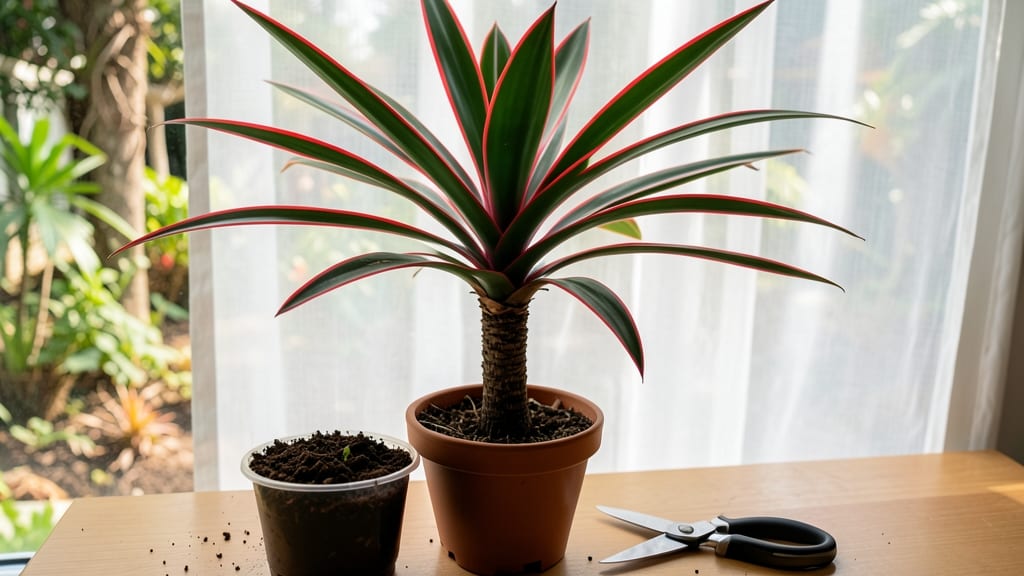
The stem-cutting method for dragon tree propagation is the fastest way to multiply your plant without waiting years for natural offsets. I’ve rooted cuttings in as little as 4-6 weeks—no patience required, just the right timing and a few simple tools.
The key is catching the plant’s natural growth cycle, when energy shifts from leaves to roots, making success almost guaranteed.
You’ll need sharp pruners (sterilized with rubbing alcohol), a well-draining mix of perlite and peat moss, and a clear plastic bag to maintain humidity.
Dragon trees thrive on neglect, but propagation demands precision: cut just below a leaf node, let the wound callus for 24 hours, then dip in rooting hormone (optional but helpful). The right conditions turn a simple cutting into a thriving new plant faster than you’d expect.
Once rooted, your new dragon tree will show dark green, leathery leaves within weeks, signaling it’s ready for its permanent home. Avoid overwatering—the most common mistake—since soggy soil leads to rot.
With proper light (bright but indirect) and occasional misting, you’ll have a self-sufficient plant that grows twice as fast as store-bought specimens.
This method works year-round, but spring and early summer give the best results. Whether you’re expanding your collection or sharing cuttings with fellow plant lovers, you’ll end up with multiple dragon trees for the price of one. Let’s get those cuttings growing!
📚 In This Guide
- What you need
- Instructions
- Tips and common mistakes
- Wrapping up and next steps
What you need
- ● Mature dragon tree stem: A healthy, woody stem (4–6 inches long) with at least 1–2 leaf nodes. Pro tip: Choose stems from the lower part of the plant for best results! 🌿
- ● Sharp pruning shears or knife: Sterilized to prevent disease (rubbing alcohol works great!).
- ○ Rooting hormone (optional but recommended): A powder or gel to boost root growth (e.g., Rootone or Clonex).
- ● Well-draining potting mix: A blend of 50% perlite, 30% peat moss or coco coir, and 20% sand (or pre-mixed cactus/succulent soil).
- ● Small pots or propagation trays: 4–6 inch pots with drainage holes (or a clear plastic dome to retain humidity).
- ● Spray bottle: For gentle misting to keep cuttings hydrated.
- ● Heat mat: Maintains warmth (70–75°F) to speed up rooting.
- ● Clear plastic bag: Creates a mini greenhouse effect for humidity.
- ● Charcoal granules: Adds to soil to prevent fungal issues.
- ● Label markers: Track propagation dates and varieties!
Step-by-Step guide to propagating dragon trees from stem cuttings
Here's how to clone your dragon tree quickly and reliably—no special tools required.
Select and Prepare Healthy Stem Cuttings
Choose a 4-6 inch section of stem with at least 3-4 nodes (the small bumps where leaves grow). Use clean, sharp pruning shears to make a clean cut just below a node—this is where roots will form. I always take cuttings from the middle section of the plant, as these stems have the most energy stored for root development.
Remove the lower leaves, leaving only 2-3 leaves at the top. This reduces moisture loss and directs the plant's energy toward root growth rather than leaf maintenance. Let the cut end callus over for 1-2 hours—this natural drying process prevents rot when you place it in rooting medium. You'll see a slightly dry, slightly raised edge form where the cut was made.
Use a Light, Well-Draining Rooting Medium
Fill a small pot with a 50/50 mix of perlite and peat moss—this ensures excellent drainage while retaining enough moisture for root development. I avoid using straight soil because it compacts and can lead to rot. Moisten the mix until it feels like a slightly damp sponge, not soggy. The goal is to keep the medium consistently moist but never waterlogged.
Insert the prepared cutting 2 inches deep into the medium, pressing gently around the base to ensure good contact. If you're propagating multiple cuttings, space them 3-4 inches apart to allow for airflow. Place the pot in a warm location (70-75°F)—a bright, indirect light spot works best. Avoid direct sunlight at this stage, as it can stress the cutting before roots have formed.
Maintain Ideal Conditions for Root Growth
Cover the pot loosely with a clear plastic bag to create a humid environment—this mimics the tropical conditions dragon trees thrive in. Secure the bag with a rubber band or twist tie, but leave a small gap for airflow. Mist the inside of the bag occasionally to maintain high humidity. You'll notice condensation forming on the bag's interior, which is a good sign that moisture levels are right.
Check the medium every 2-3 days—it should stay lightly moist. If it feels dry to the touch, mist the surface or water lightly from the bottom by placing the pot in an inch of water for 10-15 minutes. Roots typically form within 4-6 weeks, but be patient—some cuttings may take longer, especially in cooler conditions. Once roots are 1-2 inches long, you can transplant the new plants into individual pots.
Transplant and Establish New Plants
When roots are well-developed, carefully remove the cutting from the propagation pot and gently shake off excess medium. This helps you see the root structure and assess its health. Plant the cutting in a 4-6 inch pot filled with a well-draining potting mix—I like to use a blend of cactus/succulent mix with added perlite for extra airflow.
Water lightly after transplanting to settle the soil around the roots, then reduce watering to every 2-3 weeks. Dragon trees are drought-tolerant once established, so it's better to underwater slightly than to overwater. Place the new plant in bright, indirect light and gradually introduce it to more direct sunlight over 2-3 weeks. You'll know it's adapting well when new growth appears at the top of the stem.
Tips & tricks for perfect dragon tree propagation
Here's what nobody tells you about speeding up this process without sacrificing success.
Node Selection Matters: In Step 1, focus on cuttings with 3-4 nodes that are evenly spaced. The middle section of your dragon tree is ideal because these stems contain the most stored energy for root development. I've found that cuttings from the very top or bottom often struggle—avoid these areas entirely. The nodes should look plump and healthy, not shriveled or discolored.
The Callusing Secret: That 1-2 hour callusing period in Step 1 is critical. Place your cuttings on a clean paper towel in a warm, dry spot. You'll know they're ready when the cut end develops a slightly raised, dry edge. Skipping this step can lead to rot when you insert the cuttings into the rooting medium. Think of it as letting the wound heal before surgery.
Medium Moisture Balance: In Step 2, the 50/50 perlite and peat moss mix needs to stay lightly moist—like a wrung-out sponge. Overwatering is the fastest way to kill your cuttings, while underwatering slows root growth. I test moisture by squeezing a handful: if water drips out, it's too wet; if it feels completely dry, it's time to mist. Aim for that in-between consistency where the mix holds moisture but doesn't feel soggy.
Light and Temperature Synergy: The 70-75°F warm location in Step 2 isn't just about temperature—it's about creating the perfect environment for metabolic activity. Pair this with bright, indirect light to prevent stress. I've had success using a south-facing windowsill during spring and fall, but avoid direct sun until roots are established. The combination of warmth and light accelerates root formation by up to 30% compared to cooler conditions.
Pro Tips for Dragon Tree Propagation
- Here's what nobody tells you about speeding up this process without sacrificing success.
- Node Selection Matters: In Step 1, focus on cuttings with 3-4 nodes that are evenly spaced. The middle section of you...
- The Callusing Secret: That 1-2 hour callusing period in Step 1 is critical. Place your cuttings on a clean paper towe...
Frequently asked questions
Got questions about propagating your dragon tree? You’re not alone!
Here are the most common queries—and their answers—to help you master the stem-cutting method with confidence.
When is the best time to propagate my dragon tree?
The ideal window is late spring or early summer when the plant is actively growing. This gives your cuttings the best chance to root before cooler weather slows things down. Avoid winter propagation—your cuttings may struggle in low-light, dormant conditions.
How long does it take for dragon tree cuttings to root?
With proper care, most dragon tree cuttings (like Dracaena marginata) root in 4–8 weeks. Keep the soil moist but not soggy, and place the cutting in bright, indirect light. Patience is key—some slower growers may take up to 3 months!
Can I propagate a dragon tree from a leaf cutting?
Nope! Dragon trees cannot be propagated from single leaves—they require stem cuttings with at least one node (where leaves grow). Leaves lack the energy reserves to sprout roots, so stick to 4–6 inch stem sections for success.
What if my cutting rots instead of rooting?
Rotting is usually a sign of overwatering or poor drainage. Let the cutting dry for a day before planting, and use a well-draining mix (like perlite + peat). If rot starts, trim the affected area and replant in fresh, dry soil. Pro tip: Use a fungicide spray if mold appears!
Do I need to use rooting hormone for dragon tree propagation?
Not required, but it helps! Rooting hormone (like powder or gel) boosts success rates by 20–30%. Apply it to the cut end of your stem before planting. If you skip it, just ensure high humidity (cover with a plastic bag) and consistent moisture.
Can I propagate a dragon tree in water first?
Technically yes, but it’s riskier long-term. Dragon trees often develop weak, brittle roots in water and struggle when transplanted to soil. If you try it, change the water every 3–4 days and move to soil once roots hit 2 inches. For best results, stick to soil propagation!
Wrapping up and next steps
Propagating your dragon tree through stem cuttings is a rewarding way to expand your collection—and yes, you can do it! With the right tools, patience, and a little care, you’ll soon enjoy lush new plants thriving in your space. 🌱
Ready to take the next step? Start by observing your dragon tree’s growth—look for healthy stems in late spring or summer, when propagation success is highest. Once you’ve mastered this method, experiment with other techniques like air layering or seeds to keep your green thumb growing! 🌿