
Pruning
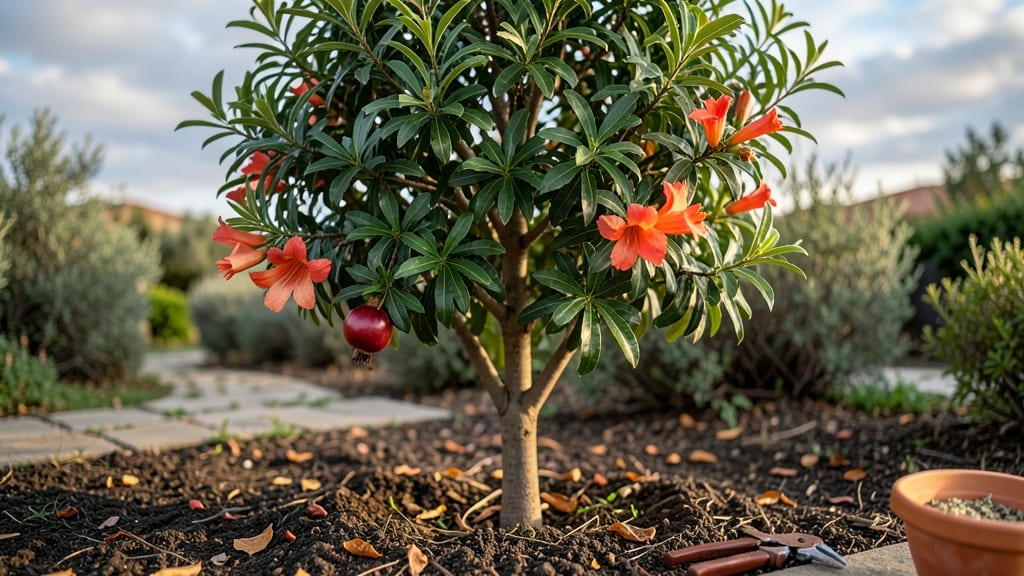
A pomegranate tree hedge transforms your yard into a living masterpiece—where vibrant summer blooms give way to jewel-toned fruit and fiery winter foliage. I planted mine last spring, and now I can't imagine a more striking privacy screen that works year-round.
The deep red bark and glossy leaves keep things interesting even when the fruit is gone, and neighbors ask about it constantly.
Spacing is key: plant trees 10-12 feet apart for a formal hedge or 15 feet if you want room for future growth. Pruning twice a year—once after fruiting and again in late winter—keeps the shape neat while encouraging dense growth.
The best part? These trees thrive in full sun and handle drought once established, making them low-maintenance stars for hot climates.
You'll end up with a hedge that blooms in late summer, bears fruit in fall, and stays visually stunning through winter. The glossy leaves catch the light beautifully, and the fruit adds unexpected texture to your landscape.
Pair with drought-tolerant ground covers like lavender or ornamental grasses to create a cohesive, low-water design.
Perfect for Mediterranean climates (zones 7-11) but adaptable with winter protection in cooler areas. The only challenge is fruit cleanup—though I've learned to embrace the mess as part of the charm. Ready to grow a hedge that turns heads in every season?
📚 In This Guide
- What you need
- Instructions
- Tips and common mistakes
- Wrapping up and next steps
What you need
- ● Pomegranate tree saplings: 5–10 healthy, 1–2 ft tall plants (dwarf or semi-dwarf varieties like 'Wonderful' or 'Eversweet' work best for hedges).
- ● Pruning shears: Sharp, bypass-style shears (for clean cuts).
- ● Gloves: Heavy-duty gardening gloves (pomegranate thorns are sharp!).
- ● Measuring tape: To ensure even spacing (plant saplings 3–5 ft apart).
- ● Shovel or trowel: For digging planting holes (1.5x wider than the root ball).
- ● Compost or well-aged manure: 2–3 gallons per plant (for nutrient-rich soil).
- ○ Mulch (optional but recommended): 2–3 inches of wood chips or straw to retain moisture.
- ● Hedge trimmer: For faster shaping once established (electric or battery-powered for ease).
- ● Fertilizer: Slow-release granular fertilizer (10-10-10 ratio) for early growth.
- ● Drip irrigation system: To keep roots consistently moist during dry spells.
- ● Plant support stakes: Temporary stakes (if planting in windy areas).
- ● Pest control (preemptive): Neem oil spray (to deter early pests like aphids).
Step-by-step guide to planting a pomegranate tree hedge
Here's how to establish a striking, low-maintenance hedge with seasonal drama.
Choose and Prepare Planting Sites
Select a location with full sun exposure (at least 6-8 hours daily) and well-draining soil. Pomegranate trees thrive in USDA hardiness zones 7-11, so verify your climate compatibility. I always test soil drainage first by digging a 12-inch deep hole and filling it with water—if it drains within 2 hours, the site is suitable.
Space planting holes 8-10 feet apart in rows 10-12 feet apart for mature hedge density. Mark positions with stakes to avoid misalignment. If your soil is heavy clay, amend with 3 inches of compost mixed into the top 12 inches of soil to improve aeration and moisture retention.
Plant Bare-Root Trees at the Right Time
Plant dormant bare-root trees in late fall or early spring when temperatures are cool but not freezing. Dig holes twice as wide as the root ball but only as deep—the top of the root ball should sit 1-2 inches above ground level to prevent waterlogging. Handle roots gently to avoid breaking them; I always soak bare roots in lukewarm water for 15-20 minutes before planting to revive them.
Place each tree in its hole and backfill with native soil, tamping lightly every 3 inches to eliminate air pockets. Water deeply immediately after planting to settle the soil and eliminate gaps. Mulch the base with 2-3 inches of organic mulch, keeping it 6 inches away from the trunk to prevent rot.
Establish Watering and Fertilizing Routines
Water newly planted trees twice weekly for the first month, then taper to once weekly once established. Deep watering (until soil is 12 inches moist) encourages strong root growth. Avoid overhead watering to prevent fungal diseases—always water at the base. I use a soaker hose for precision and efficiency.
Apply a balanced 10-10-10 fertilizer at planting time, then again in early spring and mid-summer. Follow package instructions for dosage—over-fertilizing can harm young trees. Prune any damaged or crossing branches immediately after planting to encourage a strong structural framework. Regular pruning in late winter keeps the hedge dense and manageable.
Prune for Shape and Seasonal Interest
Prune annually in late winter or early spring before new growth begins. Remove dead, diseased, or weak branches first, then shape the hedge by cutting back one-third of the previous year's growth to encourage bushiness. Use clean, sharp pruners to make cuts at a 45-degree angle just above a bud or lateral branch.
Pomegranate trees produce striking red-orange fruit in fall and bold winter color from their exfoliating bark. To enhance these features, avoid heavy pruning in late summer—this reduces flowering and fruiting potential. Instead, focus on light structural pruning to maintain shape and airflow, which prevents fungal issues.
Monitor for Pests and Diseases
Inspect trees monthly for signs of aphids, scale, or spider mites, common pests that thrive in dry conditions. Treat infestations early with neem oil or insecticidal soap—I spray in early morning or late evening to avoid harming beneficial insects. Proper spacing and airflow from pruning reduce humidity around foliage, minimizing fungal risks like powdery mildew.
Watch for yellowing leaves, a sign of overwatering or nutrient deficiency. If leaves curl or drop prematurely, check for underwatering or root rot (common in heavy, poorly drained soils). Adjust care accordingly—pomegranate trees are drought-tolerant once established but need consistent moisture during their first 2 years.
Tips & tricks for perfect pomegranate tree hedges
Here's what I've learned after years of growing these vibrant hedges—tricks that ensure your pomegranate hedge thrives from planting to winter color.
Soil Preparation: Before planting, I recommend testing your soil's pH level—pomegranate trees prefer a slightly acidic to neutral range between 6.0 and 7.5. If your soil is too alkaline, amend with sulfur or peat moss before planting. The 12-inch deep drainage test is crucial; if water pools after 2 hours, you'll need to raise beds or add gravel for proper drainage.
Planting Precision: When handling bare-root trees, never let roots dry out during the 15-20 minute soaking time. I keep them submerged in a bucket of lukewarm water while preparing the planting site. For the 1-2 inch elevation above ground level, use a level tool to ensure all trees sit at the same height—this prevents waterlogging while maintaining consistent growth.
Watering Strategy: The twice weekly watering schedule for the first month is non-negotiable, but timing matters just as much. Water in the early morning to allow foliage to dry before evening, reducing fungal risks. For the 12-inch deep moisture requirement, I use a soil probe to check moisture levels—this ensures roots develop properly without overwatering.
Pruning Insight: When cutting back one-third of last year's growth, focus on removing branches that cross or grow inward. These "hidden" branches often harbor pests and reduce airflow. I mark my cuts with a piece of chalk before making them to visualize the final shape—this prevents over-pruning and maintains the hedge's natural density.
Pro Tips for Pomegranate Tree Hedge
- Here's what I've learned after years of growing these vibrant hedges—tricks that ensure your pomegranate hedge thrive...
- Soil Preparation: Before planting, I recommend testing your soil's pH level—pomegranate trees prefer a slightly acidi...
- Planting Precision: When handling bare-root trees, never let roots dry out during the 15-20 minute soaking time. I ke...
Frequently asked questions
How long does it take for a pomegranate tree hedge to grow dense enough for privacy?
A pomegranate hedge typically reaches privacy-height (6–10 feet) in 3–5 years with proper care. Plant saplings 12–18 inches apart to encourage faster filling. Prune regularly in late winter to shape growth and stimulate bushier foliage. Patience pays off—once established, these trees thrive year-round!
When is the best time to prune a pomegranate tree hedge for optimal growth?
Prune your hedge late winter or early spring (before new growth) to avoid disturbing blooms or fruit. Light pruning after fruiting (fall) helps maintain shape. Avoid heavy cuts in summer, as it stresses the tree. Use sterilized tools and seal cuts with pruning paste to prevent disease.
Can I grow a pomegranate hedge in containers or small spaces?
Yes! Dwarf varieties like ‘Wonderful’ or ‘Eversweet’ work well in large containers (15+ gallons). Ensure the pot has drainage and use well-draining soil. Place in full sun and water deeply when the top 2 inches of soil dry. Containers limit root spread, so prune more frequently to control size.
What pests or diseases should I watch for in a pomegranate hedge?
Common issues include:
- Aphids: Spray with water or neem oil if clusters appear on new growth.
- Scale insects: Scrape off with a brush or use horticultural oil.
- Root rot: Avoid overwatering; ensure soil drains well.
- Powdery mildew: Prune for airflow and apply fungicide if needed.
Are there alternatives to pomegranate trees for a colorful, low-maintenance hedge?
If pomegranates aren’t ideal for your climate (USDA zones 7–11), consider:
- Olive trees: Drought-tolerant, evergreen, and hardy (zones 8–10).
- Pyracantha: Thorny, berry-producing shrubs with vibrant fall color (zones 5–9).
- Texas Sage: Drought-resistant, fragrant, and cold-hardy (zones 7–11).
- Boxwood: Classic evergreen hedge (zones 5–9) but needs more pruning.
Wrapping up and next steps
A pomegranate tree hedge isn’t just a privacy solution—it’s a stunning, year-round investment that rewards you with vibrant blooms, lush foliage, and striking winter color. 🌿 With the right spacing, pruning, and care, you’ll create a living masterpiece that thrives for decades. Ready to transform your outdoor space?
Your next step? Sketch a rough layout of your hedge, gather your tools, and get planting! Whether you’re a pruning pro or a beginner, this project is well within reach—and the results will leave your neighbors green with envy. Happy gardening! 🌟