
Trees
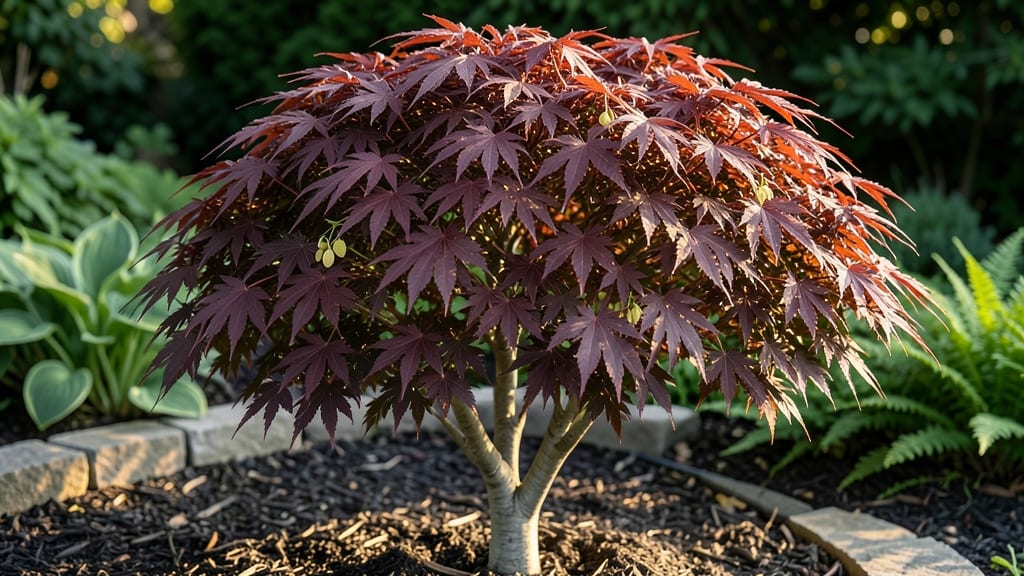
Dark red-leaved trees turn your garden into a living painting, especially when their bold foliage glows against evergreen backdrops or soft perennials. 🌿 I remember the first time I saw a Japanese maple’s deep crimson leaves backlit by morning sun—it stopped me in my tracks.
These trees aren’t just seasonal stars; they’re the backbone of dramatic landscapes, whether you want a statement focal point or a rich border that steals the show in every season.
The right spot makes all the difference. Plant them where their color will pop—near light-colored walls, against dark evergreens, or alongside silver foliage plants to create striking contrast. Most thrive in partial shade, though some like red oak can handle full sun.
Just avoid soggy soil, and you’ll see those leaves stay vibrant well into winter, long after other plants have faded. The care is simple: prune lightly in late winter, mulch to protect roots, and watch them transform your space.
Imagine a front yard where your guests pause to admire the deep burgundy leaves catching the light, or a backyard where the tree’s winter silhouette adds structure to a snowy landscape.
These trees deliver year-round interest, from spring’s fresh flush of color to fall’s fiery display and even subtle winter hues. Pair them with white blooms or golden foliage for maximum drama, and you’ve got a garden that feels both timeless and effortlessly chic.
Whether you’re designing a small urban courtyard or a sprawling estate, dark red-leaved trees adapt beautifully. Start with a dwarf Japanese maple for containers or a mature red oak for bold impact—both will reward you with low-maintenance elegance and a foliage palette that’s impossible to ignore.
Here’s how to make them the star of your outdoor space.
📚 In This Guide
- What you need
- Instructions
- Tips and common mistakes
- Wrapping up and next steps
What you need
- ● Dark red-leaved tree saplings: Choose from varieties like Prunus serrulata 'Okame', Cercis canadensis 'Forest Pansy', or Acer palmatum 'Bloodgood'. Buy 1–3 plants depending on your space.
- ● High-quality potting soil: 5–10 gallons (sterilized, well-draining mix with compost).
- ● Organic mulch: 2–3 cubic feet (cedar or hardwood chips to retain moisture and suppress weeds).
- ● Slow-release fertilizer: 10–20 lbs (balanced 10-10-10 or tree-specific formula).
- ○ Tree stakes (optional but recommended): 2–4 stakes per tree (3–4 ft tall, biodegradable if possible).
- ● Shovel or spade: For digging holes 2–3x wider than the root ball.
- ● Garden trowel: For precision planting and soil adjustments.
- ● Wheelbarrow or bucket: For mixing soil and transporting materials.
- ● Hose with nozzle or watering can: 5+ gallons capacity for thorough watering.
- ● Pruning shears: For trimming damaged branches post-planting.
- ● Gloves & knee pads: For comfort during planting.
- ● Soil moisture meter: To monitor root-zone hydration.
- ● Tree collar guard: Protects young trunks from lawnmower damage.
- ● Epsom salt (magnesium sulfate): 1–2 lbs for nutrient boost in clay soils.
- ● Companion plants: Heuchera or Hosta to complement foliage colors.
How to select and plant dark red-leaved trees for stunning year-round color
Here’s my foolproof approach to choosing and planting these bold beauties.
🌱 Step 1: Choose the Right Variety for Your Climate
Start by matching the tree to your hardiness zone—most dark red-leaved varieties thrive in zones 4-8, but check specific needs. Japanese maples (Acer palmatum) like 'Bloodgood' or 'Emperor I' are classic picks, while European beeches (Fagus sylvatica 'Purpurea') deliver deep burgundy foliage that stays vibrant even in winter. I always verify the mature size too—some dwarf varieties like 'Dragon's Blood' stay under 10 feet, while others like 'Royal Purple' smoketree can reach 20 feet.
Look for trees with rich, velvety leaves when shopping—avoid any with yellowing or brown edges, which signals stress. Nursery-grown specimens with fully developed root balls establish faster than bare-root stock. If planting in full sun, opt for varieties like 'Firepower' sumac, which handles heat better than shade-loving Japanese maples.
☀️ Step 2: Pick the Perfect Planting Spot
Dark red-leaved trees need at least 6 hours of sunlight daily, but some varieties (like 'Atropurpureum' English oak) tolerate partial shade. Avoid low-lying areas where cold air pools—this can damage tender roots in winter. I always test the spot by observing how sunlight moves across it throughout the day, especially in late afternoon when shade shifts.
The soil should drain well but retain moisture—amend heavy clay with 2-3 inches of compost mixed into the top 12 inches of soil. Dig a hole twice as wide as the root ball but no deeper. Loosen the edges of the root ball gently with your fingers before placing it in the hole—this encourages roots to spread outward instead of circling.
💧 Step 3: Plant with Care for Long-Term Health
Position the tree so the top of the root ball sits 1-2 inches above ground level—settling will occur over time. Backfill with native soil (not amended mix) to avoid disrupting root growth. Water deeply right after planting to eliminate air pockets, then let the soil settle for 24 hours before adding a 2-inch layer of mulch (keep mulch 6 inches away from the trunk to prevent rot).
Stake only if the tree is tall or top-heavy—use two stakes on opposite sides and a soft tree tie to avoid girdling the trunk. I’ve seen too many trees strangled by wire ties over time. Water once a week for the first month, then taper to every 10-14 days once established, checking that soil stays moist but not soggy.
✂️ Step 4: Prune and Maintain for Vibrant Foliage
Prune in late winter or early spring before new growth appears, removing only dead, diseased, or crossing branches. Avoid heavy pruning—these trees thrive on their natural shape. I like to step back and photograph the tree annually to spot hidden dead branches that might blend in from a close view.
Fertilize lightly in early spring with a balanced, slow-release fertilizer (10-10-10) if the soil is poor. Over-fertilizing can wash out the rich red tones. Watch for pests like lace bugs or spider mites—spray with neem oil at the first sign of webbing or stippled leaves. Most red-leaved trees are pest-resistant, but stress makes them vulnerable.
Tips & tricks for perfect dark red-leaved trees
These practical insights will help you transform your yard into a vibrant showcase of year-round color.
Variety Selection: When choosing between Japanese maples and European beeches, consider their mature heights. The 'Dragon's Blood' Japanese maple stays compact at under 10 feet, perfect for small gardens, while the 'Royal Purple' smoketree reaches 20 feet, ideal for bold landscape statements. For maximum color retention, select trees with the deepest burgundy leaves at the nursery—this ensures you're getting the most dramatic foliage from day one.
Sunlight Strategy: The 6 hours of sunlight requirement is non-negotiable for most varieties, but timing matters too. Observe your yard's sun patterns—morning sun is gentler and better for heat-sensitive varieties like Japanese maples, while afternoon sun works well for tougher species like sumac. If your spot gets intense afternoon heat, consider the 'Firepower' sumac variety, which handles it beautifully.
Planting Precision: That 24-hour settling period after planting is crucial—it allows the soil to compact naturally around the roots. I've seen too many trees sink over time because people rushed this step. Use a level to ensure the tree sits perfectly straight before backfilling, and gently press the soil around the edges to eliminate air pockets without compacting too tightly.
Maintenance Mindset: The key to vibrant foliage lies in restraint—avoid heavy pruning and over-fertilizing. When pruning in late winter, focus on removing only dead or crossing branches. The 10-10-10 fertilizer recommendation is a maximum; if your soil is already fertile, you might need just half that amount. Remember, these trees are all about natural beauty, not forced growth.
Pro Tips for Dark Red Leaved Trees
- These practical insights will help you transform your yard into a vibrant showcase of year-round color.
- Variety Selection: When choosing between Japanese maples and European beeches, consider their mature heights. The 'Dr...
- Sunlight Strategy: The 6 hours of sunlight requirement is non-negotiable for most varieties, but timing matters too. ...
Frequently asked questions
Got questions about dark red-leaved trees? You’re not alone! Here are some of the most common queries—plus straightforward answers to help you make the best choices for your landscape.
What are the best dark red-leaved trees for small yards?
For compact spaces, consider Cercis canadensis ‘Forest Pansy’ (redbud) or Prunus serrula (Tibetan cherry). Both stay relatively small (15–25 ft tall) while delivering bold color. Dwarf varieties like Cotinus coggygria ‘Royal Purple’ (smokebush) are also great for tight spots!
When is the best time to plant dark red-leaved trees?
Fall (September–November) is ideal—cooler temps reduce transplant shock, and roots establish before winter. Spring (March–April) works too, but avoid extreme heat. Pro tip: Water deeply after planting and mulch to retain moisture!
Can dark red-leaved trees thrive in full sun or shade?
Most need at least 6 hours of sun for vibrant foliage, but some (like Cornus kousa ‘Saturn’) tolerate partial shade. Check your tree’s specific needs—over-shading can dull their signature red hues. Test your yard’s sunlight with a simple light meter app!
Why are my dark red leaves turning brown or yellow?
Brown/yellow leaves often signal overwatering, underwatering, or nutrient deficiencies. Check soil moisture (stick your finger 2 inches deep—dry? Water!), and fertilize in early spring with a balanced formula. Pests like spider mites can also stress foliage—inspect undersides of leaves for webs.
Are there alternatives to trees for dark red foliage?
Shrubs like Ilex verticillata ‘Red Sprite’ (winterberry) or Viburnum bodnantense ‘Dawn’ offer year-round color without the commitment of a tree. For instant impact, try Heuchera (coral bells) or Hydrangea macrophylla ‘Endless Summer’ in red varieties!
Wrapping up and next steps
Dark red-leaved trees are more than just a seasonal spectacle—they’re bold statements in nature, transforming gardens into year-round works of art. Whether you’re drawn to their fiery autumn hues or their striking winter silhouettes, these trees offer low-maintenance elegance and unmatched visual drama. 🌿✨
Ready to elevate your outdoor space? Start by researching varieties that thrive in your climate, then plan your planting strategy with confidence. The perfect tree is just a season away!