
Pruning
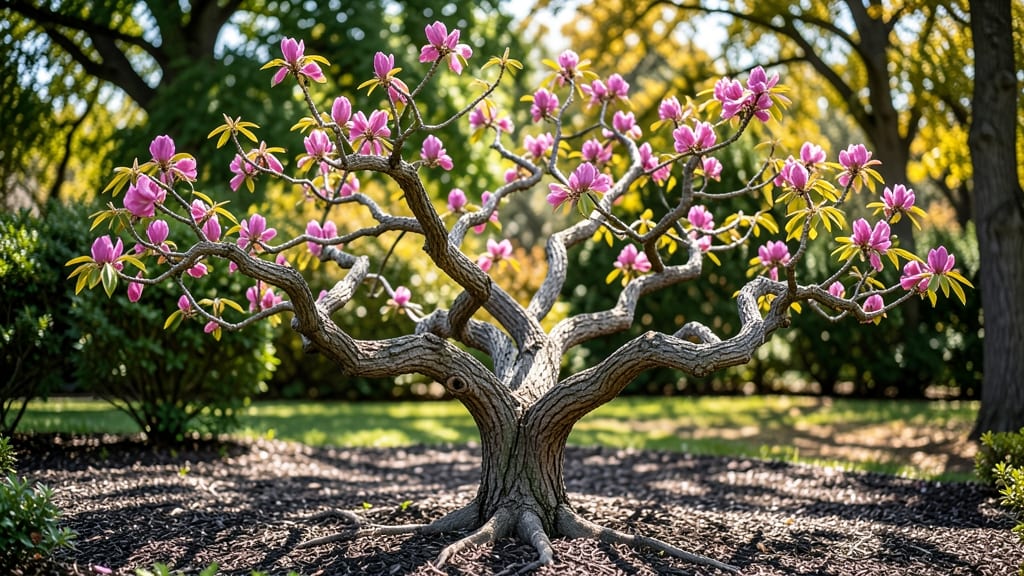
The twisted lilac redbud tree turns your garden into a living sculpture—its gnarled branches and vibrant blooms create drama no other tree can match. 🌿 I’ve watched mine transform from a bare winter silhouette to a spring explosion of pink, then summer’s deep green foliage, and now I’m sharing how to keep its form balanced year-round without sacrificing its wild charm.
This tree isn’t just pretty—it’s a multi-season statement piece. In late winter, its bare branches display that signature twisted habit, while spring brings clusters of pale pink flowers before the heart-shaped leaves emerge.
Summer’s dense canopy cools shady spots, and fall’s golden foliage extends the show. The key to keeping it stunning? Light pruning to maintain its natural shape while encouraging new growth.
You’ll end up with a tree that’s both artistic and low-maintenance—perfect for small gardens, borders, or as a focal point in a cottage-style landscape. Pair it with hostas for contrast or lavender for fragrance, and watch how it anchors your design while drawing eyes upward.
Let’s talk placement and pruning secrets that preserve its magic.
Whether you’re working with a mature specimen or a young sapling, these techniques adapt to any size. The goal? A tree that feels intentionally wild, not forced into submission. Your garden will thank you with color, texture, and a little extra personality.
📚 In This Guide
- What you need
- Instructions
- Tips and common mistakes
- Wrapping up and next steps
What you need
- ● Pruning shears: Bypass pruners (sharp, clean, and disinfected with rubbing alcohol or bleach solution—1 part bleach to 9 parts water). Size: 6–8 inches (for medium branches).
- ● Loppers: For thicker branches (up to 2 inches in diameter). Quantity: 1 pair.
- ● Hand saw: Pruning saw with a fine-tooth blade for larger limbs (2+ inches). Type: Curved or bow saw.
- ● Gloves: Heavy-duty gardening gloves (cut-resistant, long sleeves recommended). Material: Nitrile or leather.
- ● Disinfectant: 70% isopropyl alcohol or bleach solution (for sterilizing tools between cuts).
- ○ Tree wound sealant (optional but helpful): Pruning sealant (e.g., Tanglefoot Tree Wound Pruning Seal) for cuts larger than ½ inch.
- ● Extension pole: 6–10 ft telescoping pole with a pruner or saw attachment (for high branches).
- ● Bucket or trash bag: For collecting pruned branches and debris.
- ● Ladder (if needed): Sturdy, non-slip ladder (3–4 ft wide base for stability). Safety: Never stand on the top rung!
- ● Tree pruning spray: Anti-fungal spray (e.g., Neem oil) to prevent disease after pruning.
- ● Marking twine or flags: For labeling branches to prune (helpful for complex shapes!).
- ● Safety glasses: To protect eyes from debris.
- ● Knee pads: For comfort during ground-level pruning.
- ● Camera or sketchpad: To document the tree’s shape before/after pruning.
Step-by-step guide to pruning twisted lilac and redbud trees
Mastering these two striking trees means understanding their unique growth habits and seasonal needs.
🌿 Step 1: Assess Growth Habits and Seasonal Timing
Twisted lilacs and redbuds have distinct pruning windows. Redbuds should be pruned right after flowering (late spring) when their showy blooms fade—this ensures you don’t remove next year’s flower buds. Twisted lilacs, on the other hand, bloom on old wood, so prune them immediately after flowering but before new growth hardens off (early to mid-spring).
Here’s the thing—redbuds flower early, often in late winter or early spring, while lilacs bloom a bit later. Mark your calendar after their flowers drop; that’s your cue. For both, avoid heavy pruning in fall—it stimulates tender new growth that won’t survive winter. I always carry a small notebook to jot down bloom times each year so I don’t miss the window.
✂️ Step 2: Remove Dead, Diseased, or Weak Wood
Start with sanitation cuts—this is non-negotiable. Use sterilized pruners (clean with rubbing alcohol between cuts) to remove any branches with deadwood, fungal spots, or cankers. Cut back to the collateral bud (the side bud just below the damage) to encourage outward growth and maintain the tree’s natural shape. For twisted lilacs, this often means trimming back to where the branch naturally curves.
Watch for dieback—branches that look brown and brittle on the inside but green on the outside. These are classic signs of borer damage or winterkill. Snip them out completely. If you see mushrooms or sawdust-like frass at branch junctions, that’s a sure sign of borers. In that case, drill out the galleries with a 1/8-inch bit and apply borer-killing spray to the fresh wound.
🌱 Step 3: Thin and Shape for Airflow and Light
Twisted lilacs and redbuds both benefit from selective thinning to improve airflow and light penetration. Aim to remove no more than 25% of the canopy in any single pruning session—this prevents shock. Focus on branches that cross or rub, as these create wounds where disease enters. For twisted lilacs, prioritize branches that grow inward to preserve their spiral or zigzag form.
Use the "third cut" method for larger branches: First, make an undercut about 6 inches out from the trunk, then an overcut just beyond that, and finally twist the branch to separate it cleanly. For smaller branches, a single cut at the branch collar (the swollen area where the branch meets the trunk) is all you need. Avoid leaving stubs—this invites decay.
☀️ Step 4: Refine the Twisted Form and Encourage New Growth
This is where the magic happens—shaping the distinctive twisted habit of lilacs and the weeping or upright forms of redbuds. For lilacs, gently guide branches into their natural spiral by tying them with soft twine if needed (remove after a year). For redbuds, prune to open the center—this prevents a dense, shaded interior where flowers won’t develop. Step back often to check your work; you want a balanced silhouette that still showcases their unique architecture.
To encourage vigorous new growth, make heading cuts (cutting back to an outward-facing bud) on branches that are too long or leggy. For redbuds, this often means trimming back 1/3 of the current season’s growth to promote bushier flowering. For lilacs, light heading cuts in early summer can stimulate a second flush of blooms. Just don’t go overboard—too much pruning reduces next year’s flowers.
Tips & tricks for pruning twisted lilac and redbud trees
Here's what nobody tells you about keeping these trees thriving—these tricks make all the difference between a healthy specimen and one struggling to survive.
Seasonal Timing is Everything: The instructions nail the critical windows—redbuds right after flowering in late spring, lilacs immediately after blooming but before new growth hardens—but here's the catch: watch for your specific microclimate. In warmer zones, lilacs might bloom earlier; in cooler areas, they could lag. I've missed the window twice now, and both times I ended up with fewer flowers the next year. Mark your calendar the moment you see the last bloom fade, and set a reminder for that exact week.
Tool Prep Prevents Problems: Sterilizing your pruners between cuts (I use rubbing alcohol on a paper towel) isn't just about hygiene—it's about preventing disease spread. But here's what I learned the hard way: clean your tools between different trees too, even if they're the same species. I once accidentally transferred a fungal infection from a diseased lilac to a perfectly healthy redbud because I skipped this step. For borer infestations, keep a small bottle of borer-killing spray handy and a 1/8-inch bit in your toolkit—you'll thank yourself when you find those telltale frass piles.
Visual Cues Over Guesswork: When thinning branches in Step 3, focus on creating a balanced silhouette from all angles. Step back frequently and squint—this helps you spot uneven growth patterns. For twisted lilacs, imagine their natural spiral form and trim branches that disrupt that pattern. For redbuds, aim for an open center that lets light reach all branches. I measure my pruning success by whether I can see through the canopy to the trunk when standing 10 feet away—if not, I need to thin more.
Pruning for Future Blooms: Remember that 25% canopy rule? That's non-negotiable for both trees, but here's the deeper reason: flower buds form on last year's growth. Heavy pruning now means fewer blooms next spring. For lilacs, I make my heading cuts in early summer to encourage a second flush of flowers, but I never cut back more than 1/3 of the current season's growth on redbuds—this keeps their flowering vigorous. Think of each cut as an investment in next year's display.
Pro Tips for Twisted Lilac Redbud Tree
- Here's what nobody tells you about keeping these trees thriving—these tricks make all the difference between a healthy specimen and one struggling to survive.
- In warmer zones, lilacs might bloom earlier; in cooler areas, they could lag.
- Tool Prep Prevents Problems: Sterilizing your pruners between cuts (I use rubbing alcohol on a paper towel) isn't just about hygiene—it's about preventing disease spread.
Frequently asked questions
Got questions about keeping your Twisted Lilac (Cercis canadensis 'Twist-n-Shout') and Redbud (Cercis spp.) trees healthy and stunning? You’re in the right place! Here are some of the most common concerns—and their answers—to help you prune with confidence.
When is the best time to prune a Twisted Lilac or Redbud?
Prune your Twisted Lilac or Redbud in late winter or early spring (before buds swell) to avoid removing next year’s blooms. Light shaping can also be done after flowering, but avoid heavy pruning then—it may reduce spring color. For severe structural issues, prune in dormant season (Dec–Feb).
How much can I trim without harming the tree?
Never remove more than 25% of the canopy in one season—this ensures the tree retains enough leaves for photosynthesis. For Twisted Lilacs, focus on thinning out crowded branches to preserve their iconic twisted shape. Redbuds respond well to light pruning but may produce fewer flowers if over-pruned.
Why aren’t my Redbud flowers as vibrant as last year?
Over-pruning, nutrient deficiencies (like low phosphorus), or poor sunlight can dull blooms. Ensure your tree gets 6+ hours of sun and fertilize in early spring with a balanced 10-10-10 formula. If branches are leggy, prune to encourage bushier growth—more buds = more flowers!
What pests or diseases should I watch for?
Twisted Lilacs and Redbuds are generally hardy, but keep an eye out for:
- Aphids: Crushed by a strong water spray or neem oil.
- Powdery mildew: Prune for airflow and apply fungicide if needed.
- Japanese beetles: Handpick or use organic traps.
Can I grow a Twisted Lilac or Redbud in a container?
Yes! Both thrive in large containers (15+ gallons) with well-draining soil. Choose a fast-draining mix (like cactus/succulent blend) and repot every 2–3 years. Dwarf varieties (like ‘Flame’ Redbud) are ideal for pots. Just remember: Containers dry out faster—water deeply when the top inch of soil is dry!
Wrapping up and next steps
Pruning your twisted lilac redbud tree is all about patience, precision, and a little seasonal strategy! 🌿 Whether you’re shaping its dramatic branches or encouraging vibrant blooms, the key is to work with—not against—the tree’s natural form.
By following the right techniques and timing, you’ll enjoy a balanced, healthy, and stunningly unique specimen year after year.
Ready to take the next step? Start small:
- 📅 Bookmark this guide for your next pruning session.
- 🛠️ Gather your tools and tackle one branch at a time.
- 🌱 Share your progress (or ask questions!) in gardening communities for extra tips.