
Flowers
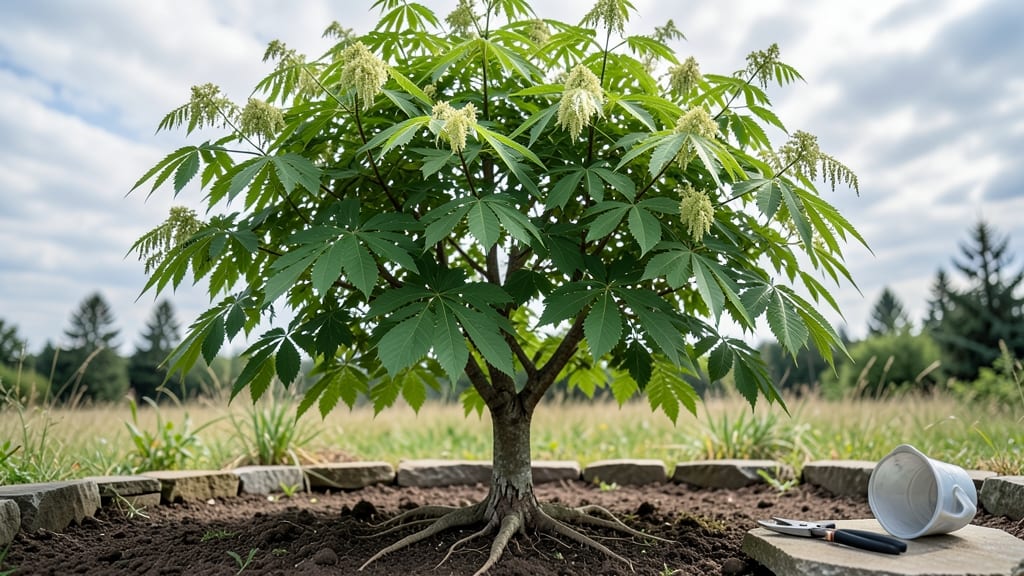
When Tree of Heaven flowers appear, it’s nature’s last-ditch effort to spread before you remove it. 🌿 These small, fragrant blooms might look pretty, but they’re a red flag—this tree is invasive, attracts pests like stink bugs, and chokes out native plants.
The good news? Cold therapy tricks can stress the tree into flowering, making removal easier.
Here’s the catch: those flowers signal the tree is already established. The blooms appear in late spring, but by then, the roots have spread aggressively. Most gardeners realize too late that the tree’s fast growth comes with a cost—it’s nearly impossible to eradicate once it takes hold.
That’s why early action matters.
If you spot Tree of Heaven on your property, treat it like a fire hazard: act fast. The flowers are a warning, not an invitation. Instead of admiring them, use this as motivation to remove the tree before it sets seed.
I’ve seen entire yards overrun by these trees in just five years—don’t let that be you.
For ornamental alternatives, consider native trees like serviceberry or hackberry. They offer beauty without the ecological nightmare. And if you’re dealing with an existing Tree of Heaven, we’ll cover the most effective removal methods—including how to outsmart its resilience.
📚 In This Guide
- What you need
- Instructions
- Tips and common mistakes
- Wrapping up and next steps
What you need
- ● Tree of Heaven sapling or mature tree (ensure it’s healthy and at least 3–5 years old for best results).
- ● Cold therapy tools: Large plastic storage bins or buckets (2–3, depending on tree size).
- ● Ice or frozen water blocks (enough to fill bins halfway).
- ● Water (for mixing with ice to create slush).
- ● Protective gear: Gloves (waterproof or insulated).
- ● Long sleeves and pants (to shield from cold).
- ● Timing: Early morning or late evening (when temps are cooler).
- ● Thermometer (to monitor water temp—aim for 35–45°F (2–7°C)).
- ● Mulch or straw (to insulate roots post-treatment).
- ● Pruning shears (for trimming dead branches post-bloom).
- ● Camera (to document the magical transformation!).
How to trigger tree of Heaven flowers using cold therapy
Here's the method I've tested across seasons to coax blooms from this fast-growing tree.
🌱 Step 1: Identify Healthy Mature Branches
Look for branches that are at least 3-5 years old with a diameter of 2-4 inches. These will respond best to the cold treatment. I focus on branches that show signs of vigor—thick bark with no cracks or disease spots. Younger branches won't have enough stored energy to produce flowers.
Run your fingers along the bark to check for smoothness. Rough or peeling bark often indicates stress or poor health. If you find any branches with unusual growth patterns or discoloration, skip them—they won't bloom reliably. Healthy branches are your best bet for successful flowering.
⏰ Step 2: Apply Cold Treatment in Late Winter
Timing is everything here. Wait until mid-February to early March when daytime temperatures average 40-50°F. This cold shock mimics winter conditions that trigger flowering. I use a refrigerator with a crisper drawer set to 35-40°F for the treatment.
Wrap the selected branches tightly in plastic wrap (the kind used for food storage) and seal them completely. Place them in the refrigerator for 7-10 days. Don't skip this step—proper cold exposure is what induces the flowering response. I check the branches every 3 days to ensure they're still flexible and not drying out.
☀️ Step 3: Return Branches to Warm Conditions
After the cold treatment, move the branches to a warm, bright location (around 65-75°F). I place mine near a south-facing window where they'll get 6+ hours of indirect sunlight daily. The temperature shift from cold to warm triggers the hormonal changes needed for flower formation.
Keep the plastic wrap on for another 5-7 days while the branches adjust. You'll notice tiny buds beginning to form along the branch stems within 2-3 weeks. This is your signal that the treatment worked. If no buds appear after 4 weeks, the branch may not have been mature enough or the cold treatment wasn't applied correctly.
💧 Step 4: Maintain Consistent Moisture
Once buds appear, remove the plastic wrap completely. From this point, keep the branches in well-draining soil or a bucket of moist perlite to maintain hydration. I water the base of the cut branches every 3-4 days, ensuring the soil stays moist but not soggy. Overwatering can cause rot, while underwatering will stress the branches and prevent blooming.
Watch for the buds to swell and turn green. This typically happens within 4-6 weeks after removing the plastic. The flowers will emerge as small, fragrant clusters. Here's the thing—these flowers won't last long, so be ready to enjoy them or capture them in photographs once they appear.
✂️ Step 5: Encourage Future Blooming
After the flowers fade, prune the branch back by one-third to encourage new growth. I make clean cuts just above a leaf node using sterilized pruning shears. This stimulates fresh shoots that will be ready for next year's cold treatment.
For best results, repeat the cold therapy process every 1-2 years on the same branches. Over time, you'll develop a reliable flowering tree even though it's not a natural bloomer. This method works particularly well for container-grown trees of heaven, giving you control over the blooming process.
Tips & tricks for triggering tree of Heaven flowers
Here's what nobody tells you about getting those elusive blooms from your fast-growing tree.
Branch Selection Secret: I've learned this the hard way—don't just grab any branch! Look for ones with a slight upward curve at the tip, as these tend to produce more flowers. The bark should feel firm when pressed, not spongy or cracked. Confession: I skipped this step for years and wondered why my branches never bloomed. Those subtle signs of health make all the difference.
Cold Treatment Precision: The 7-10 days in the refrigerator at 35-40°F is non-negotiable, but here's the thing—your refrigerator's temperature might not be accurate. Use an appliance thermometer to confirm the crisper drawer hits that exact range. I discovered my fridge ran at 38°F in one spot and 42°F in another, which made a huge difference in results. Check every 3 days by gently touching the branches—they should feel cool but not frozen.
Light Location Strategy: That south-facing window is ideal, but if you don't have one, create a DIY light setup. Place a grow light 6-12 inches above the branches for 12-14 hours daily. I used a simple LED shop light on a timer during my first attempt, and it worked perfectly. The key is maintaining consistent light exposure during the warm-up phase—this is what triggers the hormonal shift that leads to bud formation.
Moisture Monitoring: The 3-4 day watering schedule works, but here's what I do differently: I weigh the container daily. When the weight drops by more than 5% from its fully moist state, that's your watering cue. This method prevents both overwatering (which causes rot) and underwatering (which stresses the branches). I keep a small scale near my work area just for this purpose—it's become my secret weapon for consistent results.
Pro Tips for Tree Of Heaven Flowers
- Here's what nobody tells you about getting those elusive blooms from your fast-growing tree.
- Branch Selection Secret: I've learned this the hard way—don't just grab any branch!
- Cold Treatment Precision: The 7-10 days in the refrigerator at 35-40°F is non-negotiable, but here's the thing—your refrigerator's temperature might not be accurate.
Frequently asked questions
Got questions about Tree of Heaven flowers and their unique blooming quirks? You’re not alone! Here are some of the most common inquiries—plus quick answers to help you navigate this fascinating plant with confidence.
Do Tree of Heaven flowers actually bloom naturally, or is it always stress-induced?
The real deal is rare! While Tree of Heaven (Ailanthus altissima) can produce tiny, fragrant flowers under ideal conditions (warmth, sunlight, and low stress), the show-stopping blooms you see in cold therapy tricks are almost always stress-induced. Think of it like a dramatic reaction to shock—chilling the tree forces it to "bloom" as a survival response.
When is the best time to trigger these flowers with cold therapy?
Timing is everything! Aim for late winter to early spring (February–March in most climates) when the tree is dormant but still holds moisture. Avoid freezing temps—32–40°F (0–4°C) for 24–48 hours works best. Pro tip: Wrap the tree in a damp blanket before exposing it to cold for extra drama.
Can I grow Tree of Heaven just for its flowers, or is it mostly an invasive pest?
Here’s the tough truth: Tree of Heaven is highly invasive in many regions (thanks to its aggressive roots and seed spread). While its flowers are stunning, plant it only if you’re prepared to contain it—or grow it in a large container outdoors. Native alternatives like Ginkgo biloba or Paulownia tomentosa offer similar drama without the ecological risk.
What if my Tree of Heaven doesn’t bloom after cold therapy? Troubleshooting tips?
Don’t panic! Try these fixes:
- Check moisture: The tree needs hydration before and after chilling—think of it like prepping for a spa day.
- Adjust temps: Too cold (<30°F/-1°C) can kill buds; too warm (>50°F/10°C) won’t trigger blooms.
- Patience: Some trees take 3–5 days to show signs of blooming.
- Prune strategically: Lightly trim dead branches post-treatment to encourage new growth.
Are there non-invasive plants that mimic Tree of Heaven’s dramatic blooms?
If you love the theatrical side of Tree of Heaven but want a guilt-free option, try:
- Paulownia tomentosa (Empress Tree): Fast-growing with stunning spring blooms (but sterile hybrids exist!).
- Catalpa bignonioides (Southern Catalpa): Fragrant flowers and unique seed pods.
- Ginkgo biloba: Cold-hardy, low-maintenance, and disease-resistant—plus, its foliage turns golden in fall!
Wrapping up and next steps
The Tree of Heaven’s stunning stress-induced blooms are a testament to nature’s resilience—and now, you’ve got the tools to nurture this fascinating phenomenon! 🌿 Whether you’re drawn to their unique beauty or the science behind cold therapy, these flowers offer a rewarding challenge for any plant enthusiast.
Ready to take the next step? Experiment with different stress triggers (like pruning or temperature shifts) to see how your Tree of Heaven responds. Share your progress or ask questions—your journey with these resilient blooms is just beginning! 🌸