
Trees
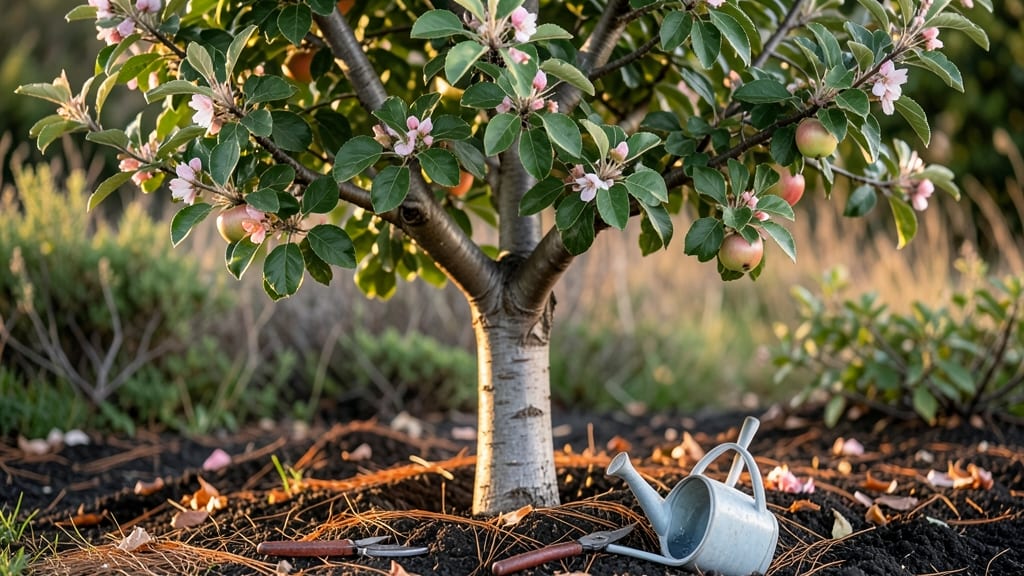
Understanding the stages of apple trees transforms your orchard from a gamble to a predictable harvest. 🌱 I’ve watched my own trees go from fragile saplings to heavy-fruiting giants—and knowing each phase’s quirks made all the difference.
The first year is all about roots, while the fifth year might require drastic pruning to keep branches from snapping under fruit weight.
Seedlings focus on root and trunk growth, with tiny leaves that look more like maple than apple. Juvenile trees (ages 3-5) shoot up fast but produce no fruit—prune aggressively to shape their structure.
Mature fruiting trees (ages 6+) are where the magic happens, but they demand annual care: thinning fruit, winter protection, and monitoring for pests that thrive in dense canopies.
By recognizing these stages, you’ll avoid common pitfalls like over-pruning young trees or ignoring signs of decline in older ones. A 10-year-old tree can still rebound with proper renewal pruning, while a neglected one may never recover.
The payoff? Trees that bear fruit reliably for decades, not just a few seasons.
Each phase has its own care calendar—spring for pruning, summer for thinning, fall for soil prep. Whether you’re starting with a bare-root sapling or rescuing a struggling mature tree, the right approach at the right time makes all the difference. Let’s break it down stage by stage.
📚 In This Guide
- What you need
- Instructions
- Tips and common mistakes
- Wrapping up and next steps
What you need
- ● Apple seeds – Fresh, viable seeds from a preferred apple variety (10–20 seeds per tree).
- ● Potting soil – Well-draining, sterile mix (50% peat moss, 30% perlite, 20% compost). Quantity: 1–2 gallons per seedling.
- ● Seed-starting trays or small pots – 2–4 inch pots (1 per seed).
- ● Plastic wrap or humidity dome – To retain moisture during germination.
- ● Spray bottle – For gentle watering (avoid over-saturating).
- ● Grow lights or sunny windowsill – 6–8 hours of light daily for seedlings.
- ● Fertilizer – Balanced, water-soluble (10-10-10 NPK ratio) for early growth.
- ● Transplanting tools – Trowel, gloves, and a bucket for watering.
- ● Permanent planting site – Full sun (6+ hours/day), well-draining soil (pH 6.0–7.0).
- ● Mulch – Organic (wood chips or straw) to retain moisture and suppress weeds.
- ● Rooting hormone – Speeds up seedling growth when transplanting.
- ● Tree supports – Stakes or cages for young trees (3–4 ft tall).
- ● Pruning shears – Sharp, clean pair for shaping and maintenance.
- ● Tree guards – Protective netting to deter pests.
- ● Soil test kit – Ensures optimal pH and nutrient levels.
How to track and support apple trees through every growth stage
Here’s how I’ve watched apple trees transform from tiny seedlings to fruit-bearing giants—with clear milestones you can follow.
🌱 Step 1: Seedling to Sapling (Year 1-3)
Your apple tree starts as a seed or bare-root sapling. If growing from seed, germination takes 30-60 days in 60-70°F soil. Place seeds ½ inch deep in well-draining mix and keep consistently moist until sprouts appear. Saplings need full sun (6+ hours daily) and 1 inch of water weekly—more in extreme heat.
Watch for first true leaves (not the initial seed leaves) as your signal to transition from shade to bright light. At 2-3 feet tall, young trees develop a woody stem and begin branching. Prune only to remove dead growth—never cut healthy stems. This stage builds the tree’s root system, so never let soil dry out completely or roots will struggle later.
☀️ Step 2: Juvenile Tree (Years 4-7)
Between years 4 and 7, your tree enters its juvenile phase, where it focuses on vertical growth rather than flowering. You’ll see rapid height increases (3-5 feet per year) and the development of a strong central leader. This is when pruning becomes critical—remove water sprouts (shoots growing straight up) and crossing branches to improve airflow and sunlight penetration.
Juvenile trees need deep watering (2-3 gallons weekly) and a balanced fertilizer (10-10-10) applied in early spring. Watch for bud swell in late winter—this signals the tree is preparing for its first potential flowers. If buds appear but drop off, your tree may still need one more year of growth before flowering.
🌿 Step 3: Maturity and First Fruits (Years 8-12)
Maturity arrives when your tree reaches 15-20 feet tall and begins producing blossoms and fruit. You’ll notice pink buds in late winter, followed by white blossoms in spring. These flowers require cross-pollination—plant a second compatible variety nearby if you want fruit. Thin fruit clusters to 6-8 inches apart to ensure larger, healthier apples.
Mature trees need deep, infrequent watering (3-4 gallons weekly) and mulch (3-4 inches) to retain moisture. Prune in late winter to remove dead wood, diseased branches, and suckers growing from the base. This stage demands patience—first harvests may be small, but yields increase over time with proper care.
⏰ Step 4: Full Production (Year 13+)
Once established, your tree enters full production, yielding 50-100+ pounds of fruit annually. You’ll see consistent blooms, heavier branches, and larger apples. Thin fruit early to prevent overcrowding, which leads to small, misshapen apples. Apply organic mulch annually to protect roots and retain moisture.
Watch for harvest cues: apples detach easily from the tree when gently twisted, skin color deepens, and seeds turn brown. Harvest in late summer to fall, depending on the variety. Prune lightly in summer to shape the tree and remove suckers or water sprouts that compete with fruit production. This stage rewards your patience with bountiful harvests.
Tips & tricks for perfect apple tree growth
These simple strategies will help you nurture your apple tree at every stage—from fragile seedling to fruit-bearing giant.
Soil Temperature Matters: The 60-70°F soil temperature range during germination is critical for consistent sprouting. I use a soil thermometer to monitor this—if it drops below 60°F, cover the planting area with row fabric to maintain warmth. Cold soil slows germination and can lead to weak seedlings that struggle later.
Watering Wisdom: During the seedling stage, those 6 hours of daily sun demand consistent moisture. I set a timer to water every morning and evening during hot spells, giving the soil a thorough soaking each time. The key is keeping the root zone moist but never soggy—overwatering can suffocate young roots just as drought can.
Pruning Precision: When your tree reaches 2-3 feet tall, focus pruning only on dead or crossing branches. I use sharp bypass pruners to make clean cuts just above outward-facing buds. This encourages healthy growth patterns while preventing disease entry points. Remember: every cut you make now affects the tree's structure for years to come.
Fertilizer Timing: The early spring application of 10-10-10 fertilizer for juvenile trees should be done when buds begin to swell but before they open. This timing gives roots time to absorb nutrients before the tree shifts energy to new growth. I always water thoroughly after applying to prevent root burn from concentrated fertilizer.
Pro Tips for Stages Of Apple Trees
- These simple strategies will help you nurture your apple tree at every stage—from fragile seedling to fruit-bearing giant.
- Soil Temperature Matters: The 60-70°F soil temperature range during germination is critical for consistent sprouting.
- Watering Wisdom: During the seedling stage, those 6 hours of daily sun demand consistent moisture.
Frequently asked questions
Got questions about nurturing your apple tree through its life stages? You’re not alone! Here are answers to the most common queries—from planting to harvest—so you can grow with confidence.
How long does it take for an apple tree to bear fruit after planting?
Most apple trees take 3–5 years to produce fruit after planting, depending on the variety and growing conditions. Dwarf trees may fruit sooner (2–3 years), while standard trees can take up to 7 years. Patience pays off—focus on proper care during the early stages to speed up fruiting!
Can I grow an apple tree from a store-bought apple?
Technically yes, but it’s not recommended for fruit production. Seeds from store apples often grow into seedling trees with unpredictable fruit quality (or none at all!). For reliable apples, plant grafted nursery trees or rootstocks instead. Save seed-growing for fun experiments!
How do I protect my young apple tree in winter?
Young trees (especially <1-year-old) need winter protection. Wrap the trunk with tree guard or burlap to prevent rodent damage. Apply a 3–4 inch mulch layer around the base (but not touching the trunk) to insulate roots. In extreme cold, add circular supports to break wind and snow buildup.
Why are my apple tree leaves curling or yellowing?
Curling/yellowing leaves often signal pests (aphids, mites) or diseases (apple scab, fire blight). Check the undersides of leaves for pests and treat with neem oil or insecticidal soap. Fungal issues? Prune infected branches and apply copper fungicide early in the season. Adjust watering if soil is too wet.
When is the best time to prune an apple tree?
Prune late winter (dormant season, before buds swell) for best results. Avoid pruning in fall (risk of disease) or summer (stresses the tree). Focus on removing dead, crossing, or overcrowded branches to improve airflow. Use sterilized tools and seal cuts with pruning paste for young trees.
Wrapping up and next steps
Understanding the stages of apple trees—from a tiny seed to a fruit-bearing giant—transforms growing them from a challenge into a rewarding journey. 🌱 Each phase, whether dormancy, budding, flowering, or harvest, plays a critical role in nurturing a thriving tree.
With patience, care, and the right techniques, you’re well on your way to enjoying homegrown apples for years to come!
Ready to take the next step? Start by selecting the perfect variety for your climate, then plant with confidence—your orchard adventure begins now!