
Pruning
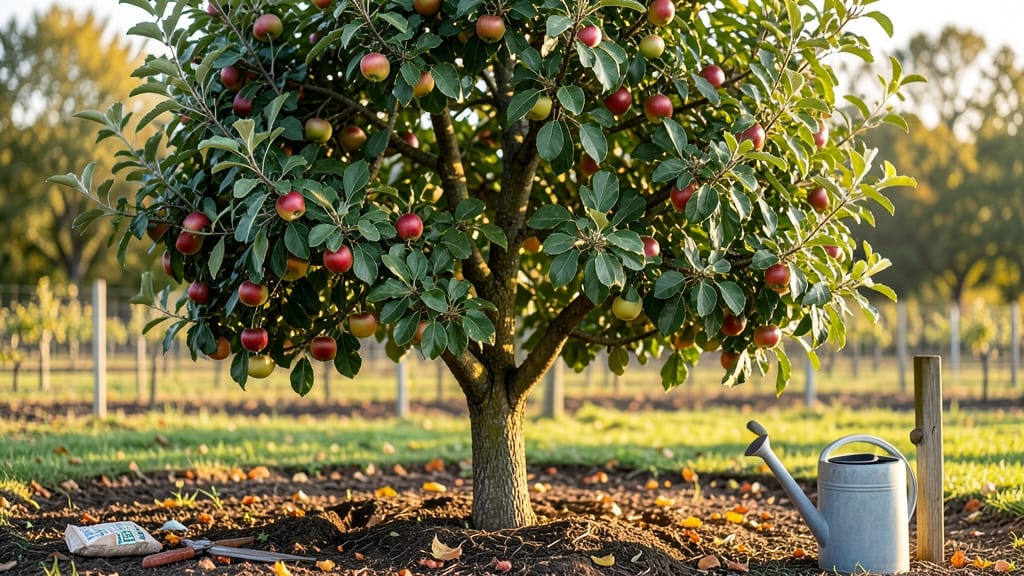
That first cut in early spring unlocks everything for your Dorset apple tree—pruning it right means sweeter fruit, stronger branches, and a tree that thrives for decades. I’ve pruned mine every year since planting, and the difference in harvest size is night-and-day.
The key isn’t just timing but understanding how each cut shapes the tree’s future, from opening the canopy to sunlight to training young branches for fruit production.
You’ll need sharp pruners, a ladder (for higher branches), and a clear day to work—cloudy mornings are ideal to avoid stressing the tree. Focus on three main tasks: removing dead or crossing branches first, then thinning to improve airflow, and finally shaping the tree’s structure.
My Dorset now produces bushels of crisp, honey-sweet apples each fall, all because I spent just 30 minutes in early spring making the right cuts. The tree rewards precision over speed every time.
What you’ll end up with is a tree that looks like a well-oiled machine—smooth, open branches that catch every ray of sunlight, and a framework that supports heavy fruit without sagging.
The apples themselves develop deeper flavor when the tree isn’t overcrowded, and the reduced humidity inside the canopy cuts down on fungal diseases. By late summer, you’ll be harvesting fruit that’s so juicy it stains your fingers, and the tree will still be standing strong through winter.
This method works for Dorset trees in USDA Zones 4-8, though colder climates need extra winter protection. If you’re in a warmer zone, focus on summer pruning to avoid heat stress.
Whether you’re a first-time pruner or refining your technique, these steps will give you a tree that’s both productive and picturesque—no guesswork involved.
📚 In This Guide
- What you need
- Instructions
- Tips and common mistakes
- Wrapping up and next steps
What you need
- ● Pruning shears: Bypass pruners with sharp, clean blades (for cuts up to ½ inch thick). Pro tip: 💡 Disinfect with rubbing alcohol between cuts to prevent disease!
- ● Loppers: For thicker branches (½ to 1½ inches). Look for bypass-style loppers for clean cuts.
- ● Pruning saw: For branches over 1½ inches thick. A curved-tooth saw minimizes tear-out.
- ● Gloves: Heavy-duty gardening gloves (cut-resistant for safety).
- ○ Pruning sealant: Optional but helpful for large cuts (over ¾ inch). Use a tree wound paint with copper-based ingredients.
- ● Disposable pruning bags: 1–2 bags (for collecting debris). Pro tip: ✨ Line them with trash bags for easy cleanup!
- ● Ladder: A sturdy, extendable ladder (if your tree is over 6 feet tall). Safety first: 🔥 Always secure it on level ground!
- ● Weather check: Prune on a dry, cool day (avoid frost or extreme heat). Early morning or late afternoon is ideal.
- ● Tree health assessment: Inspect for diseased or dead branches (they’ll snap easily—remove first!).
- ● Safety gear: Safety glasses (to protect from debris) and long sleeves/pants.
- ● Clean workspace: Lay down a tarp or old sheets to catch fallen leaves/branches.
- ● Sharpener: A file or sharpening stone to hone your tools before starting.
- ● Marking spray: White spray paint to mark branches for removal (great for complex pruning plans).
- ● Tree ties or stretchy straps: For temporarily securing branches during heavy pruning.
- ● Compost bin: To recycle pruned branches into nutrient-rich compost.
- ● Notebook & pencil: To sketch your tree’s structure before/after pruning.
How to prune a Dorset apple tree for maximum fruit production
Pruning transforms a Dorset apple tree from a wild, tangled mess into a productive, sunlit fruit machine.
Time Your Pruning for Optimal Growth
Prune your Dorset apple tree during late winter or early spring, just before buds swell but before new growth begins. This timing ensures fresh cuts heal quickly and the tree focuses energy on fruit production rather than repairing damaged branches. Avoid pruning in fall—late-season cuts invite disease and pests to overwinter in the tree.
If you must prune in summer, do it after harvest to allow the tree to recover before winter dormancy. Never prune in extreme heat or cold—50-65°F is ideal. Check local frost dates to avoid pruning too early; new growth can't survive unexpected freezes.
Assess the Tree's Structure and Remove Dead Wood
Start by removing dead, diseased, or crossing branches—these compete for resources and block sunlight. Dead wood is easy to spot: it's brittle, lacks bark, or has no leaves. Cut these out first, then move to shaping. Use sharp pruning shears or a saw for branches thicker than ½ inch to avoid tearing the bark.
Look for branches that cross or rub against each other—they'll create wounds where disease enters. Also remove suckers (shoots growing from the base or graft union) and water sprouts (vertical shoots from the trunk or scaffold branches). These drain energy from fruit production. Make cuts just outside the branch collar—the swollen area where the branch meets the trunk.
Thin Out Branches to Improve Airflow and Sunlight
Dorset apple trees thrive with an open-center shape, allowing sunlight to reach the center of the tree. Remove too many small branches—thinning 10-20% of the canopy is enough. Focus on branches growing inward or downward; these create dense shade where fruit rots and pests hide.
Leave 3-5 main scaffold branches spaced evenly around the trunk. These should form a V-shape with the trunk. If a branch grows straight up, cut it back to a lateral branch to encourage outward growth. Always cut back to a bud or lateral branch—never leave a stub. This prevents decay and encourages new growth in the right direction.
Shape the Tree for Balanced Growth
Step back and visualize the tree’s shape. The goal is a balanced, pyramid-like form with the widest point at the top. Prune to encourage outward growth—cut back the tips of branches that grow too vigorously upward. This redirects energy to fruit production and prevents the tree from becoming top-heavy.
For older trees, renewal pruning works best: remove one-third of the oldest wood every few years to stimulate new growth. If a branch is too large to cut entirely, head it back to a strong lateral branch. Avoid removing more than 25% of the tree’s canopy in one season—this stresses the tree and reduces fruit yield.
Clean Up and Protect the Tree
After pruning, sterilize your tools with rubbing alcohol or a 10% bleach solution to prevent spreading disease. Remove all pruned branches and debris from the area—this eliminates hiding spots for pests and reduces disease risk. Dispose of infected wood immediately in a sealed bag.
Apply a wound sealant only if the cut is larger than ½ inch—small cuts heal faster without it. Mulch around the base with 2-3 inches of organic mulch (like wood chips) to retain moisture and suppress weeds. Water deeply after pruning to help the tree recover, especially if the season is dry.
Tips & tricks for perfect Dorset apple tree pruning
Transforming your Dorset apple tree into a thriving fruit producer starts with smart pruning—here's how to avoid common mistakes and get the best results.
Timing is Everything: The late winter to early spring window (just before buds swell) is non-negotiable for Dorset apple trees. I learned this the hard way after pruning too early and watching new growth get frostbitten. Check your local frost dates and mark your calendar—this precise timing ensures your cuts heal properly and the tree can focus on fruit production instead of repairing damage. If you must prune in summer, wait until after harvest to give the tree recovery time before winter.
Cutting Technique Matters: When removing branches thicker than ½ inch, use a sharp saw to make clean cuts just outside the branch collar. I see so many pruning mistakes where people leave stubs or tear the bark—this creates perfect entry points for disease. For smaller branches, pruning shears work perfectly. Always cut at a slight angle to help water run off the cut, preventing rot. And remember: never cut more than 25% of the canopy in one season, or you'll stress the tree and reduce next year's fruit yield.
Shape for Sunlight and Airflow: The open-center shape is key for Dorset apple trees—it lets sunlight reach the center where fruit develops. Focus on removing branches that grow inward or downward, as these create dense shade where fruit rots and pests hide. Leave 3-5 main scaffold branches forming a V-shape with the trunk. If you see branches growing straight up, cut them back to encourage outward growth that produces more fruit. This shaping isn't just about looks; it's about maximizing your harvest.
Cleanup Prevents Problems: After pruning, sterilize your tools with rubbing alcohol or bleach solution to prevent spreading disease between cuts. Remove all pruned branches and debris immediately—this eliminates hiding spots for pests and reduces disease risk. For cuts larger than ½ inch, you can apply wound sealant, but small cuts actually heal faster without it. The 2-3 inches of organic mulch around the base helps retain moisture and keeps weeds away, giving your tree the best chance to recover and thrive.
Pro Tips for Dorset Apple Tree
- Transforming your Dorset apple tree into a thriving fruit producer starts with smart pruning—here's how to avoid common mistakes and get the best results.
- Timing is Everything: The late winter to early spring window (just before buds swell) is non-negotiable for Dorset apple trees.
- Cutting Technique Matters: When removing branches thicker than ½ inch, use a sharp saw to make clean cuts just outside the branch collar.
Frequently asked questions
Got questions about your Dorset apple tree? You’re not alone!
Whether you're a first-time pruner or a seasoned gardener, these answers will help you keep your tree thriving. Let’s dive in!
When is the best time to prune a Dorset apple tree?
The ideal time to prune is late winter or early spring (before buds swell but after heavy frost). This timing promotes healthy growth and fruit production. Avoid pruning in fall, as wounds may not heal before winter. For minor shaping, you can prune lightly in summer—but skip heavy cuts to prevent disease risks.
How much should I trim off my Dorset apple tree?
Aim to remove no more than 20-25% of the tree’s canopy in one session to avoid stress. Focus on:
- Dead, diseased, or crossing branches
- Suckers (shoots from the base)
- Water sprouts (vertical shoots)
- Overcrowded branches to improve airflow
What if my Dorset apple tree isn’t fruiting after pruning?
Lack of fruit could stem from over-pruning, poor pollination, or young age. Check these fixes:
- Ensure you’re leaving 3-5 main scaffold branches for structure.
- Plant a compatible pollinator variety (e.g., Cox’s Orange Pippin) nearby.
- Fertilize in early spring with balanced 10-10-10 or compost.
- Wait patiently—Dorset trees may take 3-5 years to bear fruit after planting.
Can I prune a Dorset apple tree in wet or rainy weather?
No—wait for dry, calm conditions! Pruning in wet weather spreads disease (like apple scab) and makes tools slippery. Ideal weather is cool (40–60°F) and sunny. If rain is forecast, prune in the morning so wounds dry quickly. Always sterilize tools with 70% rubbing alcohol or bleach solution before and after.
Are there any special pruning tips for Dorset apples to improve fruit size?
Yes! To grow larger, juicier apples, follow these pro tips:
- Thin clusters: Remove half the fruit when they’re golf-ball sized to reduce competition.
- Focus on sun exposure: Prune to open the canopy, ensuring 6+ hours of sunlight daily.
- Shape for airflow: Avoid dense growth—aim for an open vase shape to prevent rot.
- Prioritize fruiting spurs: Keep short, stubby branches (spurs) that bear fruit; cut back vigorous growth that steals energy.
Wrapping up and next steps
Growing a thriving Dorset apple tree is all about timing, technique, and a little love! With the right pruning skills—whether you’re shaping young branches or maintaining mature fruit production—you’ll enjoy a bountiful harvest and a healthier tree year after year. 🍏✨
Ready to take the next step? Grab your pruners, mark your calendar for seasonal cuts, and watch your tree flourish. Happy pruning! 🌿