
Trees
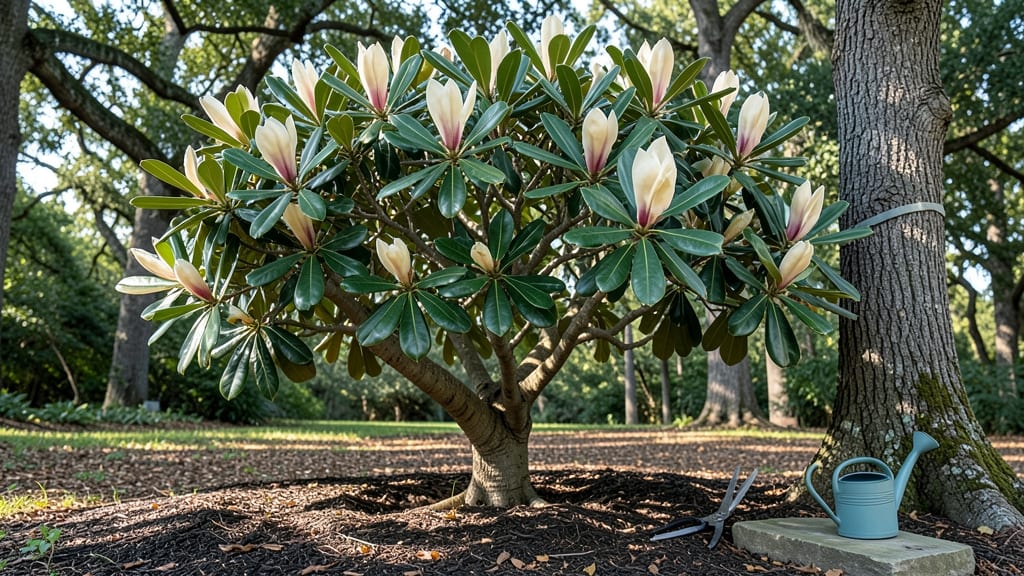
When your Southern magnolia tree leaves start yellowing or wilting after a cold snap, it’s not the end—it’s a wake-up call for its roots. 🌿 I’ve nursed back more than a few stressed magnolias by focusing on root health first, and the difference is dramatic within weeks.
The key isn’t just water or fertilizer; it’s understanding how cold stress disrupts the root system and what to do about it.
Start by checking the soil around the base—it should feel moist but not soggy. If the roots are exposed or compacted, gently loosen the top 6 inches with a fork, then top-dress with 2-3 inches of organic mulch to insulate and retain moisture.
Avoid heavy fertilizers right away; stressed roots need time to recover before feeding. Within 4-6 weeks, you’ll see new growth pushing through, and those yellow leaves will fade into rich, dark green.
📚 In This Guide
- What you need
- Instructions
- Tips and common mistakes
- Wrapping up and next steps
What you need
- ● Southern Magnolia tree: A mature or semi-mature specimen (3–10 years old) showing signs of cold stress (e.g., wilting, yellowing leaves, or stunted growth). Pro tip: Choose a tree with a healthy root ball if possible!
- ● Shovel or digging spade: A 12–18-inch wide spade for precise root exposure (avoid renting—owning one is a game-changer!).
- ● Pruning shears: Sharp, bypass-style shears for trimming damaged roots or foliage (sterilize with rubbing alcohol first!).
- ● Garden hose with adjustable nozzle: For gentle root rinsing (avoid high pressure—think "rain shower," not "power wash").
- ● Root stimulator or mycorrhizal fungi: 1–2 tbsp of a liquid or granular product (e.g., Mycorrhizal Blend or RootBoost) to jumpstart recovery.
- ● Well-draining potting soil or amended native soil: 3–5 gallons of a mix with 50% compost, 30% peat/pine bark, and 20% perlite for aeration.
- ● Mulch (pine straw or shredded bark): 2–3 inches to insulate roots post-transplant.
- ● Watering can or spray bottle: For post-revival hydration (a 1-gallon can works for small trees).
- ● Root growth accelerator gel: Apply to cut roots for faster regeneration (e.g., Dyna-Gro Root Stimulator).
- ● Soil moisture meter: To monitor root zone hydration without guesswork.
- ● Anti-transpirant spray: (e.g., Wilt-Pruf) to protect leaves during transplant shock.
- ● Epsom salt (magnesium sulfate): 1 tbsp per gallon of water for a foliar spray if leaves look pale.
- ● Stake and ties: If your tree is tall (>6 ft) and needs temporary support.
- ● Timing: Transplant on a cool, overcast day (avoid midday sun or frost risk). Early spring or fall is ideal!
- ● Site assessment: Pick a sunny, sheltered spot with 6+ hours of light and well-draining soil (Southern Magnolias hate soggy roots!).
- ● Weather check: Hold off if rain or wind >10 mph is forecasted for 48 hours post-transplant.
- ● Permits/approvals: Verify if your area requires permits for large tree transplants (common in HOAs or urban zones).
How to revitalize cold-damaged Southern magnolia leaves
Here’s how I nurse these tough beauties back to health after winter’s chill.
🌿 Step 1: Assess the Damage and Prune Strategically
Start by examining the tree—focus on leaves that show brown edges, curling, or wilting, classic signs of cold stress. Use clean, sharp pruning shears to remove only the most damaged foliage. I cut back to healthy green tissue, avoiding any blackened or mushy areas. This prevents disease from spreading through open wounds.
Don’t rush to remove every questionable leaf. Some may recover once temperatures stabilize. Watch for new growth at the branch tips—that’s your signal the tree is bouncing back. If branches are brittle, snap easily, or ooze sap, they’re beyond saving and should be pruned entirely.
💧 Step 2: Hydrate Deeply and Mulch for Root Protection
Southern magnolias hate soggy roots but need consistent moisture after cold stress. Water deeply at the drip line (where the branches extend) until the soil feels damp 6 inches down. Use a soaker hose to avoid wetting the leaves, which can encourage fungal issues. I water in the early morning to let foliage dry before evening.
Spread a 3-inch layer of mulch (like pine straw or shredded bark) around the base, keeping it 6 inches away from the trunk. This insulates roots from temperature swings and retains moisture. Replenish mulch annually—it breaks down over time, leaving roots exposed to cold snaps.
☀️ Step 3: Gradually Reintroduce Sunlight and Fertilize Gently
If the tree was in full sun before winter, don’t move it to shade now. Instead, gradually increase sunlight exposure over 7–10 days to avoid shock. Start with partial shade and transition to full sun as new leaves harden. You’ll see tougher, glossier leaves within weeks—this means the tree is adapting.
Wait until late spring (after the last frost) to fertilize. Use a balanced, slow-release fertilizer (like 10-10-10) at half the recommended rate. Over-fertilizing stresses roots further. Scratch it into the top 2 inches of soil and water thoroughly to activate it. Avoid high-nitrogen fertilizers—they encourage soft, cold-sensitive growth.
✂️ Step 4: Monitor for Pests and Disease After Revival
Cold-stressed trees attract pests like scale insects or spider mites, which thrive on weakened foliage. Inspect leaves weekly for sticky residue (scale) or fine webbing (mites). Treat infestations early with neem oil or insecticidal soap, applied in the early evening to avoid harming pollinators.
If you notice yellowing leaves with brown veins, it could signal fungal leaf spot. Prune infected leaves immediately and apply a copper fungicide as a preventative. Keep the area around the tree clean and dry—remove fallen leaves and debris to reduce fungal spores.
Tips & tricks for revitalizing cold-stressed Southern magnolia leaves
Here's what I've learned from years of nursing these majestic trees back to life after winter's harsh touch.
Pruning Precision: When you're assessing damage in Step 1, use a magnifying glass to examine leaf edges closely. The transition between healthy green and damaged brown often happens in a narrow band—cutting just beyond this line ensures you remove all compromised tissue while preserving as much leaf as possible. I've found that using sterilized pruning shears (wipe with rubbing alcohol between cuts) prevents accidental disease transmission between branches. This careful approach means you'll often keep 20-30% more foliage than someone pruning by eye alone.
Hydration Strategy: In Step 2, the key to proper watering is checking soil moisture at the drip line—not just near the trunk. Use a soil moisture meter or stick your finger 6 inches down; if it feels dry, water until moisture reaches that depth. I've learned to water more frequently in containers or sandy soils, as they dry out faster than clay soils. For container-grown magnolias, check moisture daily during warm spells, as they can't regulate temperature like in-ground trees.
Sunlight Transition: The 7-10 day sunlight adjustment in Step 3 is critical but often misunderstood. Start by moving the tree to a spot where it gets morning sun and afternoon shade, then gradually increase the afternoon sun exposure by 15 minutes each day. I've seen trees go into shock when moved directly to full sun too soon—the leaves wilt dramatically and take weeks to recover. Watch for leaves that perk up within hours of adjustment; that's your sign you're doing it right.
Pest Prevention: For Step 4's pest monitoring, I've found that a simple weekly leaf inspection with a flashlight (to spot early webbing) catches problems before they spread. The early evening application timing for neem oil is crucial—it gives the oil time to work overnight without evaporating in daytime heat. I also recommend treating the entire tree, not just visible pests, as eggs may be hidden on undersides of leaves or in bark crevices.
Pro Tips for Southern Magnolia Tree Leaves
- Here's what I've learned from years of nursing these majestic trees back to life after winter's harsh touch.
- Pruning Precision: When you're assessing damage in Step 1, use a magnifying glass to examine leaf edges closely.
- Hydration Strategy: In Step 2, the key to proper watering is checking soil moisture at the drip line—not just near the trunk.
Frequently asked questions
Got questions about your Southern magnolia tree’s leaves—or how to nurse it back to health after cold stress? You’re not alone!
Here are answers to the most common concerns about these iconic evergreen leaves, from seasonal care to troubleshooting.
Why are my Southern magnolia leaves turning brown or yellow after a cold snap?
Cold stress often causes magnolia leaf scorch—edges turning brown while the center stays green. This is usually temporary! Prune affected leaves in late winter or early spring to encourage new growth. If browning persists, check for root rot or fungal issues (like Phytophthora) and improve drainage.
How cold can Southern magnolia trees tolerate before leaves get damaged?
Southern magnolias (Magnolia grandiflora) are hardy to USDA Zones 7-10 (down to 10°F/-12°C for mature trees). Young trees or those in Zone 6 or colder may suffer leaf burn below 20°F (-7°C). Protect them with burlap wraps or mulch (3–4 inches deep) in winter to insulate roots.
Can I transplant a Southern magnolia with damaged leaves to a sunnier spot?
Yes! Spring (after last frost) is the best time to transplant, even if leaves are stressed. Choose a sunny, sheltered location (6+ hours of light) with well-draining soil. Water deeply before and after transplanting to reduce shock. Avoid heavy pruning—focus on root care instead.
My magnolia’s leaves are curling or dropping—is it a pest problem?
Curling or premature leaf drop can signal magnolia scale (a sap-sucking insect) or spider mites. Check the undersides of leaves for webbing or sticky residue. Treat with horticultural oil (early spring/fall) or neem oil. For severe infestations, consult a local arborist.
Are there cold-hardy alternatives to Southern magnolia with similar leaves?
If you love magnolia foliage but need Zone 5/6 resilience, consider:
- Little Gem magnolia (M. grandiflora ‘Little Gem’)—more compact, slightly hardier.
- Southern magnolia hybrids like ‘Exalt’ (Zone 6) or ‘Bracken’s Brown Beauty’ (Zone 5).
- Korean magnolia (M. kobus)—deciduous but cold-tolerant (Zone 4) with fragrant blooms.
Wrapping up and next steps
The southern magnolia tree leaves hold the key to nurturing resilient transplants—especially when roots face cold stress. By understanding their role in hardiness and applying the right care techniques, you’re already setting your trees up for long-term success. 🌱
Now that you’re armed with knowledge, take the next step: act. Whether you’re reviving a struggling transplant or preparing for future plantings, consistency in soil care, mulching, and seasonal adjustments will make all the difference. Your magnolia’s future starts with the leaves—and your green thumb!