
Trees
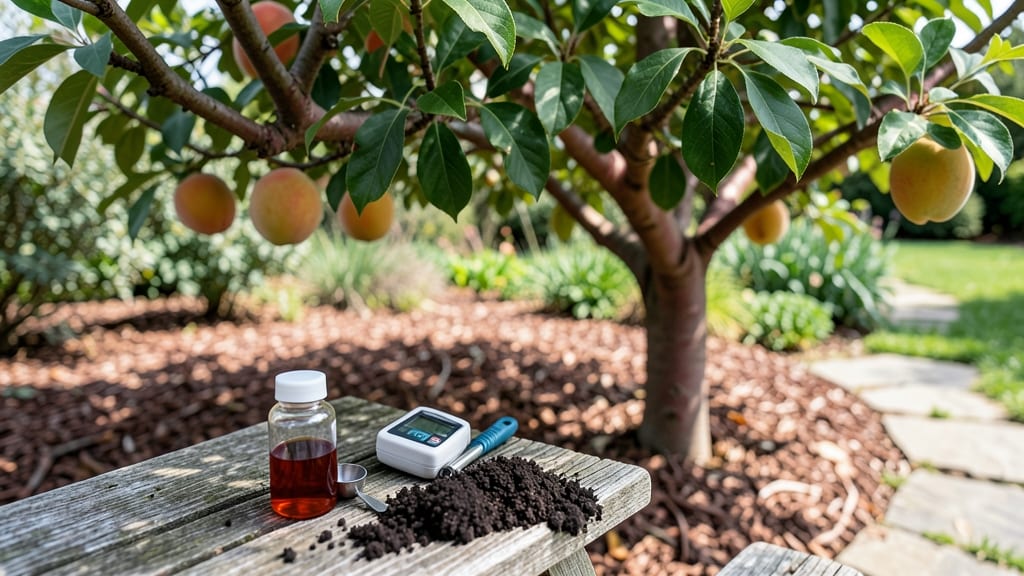
Peach trees demand a soil pH between 6.0 and 6.5—that narrow range is what turns bitter, mealy fruit into the sweet, juicy harvest you crave. 🌱 I learned this the hard way after years of struggling with sour peaches that never ripened properly, no matter how much I watered or fertilized.
The problem wasn't my green thumb—it was the invisible chemistry beneath the roots.
Testing your soil's pH is simpler than you think: grab a basic kit from the garden center or send a sample to your local extension office. Most home tests cost under $15 and take 10 minutes.
If your numbers fall outside that 6.0-6.5 window, don't panic—adjusting pH is straightforward once you know what your soil needs. Lime raises pH for acidic soils, while sulfur lowers it for alkaline conditions, and both work faster than you'd expect with consistent application.
Once you hit that sweet spot, your trees will reward you with richer foliage, stronger branches, and fruit so flavorful neighbors will ask for your recipe. The first sign of success? Leaves stay deep green instead of yellowing at the edges, and blossoms appear thicker and more vibrant each spring.
With proper maintenance, you'll maintain that ideal range year after year without extra effort.
This method works for both young saplings and mature trees, whether you're planting in a backyard orchard or a large-scale farm. The key is patience—soil chemistry takes time to stabilize, but the payoff in fruit quality makes every adjustment worth it. Let's get those peaches tasting like summer again.
📚 In This Guide
- What you need
- Instructions
- Tips and common mistakes
- Wrapping up and next steps
What you need
- ● Soil pH Test Kit: Digital or liquid test kit (e.g., LaMotte Soil pH Test Kit or MySoil pH Meter). Pro tip: 💡 Digital meters offer instant readings, while liquid kits are great for larger areas.
- ● Garden Gloves: 1 pair (nitrile or rubber for protection).
- ● Trowel or Soil Scoop: Small hand trowel (6-8 inches deep) or a soil auger for compacted soil.
- ● Garden Spade: For mixing amendments into the top 12 inches of soil.
- ● Watering Can or Hose: With a fine spray nozzle for moistening soil before testing.
- ● Lime (for raising pH): Agricultural Lime (Calcium Carbonate): 10-20 lbs per 100 sq ft (adjust based on test results).
- ● Dolomitic Lime (Calcium + Magnesium): 15-25 lbs per 100 sq ft.
- ● Sulfur (for lowering pH): 5-10 lbs per 100 sq ft (elemental sulfur or aluminum sulfate).
- ○ Measuring Tape or String: To mark testing areas (optional but helpful for consistency).
- ● Wheelbarrow or Bucket: For mixing soil amendments (5-gallon capacity recommended).
- ● Soil pH Buffer Kit: For calibration if using a digital meter.
- ● Compost or Organic Matter: 2-3 inches of well-aged compost to improve soil structure.
- ● pH Adjustment Calculator: Online tool (e.g., University Extension Service guides) to dial in precise amounts.
- ● Labeling Flags: To mark treated areas and track changes over time.
How to test and adjust soil pH for peach trees
Peach trees thrive when their soil pH is just right—here's how to check and fine-tune it for sweet, healthy fruit.
🌱 Step 1: Collect Soil Samples for Testing
Grab a clean trowel and dig 4-6 soil samples from around your peach tree, 6-12 inches deep where roots grow. Take them from different directions (north, south, east, west) to get an accurate reading. Mix the samples together in a clean bucket—this composite sample represents your tree's true soil conditions.
Use a plastic container (not metal) to store the sample until testing. Moisten it slightly if dry, but don't make it soggy. The goal is to preserve the natural soil structure for accurate results. If you're testing multiple trees, keep samples separate to compare their needs later.
💧 Step 2: Test Soil pH with a Reliable Kit
Peach trees prefer a slightly acidic to neutral pH range of 6.0 to 6.5. Use a digital pH meter or soil test kit (avoid cheap strips—they're unreliable). Follow the kit instructions carefully: mix 2 tablespoons of soil with 2 tablespoons of distilled water in a small container, stir, and let it settle for 30 minutes before testing.
Record the pH reading—this tells you exactly where your soil stands. If it's below 6.0, your peach tree is in acidic soil and needs lime to raise the pH. If it's above 6.5, your soil is alkaline and needs sulfur or peat moss to lower it. Don't guess—accurate testing prevents overcorrecting, which can harm your tree.
☀️ Step 3: Adjust pH Based on Test Results
For low pH (below 6.0), spread pelletized lime evenly over the soil surface, following package instructions for your soil type and test results. Water it in well to help it reach the roots. Avoid quick-acting lime—it can raise pH too fast and burn roots. Re-test soil in 3-6 months to confirm the adjustment before applying more.
For high pH (above 6.5), mix elemental sulfur or peat moss into the top 6 inches of soil (use 1-2 pounds per 100 square feet of sulfur). Water thoroughly to activate the changes. Sulfur works slowly—plan to re-test in 6-12 months. Organic matter like compost can also help balance pH over time, but it's a slower process.
✂️ Step 4: Maintain pH Through Regular Care
Peach trees are sensitive to sudden pH shifts, so monitor soil annually during growing season. Add compost (the 3 gallons you’ll use) each spring to improve soil structure and buffer pH naturally. Avoid fresh manure—it can spike pH unpredictably and attract pests.
Watch your tree for signs of stress: yellow leaves (often iron deficiency in alkaline soil) or stunted growth (common in acidic soil). These clues help you fine-tune adjustments before they affect fruit quality. A happy peach tree with balanced pH produces sweeter, more abundant fruit—worth the effort!
Tips & tricks for perfect soil pH for peach trees
Here's what nobody tells you about getting that pH just right for your peach tree's happiness.
Sample Collection Strategy: When you're gathering those 4-6 soil samples in Step 1, focus on the root zone where your peach tree's roots are most active. I've found that taking samples from the north and south sides often reveals different pH levels—this can happen if you've applied amendments unevenly over the years. Mixing these samples properly gives you the most accurate reading of what your tree is actually experiencing.
Testing Time Tip: That 30-minute settling period in Step 2 is crucial—don't rush it! I've seen people skip this step and get wildly inaccurate readings. The soil needs time to fully hydrate and stabilize. If you're in a hurry, you can use a digital pH meter that gives instant readings, but for the most accurate results, stick with the 30-minute method. The difference in pH can be significant between a rushed test and one that's properly settled.
Lime Application Technique: When adjusting for low pH in Step 3, spread that pelletized lime evenly across the soil surface and water it in thoroughly. I've made the mistake of just sprinkling it and calling it good—it didn't penetrate deeply enough. For best results, use a broadcast spreader and follow up with a good soaking. Remember, you want the lime to reach those root zones where it can actually do its work. And never apply more than recommended—too much lime can create its own problems.
Re-testing Reminder: The instructions mention re-testing in 3-6 months for lime adjustments and 6-12 months for sulfur. I can't emphasize this enough—so many people apply amendments and then forget to check if they actually worked. Set a reminder in your phone or mark it on your calendar. That follow-up test is what tells you whether you've achieved the perfect 6.0-6.5 range for your peach tree's happiness.
Pro Tips for Soil Ph For Peach Trees
- Here's what nobody tells you about getting that pH just right for your peach tree's happiness.
- Sample Collection Strategy: When you're gathering those 4-6 soil samples in Step 1, focus on the root zone where your peach tree's roots are most active.
- Testing Time Tip: That 30-minute settling period in Step 2 is crucial—don't rush it!
Frequently asked questions
Got questions about optimizing your peach tree’s soil pH? You’re not alone! Here are some of the most common concerns—plus straightforward answers to help you grow healthier, fruitier trees.
What’s the best soil pH range for peach trees?
Peach trees thrive in slightly acidic to neutral soil, with an ideal pH range of 6.0 to 6.5. Outside this range, nutrient uptake suffers, leading to stunted growth or poor fruit quality. Test your soil annually to keep it in this sweet spot!
How often should I check or adjust the soil pH?
Check your soil’s pH every 1–2 years, especially if your tree isn’t fruiting well or leaves look yellow. Adjustments are needed if pH drifts below 5.5 or above 7.0. Use lime to raise pH or sulfur to lower it—apply gradually to avoid shocking roots.
Can I grow peach trees in alkaline soil?
Yes, but you’ll need to lower the pH first. Alkaline soil (pH > 7.0) locks out essential nutrients like phosphorus and iron. Mix in elemental sulfur or peat moss and water deeply. Re-test in 2–3 months for progress.
Will adjusting pH affect my peach tree’s fruit flavor?
Improper pH throws off nutrient balance
, leading to bland, small, or misshapen fruit. Keeping pH in the 6.0–6.5 range ensures your peaches stay sweet, juicy, and packed with flavor. Think of it as the secret ingredient for orchard success!
What if my peach tree’s leaves turn yellow even after adjusting pH?
Yellow leaves can still signal other issues like nutrient deficiencies (iron, zinc), pests, or overwatering. Re-test soil for micronutrients and check for leaf curl or spots. A soil test kit or local extension office can pinpoint the exact problem.
Wrapping up and next steps
Getting your soil pH for peach trees just right is the secret to unlocking their full potential—sweet, abundant fruit and a thriving orchard! 🌱 With the ideal range of 6.0 to 7.0, you’re already halfway to peach-growing success.
Now, it’s time to roll up your sleeves, test your soil, and make those small adjustments that lead to big rewards.
Ready to take the next step? Grab your pH meter or soil test kit and start monitoring your soil this season. Every little tweak—whether it’s lime for alkalinity or sulfur for acidity—brings you closer to a bountiful harvest of juicy, flavorful peaches. You’ve got this! 🍑✨