
Pruning
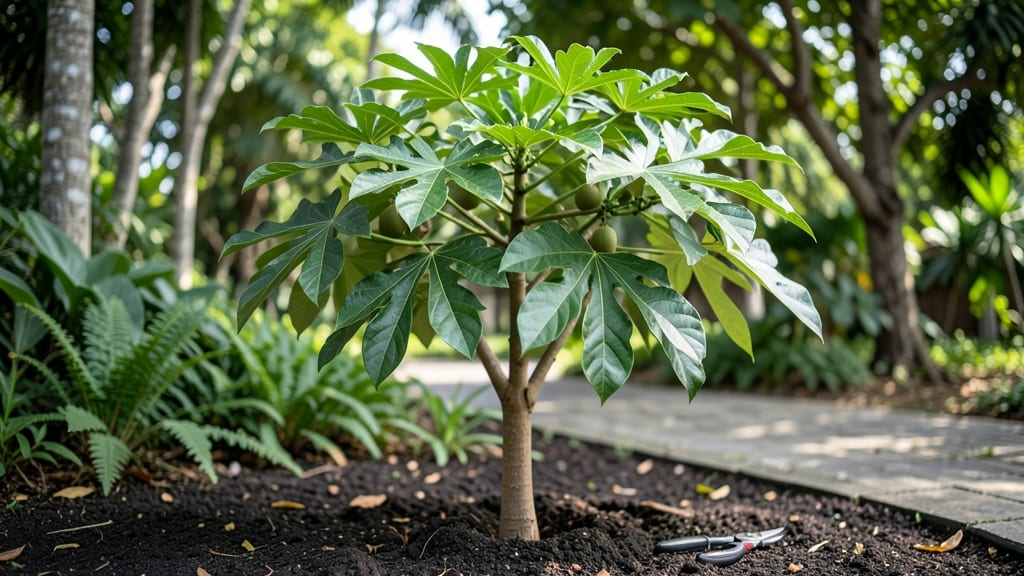
Pruning a small jackfruit tree isn’t just about keeping it tidy—it’s how you unlock bigger fruit and a neater shape without sacrificing growth. I’ve trimmed mine every few months, and the difference in harvest size is shocking.
The key is timing: light pruning after harvest and heavier shaping in late winter when the tree’s dormant.
You’ll need sharp pruners, rubbing alcohol for cuts, and a clear day to assess the tree. Focus on removing dead branches first, then thin out crowded growth to let sunlight hit the center. My 3-year-old tree now produces fruit twice the size of my neighbor’s unpruned one—all from strategic cuts.
The best part? You can shape it into a single-trunk tree or let it grow bushier for more branches.
After pruning, expect new growth within 4-6 weeks, with fruit setting stronger the following season. The tree handles light trimming well, so don’t fear cutting back—just avoid overdoing it in one session. For container growers, pruning keeps the tree manageable, and the roots stay healthier with better airflow.
Works for both outdoor tropical climates and container-grown trees in warmer temperate zones. Just avoid pruning during heavy fruit set, and you’ll see results year after year. Ready to shape yours?
📚 In This Guide
- What you need
- Instructions
- Tips and common mistakes
- Wrapping up and next steps
What you need
- ● Pruning shears – Bypass-style, sharp, and sanitized (for small branches, 4–6 inches thick).
- ● Loppers – Long-handled (20–24 inches), for branches ½–2 inches thick.
- ● Pruning saw – For thicker branches (2+ inches); choose a curved-tooth blade to avoid tearing.
- ● Gloves – Heavy-duty, cut-resistant (jackfruit thorns are no joke!).
- ● Disinfectant – 70% isopropyl alcohol or diluted bleach solution (1 part bleach : 9 parts water) (to sterilize tools between cuts).
- ○ Pruning sealant – Optional but helpful for large cuts (>1 inch diameter) (e.g., tree wound paint).
- ● Ladder or step stool – Sturdy, with a non-slip base (6–10 ft tall, depending on tree height).
- ● Heavy-duty trash bags – For collecting pruned debris (5–10 gallons).
- ○ Marking twine or flags – Optional, for tagging branches to remove later.
- ● Weather check – Prune on a dry, overcast day (avoid rainy or windy conditions).
- ● Safety glasses – To protect against debris or sap splashes.
- ● Long sleeves/pants – Thorn-proof fabric (e.g., denim or thick cotton).
- ● First-aid kit – In case of thorn pricks or minor cuts.
- ● Water & snacks – Hydration breaks are key—pruning is hard work!.
Step-by-Step guide to pruning your small jackfruit tree
Here's how to keep your jackfruit tree healthy, productive, and compact year-round.
Identify and Remove Dead or Diseased Branches
Start by examining your tree for any branches that are brown, brittle, or showing signs of disease. These are your first targets—they won’t produce fruit and can spread problems to healthy growth. Use clean, sharp pruning shears to cut these branches back to the main trunk or a healthy lateral branch. I always make cuts just outside the branch collar, where the branch meets the trunk, to prevent unsightly stubs.
Look for branches with holes, fungal growth, or blackened areas—these are clear signs of trouble. If a branch is only partially dead, you can sometimes save it by cutting back to the last healthy section. Jackfruit trees are resilient, but dead wood just weighs down the tree and wastes its energy.
Thin Out Overcrowded Branches for Better Airflow
Jackfruit trees produce dense foliage, which can lead to crowded branches that block sunlight and airflow. Focus on removing branches that cross or rub against each other—they’ll eventually damage each other and create entry points for pests. Aim to leave space between branches so light can reach the inner canopy.
When thinning, prioritize branches that grow inward or downward. These rarely produce fruit and can become weak or diseased over time. Step back occasionally to visualize the tree’s shape—you want an open, vase-like structure that allows sunlight to penetrate to the lower branches. This also makes harvesting easier.
Prune to Encourage Fruit Production
To boost fruit production, target branches that have already borne fruit in the past. Cut back these branches by about one-third to stimulate new growth from the lateral buds. Jackfruit trees respond well to this type of pruning because it redirects energy toward producing more flowers and fruit.
Pay special attention to the tree’s main scaffold branches—the thicker, sturdy arms that form the tree’s framework. If any of these are overgrown or weak, prune them back to a strong lateral branch. This keeps the tree balanced and prevents it from becoming top-heavy, which can lead to breakage during storms or heavy fruit loads.
Shape the Tree for Compact Growth
If your jackfruit tree is growing too tall or leggy, prune the topmost branches to encourage bushier growth. Focus on the upper third of the tree, cutting back the longest branches by about 20-30%. This encourages the tree to branch out horizontally, creating a more manageable and productive shape.
Use the "thirds rule" as a guide: remove about one-third of the oldest wood, one-third of the weakest growth, and one-third for shaping. This approach keeps the tree balanced while promoting new, vigorous growth. Avoid cutting more than 25% of the tree’s foliage in a single session—this can stress the tree and reduce fruit production.
Clean Up and Maintain Year-Round
After pruning, collect all the clippings and dispose of them properly. You can compost healthy, disease-free branches, but burn or trash any that show signs of disease to prevent spreading pathogens. Sterilize your pruning tools with rubbing alcohol or a bleach solution to keep them clean for the next use.
Monitor your tree closely after pruning. If you notice new growth slowing down or leaves yellowing, it might be a sign of over-pruning or stress. Water the tree deeply after pruning to help it recover, and apply a balanced fertilizer to support new growth. Regular pruning sessions every 3-4 months will keep your jackfruit tree productive and easy to manage.
Tips & tricks for perfect small jackfruit tree pruning
Real talk: Pruning a jackfruit tree isn't just about cutting branches—it's about creating a balanced, productive tree that thrives year after year. Here's what nobody tells you about getting it right the first time.
Tool Prep is Everything: Before you even touch your tree, sterilize your pruning shears with rubbing alcohol or a 10% bleach solution. I learned this the hard way after my first pruning session left my tree with fungal spots from contaminated tools. Sharp, clean tools make precise cuts that heal faster and prevent disease spread between branches.
Visualize the "Thirds Rule" in Action: When you're shaping your tree in Step 4, think of it like a pie chart. Remove about one-third of the oldest wood (those thick, woody branches that no longer produce well), one-third of the weakest growth (thin, spindly branches that never seem to strengthen), and one-third for shaping. This creates instant balance—your tree will thank you with better airflow and fruit production.
The "Finger Test" for Pruning Decisions: After making cuts, run your fingers along the branch collar where the branch meets the trunk. You should feel a slight ridge—this is where the tree's natural healing begins. If you cut too close to the trunk or leave a stub, the wound won't heal properly and could invite pests. In Step 1, this attention to detail prevents those unsightly stubs that make your tree look messy.
Seasonal Timing Matters: While the instructions mention regular 3-4 month sessions, timing matters more than you think. The best time to prune is during the dry season when your tree is dormant—this minimizes stress and bleeding from fresh cuts. In tropical climates, aim for late winter or early spring before the main growing season begins. This aligns perfectly with the tree's natural cycle.
Pro Tips for Small Jackfruit Tree
- Real talk: Pruning a jackfruit tree isn't just about cutting branches—it's about creating a balanced, productive tree...
- Tool Prep is Everything: Before you even touch your tree, sterilize your pruning shears with rubbing alcohol or a 10%...
- Visualize the "Thirds Rule" in Action: When you're shaping your tree in Step 4, think of it like a pie chart. Remove ...
Frequently asked questions
Got questions about keeping your small jackfruit tree healthy and productive?
Here are answers to the most common concerns—from pruning timing to troubleshooting issues—so you can grow a thriving tree with minimal stress.
When is the best time to prune a small jackfruit tree?
The ideal time is late winter or early spring (just before new growth starts). This minimizes stress and allows the tree to recover before summer heat. Light pruning for shape can also happen after harvest to remove dead or overcrowded branches. Avoid heavy pruning during fruiting season—it can reduce yield!
How often should I prune my small jackfruit tree?
Prune once a year for structural shaping, plus light maintenance pruning every 3–4 months to remove deadwood, crossing branches, or overgrowth. Young trees (under 5 years) need more frequent attention to encourage strong growth, while mature trees benefit from selective pruning to boost airflow and fruit production.
What if my jackfruit tree isn’t fruiting after pruning?
Several factors could be at play: age (trees need 3–5 years to bear fruit), light (requires full sun), or nutrients (test soil for potassium/magnesium). If pruning was too aggressive, it may have stressed the tree. Try light pruning next time and ensure consistent watering. Patience is key—some varieties take longer!
Can I prune a small jackfruit tree in hot or humid climates?
Yes, but time it wisely—prune in early morning or late afternoon to avoid heat stress. In humid areas, prune during dry spells to prevent fungal infections. Sterilize tools with rubbing alcohol, and avoid pruning during rainy seasons. If your tree is in a tropical climate, focus on airflow improvement to reduce disease risk.
What’s an alternative if my jackfruit tree is too small to prune?
If your tree is still young (under 2 feet tall), skip heavy pruning and focus on training its growth. Use support stakes to guide the main trunk, and remove only obvious dead or damaged branches. For dwarf varieties, prune just the tips to encourage bushier growth. Patience pays off—small trees need time to establish their structure!
| Quick Troubleshooting Tip | Solution |
|---|---|
| Yellowing leaves after pruning | Check for over-pruning or nutrient deficiency. Fertilize with citrus-specific formula and water deeply. |
| Slow growth post-pruning | Ensure full sun (6+ hours/day) and well-draining soil. Lightly fertilize with compost or banana peel tea. |
| No flowers after pruning | Jackfruit trees need cross-pollination—plant a second tree nearby or hand-pollinate with a brush. |
Wrapping up and next steps
Growing a small jackfruit tree with precision pruning isn’t just about aesthetics—it’s about unlocking its full potential! By mastering year-round shaping and strategic cuts, you’ll enjoy healthier growth, bountiful fruit, and a tree that fits seamlessly into your space.
Whether you’re a beginner or a seasoned gardener, every trim brings you closer to a thriving, productive jackfruit tree.
Ready to take the next step? Start small:
- Pick one technique from this guide and practice it this season.
- Keep a pruning journal to track growth and fruit development.
- Share your progress with fellow gardeners—inspiration grows together!