
Pruning
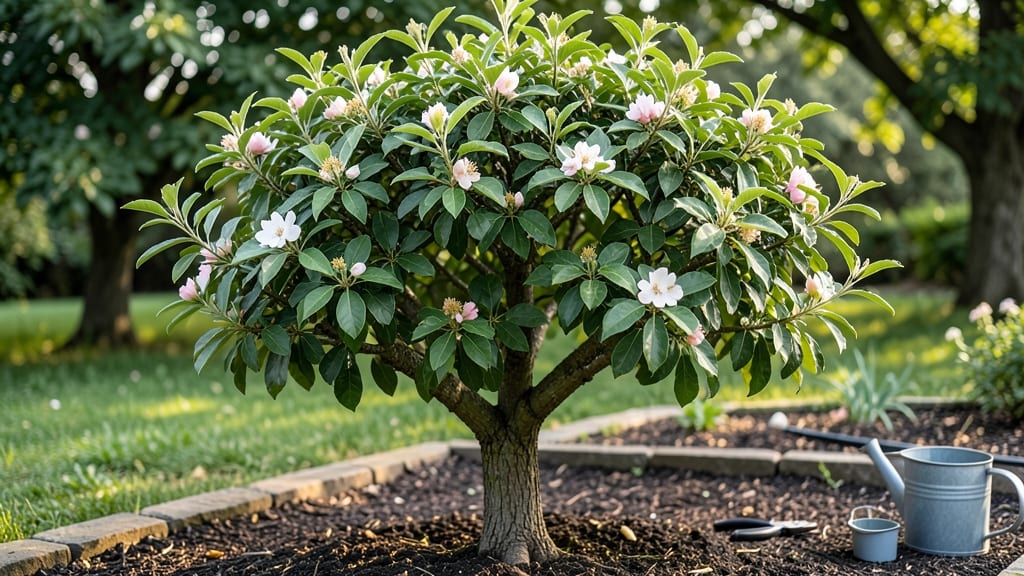
The reliance peach tree size—compact at 12-15 feet tall with an 8-10 foot spread—makes it ideal for suburban yards while still requiring room to flourish. I planted mine last spring and was surprised how quickly it filled out, yet stayed manageable for my small backyard.
The key lies in early pruning to control its natural vigor while encouraging fruit production.
This variety thrives in full sun with 6-8 hours daily, making it perfect for southern exposures. For small gardens, space 10 feet apart between trees to prevent overcrowding.
While not a true dwarf, its semi-compact growth makes it adaptable—ideal for home orchards where space is limited but quality peaches are the goal.
With proper pruning, you’ll shape a well-aerated canopy that produces sweet, reliable fruit while keeping the tree’s footprint in check. The first year focuses on establishing structure; by year three, you’ll see abundant harvests with minimal maintenance.
No need for fancy tools—just sharp pruners and a clear vision for its future shape.
Container growing isn’t ideal, but if you’re creative, a large raised bed (5+ feet wide) could work for a single tree. Just expect slightly smaller fruit and more frequent pruning.
The real magic happens when you match pruning to the tree’s growth rhythm—spring for structure, summer for cleanup, and winter for shaping.
📚 In This Guide
- What you need
- Instructions
- Tips and common mistakes
- Wrapping up and next steps
What you need
- ● Pruning shears: Bypass pruners (sharp, 6-8 inch blades) – 1 pair
- ● Loppers: For thicker branches (2-3 inch cutting capacity) – 1 pair
- ● Hand saw: Pruning saw with curved blade (for stubborn branches) – 1
- ● Disinfectant: Rubbing alcohol or 10% bleach solution – Small bottle
- ○ Pruning sealant: Optional but recommended for large cuts (e.g., tree wound dressing) – Small tube
- ● Gloves: Heavy-duty gardening gloves (cut-resistant) – 1 pair
- ● Ladder or step stool: Sturdy, 8-12 ft tall (if tree exceeds 6 ft) – 1
- ● Measuring tape: For tracking branch lengths and canopy size – 1
- ● Trash bags: Heavy-duty for debris (10-20 gallon size) – 2-3
- ● Pole pruner: For high branches (extendable up to 10 ft) – 1
- ● Sharpener: Pruner sharpening stone or file – 1
- ● Pruning guide: Branching diagram or app (e.g., PlantNet) – Digital/printed
- ● Safety glasses: For debris protection – 1 pair
- ○ Tree growth regulator: Optional spray (e.g., Paclobutrazol) for compact growth – Small bottle
Step-by-step pruning guide for controlling Reliance peach tree size
Mastering this dwarfing technique transforms a sprawling peach tree into a manageable, productive small orchard.
Understand the Reliance Tree’s Growth Habits
The Reliance peach tree naturally grows at a moderate rate, reaching 12-15 feet without intervention. Its compact branching pattern makes it ideal for small properties, but unchecked growth leads to dense canopies that reduce fruit quality. I focus on three key areas: removing water sprouts, thinning crossing branches, and encouraging outward growth from the scaffold limbs.
Start by identifying the central leader—the strongest vertical stem—and the 4-6 scaffold branches that form the tree’s skeleton. These should be spaced 8-12 inches apart along the trunk. Weak or inward-growing branches will compete with these structural limbs, so they’re the first to go. Use sharp pruning shears to make clean cuts just outside the branch collar, the swollen area where the branch meets the trunk.
Perform Structural Pruning in Late Winter
Schedule your first major pruning session 2-3 weeks before bud break, when the tree is still dormant but temperatures stay above 32°F. This timing prevents stress from late-season cuts and avoids disease entry points. Begin by removing dead, diseased, or damaged wood—these branches won’t recover and can harbor fungal infections like brown rot.
Next, thin the canopy by cutting back overlapping branches to improve airflow. Aim to maintain an open vase shape with sunlight penetrating to the center. For scaffold limbs that grow too vertically, make a 30-degree cut just above an outward-facing bud to redirect growth. Avoid leaving stubs—these invite decay and weaken the tree’s structure. After pruning, sterilize your tools with 70% isopropyl alcohol to prevent cross-contamination.
Summer Light Pruning for Compact Growth
Mid-summer is the time to refine the tree’s shape and control its size. Focus on water sprouts—fast-growing, vertical shoots that appear along the trunk and branches. These steal energy from fruit production and create dense shade. Snip them off at their base as soon as they appear, using hand pruners for precision.
Thin out excessive fruiting spurs (short, fruit-bearing branches) to prevent overcrowding. Leave 1-2 spurs per scaffold limb to ensure even fruit distribution. If a branch grows too long and leggy, shorten it by one-third to encourage bushier growth. Prune on a dry, overcast day to reduce stress on the tree and minimize sap bleeding.
Annual Maintenance for Long-Term Size Control
Establish a yearly pruning schedule in late winter and mid-summer to maintain the Reliance peach tree’s compact size. Each year, reassess the tree’s structure and remove any suckers (shoots growing from the base) or rubbing branches (those that cross and damage each other). Use thinning cuts rather than heading cuts—this promotes stronger regrowth and better fruit production.
Pay close attention to the tree’s growth habit after pruning. If branches grow too vigorously, it may need more aggressive thinning. Conversely, if growth slows, reduce pruning intensity slightly. Mulch the base with 2-3 inches of organic mulch (like wood chips) to retain moisture and suppress weeds, which compete for nutrients. Water deeply once a week during dry spells to support the tree’s recovery after pruning.
Tips & tricks for perfectly pruned Reliance peach trees
Transforming your Reliance peach tree into a compact, productive powerhouse takes precision—and a few insider tricks to avoid common pitfalls. Here's what I've learned from years of shaping these trees without sacrificing fruit quality.
Timing is Everything: The 2-3 weeks before bud break window is critical for late winter pruning. If your region experiences unpredictable spring weather, err on the earlier side—once buds begin to swell, you risk stimulating new growth that can't harden off before potential late frosts. I've seen trees stressed by premature pruning in warmer winters, so when in doubt, check local frost dates and plan accordingly. The goal is to complete pruning while the tree remains dormant but temperatures stay above 32°F.
Branch Angle Matters: When making those 30-degree cuts to redirect scaffold limbs, pay close attention to the bud you're targeting. The bud should face outward and slightly upward to encourage horizontal growth. I've made the mistake of cutting to inward-facing buds, which resulted in branches growing back toward the center—exactly what we're trying to avoid. For best results, make your cut just above the bud you want to grow, at that precise 30-degree angle, and avoid leaving any stubs that could harbor disease.
Tool Sterilization Can't Be Overstated: After pruning, I sterilize my tools with 70% isopropyl alcohol—not just for sanitation, but because I've seen fungal infections spread through contaminated shears. For larger operations, consider using a dedicated pruning saw and shears for each tree to prevent cross-contamination. The few extra minutes spent sterilizing between cuts will pay off in healthier growth and fewer disease issues down the line. This is especially important when dealing with peach trees, which are particularly susceptible to brown rot.
Summer Pruning Strategy: During mid-summer light pruning, focus on removing water sprouts as soon as they appear—don't wait until they become established. I've found that using hand pruners for these small shoots gives me better control than larger shears. For the fruiting spurs, remember that less is more: leaving just 1-2 spurs per scaffold limb ensures better fruit quality and size. The key is to maintain that open vase shape while preventing overcrowding that would reduce sunlight penetration to the center of the tree.
Pro Tips for Reliance Peach Tree Size
- Transforming your Reliance peach tree into a compact, productive powerhouse takes precision—and a few insider tricks to avoid common pitfalls.
- Timing is Everything: The 2-3 weeks before bud break window is critical for late winter pruning.
- Branch Angle Matters: When making those 30-degree cuts to redirect scaffold limbs, pay close attention to the bud you're targeting.
Frequently asked questions
Got questions about managing your Reliance peach tree’s size? You’re not alone!
Here are answers to the most common concerns gardeners have—from pruning tips to troubleshooting—so you can keep your tree healthy and compact.
How big does a Reliance peach tree grow if left unpruned?
A Reliance peach tree can reach 15–20 feet tall and spread 12–15 feet wide if unpruned. However, with regular pruning (especially during dormancy), you can keep it at a manageable 8–10 feet for easier fruit picking and yard space. Start pruning young to shape its growth early!
When is the best time to prune for compact growth?
Prune your Reliance peach tree during late winter or early spring (before buds swell) for best results. Avoid heavy pruning in fall—it can stimulate new growth vulnerable to frost. Light maintenance pruning (removing dead wood or crossing branches) can happen anytime, but never prune in summer when the tree is fruiting.
Why is my Reliance peach tree growing too fast or unevenly?
Fast or uneven growth often signals over-fertilization, water stress, or poor pruning habits. Check your soil (peach trees prefer well-draining, slightly acidic soil) and adjust watering—deep but infrequent watering (1–2 inches per week) encourages stronger roots. If branches are growing inward, prune them out to open the canopy and improve air circulation.
Can I keep a Reliance peach tree dwarf-sized like a bonsai?
While Reliance peach trees aren’t true dwarf varieties, you can train them to stay small (6–8 feet) with aggressive pruning and regular shaping. Use espalier techniques or stake branches to grow horizontally. However, expect smaller fruit yields—dwarfing isn’t ideal for heavy peach production. For true compact trees, consider ‘Bonanza’ or ‘Redhaven’ dwarf grafts.
What should I do if my pruned Reliance peach tree has dead branches?
Dead branches (often brown, brittle, or without leaves) should be cut back to healthy wood immediately to prevent disease. Sterilize pruners with rubbing alcohol between cuts. If you see peach leaf curl or borers, treat with copper fungicide or insecticide as needed. Never leave stubs—prune at the branch collar for clean healing.
Pro Tip:
Use a 3-step pruning approach for Reliance peaches:
- Remove the bad: Dead, diseased, or crossing branches first.
- Thin the canopy: Aim for open centers to let sunlight reach inner fruit.
- Shape for size: Cut back sucker growth (shoots at the base) and limit vertical branches.
Wrapping up and next steps
Mastering the art of pruning your Reliance peach tree isn’t just about shaping its branches—it’s about unlocking its full potential for a compact, productive, and healthy canopy. By following the right techniques, you’ll encourage better airflow, easier harvesting, and even sweeter fruit.
Whether you’re a seasoned gardener or just starting, these secrets will help you transform your tree’s growth with confidence! 🌱✂️
Ready to see your peach tree thrive? Grab your pruners and start planning your next pruning session—your future harvest (and happy tree!) will thank you.