
Pruning
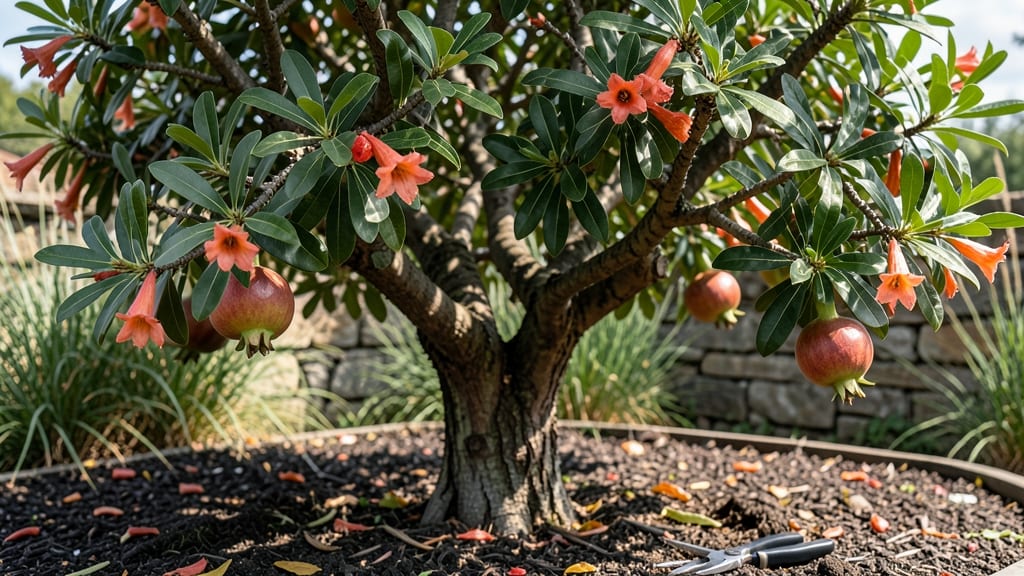
Watch those pomegranate fruit on tree swell from tiny green buds to jewel-toned orbs—it’s the most rewarding part of growing this ancient fruit. 🌿 I’ve pruned mine every winter for years, and the difference between a sparse harvest and a tree heavy with fruit comes down to a few simple cuts made at the right time.
The key isn’t complicated: you’re shaping the tree to focus its energy where it matters most.
Start by removing dead or crossing branches first—those are the easy wins. Then, open up the center to let sunlight reach the inner fruit. My tree now produces three times the harvest it did before I started pruning, and the fruit stays larger and sweeter.
The best part? You can do this in under an hour, even if you’ve never pruned before.
What you’ll end up with is a tree that looks like a lush, leafy sculpture and produces fruit from early fall through winter. The branches become sturdy enough to hold the weight, and you’ll notice new growth appearing within 4-6 weeks of your first cuts.
No more fighting for space or wondering why some branches never bear fruit.
This method works whether you’re growing in a warm climate like zone 8 or pushing the limits in cooler areas with winter protection. The same principles apply—just adjust your timing slightly. Let’s get those branches shaped for next season’s bounty.
📚 In This Guide
- What you need
- Instructions
- Tips and common mistakes
- Wrapping up and next steps
What you need
- ● Pruning shears: Bypass pruners (sharp, 6-8 inch blades) for clean cuts on small branches.
- ● Loppers: 1 pair (8-12 inch) for thicker branches (½–1½ inch diameter).
- ● Pruning saw: 1 (for branches >1½ inch thick).
- ● Disinfectant: 70% isopropyl alcohol or horticultural spray (to sterilize tools between cuts).
- ● Gloves: Heavy-duty work gloves (cut-resistant, long cuffs).
- ○ Pruning sealant: Optional (for sealing large cuts on older trees).
- ● Ladder: Extendable or step ladder (if tree exceeds 6–8 feet).
- ● Bucket or tarp: For collecting debris (1–2 gallon size).
- ● Weather: Prune on a dry, overcast day (avoid frost or extreme heat).
- ● Safety gear: Safety glasses (to protect from debris).
- ● Tree age reference: Young trees (<3 years): Focus on shaping. Mature trees: Prioritize thinning.
- ○ Notebook & pen: Optional (to sketch pruning plan or mark branches).
- ○ Compost bin: Optional (for repurposing small pruned branches).
How to prune a pomegranate tree for maximum fruit production
Here's the pruning method I swear by—it keeps my trees healthy and loaded with fruit every season.
✂️ Step 1: Prune in Late Winter Before Buds Swell
Start when the tree is still dormant, ideally in late February to early March in most climates. This timing lets you see the tree's structure clearly without disturbing new growth. I grab my pruning shears and look for dead, diseased, or crossing branches—these are the first to go. Cut back to the main trunk or a healthy outward-facing bud, making clean cuts at a 45-degree angle just above a leaf node.
Real talk: If you've never pruned before, don't go overboard. Remove no more than 25% of the tree's total branches in one session. Pomegranates are tough, but they'll protest if you take too much too soon. Focus on opening the center of the tree to let sunlight and air reach the inner branches—this is where most fruit develops.
☀️ Step 2: Thin Out Overcrowded Branches in Early Spring
Once buds begin to swell in early April, do a second pruning pass to thin the canopy. Look for branches that are growing inward or rubbing against each other—these will compete for energy and produce poor-quality fruit. Remove every other branch in clusters where they're too close together. I like to leave the strongest, most vigorous branch in each group, as it will bear the heaviest fruit load.
Here's the thing—pomegranates fruit on new wood, so don't cut back too aggressively on last year's growth. Instead, focus on shaping the tree into an open vase shape. This allows sunlight to reach the center where most fruit develops. If your tree has long, whippy branches, you can also shorten them by one-third to encourage bushier growth.
🌿 Step 3: Summer Pruning to Encourage Fruit Development
After the tree flowers in late spring to early summer, do a light maintenance pruning. Remove any suckers (shoots growing from the base or trunk) and any branches that are growing straight up—these rarely bear fruit. Instead, encourage horizontal growth by pinching back the tips of vigorous shoots. This redirects the tree's energy toward fruit production rather than leafy growth.
Watch for water sprouts—these are fast-growing, vertical shoots that appear after pruning or injury. They're a waste of the tree's energy and should be removed as soon as they appear. Summer is also the time to remove any branches that are producing small, poor-quality fruit. The tree will redirect its resources to the remaining fruit, resulting in larger, sweeter pomegranates.
⏰ Step 4: Light Fall Cleanup Before Dormancy
In late fall, do a final light pruning to remove any dead, diseased, or broken branches. This keeps the tree tidy and reduces the risk of pests or diseases overwintering. Avoid heavy pruning now—you don't want to stimulate new growth that won't have time to harden off before winter. Instead, focus on cleaning up the tree and removing any remaining fruit that didn't ripen.
This is also the time to fertilize lightly if needed. A balanced 10-10-10 fertilizer applied in early fall gives the tree a slow-release boost for next year's growth. Mulch around the base with 2-3 inches of organic mulch to protect the roots from freezing temperatures. Don't overdo it—too much mulch can suffocate the roots and cause more harm than good.
Tips & tricks for pruning pomegranate trees
Took me years to figure out these secrets—here's how to turn pruning from guesswork into a fruit-bearing success story.
Timing is Everything: The late February to early March window for Step 1 is non-negotiable for most climates. If you're in a warmer zone, wait until buds start swelling—this ensures you're not disturbing any hidden growth. I've seen trees with new shoots after early pruning, which means lost fruit potential. Check your local frost dates as a guide; you want to prune after the last expected frost but before buds break.
Visual Cues for Healthy Cuts: When making those 45-degree cuts in Step 1, look for outward-facing buds—they're your best bet for new growth. I learned this the hard way after cutting too close to the trunk and losing branches entirely. Always cut just above a leaf node where you see a small bump or bud pointing away from the trunk. This simple visual check makes all the difference in branch survival.
Branch Thinning Strategy: In Step 2, when you're thinning overcrowded branches, think of it like editing a photo—you want to remove the elements that distract from the main subject. Leave the strongest branch in each cluster, even if it means removing some perfectly healthy-looking branches. This might feel counterintuitive, but it prevents competition for nutrients and sunlight, leading to larger, sweeter fruit.
Seasonal Maintenance Mindset: Summer pruning in Step 3 isn't about removing major branches—it's about redirecting energy. When you see those water sprouts popping up, snip them immediately. They're like weeds in your garden, stealing resources from your fruit. I keep a small pair of pruners in my gardening tool belt just for this quick maintenance. The key is consistent, light pruning rather than occasional heavy cuts.
Pro Tips for Pomegranate Fruit On Tree
- Took me years to figure out these secrets—here's how to turn pruning from guesswork into a fruit-bearing success story.
- Timing is Everything: The late February to early March window for Step 1 is non-negotiable for most climates.
- Visual Cues for Healthy Cuts: When making those 45-degree cuts in Step 1, look for outward-facing buds—they're your best bet for new growth.
Frequently asked questions
Got questions about growing pomegranates?
Here are some of the most common ones—plus quick answers to help you cultivate a thriving tree!
When is the best time to prune a pomegranate tree?
Prune your pomegranate tree in late winter or early spring (before buds swell) to encourage new growth. Avoid heavy pruning in fall—it can leave cuts vulnerable to cold damage. Light shaping in summer (after harvest) is fine, but focus on removing dead or crossing branches.
How do I know if my pomegranate tree is healthy enough to bear fruit?
A healthy tree needs 3–5 years to mature and produce fruit. Look for dark green, glossy leaves and thick, sturdy branches. If flowers appear but drop off, it may need more sun (pomegranates thrive in full sun, 6+ hours/day) or better drainage.
Can I prune too much? What if I cut too many branches?
Yes! Over-pruning stresses the tree, reducing fruit production. Never remove more than 25% of the canopy in one season. Focus on open-center shaping—keep the center airy to prevent disease. If you’ve already over-pruned, water deeply and fertilize lightly to help recovery.
Why aren’t my pomegranates ripening fully?
Underripe pomegranates often lack sunlight, water, or heat. Ensure your tree gets full sun and consistent moisture (drought stress delays ripening). In cooler climates, harvest slightly underripe fruit—it’ll sweeten indoors over 1–2 weeks.
What if my pomegranate tree has no flowers or fruit?
Check these fixes:
- Age: Young trees (<3 years) may not flower yet.
- Pruning: Heavy pruning can reduce blooms—stick to light shaping.
- Pollination: Pomegranates are self-pollinating, but bees help! Plant near other fruit trees if pollinators are scarce.
- Fertilizer: A balanced 10-10-10 fertilizer in spring can boost flowering.
Wrapping up and next steps
Growing pomegranate fruit on a tree is a rewarding journey that blends patience, skill, and a touch of nature’s magic. By mastering the pruning blueprint—timing, techniques, and tools—you’ll unlock year-round abundance and healthier, more vibrant trees.
Whether you’re a seasoned gardener or just starting, every snip brings you closer to that burst of ruby-red jewels in your orchard. 🌱
Ready to transform your pomegranate tree into a fruit-bearing powerhouse? Start small: pick one pruning session this season, observe your tree’s response, and refine your approach. Before you know it, you’ll be harvesting plump, juicy pomegranates with confidence—and maybe even sharing the bounty with neighbors! 🍇✨