
Trees
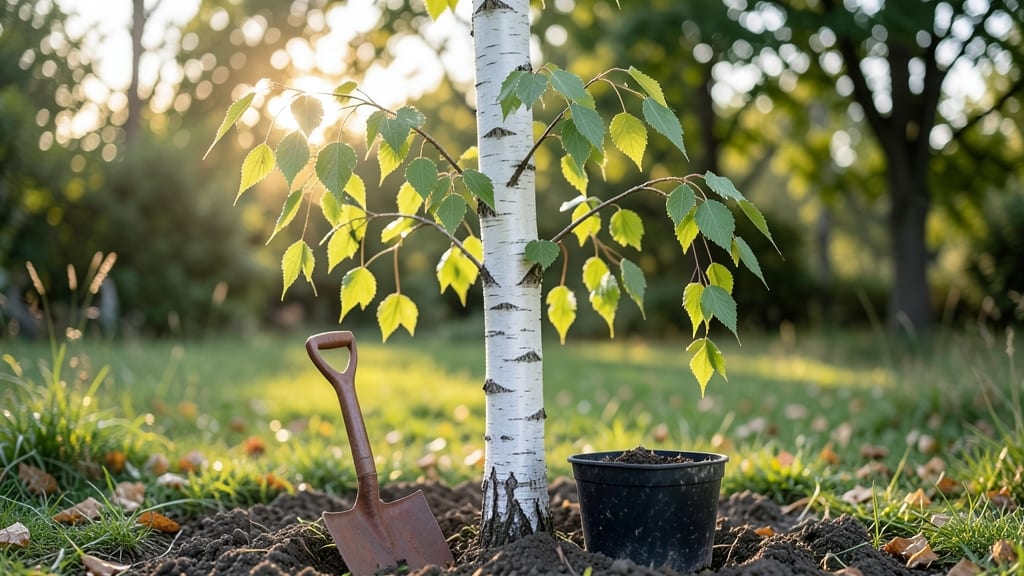
Planting birch trees means giving your property a delicate, silver-barked centerpiece that thrives where other trees struggle. 🌳 I’ve watched these graceful giants transform bare spots into shady retreats, their peeling bark adding texture that no other tree matches.
The secret lies in mimicking their natural habitat—cool roots, well-drained soil, and patience for deep establishment.
You’ll need a spot with partial shade to full sun, a shovel, compost, and a 5-gallon container-grown sapling (avoid bare-root unless you’re planting in late winter). Birches hate soggy feet, so amend heavy clay with sand or grit—they’re picky but worth it.
Spacing matters too: give them 15–20 feet between neighbors for those signature trunks to shine.
Timing is everything—spring or fall planting gives roots 6–8 weeks to settle before extreme heat or cold. Water deeply once a week for the first year, keeping soil moist but never waterlogged.
Mulch with wood chips to protect roots from temperature swings, and watch as your tree develops that iconic bark within 3–5 years.
For advanced gardeners, consider layering soil to mimic forest floors: mix in leaf mold for acidity-loving roots. Avoid common mistakes like planting too deep (the root flare should peek above soil) or fertilizing young trees—birches grow slowly but steadily.
With the right care, yours will stand for decades, a living sculpture of nature’s elegance.
📚 In This Guide
- What you need
- Instructions
- Tips and common mistakes
- Wrapping up and next steps
What you need
- ● Birch tree seedlings or saplings: 1–3 plants (depending on spacing goals—see spacing tips below)
- ● Choose native species (e.g., Betula papyrifera for paper birch or Betula pendula for silver birch)
- ● Age: 1–2 years old (younger saplings establish faster)
- ○ Soil amendments (optional but helpful): Compost or well-rotted manure (5–10 gallons per planting hole)
- ● Peat moss or coconut coir (1–2 bags, for moisture retention in sandy soil)
- ● Planting tools: Shovel or d-handle transplant spade (for digging holes 2–3x wider than the root ball)
- ● Garden trowel (for loosening soil around roots)
- ● Gloves (to protect hands from thorns or rough bark)
- ● Mulch: 3–4 inches of organic mulch (wood chips, straw, or pine needles)
- ● Avoid volcanic rock or plastic mulch (birch roots prefer breathable layers)
- ● Watering supplies: Garden hose with soft spray nozzle or watering can (5 gallons per tree for initial watering)
- ○ Drip irrigation kit (optional, for long-term care)
- ● Location: Full sun to partial shade (6+ hours of sunlight daily)
- ● Well-draining soil (birch trees hate waterlogged roots!)
- ● Spacious site: 15–25 feet apart for mature trees (thinner spacing for hedgerows)
- ● Climate: Hardy in USDA Zones 2–7 (cold-resistant but needs winter protection for young saplings)
- ● Avoid planting in low-lying areas (risk of frost pockets)
- ● Soil pH: Ideal range: 4.5–7.5 (slightly acidic to neutral)
- ○ Test soil with a pH kit (optional but recommended)
- ● Timing: Best planting seasons: early spring or fall (avoid extreme heat or frost)
Step-by-step guide for planting birch trees in cold climates
Here's how to give birch seedlings the strong start they need to thrive in northern climates.
🌱 Step 1: Prepare the Planting Site for Cold Adaptation
Birch trees naturally grow in cooler regions, so your planting site should mimic their forest floor habitat. Choose an area with partial shade to full sun—young birches tolerate shade better than mature trees. The soil should be well-draining but consistently moist, as birches hate soggy roots but need steady water.
Use a shovel to loosen the soil to a depth of 12-18 inches, breaking up any compacted layers. This helps roots establish deeper in cooler climates. If your soil is heavy clay, mix in 2-3 inches of compost to improve drainage without overheating the roots. Birches prefer slightly acidic soil, so test your pH and amend with sulfur if needed—aim for 5.0-6.5.
🪴 Step 2: Dig the Hole and Handle Seedlings with Care
Dig a hole twice as wide as the root ball but no deeper—birch roots are shallow and sensitive to burial. The top of the root ball should sit 1-2 inches above ground level to prevent waterlogging. If planting in winter, avoid disturbing the root ball more than necessary; birches handle transplant shock better when roots stay cool.
Gently remove the seedling from its container, keeping the root ball intact. If roots are circling, tease them outward with your fingers—this prevents girdling as the tree matures. Place the seedling in the hole so the root flare (where roots meet the trunk) is visible above soil. Backfill with native soil, tamping lightly to eliminate air pockets but not compacting too firmly.
💧 Step 3: Water Deeply and Mulch for Winter Resilience
Water the seedling deeply immediately after planting—1-2 gallons for small trees—to settle the soil and eliminate air gaps. Birches need consistent moisture, especially in their first year, but avoid waterlogging. Let the soil dry slightly between waterings; soggy conditions invite root rot in cold climates.
Apply 3-4 inches of mulch (wood chips or straw) around the base, keeping it 6 inches away from the trunk to prevent rot. Mulch insulates roots in winter and retains moisture in summer. Replenish mulch annually—birches benefit from this protective layer year-round. Avoid heavy mulch that could suffocate roots or attract pests.
☀️ Step 4: Protect Young Trees from Harsh Winter Conditions
In their first winter, young birches need extra protection from freezing winds and temperature swings. Wrap the trunk with tree guard or burlap if your climate experiences extreme cold snaps below -20°F. This prevents sunscald, a common issue in birches when winter sun warms bark too quickly.
Prune any damaged branches in late winter before new growth starts, but avoid heavy pruning—birches resprout well but may develop weak growth if over-pruned. Monitor for signs of stress like yellowing leaves in early spring; this often signals root issues from improper planting depth or poor drainage.
Tips & tricks for planting hardy birch trees
Birch seedlings demand special care in northern climates—here's how to give them the perfect foundation for survival.
Soil Preparation Secret: When loosening soil to 12-18 inches, focus on breaking up any compacted layers horizontally first. Birch roots spread laterally, so horizontal aeration prevents future girdling. I always use a broadfork to avoid damaging deeper soil layers that native microbes rely on. For clay-heavy soils, work in the 2-3 inches of compost gradually—too much at once can create anaerobic pockets that suffocate roots.
Root Ball Handling: The 1-2 inch elevation of the root ball above soil level is critical—it prevents water pooling that birches despise. If your seedling has particularly dense roots, gently compress the sides of the root ball before planting to encourage outward growth. I've found that teasing circling roots works best when soaked in water for 10 minutes first, making them more pliable without damage.
Winter Protection Strategy: For climates dipping below -20°F, I recommend wrapping the trunk with tree guard AND adding a layer of burlap around the base. This double protection creates a microclimate that prevents sunscald while allowing some air circulation. The key is to leave space between the wrap and trunk—too tight can cause bark damage when temperatures fluctuate.
Mulch Application: That 3-4 inch mulch layer should be your first line of defense against winter desiccation. I prefer wood chips over straw because they break down slowly, releasing nutrients while maintaining consistent moisture. The 6-inch clearance from the trunk prevents rot while still protecting the shallow root zone. In early spring, I always rake back mulch slightly to check for rodent activity—a common issue in northern climates.
Pro Tips for Planting Birch Trees
- Birch seedlings demand special care in northern climates—here's how to give them the perfect foundation for survival.
- Soil Preparation Secret: When loosening soil to 12-18 inches, focus on breaking up any compacted layers horizontally first.
- Root Ball Handling: The 1-2 inch elevation of the root ball above soil level is critical—it prevents water pooling that birches despise.
Frequently asked questions
Got questions about planting birch trees? You’re not alone! Here are some of the most common queries—plus straightforward answers to help you grow thriving trees with confidence.
When is the best time to plant birch trees?
Birch trees thrive when planted in early spring or fall (4–6 weeks before the first frost). Spring planting gives roots time to establish before summer heat, while fall planting lets them settle before winter dormancy. Avoid planting in extreme heat or freezing temperatures—root stress is real!
How far apart should I space birch trees?
For mature growth, space birch trees 15–25 feet apart (depending on the species). Paper birches (thinner canopy) need ~15 feet, while yellow birches (wider spread) may require 25+ feet. Check your local climate—tighter spacing can lead to competition for sunlight and nutrients.
Why are my birch tree leaves turning yellow or brown?
Yellowing leaves often signal overwatering, nutrient deficiency, or fungal issues (like birch leaf blight). Brown patches? It could be drought stress, pests, or winter burn. Prune affected branches, adjust watering (birches hate soggy roots!), and fertilize lightly in early spring.
Can I plant birch trees in containers or small yards?
Yes! Dwarf varieties like Betula pendula ‘Fastigiata’ (upright birch) thrive in containers (15+ gallon pots) or tight spaces. Just ensure well-draining soil and regular watering—birches need moisture but hate standing water. For small yards, consider multi-stemmed birches for a fuller look without sprawling roots.
Are birch trees prone to pests or diseases?
Birches attract bronze birch borers, aphids, and powdery mildew, but prevention is key! Keep trees healthy with proper spacing, mulch (not touching the trunk), and occasional pruning to improve airflow. If pests strike, use neem oil or insecticidal soap—avoid harsh chemicals that stress the tree.
| Quick Tip | Do This! |
|---|---|
| Root Care | Water deeply once a week (more in droughts) but avoid waterlogging—birch roots rot easily. |
| Soil Prep | Mix compost or peat moss into planting holes for drainage—birches hate compacted soil. |
Wrapping up and next steps
Planting birch trees is a rewarding way to add beauty, resilience, and ecological value to your landscape—especially in cooler climates! 🌳 These hardy trees thrive with the right soil, spacing, and care, offering shade, wildlife support, and stunning golden foliage.
Whether you're restoring a forest or brightening your backyard, your effort will create a lasting legacy for future generations.
Ready to take the next step? Start by marking your planting spots, gathering your tools, and checking the weather forecast. Then, dig in—your birch trees will thank you with vibrant growth for years to come! 🌱