
Pruning
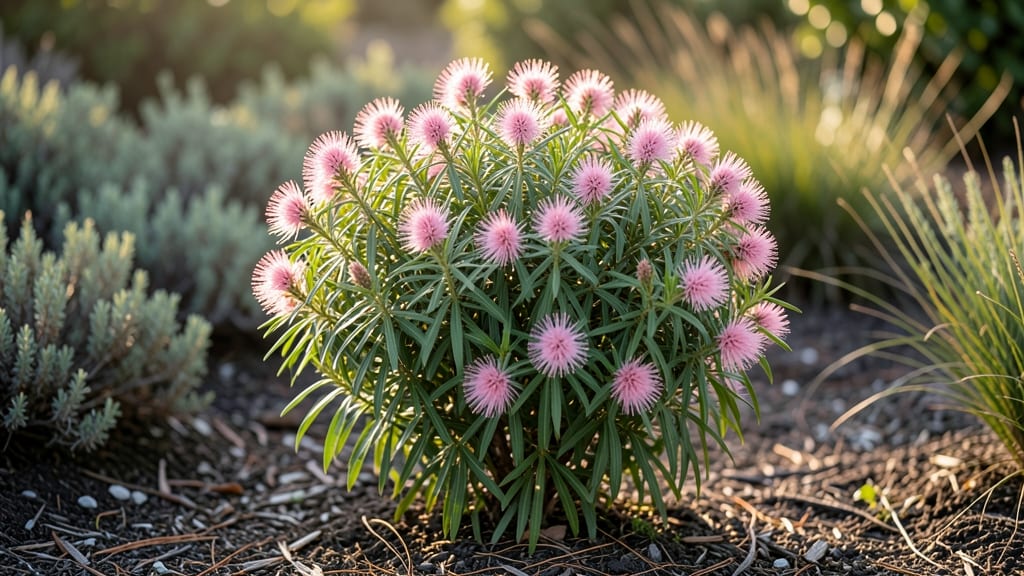
Your pink powder puff tree needs a year-round shape revival that keeps those fluffy pink blooms coming—no more bare branches or leggy growth.
I’ve pruned mine for five seasons now, and the secret is timing: a little maintenance in spring, a strategic trim after blooms fade, and light shaping in winter to encourage fresh growth.
The key is never cutting back more than one-third of the plant at once, or you’ll sacrifice next year’s flowers.
The tools you’ll need are simple: sharp pruning shears, rubbing alcohol to sterilize cuts, and a small brush to sweep away debris. Work on a dry day when the tree isn’t actively blooming—early morning or late afternoon is ideal.
I also keep a notebook to track pruning dates and note which branches respond best to cuts. This tree is forgiving, but consistency is everything for keeping it bushy and blooming.
What you’ll end up with is a neat, rounded silhouette covered in those signature powder-puff blooms from spring through fall. The new growth after pruning is fast, and the tree fills back in within 6-8 weeks.
Plus, you’ll notice fewer leggy stems and more compact branches—perfect for container gardens or as a focal point in sunny borders.
This method works for both young trees and mature specimens, though older plants may need slightly more aggressive shaping. If you’re in USDA zones 9-11, you can prune year-round with minimal stress.
For cooler climates, wait until after the last frost before heavy trimming. Ready to give your tree the revival it deserves?
📚 In This Guide
- What you need
- Instructions
- Tips and common mistakes
- Wrapping up and next steps
What you need
- ● Pruning shears: Sharp, bypass shears (for clean cuts on small branches). Size: 5–7 inches (13–18 cm).
- ● Loppers: For thicker branches (½–1.5 inches / 1.3–3.8 cm). Quantity: 1 pair.
- ● Pruning saw: For branches >1.5 inches (3.8 cm). Type: Curved-tooth saw for wood.
- ● Disinfectant: 70% isopropyl alcohol or pruning sealant (to prevent disease spread).
- ● Garden gloves: Heavy-duty, cut-resistant (to protect from thorns and sap).
- ○ Bucket or tarp: For collecting debris (optional but handy!).
- ● Hand pruners: Compact shears for precision trimming (great for tight spaces).
- ● Extension pole saw: For high branches (if you’re not using a ladder).
- ● Plant food: Balanced fertilizer (e.g., 10-10-10) to nourish post-prune.
- ● Mulch: Organic mulch (e.g., wood chips) to retain moisture and protect roots.
How to prune your pink powder puff tree for year-round beauty
This method keeps your tree lush and blooming without stressing the plant.
Understand the Right Time to Prune
The best time to prune your pink powder puff tree (Callistemon) is right after flowering—typically in late spring or early summer. This timing ensures you don’t cut off next season’s blooms, which form on new growth. If you missed that window, light pruning in early fall is acceptable, but avoid heavy cuts then.
Look for spent flower clusters—these will turn brown and dry up. When you see at least 50% of blooms fading, that’s your cue. Pruning too early removes potential flower buds, while waiting too long lets the tree get leggy and overgrown.
Gather Your Tools and Assess the Tree
You’ll need clean, sharp pruning shears (sterilized with rubbing alcohol) and gloves to protect your hands from sap. Inspect your tree for dead, crossing, or overcrowded branches—these are your first targets. Remove any branches rubbing against each other, as they’ll eventually create wounds.
Stand back and visualize the shape. Pink powder puff trees naturally grow in a rounded, vase-like form, so aim to maintain that silhouette. If branches are growing inward, they’ll block light and air circulation, inviting pests and disease. Thin these out first.
Prune for Shape and Airflow
Start by removing up to 25% of the tree’s total foliage—this prevents over-stressing the plant. Cut just above a leaf node or outward-facing bud to encourage new growth in the right direction. Avoid leaving stubs; these attract pests and rot.
For thicker branches, use bypass pruners for clean cuts. If a branch is larger than ½ inch in diameter, consider using a hand saw instead. Always cut at a 45-degree angle to allow water to run off, reducing the risk of fungal infections.
Encourage New Growth and Blooms
After shaping, lightly trim the tips of remaining branches to promote bushier growth. This is where new blooms will form next season. Avoid heavy pruning in late summer, as it may delay flowering. Instead, focus on removing only dead or weak growth at this stage.
Water the tree deeply after pruning to help it recover. Mulch around the base with 2-3 inches of organic mulch to retain moisture and protect roots. Within 4-6 weeks, you should see fresh, vibrant growth emerging from the pruned areas.
Maintain Year-Round Care
Throughout the year, remove spent blooms as they fade to encourage more flowers. In winter, do minimal pruning—just remove any dead or broken branches. Pink powder puff trees are drought-tolerant once established, but water deeply once a week during dry spells to support recovery.
Fertilize lightly in early spring with a balanced, slow-release fertilizer to support new growth. Avoid heavy nitrogen, which encourages leafy growth at the expense of flowers. With consistent care, your tree will stay healthy, blooming, and beautifully shaped for years.
Tips & tricks for pruning pink powder puff trees
Perfecting your pink powder puff tree's shape without sacrificing its stunning blooms takes a few key insights from gardeners who've mastered the art.
Timing is Everything: When you see those spent flower clusters turning brown and dry—typically in late spring or early summer—don't hesitate. This is your prime window to prune. I've seen people wait too long, and suddenly you're dealing with a leggy tree that's lost its natural shape. The 50% bloom fade rule is your best guide: when half the flowers have finished, it's time to act. This ensures you're not cutting off next season's blooms while still maintaining that beautiful form.
Tool Selection Matters: Using the right tools makes all the difference. I can't stress enough how important it is to have clean, sharp pruning shears—sterilized with rubbing alcohol to prevent disease transmission. For branches larger than ½ inch, bypass pruners are your best bet, but a hand saw works perfectly for thicker branches. Always cut at a 45-degree angle to allow water to run off, which helps prevent fungal infections that can harm your tree's health. This small detail makes a big difference in your tree's recovery.
Shape with Purpose: Pink powder puff trees naturally grow in a rounded, vase-like form, so work with that shape rather than against it. When you're removing up to 25% of the foliage, focus on creating an open center that allows light and air to circulate. This isn't just about aesthetics—proper airflow reduces the risk of pests and diseases. Visualize your tree's natural silhouette and make cuts that maintain that beautiful structure while encouraging new growth from outward-facing buds.
Post-Pruning Care is Critical: After you've finished pruning, don't just walk away. Water deeply to help your tree recover, and apply 2-3 inches of organic mulch around the base to retain moisture and protect those vital roots. Within 4-6 weeks, you should see fresh, vibrant growth emerging from the pruned areas—this is a clear sign you've done everything right. This aftercare is what transforms a good pruning job into a great one that keeps your tree thriving for years.
Pro Tips for Pink Powder Puff Tree
- Perfecting your pink powder puff tree's shape without sacrificing its stunning blooms takes a few key insights from gardeners who've mastered the art.
- Timing is Everything: When you see those spent flower clusters turning brown and dry—typically in late spring or early summer—don't hesitate.
- Tool Selection Matters: Using the right tools makes all the difference.
Frequently asked questions
about pruning your Pink Powder Puff Tree (Callistemon spp.) can help you keep your plant thriving while maintaining its stunning blooms. Here are some common queries:When is the best time to prune my Pink Powder Puff Tree?
The ideal time to prune is late winter or early spring, just before new growth begins. This ensures you don’t cut off potential blooms for the season. Light trimming after flowering can also encourage bushier growth—but avoid heavy pruning then, as it may reduce next year’s flowers.
Can I prune my Pink Powder Puff Tree at any time of year?
While year-round pruning is possible, timing matters! Avoid heavy cuts during summer (stress risk) or fall (new growth may not harden before winter). Light shaping or deadhead removal is fine anytime, but major pruning disrupts the tree’s natural cycle—stick to off-season for best results.
Will pruning reduce my tree’s flowers next season?
Not if done right! Prune selectively—focus on dead, diseased, or overcrowded branches first. Avoid cutting back more than ⅓ of the tree’s height at once. The Pink Powder Puff Tree blooms on new wood, so strategic cuts actually promote more vibrant flowers the following year.
How do I know if I’ve pruned too much?
Watch for signs like yellowing leaves, stunted growth, or no new buds by late spring. If your tree looks stressed, it may have been over-pruned. Next time, reduce cuts by 50% and focus on thinning (removing inner branches) rather than shearing.
What if my Pink Powder Puff Tree isn’t blooming after pruning?
Bloom issues often stem from poor timing or nutrient deficiencies. Ensure you pruned in late winter/early spring and fertilize with low-phosphorus, high-potassium mix in early spring. Also, check for sunlight—these trees need 6+ hours of direct sun daily to flower optimally.
Wrapping up and next steps
The pink powder puff tree is a stunning addition to any garden, and with the right pruning techniques, you can keep it thriving year-round while preserving its breathtaking blooms. 🌸 By following seasonal guidelines, using the proper tools, and understanding its unique growth habits, you’re well on your way to a lush, healthy tree that continues to dazzle.
Ready to take the next step? Start small—pick one pruning task this weekend, whether it’s removing dead branches or shaping for the season. Your tree (and your green thumb!) will thank you! 🌿