
Flowers
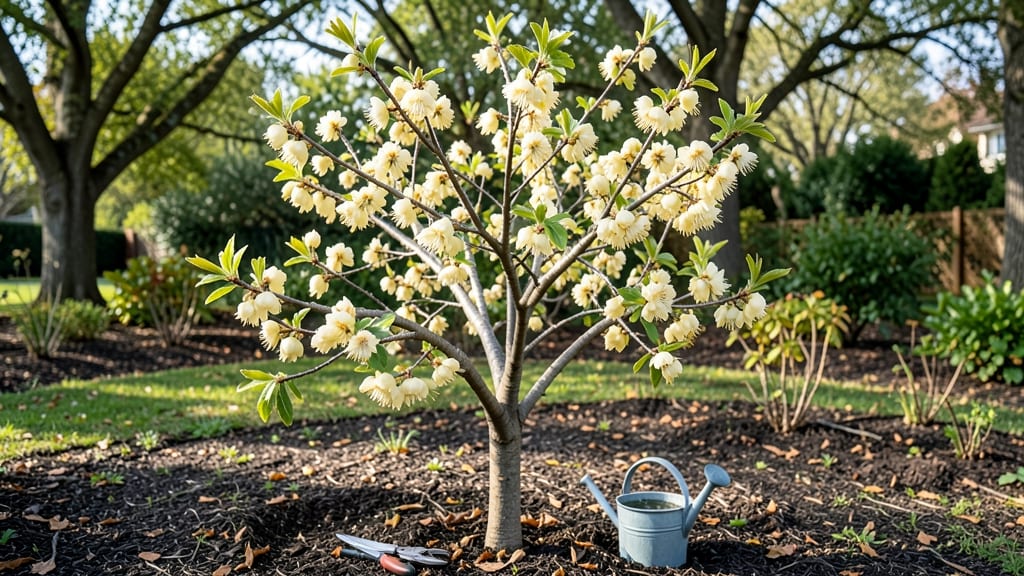
Persimmon tree flowers are the secret to a fruit bonanza next fall, and they start with understanding what triggers those delicate blooms. 🌸 I’ve watched my backyard Asian persimmon burst into vibrant yellow in late April, and it all comes down to breaking dormancy the right way—timing, sunlight, and a little winter prep work.
The key is giving the tree enough chill hours (300–600, depending on variety) followed by consistent warmth once buds swell. American persimmons need full sun, while Asian varieties tolerate partial shade—though both reward you with fragrant, star-shaped flowers that hummingbirds adore.
Prune in late winter to open the canopy, and you’ll see more blooms than you’ve ever imagined.
By late spring, you’ll have clusters of buttery-yellow flowers that turn into sweet, orange fruit by harvest. The best part? These trees thrive in zones 5–9, so whether you’re in the South or Midwest, you can grow one.
Just remember: patience pays off—it takes two full years from bloom to fruit, but the wait is worth it.
For varieties, stick with ‘Fuyu’ or ‘Hachiya’ for Asian persimmons—they’re the easiest to grow from seed or nursery stock. American persimmons like ‘Meader’ are tougher but produce stunning orange blooms. Start with one, and you’ll be hooked on the whole process.
📚 In This Guide
- What you need
- Instructions
- Tips and common mistakes
- Wrapping up and next steps
What you need
- ● Persimmon tree (Diospyros spp.) – Choose a healthy sapling or mature tree (e.g., Diospyros kaki or Diospyros virginiana).
- ● Well-draining soil – Aim for slightly acidic to neutral pH (6.0–7.0). Mix in 1 part compost to 3 parts native soil.
- ● Slow-release fertilizer – Use a balanced 10-10-10 NPK or organic option like composted manure (apply in early spring).
- ● Mulch – 2–3 inches of organic mulch (e.g., wood chips or straw) to retain moisture and regulate temperature.
- ● Garden gloves – Protect your hands from thorns (persimmon trees can be prickly!)
- ● Pruning shears – Sharp, bypass-style shears (sterilized with rubbing alcohol).
- ● Watering can or hose – With a gentle spray nozzle for even moisture distribution.
- ○ pH testing kit – Optional but helpful for monitoring soil acidity.
- ○ Thermometer (optional) – To track dormancy temperatures if you’re experimenting with cold triggers.
- ● Sunlight – Full sun (6–8 hours daily) is non-negotiable for optimal flowering.
- ● Dormancy period – Persimmon trees need 300–500 hours of temperatures below 45°F (7°C) to break dormancy. Plan ahead!
- ● Patience – Young trees may take 3–5 years to produce flowers; mature trees bloom reliably.
Step-by-Step guide to encouraging persimmon tree flowers
Here’s how to coax those stunning spring blooms from your persimmon tree.
⏰ Step 1: Time Your Dormancy Period Correctly
Persimmon trees need a proper winter dormancy to set flower buds for spring. Start by ensuring your tree experiences at least 400-600 chill hours below 45°F—this is non-negotiable for flowering. If you’re in a mild climate, you might need to simulate dormancy by withholding water and avoiding fertilization in late fall.
Watch for the first frost to signal the start of dormancy. Once leaves fall completely, stop watering unless the soil is bone-dry. The tree’s natural dormancy triggers flower bud formation, so don’t rush into winter care. You’ll know you’re on track when the tree’s leaves turn a deep orange-brown before dropping.
☀️ Step 2: Position for Maximum Sunlight in Early Spring
Persimmon trees thrive in full sun (6-8 hours daily), but they’re especially sensitive to light exposure in early spring when flower buds form. Move any nearby obstructions—like overhanging branches or tall shrubs—that might cast shade during morning sunlight, which is critical for bud development.
If your tree is in a container, rotate it quarter-turn weekly to ensure even sunlight exposure. You’ll notice buds swelling in late winter—these are your first sign that the tree is preparing to bloom. If buds appear but don’t open, insufficient light is often the culprit. Adjust placement immediately if you see weak, sparse bud formation.
💧 Step 3: Water Strategically During Bud Break
Once buds appear in late winter, water deeply every 10-14 days unless rainfall provides 1 inch of moisture. Overwatering now can drown buds before they open, while underwatering stresses the tree and reduces bloom quality. The soil should feel dry 2-3 inches down before watering again—stick your finger in to check.
Apply water at the base of the tree in the early morning to reduce evaporation and fungal risks. Avoid wetting the buds themselves, as moisture can encourage rot. You’ll see buds open into vibrant flowers within 2-3 weeks of proper watering—this is your reward for patience.
🌿 Step 4: Fertilize Lightly to Support Blooming
Skip heavy fertilization until after the first flush of flowers appears. Instead, use a balanced 10-10-10 fertilizer (or organic equivalent) at half-strength in early spring, just as buds swell. This gives the tree energy without overstimulating leaf growth at the expense of flowers.
Apply fertilizer in a 6-inch wide band around the tree’s drip line, then water deeply to help nutrients reach the roots. You’ll notice stronger, more abundant blooms if the tree isn’t competing with excessive foliage. Avoid high-nitrogen fertilizers—they promote leaves over flowers, which is the opposite of what you want.
✂️ Step 5: Prune for Airflow and Bloom Health
Prune dead, crossing, or diseased branches in late winter before buds break. Use clean, sharp pruners to make cuts just outside the branch collar. This ensures airflow circulates freely, reducing humidity around flowers and preventing fungal issues like anthracnose.
Remove any suckers or water sprouts that appear at the base of the tree—they drain energy from blooming. Thin out crowded branches to let sunlight penetrate to the center of the tree. You’ll see a noticeable difference in flower quality if the tree isn’t fighting for light and air.
Tips & tricks for persimmon tree flowers
Real talk: Getting your persimmon tree to bloom reliably takes more than just planting and hoping. Here’s what nobody tells you about maximizing those vibrant spring flowers.
Chill Hours Are Non-Negotiable: Those 400-600 chill hours below 45°F in Step 1 aren’t just a suggestion—they’re the biological trigger for flower bud formation. In mild climates, you can simulate this by covering the tree with frost cloth during cold snaps or moving it to a cooler location. I’ve seen trees in Zone 8 completely skip flowering when they didn’t get enough cold exposure. The key is consistency—don’t let temperatures creep above 45°F for more than a few hours during winter.
Sunlight Strategy Beyond the Basics: While 6-8 hours of sunlight is ideal, focus on morning sun exposure in Step 2. Morning sunlight warms the buds gently, encouraging them to open properly. If your tree is in a container, that quarter-turn rotation isn’t just about even growth—it’s about preventing one side from becoming permanently shaded. I’ve seen container trees with all their buds on one side because they weren’t rotated, creating an uneven bloom pattern.
Watering Precision Matters: That 10-14 day watering schedule in Step 3 is critical, but timing is everything. Water in the early morning when temperatures are coolest—this prevents evaporation and gives the soil time to absorb moisture before the heat of day. I learned this the hard way when my first attempt at afternoon watering led to buds rotting before they could open. And yes, that finger-in-the-soil check is essential—if it’s dry 2-3 inches down, it’s time to water.
Fertilizer Timing Is Everything: The half-strength 10-10-10 application in Step 4 should happen precisely when you see those first buds swelling, not before. Early fertilization can send the tree into leaf growth mode instead of flower production. I recommend mixing your fertilizer with water first, then applying it in a 6-inch band—this ensures even distribution without burning the roots. And that deep watering afterward? It’s not optional—it’s what gets those nutrients where they need to go.
Pro Tips for Persimmon Tree Flowers
- Real talk: Getting your persimmon tree to bloom reliably takes more than just planting and hoping.
- Chill Hours Are Non-Negotiable: Those 400-600 chill hours below 45°F in Step 1 aren’t just a suggestion—they’re the biological trigger for flower bud formation.
- Sunlight Strategy Beyond the Basics: While 6-8 hours of sunlight is ideal, focus on morning sun exposure in Step 2.
Frequently asked questions
Got questions about growing and caring for persimmon tree flowers? You’re not alone! Here are some of the most common queries—plus straightforward answers to help you nurture those stunning spring blooms.
When do persimmon trees typically flower?
Most persimmon trees (like Diospyros virginiana or Diospyros kaki) bloom in late spring, usually between April and June, depending on your climate. Early bloomers may appear as soon as March in warmer regions, while northern growers might see flowers a bit later. Cold dormancy in winter is key—ensure your tree gets 6–8 weeks below 40°F (4°C) for vibrant blooms!
Why aren’t my persimmon tree flowers opening?
If your tree is skipping blooms, check these common culprits:
- Insufficient chill hours: Persimmons need 200–1,000 hours below 45°F (7°C) for dormancy. Use a chill-hour calculator or consider a dormancy spray if your winters are too mild.
- Over-fertilizing: Too much nitrogen = leafy growth, no flowers. Switch to a balanced 10-10-10 or low-nitrogen fertilizer in early spring.
- Stress or disease: Yellowing leaves, spots, or weak branches? Prune damaged areas and treat with neem oil or copper fungicide.
Can I grow persimmon flowers indoors?
While persimmon trees thrive outdoors, you can grow a dwarf variety (like Diospyros virginiana ‘Meader’) in a large container with these tweaks:
- Use a well-draining mix (60% potting soil, 30% perlite, 10% compost).
- Place near a south-facing window or under grow lights (12+ hours/day).
- Mimic dormancy: Reduce watering and move to 40–50°F (4–10°C) for 8 weeks in winter.
What’s the best fertilizer for persimmon tree flowers?
Persimmons love low-nitrogen, high-phosphorus fertilizers to encourage blooms. Try these options:
Type
When to Apply
Ratio Example
Granular (organic)
Early spring (before buds swell)
5-10-10 (e.g., bone meal or fish emulsion)
Slow-release
Late winter or early spring
10-20-20 (e.g., Osmocote)
Liquid feed
Every 4–6 weeks (spring–summer)
3-4-6 (e.g., seaweed extract)
Do persimmon flowers attract pollinators?
Persimmon flowers are a magnet for bees, butterflies, and hummingbirds—especially American persimmons (D. virginiana), which have showy, fragrant blooms. Here’s how to boost pollinator visits:
- Plant near native pollinator-friendly flowers (e.g., black-eyed Susans, bee balm).
- Avoid pesticides—opt for neem oil or soapy water sprays instead.
- Leave some wild areas in your garden for nesting bees.
Wrapping up and next steps
Persimmon tree flowers are a stunning reward for patient gardeners—packed with beauty and potential! By understanding their dormancy triggers and providing the right care, you’ll unlock vibrant spring blooms that’ll turn heads. 🌸 Whether you’re a seasoned gardener or just starting, this guide gives you the tools to nurture your tree’s full potential.
Ready to see those blossoms flourish? Start small: monitor your tree’s dormancy cues, adjust care as needed, and enjoy the journey. Every pruning snip and watering session brings you closer to a show-stopping spring display—so grab your gloves and get growing!