
Trees
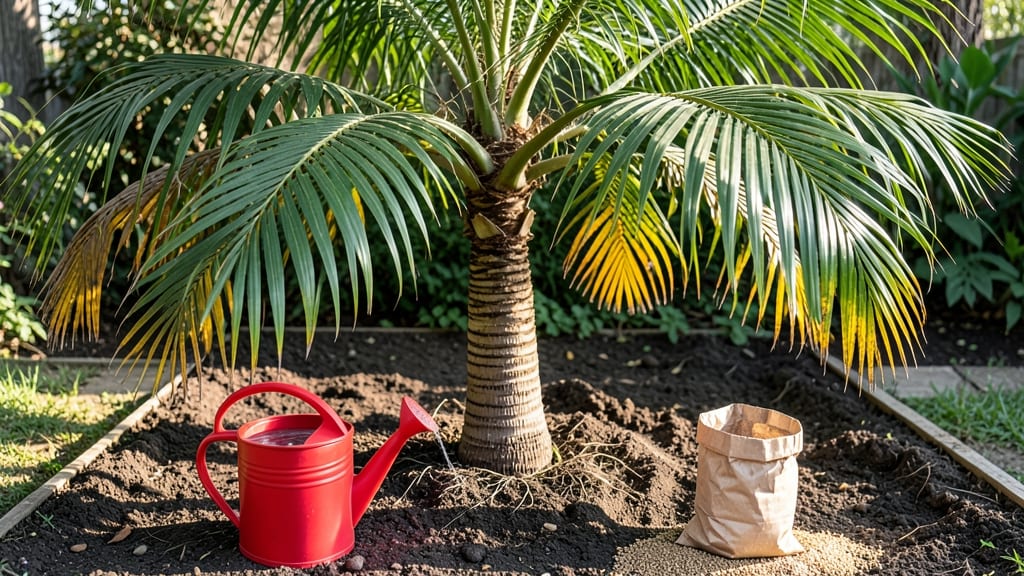
Here are some essential palm tree care tips—like balancing sun, water, and shelter—that I wish I’d known before my first palm turned yellow under my care. 🌴 The key isn’t complicated: most palms thrive in full sun, need well-draining soil, and hate soggy roots, but they also need protection from sudden temperature swings that can shock their tropical systems.
Start with the basics: water deeply but infrequently—once a week in summer, less in winter—and always use soil that drains fast. Prune only dead fronds (never green ones) to keep energy flowing upward.
Even in cold zones, a little winter prep—like wrapping young trunks or moving potted palms indoors—can save your tree from frost damage.
📚 In This Guide
- What you need
- Instructions
- Tips and common mistakes
- Wrapping up and next steps
What you need
- ● Watering supplies: Hose with adjustable nozzle (1) – for deep, gentle watering
- ● Watering can (1-2) – for smaller pots or delicate seedlings
- ○ Drip irrigation system (optional) – for automated, efficient hydration
- ● Soil & fertilizers: Well-draining potting mix (50 lbs) – mix sand, peat, and compost (3:1:1 ratio)
- ● Slow-release palm fertilizer (1 bag) – look for balanced NPK (e.g., 8-2-12)
- ● Organic mulch (e.g., pine bark or coconut coir, 2-3 bags) – retains moisture and regulates temperature
- ● Pruning tools: Sharp bypass pruners (1 pair) – for trimming fronds and dead leaves
- ● Pruning saw (1) – for thicker stems or large branches
- ● Sterilizing solution (e.g., rubbing alcohol or bleach) – to disinfect tools
- ● Safety gear: Work gloves (1 pair) – protects hands from thorns and rough edges
- ● Sturdy ladder (1) – for tall palm trees (ensure it’s rated for outdoor use)
- ● Eye protection (1 pair) – shields against debris during pruning
- ● Soil moisture meter (1) – monitors hydration levels without overwatering
- ● Palm tree-specific fungicide (1 bottle) – for prevention of diseases like bud rot
- ● Windbreaks or burlap (1-2 rolls) – protects young or vulnerable palms from harsh winds
- ● Container or pot (if potted) – ensure it has drainage holes and is at least 2x wider than the root ball
Step-by-Step guide to keeping your palm tree healthy all year
Here's how to nurture your palm so it stays lush and vibrant through every season.
💧 Step 1: Master the Watering Schedule
Palms thrive when watered deeply but infrequently. Stick to a schedule of every 7-10 days during warm months, checking the soil first. Push your finger 2-3 inches deep—if it feels dry, water thoroughly until it drains from the bottom. Overwatering is the #1 killer, so avoid soggy soil at all costs.
In winter, cut back to every 2-3 weeks, as cooler temps slow growth. Yellowing fronds often signal overwatering, while crispy brown edges mean underwatering. Adjust based on what you see—not just the calendar.
☀️ Step 2: Position for Perfect Light Balance
Most palms crave bright, indirect light—think filtered sun through sheer curtains. South or west-facing windows work best, but avoid harsh afternoon rays that scorch fronds. If your palm leans toward the light, rotate it a quarter turn weekly to grow straight.
For indoor palms, supplement with a grow light 12 hours daily if natural light is weak. You’ll know it’s happy when new fronds unfurl bright green and upright, not yellow or droopy. Watch for brown tips—this often means too much direct sun.
🌿 Step 3: Feed and Fertilize for Year-Round Growth
Use a balanced liquid fertilizer (like 20-20-20) every 4-6 weeks in spring and summer. Dilute to half-strength to avoid burning roots. Skip fertilizing in fall and winter—palms rest then, and extra nutrients just stress them.
Here’s the trick: Mix fertilizer with water and apply it to moist soil (never dry). You’ll see it working when fronds grow longer and fuller within weeks. If leaves yellow between veins, you’re overdoing it—flush the soil with water immediately.
✂️ Step 4: Prune Dead Fronds and Encourage New Growth
Remove brown or crispy fronds at the base with clean, sharp shears. Cut just above the leaf collar (the swollen area where the frond meets the trunk). Never leave stubs—this invites rot. Wear gloves; palm fronds can scratch!
Prune in late winter or early spring before new growth begins. You’ll notice fresh, vibrant fronds emerging within 4-6 weeks. If your palm has too many fronds, it struggles to support them—aim to remove no more than 1/3 at a time to avoid shocking it.
Tips & tricks for perfect palm tree care
Keeping your palm thriving year-round takes just a few smart adjustments—here's what I've learned after watching countless palms struggle (and recover!).
Soil Check is Everything: The 2-3 inch soil test in Step 1 is non-negotiable. I've seen palms die from soggy soil even when watered "on schedule"—always check before watering. Pro tip: Use a moisture meter for accuracy, especially in winter when palms need less. The key is that top layer drying out while deeper roots stay moist.
Light Rotation Hack: That quarter turn weekly in Step 2 prevents lopsided growth. I noticed my palm started leaning dramatically after moving it—now I set a phone reminder every Sunday. For indoor palms, rotate toward the brightest window daily if possible. You'll see the difference in just a few weeks when new fronds emerge perfectly straight.
Fertilizer Timing Matters: The 4-6 week spring/summer schedule in Step 3 works perfectly, but here's the secret: Always fertilize after watering. I learned this the hard way when my palm's fronds turned yellow—diluted fertilizer burned the roots. Think of it like giving your palm a drink first, then a snack.
Pruning Precision: When removing those brown fronds in Step 4, cut at a 45-degree angle just above the leaf collar. I used to leave tiny stubs, which led to rot—now I make clean cuts with sterilized shears. And never remove more than 1/3 at once, even if it's tempting. Your palm needs that energy for new growth.
Pro Tips for Palm Tree Care Tips
- Keeping your palm thriving year-round takes just a few smart adjustments—here's what I've learned after watching coun...
- Soil Check is Everything: The 2-3 inch soil test in Step 1 is non-negotiable. I've seen palms die from soggy soil eve...
- Light Rotation Hack: That quarter turn weekly in Step 2 prevents lopsided growth. I noticed my palm started leaning d...
Frequently asked questions
Got questions about keeping your palm trees lush and happy? Here are some of the most common concerns—plus quick, expert-backed answers to help you troubleshoot and thrive!
How often should I water my palm tree?
Watering depends on your climate and soil type! In general, young palms need watering 2-3 times per week, while mature trees thrive with deep watering once a week (or less in rainy seasons). Check soil moisture 2-3 inches down—if it’s dry, it’s time to water. Pro tip: Overwatering is a common killer—ensure good drainage!
When is the best time to prune a palm tree?
Prune only when necessary, like removing dead fronds or brown, hanging leaves. The best time is during the growing season (spring or summer) to avoid stressing the tree. Avoid heavy pruning in winter, as cold weather slows recovery. Warning: Never prune more than ⅓ of the fronds at once!
What pests or diseases should I watch for?
Palm trees are tough, but watch for spider mites, palm weevils, and fungal diseases like gainesville gall. Yellowing fronds or oozing sap? Act fast! Treat mites with neem oil, and remove infected fronds immediately. For weevils, contact a pro—this pest can be deadly. Prevention tip: Keep trees healthy with proper care!
Can I grow a palm tree in a pot? Which species work best?
Yes! Dwarf palm species like the Pygmy Date Palm (Phoenix roebelenii) or Areca Palm (Dypsis lutescens) thrive in containers. Use a large pot (at least 12 inches deep) with drainage holes and a well-draining potting mix. Repot every 2-3 years and move indoors if temps drop below 40°F (4°C).
How do I protect my palm tree in cold weather?
Most palms can’t handle frost—if temps dip below 30°F (-1°C), take action! Wrap the trunk with burlap or frost cloth, water deeply before cold snaps (to insulate roots), and avoid pruning. For extreme cold (<20°F/-7°C), consider moving potted palms indoors. Remember: Hardiness varies by species—check yours!
Why are my palm tree’s fronds turning brown?
Brown fronds are usually normal as they age (like human hair turning gray!). But if browning spreads rapidly or appears yellowish, it could signal underwatering, overwatering, or nutrient deficiency. Check soil moisture and adjust care. For sudden browning, inspect for pests or disease—act fast to save your tree!
Wrapping up and next steps
Caring for your palm tree doesn’t have to be a mystery—with the right watering routine, soil attention, and seasonal adjustments, you’ll watch it thrive year after year! 🌴✨ Remember, patience and consistency are key, and soon, your palm will reward you with lush fronds and vibrant growth.
Ready to take the next step? Start small: pick one tip from this guide—like improving drainage or checking for pests—and implement it this week. Before you know it, your palm tree will be the star of your landscape! 🌟