
Pruning
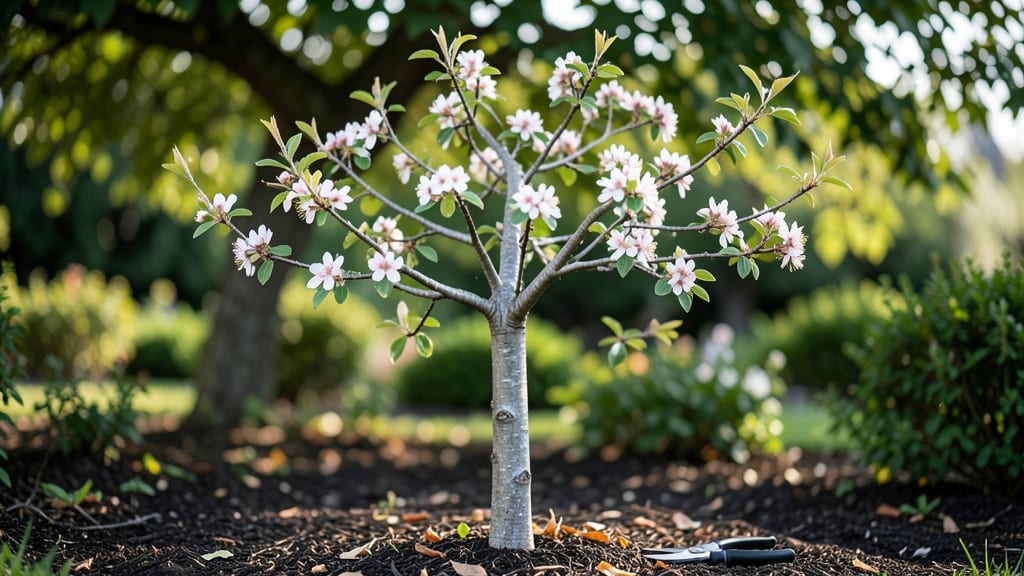
Your ornamental almond tree could be covered in fragrant blooms by next spring if you prune it right now. ✨ The secret to those showstopping pink blossoms isn't complicated—it's about timing, technique, and a little patience that pays off in dramatic seasonal color.
My first pruning attempt left the tree looking like a tangled mess, but I've since perfected a method that keeps the branches open and the flowers abundant.
You'll need just a few tools: sharp pruning shears, rubbing alcohol for sterilizing cuts, and maybe a small ladder if your tree has grown taller than you.
The best time to prune is late winter or early spring, right before buds swell but before they burst open—this ensures you're not cutting off next year's flowers. A well-pruned tree develops a graceful, layered shape that showcases its peeling bark and delicate blossoms year-round.
What you'll end up with is a tree that becomes the star of your garden in every season: fragrant spring blooms, summer shade, and striking winter bark.
The pruning process itself takes about 30-45 minutes for a mature tree, and the results—more flowers, better airflow, and a stronger structure—are worth every minute. Plus, you'll avoid the common mistake of over-pruning, which can leave your tree vulnerable to pests and diseases.
This method works for both small patio trees and large landscape specimens, and it adapts to different climates from zones 5 through 8. Once you've mastered the basics, you can experiment with shaping techniques to create a true focal point in your garden.
Let's get those shears ready—your tree's next bloom cycle starts with a single cut.
📚 In This Guide
- What you need
- Instructions
- Tips and common mistakes
- Wrapping up and next steps
What you need
- ● Pruning shears: Sharp, bypass-style shears (for small branches, 6–8 inches long). Quantity: 1 pair.
- ● Loppers: Long-handled (24–36 inches) for thicker branches (½–1½ inches in diameter). Quantity: 1 pair.
- ● Pruning saw: Curved-tooth saw for branches over 1½ inches thick. Quantity: 1.
- ● Garden gloves: Cut-resistant, durable (to protect from thorns and rough bark). Quantity: 1 pair.
- ● Disinfectant: 70% isopropyl alcohol or rubbing alcohol (to clean tools between cuts). Quantity: Small bottle.
- ○ Sealing wax or pruning paint: Optional but helpful for large cuts (to prevent disease). Quantity: Small tube.
- ● Heavy-duty trash bags: For collecting pruned branches (2–3 bags, depending on tree size).
- ● Ladder: Sturdy, extendable (12–20 ft) if tree exceeds 6 ft tall. Safety tip: Use a ladder stabilizer!
- ● Weather check: Prune on a dry, calm day (avoid rain or wind).
- ● Tree health: Ensure the tree is free of pests/diseases before pruning.
- ● Safety gear: Safety glasses (to protect from debris) and long sleeves/pants (for thorn protection).
- ● Plan ahead: Sketch a rough pruning plan (identify dead, crossing, or overcrowded branches).
Step-by-Step pruning guide for your ornamental almond tree
Here's how to keep your tree flowering beautifully all year—no guesswork, just clear cuts.
🌿 Step 1: Time Your Pruning for Maximum Blooms
Prune your ornamental almond tree immediately after it finishes blooming in late spring, around May or early June. This timing ensures you remove spent flowers while leaving plenty of time for new growth before winter. Avoid pruning in fall or winter, as cold weather stresses the tree and can damage tender new shoots.
Watch for your tree's natural cycle: when 90% of blossoms have fallen and new leaf buds begin swelling, that's your cue. I like to mark the date on my calendar after seeing the first fresh leaves appear—this prevents me from cutting too early or too late.
✂️ Step 2: Remove Dead, Diseased, or Crossing Branches First
Start by eliminating any branches that are dead (no green leaves), diseased (mushy bark, oozing sap), or crossing (rubbing against others). Use clean, sharp pruning shears to make 45-degree cuts just outside the branch collar—that little swollen area where the branch meets the trunk. A clean cut heals faster and looks more professional.
Here's the thing—don't worry about making perfect cuts on every branch. Focus first on removing the obvious problems. You'll see the tree's natural shape emerge as you work. If a branch is thicker than ½ inch, use your loppers instead of shears to avoid crushing the wood.
☀️ Step 3: Thin the Canopy for Better Airflow and Light
Step back and look at your tree from all sides. You want to open up the center so sunlight reaches all branches. Remove 15-20% of the smallest branches—these are the ones growing inward or too close together. Aim to create an open vase shape that lets light penetrate to the center.
I always start at the bottom and work my way up. Cut branches that are growing straight up or down first, as these compete with horizontal branches for energy. You'll notice the tree's natural framework becomes clearer as you remove these "filler" branches. Never remove more than 25% of the canopy in one season—this stresses the tree.
⏰ Step 4: Shape for Year-Round Interest
Now focus on refining the tree's silhouette. Ornamental almonds respond well to light shaping, so use your pruners to shorten overlong branches by ⅓ of their length. Make cuts just above a leaf bud that faces outward—this encourages new growth in the right direction. Avoid cutting back to bare wood; always leave some foliage to feed the branch.
Here's what I do: I imagine a rounded, slightly tiered shape with the widest part at the bottom. Cut branches that spoil this vision first. For example, if a branch is growing too low, cut it back to where it meets the main trunk. You'll see the tree's natural beauty emerge as you work—it's like sculpting with living wood.
💧 Step 5: Clean Up and Protect Your Tree
After pruning, sterilize your tools with rubbing alcohol to prevent spreading disease. Collect all clippings and dispose of them in the trash—not the compost—since almond tree debris can harbor pests. Apply a layer of mulch around the base (but not touching the trunk) to retain moisture and protect roots from temperature swings.
Water deeply right after pruning to help the tree recover. You'll notice fresh new growth appearing within 4-6 weeks if everything went well. This is your reward for careful pruning—more blooms next season and a healthier tree overall. Don't forget to fertilize lightly in early spring to support new growth.
Tips & tricks for perfect ornamental almond tree pruning
Took me years to figure out how to prune these delicate trees without stressing them—here's what actually works.
Timing is Everything: The late spring timing in Step 1 is non-negotiable for ornamental almonds. I've seen trees pruned in fall develop frost damage because their new growth isn't hardened off. If you miss May-June, wait until early summer—but never after July, or you risk cutting back next year's flower buds. Mark your calendar when you see 90% of blossoms fall, not when they peak.
Cutting Technique Matters: That 45-degree angle in Step 2 isn't just for looks—it prevents water from pooling on the cut, which causes rot. I use my pruners to make a slight notch just outside the branch collar, then complete the cut with a smooth motion. For branches thicker than ½ inch, I always switch to my loppers to avoid crushing the bark, which creates entry points for disease.
Canopy Thinning Strategy: When removing those 15-20% of smallest branches in Step 3, focus on the ones growing straight up or down—they're energy vampires that block sunlight from reaching the center. I start at the bottom because lower branches often get shaded by upper ones. Pro tip: If you're unsure about a cut, snap the branch with your hands first—if it's brittle and dry, it's ready to go.
Shape with Purpose: That ⅓ reduction in Step 4 creates a natural balance. I visualize the tree's final shape before making any cuts—imagine a rounded vase with the widest part at the bottom. For branches growing too low, cut them back to the main trunk to maintain that elegant tiered look. Always leave some foliage to feed the branch, even if you're making significant cuts.
Pro Tips for Ornamental Almond Tree
- Took me years to figure out how to prune these delicate trees without stressing them—here's what actually works.
- Timing is Everything: The late spring timing in Step 1 is non-negotiable for ornamental almonds. I've seen trees prun...
- Cutting Technique Matters: That 45-degree angle in Step 2 isn't just for looks—it prevents water from pooling on the ...
Frequently asked questions
Got questions about keeping your ornamental almond tree looking its best? Here are some of the most common concerns—plus expert answers to help you prune with confidence!
When is the best time to prune my ornamental almond tree for blooms?
The ideal time is late winter or early spring (before buds break), but you can also do light pruning after flowering. Avoid heavy cuts in summer—this stresses the tree and reduces next year’s blooms. Pro tip: If you missed the window, prune in late fall (but skip if frost is forecasted).
How much can I trim without hurting the tree?
For healthy growth, remove no more than 25% of the canopy in one session. Focus on dead, crossing, or overcrowded branches first. Over-pruning weakens the tree and may reduce flowering. Thin out dense areas to improve airflow—this prevents disease and encourages vibrant blooms!
What if my ornamental almond tree isn’t blooming as much as it used to?
Fewer blooms often mean over-pruning, poor nutrition, or stress. Check for:
- Sunlight: Ensure it gets 6+ hours of direct sun daily.
- Fertilizer: Use a balanced, low-nitrogen formula in early spring.
- Avoid: Heavy pruning in summer or using high-nitrogen fertilizers (they promote leaves over flowers).
Can I grow an ornamental almond tree in a container?
Yes! Choose a large pot (at least 20 gallons) with drainage holes and use well-draining soil. However, container-grown trees may bloom less than in-ground specimens due to limited root space. Prune lightly and fertilize regularly to compensate. Move containers indoors (or to a sheltered spot) if temps drop below 15°F.
Why are the leaves on my ornamental almond tree turning yellow or brown?
Yellowing leaves often signal overwatering, underwatering, or pests. Check for:
- Watering: Water deeply but only when the top 2–3 inches of soil are dry.
- Pests: Inspect for aphids, spider mites, or scale (use neem oil if infested).
- Brown edges: Could mean underwatering or salt buildup (flush soil with water).
Wrapping up and next steps
The ornamental almond tree is a stunning addition to any landscape, and with the right pruning techniques, you can enjoy its breathtaking blooms year after year! 🌸 By following this guide—from selecting the perfect tools to mastering seasonal trims—you’ll keep your tree healthy, vibrant, and full of life.
Now that you’re armed with knowledge, it’s time to roll up your sleeves and get pruning!
Start with a single branch or two, build your confidence, and soon, your ornamental almond tree will reward you with show-stopping flowers. Happy gardening! 🌿✂️