
Pruning
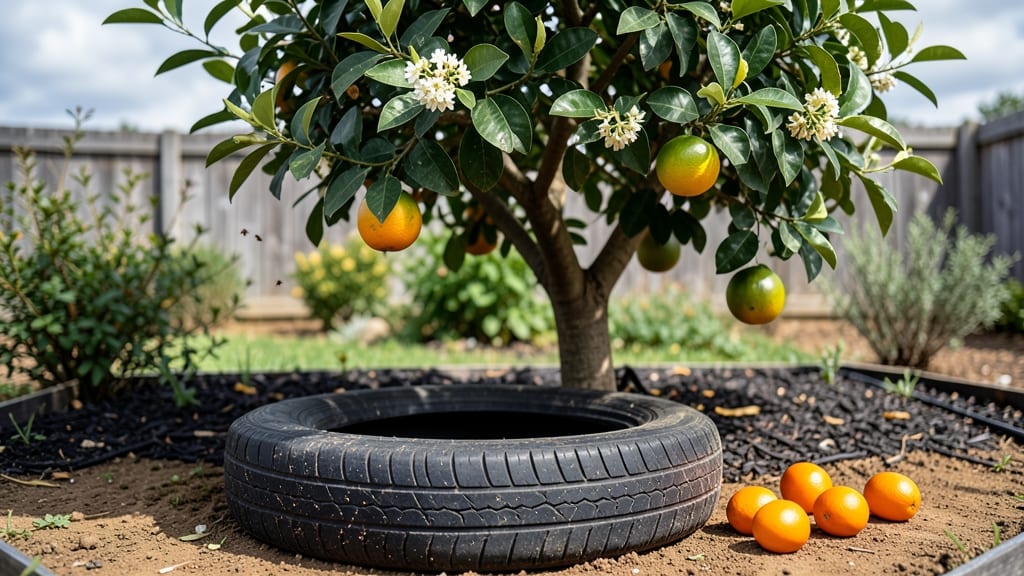
Transforming old tires into sturdy orange tree planters is one of those gardening hacks that feels both clever and practical. 🌱 I've grown citrus in repurposed tires for years, and the results—thriving trees with heavy canopies that stay supported—prove it works.
The secret lies in the tire's built-in stability, which mimics the natural trunk strength of mature trees while giving you the flexibility to move your tree when needed.
You'll need just a few supplies: clean, intact tires (no cracks or rust), a drill for drainage holes, landscape fabric to line the bottom, and quality potting mix designed for citrus.
The key prep step is drilling 10-12 holes around the tire's sides—this prevents root rot while keeping the soil aerated. Paint or stack tires for a creative look, but always leave the top open for easy access to the tree's needs.
What you gain is a low-maintenance support system that handles the weight of dense orange tree foliage without bending or breaking. The tires' thick walls provide natural trunk-like reinforcement, and their mobility lets you rotate the tree for even sunlight exposure.
Plus, the rustic aesthetic adds character to any patio or courtyard.
Winter care is the only real challenge—you'll need to wrap the tires in insulation or move them indoors when temperatures drop below 25°F.
But with proper drainage and occasional fertilizer, your tire-grown orange tree will produce fruit just like its in-ground counterparts, all while making a statement in your garden design.
📚 In This Guide
- What you need
- Instructions
- Tips and common mistakes
- Wrapping up and next steps
What you need
- ● Reclaimed Tire: 1 large (30"+ diameter) or 2-3 stacked tires (20"+ each) for stability. Ensure they’re clean and free of sharp edges.
- ● Pruning Tools: 1 bypass pruners (for clean cuts on small branches)
- ● 1 loppers (for thicker branches, 1"-2" diameter)
- ● 1 pruning saw (for stubborn, larger limbs)
- ● Support Structures: 4-6 T-posts or concrete anchors (6' tall, buried 12"-18") for securing the tire
- ● 1 heavy-duty bungee cord or ratchet straps (to tie branches to the tire)
- ● Safety Gear: 1 pair gloves (cut-resistant, like Mechanix)
- ● 1 safety glasses
- ● 1 tree tie kit (for gentle branch support)
- ● 1 waterproof sealant (to protect tire edges from rot)
- ● 1 spray bottle with soapy water (to disinfect pruning tools)
- ● 1 notebook + pen (to track pruning cuts and growth progress)
Step-by-step guide for stabilizing an orange tree in a tire planter
Here’s how I reinforce tire-grown citrus so they stand strong through years of heavy fruit.
🪴 Step 1: Select and Prepare the Right Tire Planter
Choose a used truck tire at least 24 inches tall with intact walls—larger tires support deeper root systems and more stable growth. Clean thoroughly with a wire brush to remove debris, then disinfect with a 10% bleach solution (1 part bleach to 9 parts water). Rinse well and let dry completely in the sun for 24 hours. This prevents fungal issues that weaken young roots.
Drill four ½-inch drainage holes near the base if none exist. Place a 1-inch layer of coarse gravel at the bottom to improve drainage and prevent root rot. The tire’s weight alone won’t anchor the tree—you’ll need to add structural support next.
💧 Step 2: Plant and Secure the Tree with Support Stakes
Fill the tire ⅔ full with well-draining citrus potting mix (avoid garden soil—it compacts and suffocates roots). Remove the orange tree from its nursery pot and loosen the root ball gently. Position it so the graft union (the bump near the base) sits 1-2 inches above the tire’s rim—this prevents waterlogging at the graft.
Plant the tree, then insert two ½-inch diameter wooden stakes vertically into the soil on opposite sides of the tire. Drive them 6-8 inches deep to ensure stability. Tie the tree trunk to the stakes using soft tree ties (never wire—it cuts into bark as the tree grows). The goal is to immobilize the trunk while allowing flexibility for wind.
✂️ Step 3: Prune for Balance and Structural Integrity
Use clean, sharp pruning shears to remove any dead, crossing, or inward-growing branches—these compete for energy and weaken the tree’s ability to support fruit. Focus on scaffolding branches (the main structural limbs) and prune them back to a bud facing outward to encourage even growth. Never remove more than 25% of the canopy in one session.
Watch for water sprouts (fast-growing, vertical shoots) and prune them immediately—they drain energy from fruiting limbs. After pruning, apply wound sealant to cuts larger than ¼ inch to prevent disease entry. The tree’s canopy should now distribute weight evenly, reducing strain on the tire’s sides.
☀️ Step 4: Monitor and Adjust Support as the Tree Grows
Check the stakes and ties every 3 months—wooden stakes rot over time, and ties can tighten as the trunk thickens. Replace stakes if they’re splintered or loose, and adjust ties to maintain gentle pressure (you should be able to slide one finger between the tie and the trunk). In windy conditions, temporarily tie the tree to a sturdy post outside the tire for extra support.
As the tree matures, its canopy weight will increase dramatically. If the tire starts to tip, bury it ⅓ of its depth in the ground or add concrete blocks around the base for counterbalance. A mature orange tree in a tire can weigh hundreds of pounds—proactive support prevents catastrophic failure.
Tips & tricks for stabilizing an orange tree in a tire planter
Real talk: Growing an orange tree in a tire isn't just about planting—it's about engineering stability. Here's what I've learned to keep these trees upright through years of fruiting.
Tire Selection Matters: That 24-inch minimum height isn't arbitrary—it provides the necessary root space while maintaining structural integrity. I've seen smaller tires tip under mature fruit weight. If you're working with a slightly shorter tire, consider adding a second tire as a base for extra stability. The intact walls are non-negotiable; even small cracks can compromise the entire structure over time.
Support System Design: The two-stake method works perfectly, but here's the breakthrough: angle the stakes outward slightly (about 15 degrees) rather than straight up. This creates a natural tripod effect with the tree trunk, distributing weight more evenly. I also recommend using bamboo stakes instead of wood—they're lighter, more flexible, and won't rot as quickly. The 6-8 inch depth is critical for preventing wind rock.
Pruning for Structural Balance: When pruning those scaffolding branches in Step 3, focus on creating a "Y" shape rather than a flat canopy. This natural framework helps distribute the tree's weight more evenly across the tire's sides. I've found that removing just 15-20% of the canopy (rather than the full 25% maximum) often achieves better structural integrity while maintaining fruit production. The outward-facing bud technique is brilliant—it encourages branches to grow away from the tire's center of gravity.
Long-Term Stability Hacks: That 3-month stake check is your safety net, but here's what nobody tells you—bury the bottom 3-4 inches of each stake before planting. This creates a natural anchor point that prevents them from pulling out when you adjust the ties later. For extra insurance, I've started using galvanized hardware cloth wrapped around the tire's base before planting—it creates a hidden cage that prevents the tire from shifting in windy conditions.
Pro Tips for Orange Tree Tire
- Real talk: Growing an orange tree in a tire isn't just about planting—it's about engineering stability.
- Tire Selection Matters: That 24-inch minimum height isn't arbitrary—it provides the necessary root space while maintaining structural integrity.
- Support System Design: The two-stake method works perfectly, but here's the breakthrough: angle the stakes outward slightly (about 15 degrees) rather than straight up.
Frequently asked questions
Got questions about pruning your orange tree tire for better structural support?
Here are some answers to the most common queries—helping you keep your citrus tree thriving with a sturdy, well-supported canopy!
What is an orange tree tire, and why do I need it?
An orange tree tire (or tree tire) is a specialized support system—usually a wide, reinforced rubber ring—that wraps around the trunk to stabilize heavy canopies. Orange trees, especially dwarf varieties, can develop top-heavy growth that strains the trunk, leading to splits or breaks. The tire distributes weight evenly, reducing stress and promoting healthier growth.
When is the best time to install an orange tree tire?
Install the tire early—ideally when your tree is young (1–3 years old) and the trunk is still flexible but sturdy enough to support the weight. For mature trees, prune first to reduce canopy weight, then install the tire during dormant season (late winter/early spring) to minimize stress. Avoid installing during peak fruit production or extreme weather.
How do I know if my orange tree needs a tire?
Watch for these signs:
- Trunk splitting or cracking (common in heavy fruit-bearing trees).
- Leaning or uneven growth (tree bending under its own weight).
- Thin or weak trunk compared to a sprawling canopy.
- Frequent fruit drop due to structural instability.
Can I use a regular tire or do I need a special tree tire?
Nope—never use a car or bike tire! Tree tires are designed with:
- Reinforced rubber to prevent tearing.
- Adjustable straps for a snug, custom fit.
- Durability against UV, rain, and pests.
What should I do if the tire slips or doesn’t fit right?
If the tire feels loose or uneven:
- Tighten straps gradually—don’t over-torque, or you’ll damage the trunk.
- Add padding (like foam or rubber) if the tire rubs against the bark.
- Check for growth—trees expand! Adjust the tire every 6–12 months as the trunk thickens.
- Combine with stakes for extra support if the canopy is still too heavy.
Wrapping up and next steps
Pruning your orange tree tire to support heavy canopy growth isn’t just about aesthetics—it’s an investment in your tree’s health and productivity. 🌳 By following proper techniques, you’ll ensure a sturdy structure that thrives for years.
Whether you’re a seasoned gardener or just starting, every trim brings you closer to a flourishing, well-supported citrus tree.
Ready to take the next step? Grab your tools, schedule a pruning session, and watch your orange tree shine brighter than ever. Happy pruning—your future harvest will thank you! 🍊✨