
Pruning
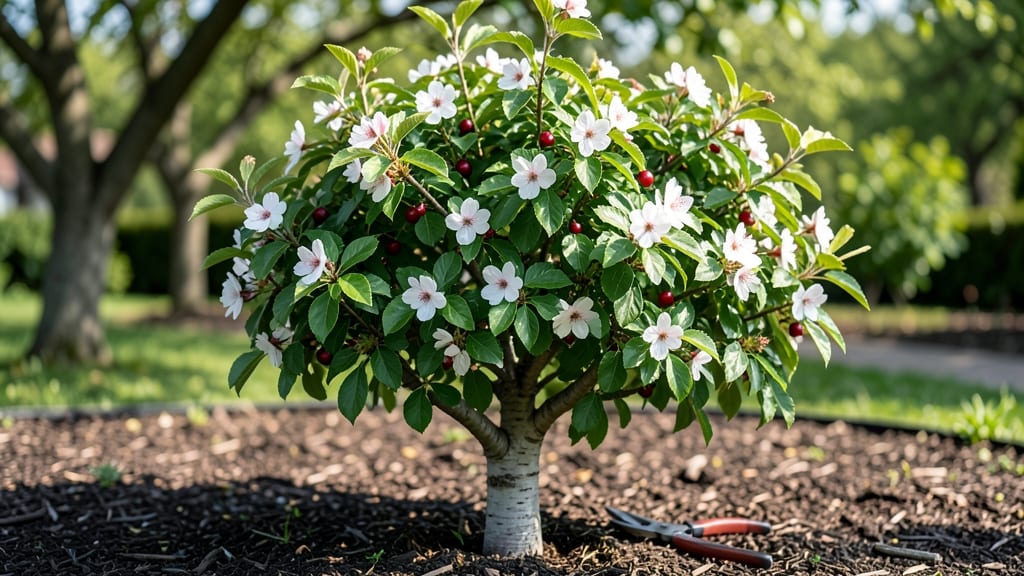
The North Star sour cherry tree delivers tart, sweet-tart fruit that outshines most supermarket cherries. 🌟 I planted mine last spring, and by August, it was already heavy with clusters—proof that this cold-hardy variety thrives even in short growing seasons.
The key lies in mimicking its native habitat: well-drained soil, full sun, and a little winter chill to trigger fruiting.
This tree isn’t fussy, but it does demand 6+ hours of sunlight daily and soil that drains well (think sandy loam or amended clay). Water deeply once a week after establishment, but avoid soggy roots—North Stars hate wet feet.
Prune in late winter to open the canopy, and you’ll reward yourself with pounds of fruit by mid-summer.
What makes North Stars special is their two-year fruiting cycle—you’ll get a bumper crop one year, then a lighter harvest the next, but both years deliver. The tart flavor pairs perfectly with pies, jams, or fresh eating, and the birds usually leave yours alone (unlike sweet cherries).
For best results, plant in USDA zones 3-7 and protect young trees from late frosts. With proper care, this tree will produce for decades—my neighbor’s 15-year-old North Star still yields like it’s two. Ready to grow yours?
📚 In This Guide
- What you need
- Instructions
- Tips and common mistakes
- Wrapping up and next steps
What you need
- ● North Star sour cherry tree: A 1- to 3-year-old bare-root or container-grown sapling (check for disease resistance and cold hardiness).
- ● Planting site: Full sun (6+ hours of direct sunlight daily).
- ● Well-draining soil (pH 6.0–7.0).
- ● Space: At least 20–25 feet between trees (or 15 feet from walls/fences).
- ● Soil amendments: Compost (5–10 gallons) or aged manure to improve fertility and drainage.
- ● Fertilizer: Balanced, slow-release fertilizer (10-10-10 or similar) for planting, plus ammonium sulfate (1 lb per 100 sq ft) in early spring.
- ● Pruning tools: Bypass pruners (sharp, for clean cuts).
- ● Loppers (for thicker branches).
- ● Pruning saw (for large limbs).
- ● Disinfectant (rubbing alcohol or bleach solution) to sterilize tools between cuts.
- ● Mulch: Organic mulch (wood chips or straw), 2–4 inches deep, keeping it 3–4 inches away from the trunk.
- ● Watering supplies: Drip irrigation system or hose with a soaker nozzle (deep watering capacity recommended).
- ○ Protective barriers (optional but helpful): Tree guard or wire cage to deter animals.
- ● Frost cloth (for young trees in early spring).
- ○ Winter: Heavy-duty gloves, ladder (for tall trees), and a pruning sealant (optional, for large cuts).
- ● Spring/Summer: Sharp pruning shears and a tree spray (organic fungicide if needed).
Step-by-Step guide for planting and maintaining a North Star sour cherry tree
Here's how I ensure my North Star cherry thrives from spring blossoms to winter dormancy.
🌱 Step 1: Choose the Perfect Planting Spot and Prepare the Soil
Select a location with full sun exposure (6-8 hours daily) and well-draining soil. North Star cherries hate soggy roots, so avoid low spots where water pools. I dig a hole twice as wide and just as deep as the root ball to encourage outward root spread.
Amend the native soil with 2-3 inches of compost mixed into the bottom and sides of the hole. This improves drainage while providing nutrients. If your soil is particularly heavy clay, add a handful of sand or perlite to the mix. Tap the tree gently from side to side to settle roots before backfilling.
☀️ Step 2: Plant at the Right Time and Water Deeply
Plant your North Star cherry in early spring, as soon as the ground thaws but before buds break. This gives roots time to establish before summer heat. Position the tree so the graft union sits 2-3 inches above soil level—this prevents root suckers later.
Water immediately after planting with 10 gallons of water, then mulch around the base with 2-3 inches of wood chips, keeping mulch 6 inches away from the trunk. Mulch retains moisture and regulates soil temperature. Check soil moisture weekly—water when the top 2 inches feel dry—but never let it sit soggy.
🌿 Step 3: Prune for Structure and Fruit Production
Prune your North Star cherry in late winter or early spring, before buds swell. Remove any dead, crossing, or weak branches first. I always start with the central leader—cherries grow best with a strong vertical trunk. Cut back any branches growing inward to improve airflow and sunlight penetration.
Thin out branches to create an open center. North Star cherries produce best with good airflow, so avoid a dense canopy. Make cuts just outside the branch collar—never leave stubs. After pruning, apply dormant oil spray to prevent overwintering pests.
✂️ Step 4: Fertilize and Thin Fruit for Quality Harvests
Feed your tree in early spring with a balanced 10-10-10 fertilizer spread evenly under the drip line. Avoid high-nitrogen fertilizers—they promote leafy growth at the expense of fruit. In late spring, switch to a low-nitrogen, high-phosphorus formula (5-10-10) to support flowering and fruiting.
When fruit sets, thin clusters to 6-8 inches apart—this ensures larger, higher-quality cherries. Remove any misshapen or damaged fruit early. Harvest when cherries ripen uniformly, usually in late summer. Shake the tree gently over a tarp to collect fruit—North Star cherries ripen all at once.
⏰ Step 5: Winter Care for Next Year’s Growth
Protect young trees from winter damage by wrapping the trunk with tree guard or burlap. Older trees handle cold better, but I still mulch heavily in late fall to insulate roots. Remove any fallen fruit to prevent pests and diseases from overwintering.
In early spring, rake away old mulch and check for signs of pests like aphids or scale. Prune out any dead wood before buds break. This is also the time to apply a pre-bloom fungicide if your area has a history of cherry leaf spot or brown rot.
Tips & tricks for perfect North Star sour cherry tree care
Real talk: The difference between a thriving North Star cherry tree and one that struggles often comes down to these small but critical details.
Sunlight Secret: That 6-8 hours of daily sun isn't just a suggestion—it's non-negotiable for this variety. I've seen North Star cherries in partial shade produce half the fruit, and the cherries that do form are often small and tart. If your yard only gets 4-5 hours of sun, consider planting near a south-facing wall or fence that reflects sunlight back onto the tree. This passive heat boost makes a surprising difference in fruit set.
Soil Science: The 2-3 inches of compost recommendation isn't just about nutrients—it's about creating the perfect air-to-soil ratio. I always test my amended soil by squeezing a handful: it should hold shape but crumble easily when tapped. If your soil feels gummy or leaves a muddy residue when squeezed, you need more sand or perlite. This prevents those dreaded root rot issues that can kill a young tree before it even bears fruit.
Watering Wisdom: Those 10 gallons after planting might seem like overkill, but trust me on this: The goal is to eliminate air pockets around the roots. I use a garden hose with a gentle spray nozzle to slowly water until the soil is completely saturated down to 12 inches. This ensures the roots establish properly from the start. After that, checking the top 2 inches of soil is the right approach—dryness at that depth means it's time to water, not when the leaves start wilting.
Pruning Precision: When you're thinning branches in Step 3 to create that open center, aim for a shape where sunlight can reach the inner branches. I like to visualize the tree as an open umbrella—no part should be in permanent shade. And here's what nobody tells you: The dormant oil spray after pruning isn't just about pests. It also helps seal tiny wounds on the branches, reducing the risk of fungal infections that can enter through fresh cuts.
Pro Tips for North Star Sour Cherry Tree
- Real talk: The difference between a thriving North Star cherry tree and one that struggles often comes down to these small but critical details.
- Sunlight Secret: That 6-8 hours of daily sun isn't just a suggestion—it's non-negotiable for this variety.
- Soil Science: The 2-3 inches of compost recommendation isn't just about nutrients—it's about creating the perfect air-to-soil ratio.
Frequently asked questions
When is the best time to plant a North Star sour cherry tree?
The ideal window is late fall or early spring (before buds swell). Planting in fall gives roots time to establish before winter, while spring ensures growth kicks off with warmer temps. Avoid extreme heat or frost—root shock is no joke!
How often should I prune my North Star sour cherry tree?
Prune once a year, in late winter or early spring (before buds break). Remove dead/diseased wood first, then thin out crowded branches to improve airflow. Never prune in fall—it invites fungal infections. Aim for an open-center shape to boost fruit production!
Why isn’t my North Star sour cherry tree bearing fruit?
Common culprits:
- Young age: Trees need 3–5 years to mature.
- Poor pollination: Plant a second variety (like ‘Montmorency’) within 50 feet.
- Over/under-pruning: Balance light and structure.
- Nutrient deficiency: Test soil and amend with low-nitrogen fertilizer (like 5-10-10).
What pests or diseases should I watch for in North Star cherries?
Keep an eye out for:
- Cherry leaf spot: Brown spots? Prune infected leaves and apply copper fungicide in spring.
- Japanese beetles: Handpick or use neem oil to protect fruit.
- Birds: Netting saves your harvest!
Can North Star sour cherries survive in cold climates?
This variety thrives in USDA Zones 3–7 and handles winter temps down to -30°F. For extra protection in Zone 7+, mulch heavily and water deeply before freeze. Spring frost? Cover blossoms with frost cloth if temps dip below 28°F.
What’s a good alternative if I can’t grow North Star cherries?
Try these low-maintenance sour cherry varieties:
- Montmorency: Classic, tart, and cold-hardy (Zones 4–7).
- Stella: Self-pollinating and disease-resistant.
- Meteor: Compact, great for containers (Zones 4–8).
Wrapping up and next steps
Growing a thriving North Star sour cherry tree is a rewarding journey that blends patience, care, and a bit of seasonal strategy—especially when it comes to pruning. By mastering the art of summer thinning, winter shaping, and disease prevention, you’ll unlock bountiful harvests year after year.
Remember, healthy trees start with the right tools, timing, and technique, so don’t hesitate to revisit your notes or consult local gardening resources for tailored advice.
Now that you’re armed with knowledge, roll up your sleeves and get pruning! 🌳✂️ Start small, observe your tree’s response, and soon you’ll be the proud caretaker of a fruit-bearing powerhouse. Happy growing!