
Pruning
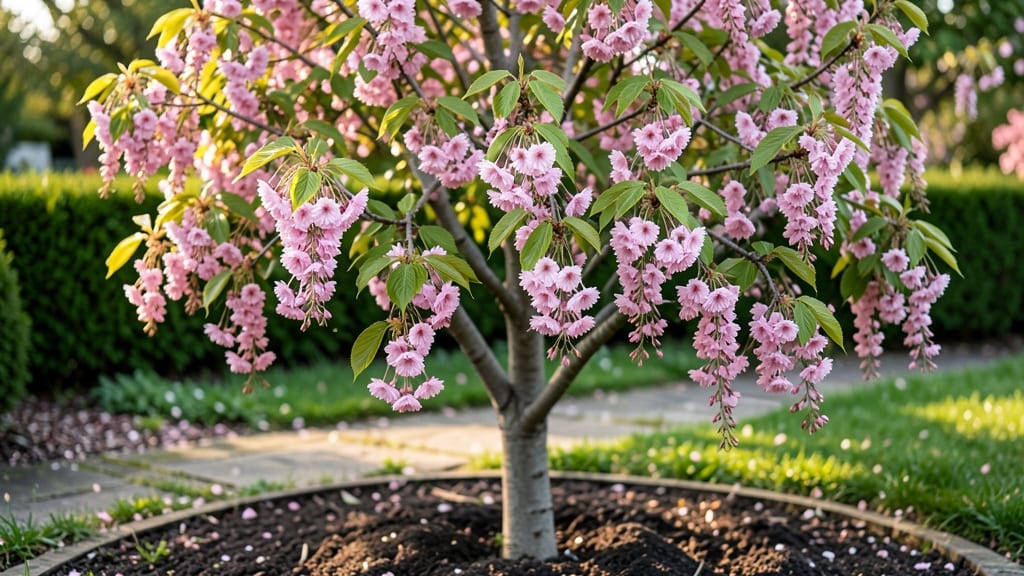
Proper Kwanzan cherry tree care in late winter—like strategic pruning—reveals the magic behind next year’s breathtaking pink blooms, the kind that turn heads and fill your garden with romance.
I learned this the hard way after my first pruning left me with half the usual flowers, and now I swear by the dormant-season approach before buds even think about swelling.
The right tools make all the difference: sharp bypass pruners for clean cuts, rubbing alcohol to sterilize them between branches, and a 5-gallon bucket for collecting debris.
You'll work when temperatures hover between 25-45°F, timing it just as the tree breaks dormancy but before sap starts flowing—usually February to early March in most climates. This timing ensures you don't trigger excessive bleeding or stress the tree.
What you'll end up with is a tree that bursts into vibrant pink blooms so dense they nearly hide the branches, followed by glossy green foliage that stays lush through summer.
The pruning itself takes 30-60 minutes depending on tree size, but the payoff is years of stronger structure, better air circulation, and more flowers than you thought possible.
This method works for both young trees establishing their shape and mature specimens needing rejuvenation. The same principles apply whether you're in Zone 5 or Zone 8, just adjust your timing by a week or two based on your last frost date.
Let's get those branches in shape for next spring's showstopper.
📚 In This Guide
- What you need
- Instructions
- Tips and common mistakes
- Wrapping up and next steps
What you need
- ● Pruning shears: Sharp, bypass-style shears (for cuts under ½ inch thick). Quantity: 1 pair.
- ● Loppers: Heavy-duty, long-handled loppers (for cuts ½–2 inches thick). Quantity: 1 pair.
- ● Pruning saw: Curved-tooth saw for thick branches (2+ inches). Quantity: 1.
- ● Rubbing alcohol (70%+) or bleach solution: For sterilizing tools between cuts. Quantity: Small bottle or spray.
- ● Garden gloves: Cut-resistant gloves (size to fit snugly). Quantity: 1 pair.
- ○ Pruning sealant: Tree wound dressing (optional but recommended for large cuts). Quantity: Small tub.
- ● Disposable bags or bucket: For collecting debris. Quantity: 1–2.
- ● Ladder (if needed): Sturdy, extendable ladder (for taller trees). Safety note: Use with a spotter!
- ● Hand saw or pole pruner: For high branches without a ladder.
- ● Marking twine or spray paint: To tag branches for removal.
- ● Work vest or tool belt: To keep tools organized.
- ● Safety glasses: Protect your eyes from debris.
- ● Notepad: Sketch a quick pruning plan before you start!
Dormant season pruning techniques for a thriving Kwanzan cherry tree
Here’s how to shape your tree for next year’s spectacular blooms—without sacrificing its health.
Time the Pruning for Optimal Growth
Prune your Kwanzan cherry tree during its dormant season, ideally between late winter and early spring (just before buds swell). This timing ensures the tree isn’t stressed by cold snaps or early blooming. Avoid pruning in fall—it can leave cuts vulnerable to fungal infections and winter dieback.
Check for bud swell—small, plump buds along the branches signal readiness. If you prune too early, the tree may produce fewer blossoms. If you wait too late, you risk encouraging new growth that won’t harden off before frost. A clear, dry day is best to minimize stress and allow wounds to heal quickly.
Assess the Tree’s Structure and Remove Problem Branches
Start by removing dead, diseased, or crossing branches—these compete for resources and weaken the tree. Look for branches that rub against each other (crossing) or grow inward (inward-facing). These are prime candidates for removal, as they create entry points for pests and reduce airflow, increasing disease risk.
Next, identify water sprouts—fast-growing, vertical shoots that drain energy from blossom production. These should be cut back to the nearest outward-facing bud. Use clean, sharp pruners to make 45-degree cuts just above a bud that faces outward. This encourages strong, structural growth rather than weak, leggy branches.
Thin the Canopy for Better Airflow and Light Penetration
Thin the canopy by selectively removing 10-20% of the branches, focusing on those that block light from reaching the interior. Kwanzan cherries thrive when sunlight reaches the center—this promotes even blooming and reduces fungal issues. Aim to create an open, vase-like shape with a dominant central leader.
Prioritize branches that are too close together or grow at sharp angles (less than 45 degrees). These often break under snow or wind. When thinning, cut back to a side branch or lateral bud rather than leaving a stub. This prevents water from pooling in the wound, which can lead to rot.
Shape the Tree for Balance and Future Blooms
Now, refine the tree’s shape by shortening overlong branches to maintain proportion. Never remove more than one-third of a branch’s length in a single cut—this prevents shock. For branches longer than 6 feet, make the cut just above a well-placed lateral bud to encourage a bushier form.
Pay special attention to the lower branches—if they’re too dense, they can block light from reaching the trunk, increasing moisture retention and fungal risks. Step back frequently to visualize the tree’s silhouette. A well-shaped Kwanzan cherry should have gradual tapering from trunk to outer branches, like an inverted cone.
Clean Up and Protect the Tree Post-Pruning
After pruning, sterilize your tools with rubbing alcohol or a 10% bleach solution to prevent spreading disease. Collect and dispose of all clippings—never leave them beneath the tree, as they can harbor pests or fungi. A thin layer of mulch (2-3 inches) around the base helps retain moisture and regulate soil temperature.
Water the tree deeply after pruning to reduce stress, but avoid overwatering—soggy soil slows wound healing. If your tree is young or particularly stressed, apply a balanced fertilizer (10-10-10) in early spring to support new growth. Monitor the pruning wounds for signs of infection (oozing, discoloration) over the next few weeks.
Tips & tricks for perfect Kwanzan cherry tree pruning
These essential techniques will help you transform your pruning session into a strategic investment for next year's blossoms.
Timing is Everything: The late winter to early spring window between late January and early March is your sweet spot for pruning. I learned this the hard way after pruning too early one year and seeing a noticeable reduction in blossoms the following spring. Watch for those telltale swollen buds - they're your green light to begin. If you're in a region with unpredictable weather, err on the side of waiting until you see consistent daytime temperatures above freezing.
Tool Preparation Matters: Before you even touch a branch, sterilize your pruners with rubbing alcohol or a 10% bleach solution. I've seen too many gardeners skip this step and end up spreading fungal diseases between trees. After pruning, clean your tools again to prevent cross-contamination. For branches thicker than 1 inch, consider using a pruning saw - your hands will thank you. Always make clean cuts at a 45-degree angle just above a bud facing outward to encourage proper growth patterns.
Structural Balance Secret: When shaping your tree, step back frequently to visualize the overall silhouette. The goal is gradual tapering from trunk to branches, like an inverted cone. I recommend removing no more than one-third of any branch's length in a single cut - this prevents shock to the tree. For branches longer than 6 feet, focus on cutting back to lateral buds to create that bushier, more productive form. Remember, you're not just pruning for aesthetics - you're creating an optimal structure for next year's blossoms.
Post-Pruning Care: After you've finished pruning, don't just walk away. Water deeply to help the tree recover from the stress, but avoid overwatering which can slow wound healing. Apply a 2-3 inch layer of mulch around the base to regulate soil temperature and retain moisture. For young trees or those that look particularly stressed, consider applying a balanced 10-10-10 fertilizer in early spring to give them a nutritional boost for the growing season ahead.
Pro Tips for Kwanzan Cherry Tree Care
- These essential techniques will help you transform your pruning session into a strategic investment for next year's blossoms.
- Timing is Everything: The late winter to early spring window between late January and early March is your sweet spot for pruning.
- Tool Preparation Matters: Before you even touch a branch, sterilize your pruners with rubbing alcohol or a 10% bleach solution.
Frequently asked questions
Got questions about keeping your Kwanzan cherry tree thriving? Here are answers to the most common concerns—from pruning timing to troubleshooting—so you can enjoy those stunning pink blooms year after year!
When is the best time to prune a Kwanzan cherry tree?
The ideal window is late winter or early spring, just before buds swell but before new growth starts. For dormant-season pruning (as this article covers), aim for January–February in most U.S. climates. Avoid pruning after blooms appear—this removes next year’s flowers!
Can I prune a Kwanzan cherry tree in winter if it’s still dormant?
Yes! Pruning during deep dormancy (when the tree has no leaves and before sap rises) is perfect for shaping and removing dead wood. Just work on mild winter days (above 40°F/4°C) to avoid stressing the tree. Pro tip: Wait until after the worst cold snaps to minimize frost damage.
How much can I prune back a Kwanzan cherry tree?
Keep it moderate—never remove more than 25% of the canopy in one season. Focus on thinning crowded branches (cut back to the bud or branch collar) and removing dead, crossing, or weak growth. Over-pruning stresses the tree and reduces spring blooms.
Why aren’t my Kwanzan cherry tree blooms as abundant as last year?
Common culprits include over-pruning (especially after flowering), nutrient deficiencies (add compost or a balanced fertilizer in early spring), or pests/disease (check for borers, fungal spots, or aphids). If blooms are sparse, also ensure the tree gets 6+ hours of sunlight and well-draining soil.
Are there smaller or low-maintenance alternatives to Kwanzan cherry trees?
If space or upkeep is a concern, consider these low-maintenance bloomers:
- ‘Okame’ cherry (smaller, disease-resistant, early blooms)
- ‘Shirofugen’ (compact, pink/purple foliage, fewer pruning needs)
- Dwarf flowering almond (fragrant, cold-hardy, 5–10 ft tall)
Wrapping up and next steps
Caring for your Kwanzan cherry tree during the dormant season is the secret to stunning spring blooms year after year! By following proper pruning techniques—like thinning out crowded branches, shaping for airflow, and removing dead wood—you’ll set the stage for vibrant flowers and a healthier tree.
With patience and the right tools, your efforts will pay off in a breathtaking floral display that brightens your landscape.
Ready to transform your tree into a showstopper? Grab your pruners, mark your calendar for late winter, and get started! 🌸 For even more tips, check out our detailed pruning guide to keep your Kwanzan cherry tree thriving for decades.