
Pruning
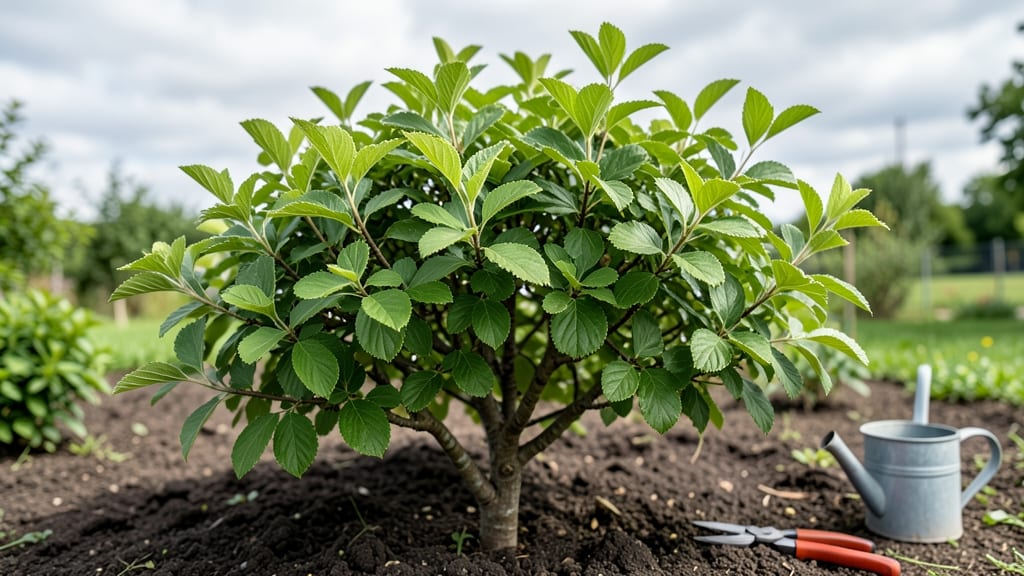
Strategic pruning keeps your Juneberry tree leaves vibrant all season long. ✨ After battling leaf spot and spider mites on my own tree, I learned the right cuts make all the difference—removing diseased leaves early and shaping for airflow prevents future problems.
The key is timing: prune in late winter or early spring before new growth starts, and do a light cleanup after heavy leaf drop in fall.
You’ll need sharp pruning shears, a bucket for clippings, and a few minutes of focused attention. Juneberry trees respond well to open-centered pruning, which lets sunlight reach the center branches where leaves cluster. This simple approach cuts down on fungal issues while keeping your tree’s natural shape.
For heavy infestations, a 3% hydrogen peroxide spray (1 part to 3 parts water) works as a natural disinfectant between pruning sessions.
What you’ll end up with is a tree that stays disease-resistant and produces more berries year after year. Leaves stay glossy green instead of yellowing or curling, and the branches fill in evenly.
The best part? You’ll spend less time fighting pests and more time enjoying the tree’s stunning spring blooms and edible fruit. Let’s get those leaves thriving!
This method works for both young saplings and mature Juneberry trees, though larger trees may need a ladder for high branches. If you’re in a humid climate, add a baking soda spray (1 tablespoon per gallon of water) every few weeks during peak growing season to deter fungal spores.
Small adjustments make a big difference over time.
📚 In This Guide
- What you need
- Instructions
- Tips and common mistakes
- Wrapping up and next steps
What you need
- ● Pruning shears: Bypass pruners (sharp, sterilized) for small branches (1/4"–3/4" thick). Example: Felco F-2 or Corona Tools Classic.
- ● Loppers: For medium branches (3/4"–2" thick). Look for bypass-style loppers with long handles for leverage. Example: Fiskars X27.
- ● Pruning saw: For thick branches (>2" diameter). A bow saw or pruning saw with a fine-tooth blade works best.
- ● Gloves: Heavy-duty, cut-resistant gloves (e.g., Mechanix or Wagner) to protect hands from thorns and sharp edges.
- ● Disinfectant: 70% isopropyl alcohol or a pruning sealant (e.g., Tanglefoot Pruning Seal) to prevent disease spread.
- ● Ladder or step stool: If your tree is taller than 6 feet. Ensure it’s stable and non-slip.
- ● Trash bags or bucket: For collecting pruned branches and leaves (1–2 large bags or a 5-gallon bucket).
- ○ Marking twine or flags: (Optional but helpful) To tag branches for future reference.
- ● Hand saw or reciprocating saw: For stubborn, large branches that won’t yield to a pruning saw.
- ● Extension pole pruners: For high branches without a ladder (e.g., 20–30 feet reach).
- ● Work gloves with grip: For extra comfort during long pruning sessions.
- ● Tree wound dressing: (Controversial but some swear by it) Like Tanglefoot Tree Wound Pruning Seal for sealing cuts.
- ● Notebook or app: To log pruning dates, branch locations, and growth notes (e.g., iNaturalist or a simple garden journal).
- ● Weather check: Prune on a dry, calm day (avoid wind or rain).
- ● Timing: Best done in late winter/early spring (before buds swell) or summer after harvest.
- ● Tree health: Inspect for diseases (e.g., powdery mildew) or pests (e.g., sawfly larvae) before pruning.
- ● Local regulations: Check if your area requires permits for large-scale pruning (rare but possible).
Step-by-step guide to pruning Juneberry tree leaves for year-round health
Here's how I keep my Juneberry trees thriving—strategic cuts prevent disease and boost fruit production.
✂️ Step 1: Prune in Late Winter for Structural Health
Wait until mid-to-late February when the tree is still dormant but before buds swell. Use clean, sharp pruning shears to remove dead, crossing, or diseased branches first—these are easy to spot against bare wood. Cut just outside the branch collar where it meets the trunk to avoid leaving stubs that invite rot.
Real talk: I always start with the "uglies." Look for branches with peeling bark, hollow centers, or blackened cankers. These won’t recover, and removing them early prevents the tree from wasting energy. Aim to open the center of the tree slightly—Juneberries need airflow to prevent fungal issues like powdery mildew.
☀️ Step 2: Light Summer Thinning After Fruit Harvest
Once you’ve picked the last berries in late June or early July, grab your pruners again. This is when you thin out overcrowded branches to improve sunlight penetration. Focus on suckers (shoots growing from the base) and water sprouts (vertical shoots with no leaves)—these steal energy from fruit production.
I like to step back and scan the tree for branches growing inward. These compete for light and often produce smaller fruit. Cut these back to just above an outward-facing bud to encourage stronger growth. Never remove more than 25% of the canopy in one session—this stresses the tree and can reduce next year’s crop.
🌿 Step 3: Sanitize and Monitor Through Fall
After your final summer pruning, sterilize your tools with rubbing alcohol to prevent spreading disease. In October, do a quick check for yellowing leaves or new fungal spots—these can signal late-season issues. Remove any infected leaves or branches immediately and compost them separately (not in your regular bin) to stop the spread.
Here’s the thing—I’ve seen Juneberry trees decline fast when pruning cuts heal poorly. Always make cuts at a 45-degree angle if the branch is over ½ inch thick, and avoid cutting into the branch collar. If you notice oozing sap or blackened edges after pruning, the cut was too deep. Adjust next time.
⏰ Step 4: Winter Protection for Young Trees
For trees under 5 years old, wrap the trunk with tree guard in late November to protect against voles and sunscald. Prune lightly in winter only if you spot ice damage—snip broken branches back to healthy wood. Older trees handle cold better, but I still check for split bark or cracked limbs after heavy snow and prune those out early.
This is the moment that matters: If you’ve got a young Juneberry, stake it now if it’s leaning. Use soft ties and adjust as the tree grows. Over the years, I’ve lost count of how many trees I’ve saved by catching winter damage early—don’t skip this step, even if it feels like overkill.
Tips & tricks for perfect Juneberry tree leaf pruning
These simple strategies will help you keep your Juneberry trees healthy and productive year after year.
Timing is Everything: The mid-to-late February window for winter pruning is critical because it allows the tree to heal before spring growth begins. If you prune too early, you risk exposing fresh cuts to late winter frost, which can lead to infection. I've seen trees recover beautifully when pruned in this exact window—trust me, the timing matters more than you think!
Visual Cues for Healthy Cuts: When making cuts in Step 1, look for the branch collar—the swollen area where the branch meets the trunk. Cut just outside this collar, but never inside it. This ensures the tree can seal the wound properly. For branches over ½ inch thick, make a 45-degree angle cut to prevent water from pooling and causing rot. I've made this mistake before—don't let your cuts look like they were made with a chainsaw!
Seasonal Pruning Strategy: The summer thinning in late June/early July should focus on removing only 25% of the canopy at most. This might seem counterintuitive, but removing too much at once stresses the tree and can reduce next year's fruit production. Think of it as giving your tree a haircut—you wouldn't shave someone's head in one visit, would you?
Tool Maintenance Matters: Always sterilize your pruning shears with rubbing alcohol between cuts, especially when dealing with diseased branches. I keep a small bottle of alcohol in my tool pouch for this exact purpose. Clean tools prevent spreading fungal spores to healthy parts of the tree. This simple habit has saved me from dealing with powdery mildew outbreaks in my orchard.
Pro Tips for Juneberry Tree Leaf
- These simple strategies will help you keep your Juneberry trees healthy and productive year after year.
- Timing is Everything: The mid-to-late February window for winter pruning is critical because it allows the tree to heal before spring growth begins.
- Visual Cues for Healthy Cuts: When making cuts in Step 1, look for the branch collar—the swollen area where the branch meets the trunk.
Frequently asked questions
Got questions about keeping your Juneberry tree healthy with strategic leaf pruning? You’re not alone! Here are some of the most common questions—and answers—to help you navigate the process like a pro.
When is the best time to prune Juneberry tree leaves?
The ideal time to prune is late winter or early spring (before buds break) to remove dead or weak growth. Light pruning can also happen in summer after harvest to improve airflow. Avoid heavy cuts in fall—it can stress the tree before winter.
How do I tell if I’m pruning too much?
If you see more than 25% of the foliage removed at once, you’re likely over-pruning. Signs include excessive water sprouts, delayed fruiting, or yellowing leaves. Aim for selective cuts—focus on dead, crossing, or overcrowded branches first.
Will pruning affect my Juneberry harvest?
Pruning correctly actually boosts fruit production by redirecting energy to healthy branches. However, over-pruning (especially in fruiting years) can reduce yield. Prioritize structural cuts and thin out dense areas to balance growth and harvest.
What should I do if my Juneberry leaves turn brown after pruning?
Brown leaves post-pruning often mean stress from cuts too close to the trunk or fungal/bacterial infections from dirty tools. Solution: Prune just outside the branch collar, sterilize tools with rubbing alcohol, and avoid wet foliage. If spots appear, treat with copper fungicide.
Can I use Juneberry leaves for anything other than pruning?
While pruned leaves aren’t typically used for culinary purposes (they’re bitter), they make excellent compost or mulch. Young, tender leaves can also be infused in teas (sparingly) for medicinal properties—just ensure the tree isn’t treated with pesticides.
Wrapping up and next steps
Mastering the art of juneberry tree leaf pruning isn’t just about aesthetics—it’s a year-round investment in your tree’s vitality. By following strategic cuts, you’ll encourage stronger growth, better fruit production, and a healthier canopy.
Whether you’re a seasoned gardener or just starting, these techniques make maintenance feel effortless and rewarding! 🌿
Ready to transform your juneberry tree into a thriving centerpiece? Grab your pruners, review your notes, and schedule your next pruning session—your tree’s future starts with your next cut! 🌱